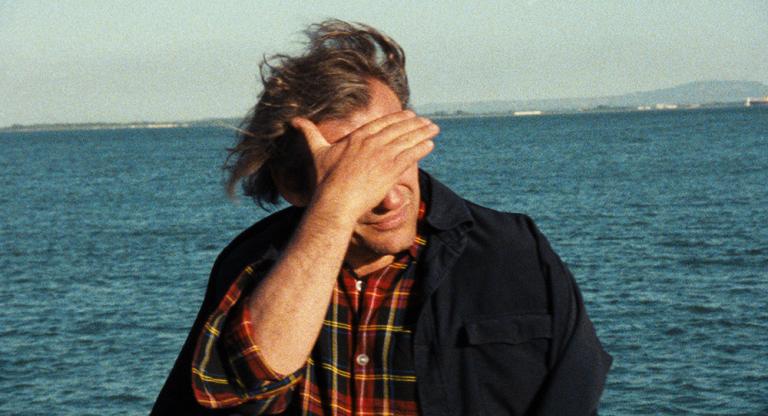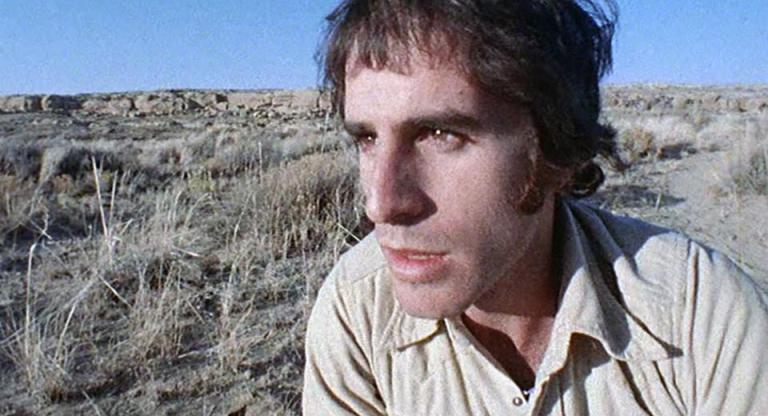
It appears that, in recent years, the filmmaker Robert Kramer’s profile has increased in the United States. I first became aware of him through a screening of Ice (1970) hosted at The Film-Makers’ Co-op in 2023. The idea that there was an American filmmaker who’d made a film about overthrowing a fascist regime in the United States was extremely seductive to me; it opened my eyes to histories my textbooks had omitted during my school years and set me down a path of discovery. On top of the political dimension of Kramer’s work, there was also something exciting about the forms his films moved through—a brilliant dance of documentary and fiction. The more films of his I watched, the more convinced I became he was one of the great American directors of the latter-end of the twentieth century; to me, this was novel, though it appeared to be the general consensus in France and elsewhere.
Kramer has, unfortunately, been somewhat forgotten in the United States. Part of this has to do with his move to Europe in the ‘80s, but a lot of it has to do with the fact that his films fell entirely out of circulation in the home video era. Yet recent efforts from his daughter, Keja Kramer, in conjunction with RE:VOIR, have helped bring his films back into the world. I have to imagine that the fact that the world receiving his films now is particularly hellish must help bolster their appeal. Kramer was a radical and, at a time when radical change is necessary, it’s only natural people would gravitate toward work that offers visions and historical lessons about what an American Left could look like.
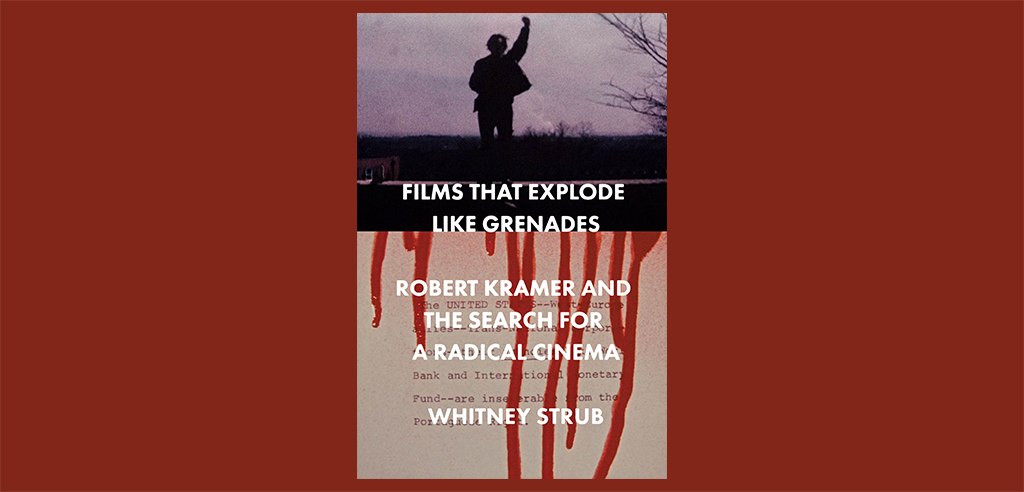
Amid the recent spate of screenings, books, and retrospectives tied to this sudden Kramer renaissance is Whitney Strub’s Films That Explode Like Grenades: Robert Kramer and the Search for a Radical Cinema. Strub has spent over a decade researching the life and work of the New Left filmmaker-turned-wayward expat, and his biography on the man is rigorous. Charting a career that saw Kramer go from wannabe novelist to political organizer to gun-toting revolutionary to video-diarist and everything in between as he moved between New York, New Jersey, Vermont, Portugal, Angola, France, Germany, and certainly many other points on the map, Films That Explode Like Grenades assembles an incredible portrait of a veritable New Left Zelig, balancing out that chronicling with insightful commentary on a figure whose history has always been more akin to legend.
Now that his biography has hit bookshops across the U.S., I spoke with Strub about the life and times of Robert Kramer. Our conversation has been edited for clarity and length.
Nicolas Pedrero-Setzer: When did you start working on the research for this book?
Whitney Strub: The real roots of it were in 2009, when Anthology Film Archives did a pretty substantial Kramer retrospective. It was the tenth anniversary of his death. At that point, his movies were impossible to see; it was before torrents, Solidarity Cinema, and Google Drives. His stuff was very elusive, so it was shocking to see radical cinema that had slipped through the cracks. I mean, at that point, I don’t think Robert Kramer even had a Wikipedia page. He was really a murky figure.
There are a lot of filmmakers who fall through the cracks of history, but Kramer stuck with me for several years. When I was living and teaching in Newark, New Jersey, my friend Mark Krasovic wrote this great book called The Newark Frontier: Community Action in the Great Society [2016]. It partly involved the documentary Troublemakers [1966], because it had come out of community action projects in Newark. He ended up connecting me with Bob Machover, who was the co-director of Troublemakers and, at that point, I didn’t even realize that Robert Kramer was in the film.
So, I was interviewing Machover about Newark and it just came up. He was like, “Well, I filmed Kramer’s first three movies.” Then, I spent many, many hours hanging out with Machover, who was living in Northwest New Jersey at the time. That was 2014.
It was clear there was this abundance of material. The question was, “How do you research a guy like Kramer?” It turns out interviewing dozens of people from his life was actually possible. And, that led me to his papers, which are preserved at IMEC, the French Cultural Archive, up in Normandy inside of a monastery that was bombed out in World War II.
NP: In the intervening years since you started writing this book, it appears Robert Kramer’s status as an American auteur has increased. To me, this seems almost improbable considering his name and history had been lost for so long in the U.S. How do you make sense of this?
WS: It’s multi-causal. In part, it’s a question of access and availability. Almost zero of his films circulated on home video—on VHS, DVD. There’s a very materialist sense in which he was erased and lost.
Icarus put out Ice and Milestones [1975] on DVD a while back. Then, Route One/USA [1989] came back into circulation. There was this slow-burning Kramer renaissance, mostly coming out of France. His daughter Keja is very involved in administering his legacy and getting these films back into circulation.
But, in other ways, Kramer also speaks to our moment. He made insurrectionary, revolutionary films about the contradictions of the left. He made films about the desire for revolution or radical politics that’s always obstructed or forestalled. Under the first Trump administration and under this one, there’s a hunger for that kind of cinematic politics.
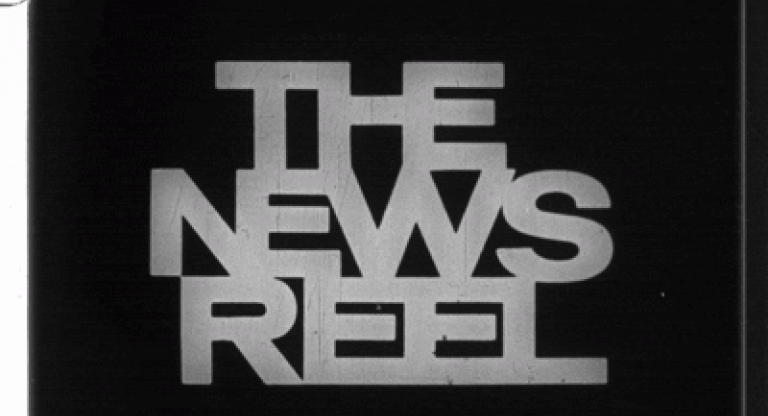
In a U.S. context, we always go back to the ‘60s. The New Left has this central, iconic, and foundational role in the imaginary. It’s remarkable, because there aren’t that many New Left filmmakers who became iconic. The Newsreel Collective serves as the cinematic documentary wing of the New Left. Then, there’s a whole generation of radical Black filmmakers, from Melvin Van Peebles to Charles Burnett, but they don’t really locate themselves within the New Left per se, which they rightly see as a very white formation. Beyond Kramer, I don’t really know who one would name. Every member of Newsreel had their own fascinating story, but in terms of national and international visibility, Kramer was pretty singular. There’s Haskell Wexler. Bert Schneider with BBS Productions in Hollywood. But, really, Kramer kind of has an open field here.

NP: I was under the impression that Kramer was more or less making his films in isolation. That he was making them on his own and they didn’t really play anywhere. But, reading your book, I realized that wasn’t the case. His films were reviewed in The New York Times. People saw them at festivals. There was real engagement with his work, so it’s striking to realize that his name could’ve vanished simply because his films were never transferred to VHS.
WS: Vincent Canby, of The New York Times, loved him. Pauline Kael didn’t. He had Jonas Mekas on his side. He was very visible.
But, as the very necessary critiques of the New Left emerged—of the white male dominance that manifested in SDS and other New Left Organizations—Kramer became tethered to them. It was his own fault, of course, that he embodied those contradictions having created their conditions. He became a sort of relic, in some ways, of the 1968 that needed to be diversified by people like Christine Choy and Suzanne Robeson with the Third World Newsreel. So, that did not help him.
And, of course, moving to France lowered his profile in the U.S. He’s always been well-remembered in France. There’s this kind of divergent narrative in which he’s much less obscure there than he is here.
NP: When I spoke to Nicholas Elliott around the time he programmed Milestones a few years back at Film at Lincoln Center, I got this impression that it was impossible to not include Kramer in a series about ‘70s cinema. That, to the French, he was one of the filmmakers of the 1970s—something I don’t think most Americans who equate ‘70s cinema with the New Hollywood Movie Brats might think about.
Yet, when Kramer makes his move to France, the first film he directs over there isn’t received all too well. I can’t help but wonder if his alienated state-of-mind somehow manifested itself in the reception his films received.
WS: Everyone was so excited to welcome the radical, bomb-throwing Robert Kramer in France and it’s so ironic that his move coincided with the exact moment when he wanted to shed all of that. He didn’t want to remake Ice forever. He had a different set of historical questions about the absence of the Left going into the 1980s. That’s not what the French were anticipating. They had this radical chic, iconic vision of him and there’s this disconnect that lingers throughout the 1980s as his profile incrementally dims because he doesn’t quite deliver what’s expected of him from critics or audiences. Eventually, he bottoms out with Diesel [1985]. His attempt to make a commercial cross-over is disastrous. It’s clear he’s not meant for that kind of filmmaking and he learns the hard way.
There’s a perpetual dislocation in his post-‘77 movies. He doesn’t have an audience in the U.S. He’s not giving French audiences what they want. So, he ends up wandering and that diasporic quality marks late Kramer, when he goes back to Vietnam and finally comes back to the U.S. That rootlessness becomes seminal to his later work, but it certainly does not have commercial appeal. He ends up stranded.
NP: Reading your biography, I got the sense that he was stranded from the start. I thought it was interesting that for someone who involved himself in collective and communal work throughout his entire life, he was never able to get out of his own head.
WS: There’s a deep alienation throughout Kramer’s life and work. As privileged as he was, socio-economically and in terms of his cultural connections, he came from a fairly traumatic family background.
He was an only child. His father was one of the first medical doctors to land in Hiroshima after the dropping of the atomic bomb; he was deeply traumatized, but never said a word about it. He was a notoriously silent, taciturn, and withdrawn man. His mother had very clear mental illness, especially after Kramer’s father died. Clearly, he has trouble shaking that. In a lot of ways, he’s not a good collective member. He’s too headstrong, too idiosyncratic, too individualist. But he really tries. At Newsreel and the Vermont Commune. Except that, at the end of the day, he’s more of an artist than an organizer.
NP: It’s almost as if he was predetermined to become the filmmaker that he did. Someone with a disposition toward failure caught up in the failures of the Left in the U.S. and elsewhere.
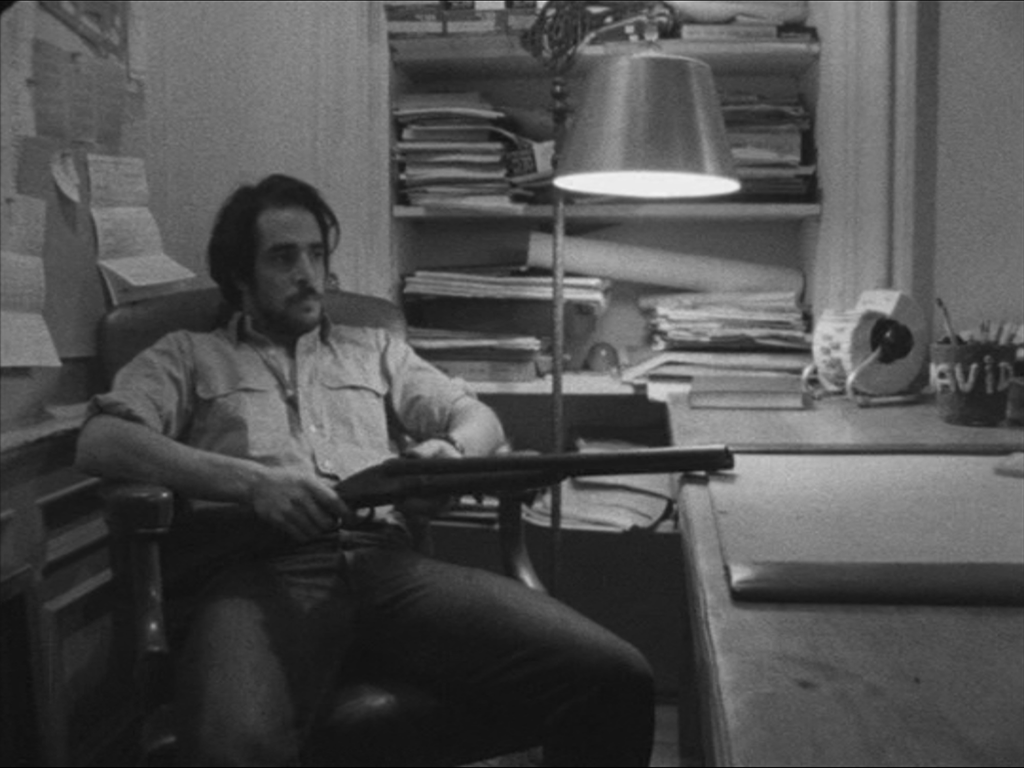
WS: It’s kind of hilarious. He is already fatalistic about the New Left when he makes his first feature, In the Country, in 1966. That’s quite early, historically speaking, to give up. He has a fatalistic worldview that coexists with a revolutionary urge. His behavior shows that he does believe in revolution: he moved to an armed commune in Vermont and stockpiled weapons. But, he’s always dealing with internal fatalism. It all comes to a head in Portugal.
He goes there right after the Carnation Revolution starts, in 1975. He’s thinking, “This is the manifestation of the spirit of 1968.” He’s thinking he’s going to catch it. Instead, what he catches is the death of that vision. He sees the Socialist Party move to the right. That’s the moment when he gives up on a revolutionary vision, which is not present in any of his French films.
NP: Then he lands himself in France and at the end of his career it’s just him and his video-camera. He goes from participating in these grand collective projects to working like a lonesome painter.
WS: In Berlin 10/90 [1990], it’s Kramer with a video-camera in a bathtub. And, it’s one of his most effective and powerful late-period films. It’s a little self-involved, but not in a narcissistic way. He interrogates questions related to the fate of the Left, the so-called “End of History” thesis that was popular at that point and he clearly doesn’t buy, and this notion that a certain regime was ending. That regime is the Utopian dream of the 20th century Left. He confronts that, but without answers. He’s not a didactic filmmaker. He’s not doing agitprop.

NP: The reason I keep harping on this is because I think there is a historical arc imprinted on his body and his body of work. I can’t think of any other filmmaker who embodied that shift, from the collective swell of the ‘60s to the atomization of the ‘90s, quite like he did.
WS: The ‘60s generation navigated the disappointments of the ‘70s and ‘80s in different ways. You’ve got someone like Raúl Ruiz, who was very much part of the revolutionary Chilean Left, going in a more surreal and semiotic direction. Brian De Palma goes to Hollywood. Kramer’s arc is distinctive in Left film history, in that he first historicizes the Left from within, then after 1977 historicizes its absence.
NP: You’ve brought up Ruiz. Your book mentions he was one of the main reasons Kramer moved to France. Could you talk more about that?
WS: Kramer’s archive in Normandy holds an enormously rich collection…
NP: What’s it look like?
WS: It’s expansive. The first time I went there, in 2016, the collection wasn’t processed yet, so they didn’t have a finding aid. You had to make requests in the dark. Is there a file on Milestones? Can I see the file on Route One/USA.? They’d either drag out a huge box or one folder. But, now they have a finding aid. It’s got films…
NP: As in, the material films?
WS: Yes, they have a good portion of his actual films there. I’m pretty sure that’s the only place you can see a few of the shot-on-camcorder, improv stuff he did in the ‘80s. The same goes for outtakes and leftover footage from his unfinished dance film Maquette from 1990. You can see that there. But, the paper materials are also amazing.
Kramer kept copious diaries. He started writing a diary at some point in his teens and relentlessly wrote until his death, so there’s this huge treasure trove of his internal thoughts, reflections on his days, and material related to his films. There’s a lot of correspondence related to production. Drafts. Screenplays. It’s an incredibly rich archive, so if you dig around in it you find these extremely random things. For example, the Raúl Ruiz connection. I don’t think that had been out there in the public sphere before.
The two bonded through the festival circuit in the late ‘70s. Ruiz, when he was in France, famously adopted this ethos where he’d take any gig. He enjoyed taking banal television gigs and working through them in a formalist way. Kramer connected with Ruiz and his wife/editor Valeria Sarmiento, and that was the main impetus for him moving to France. Of course, the French loved him and that was the structural impetus. But the proximate cause was that Ruiz and Kramer were going to set up a company that was going to do production along the lines of what Ruiz was doing, as well as a book-line, a magazine, and video production. It was scattershot, which is how Ruiz was. But, that’s the main thing that took Kramer to France.
He had a T.V. episode about Bertolt Brecht in Hollywood lined up that never came to be. Then, he and Ruiz were going to make a documentary about the Paris metro; it was going to be an essay film about two different views of exile. One wishes that it manifested, because they had such different sensibilities. They got funding from the Ministry of Culture in 1980/81, but both of them were just cranking stuff out at that point so the project fell through the cracks. Then Kramer connected with Richard Copans, made Guns [1980], and went off on his own trajectory. Yet the two of them remained close; they stayed friends all the way through Kramer’s death. It’s a shame that we didn’t get to see them collaborate.
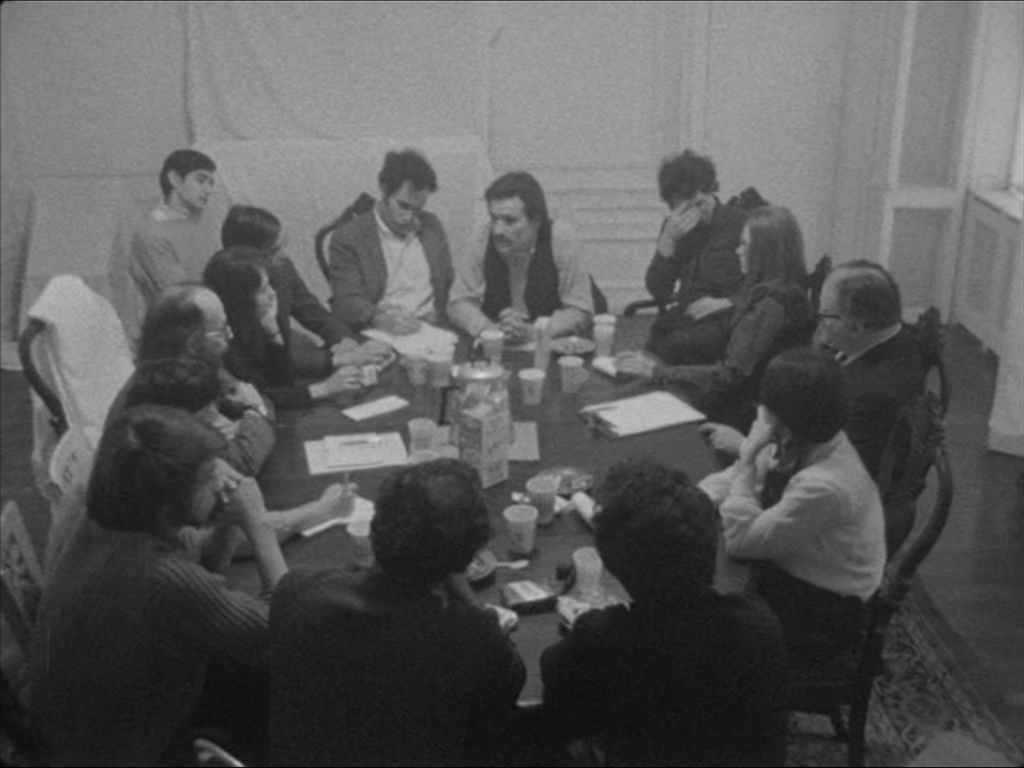
NP: There’s a Zelig-like quality to Kramer. When he lands in Portugal, all of a sudden he’s on a panel with Straub-Huillet. Were there any other curious connections that you found?
WS: After Portugal, he went to Angola and was embedded with the MPLA. At the Democratic Convention in Chicago in 1968—the very iconic one where Richard Daley said the police were sent out to crack heads—he was there trying to drop spiked balls on the street to block the police. That got him arrested and put him on the FBI security index. He had an affair with Bernardine Dohrn from the Weather Underground while she was underground. In France, he developed a collaborative community with the cinematographer Richard Copans and Barre Phillips, who did all of his scores.
He had an amazing capacity, and certain skill for self-promotion, to connect with the right person in the right place. In Troublemakers, he’s only in it for a few minutes, but he was able to use that film to connect with Jonas Mekas, who then took him to the Pesaro Film Festival in 1967. He met all of the Italian filmmakers there. His date-book in his papers has phone numbers for Bertolucci, Pasolini, Straub-Huillet, and Agnès Varda. He knew how to make it into a scene and it helped that he was extremely attractive. People were drawn to him; he was smart, articulate, and charismatic.
But no one is actually Forrest Gump. No one randomly sleepwalks through history. He would never admit it, because he was so anti-careerist rhetorically, but he knew how to be in the right place and meet the right people.
NP: He knew how to work a room. In the Free Vermont section, you have all these different accounts of what his standing was within the commune. Some people talk about him as a handsome and charismatic leader, but others view him as stringent and arrogant. It’s clear he knew how to perform when it came to meeting certain people or navigating certain scenarios—whether political organizers or directors, or in collective meetings or film festivals. Some people caught on to that, others didn’t.
WS: About him, Jon Jost said: “Naïve, revolutionary, posturing bullshit.” That captures the sentiment of the people who weren’t sold on him, but most people were. He had a commanding presence.
NP: That’s probably why he was able to keep making movies despite the fact that none of them were commercially successful.
WS: He was seductive. At some level, I am a testament to that. I was seduced by the Kramer mystique enough to write a book about him. All of these perennial revivals are similar. We’re all drawn to him. We all want this access, proximity, and understanding.
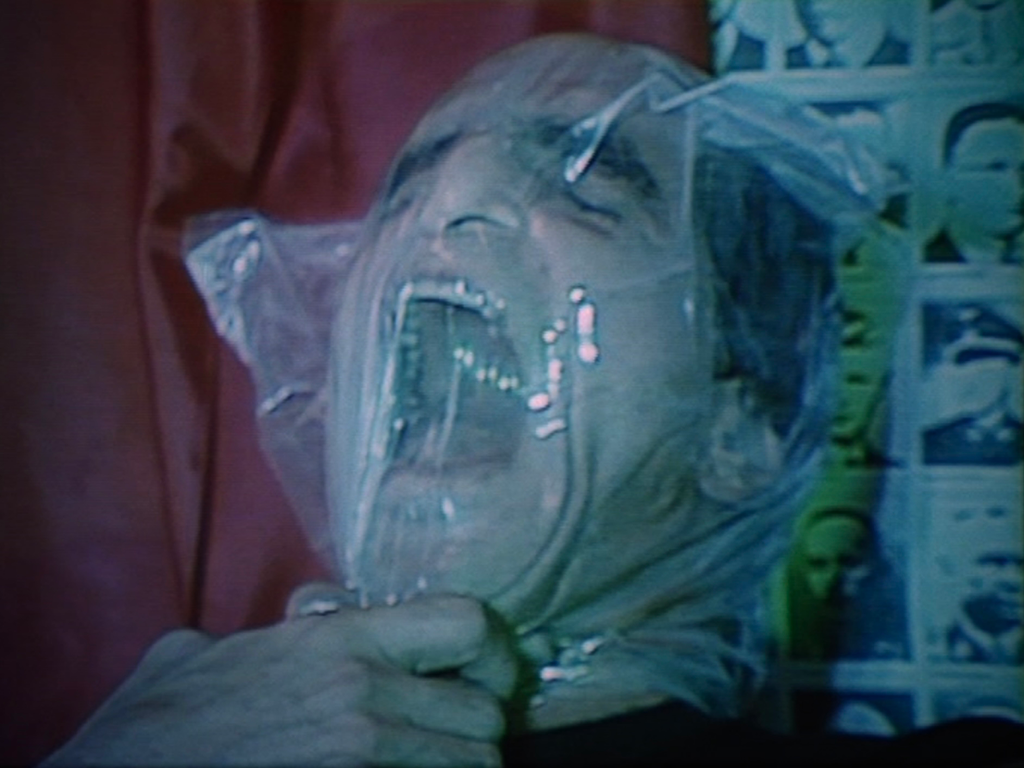
NP: Yes, but your book does a good job of piecing together various perspectives on Kramer in a way that suits him as someone who made films in a similar manner. Milestones and Route One are both mosaics that do not give you a definitive picture of the United States or the people involved in the counterculture. They’re honest films. Did his approach to filmmaking influence your approach to writing his biography?
WS: Kramer believed in that Karl Marx phrase: “A ruthless critique of everything existing.” That was his approach. He was an unsparing figure. He was not gentle in his critique or his treatment of people.
I read a lot of film biographies, like David Caute on Joseph Losey and Richard Brody on Godard. Most of the 20th century is white men dominating the film industry. Most of these guys did not act all that well—they didn’t treat people well, they didn’t treat women well. So, it’s tough to strike the right tone. No one wants to read 400 pages of relentless condemnation, and it’s not fair. At the same time, some glowing, hagiographic redemption account wouldn’t be fair. I’d like to think that Kramer would recognize that the best way to honor his legacy would be through unsparing honesty. He was brilliant and a great filmmaker. He could also be a cad and treat people poorly. He had political limitations; he was a relic of the 1960s New Left macho mentality, even though he evolved over time. I tried to internalize what Kramer would’ve thought and imagined a Kramer superego contemplating how his story would be told.
NP: How self-critical was Kramer in his diaries?
WS: He was unsparing. In a public setting, like some of the Vermont Commune people pointed out, it could be quite performative. He was good at self-critique as a way of setting the terms of critique, but he was scathing in his own personal assessments.
One of my favorite things he ever wrote was a long essay that he wrote, mimeographed, and sent to friends in 1985 called “The Years of the Mole.” This was after Diesel came out and flopped. It’s a self-interrogation of what drove him to sell out and make a commercial movie that flopped and alienated all of his friends and burnt a lot of bridges. It’s a brutal self-critique. There’s a real self-awareness of the ethical and moral compromises that he made and didn’t even pay off. He came from a neurotic 1950s existential generation, so that was a demeanor shared by a lot of his colleagues and friends. The Swarthmore class of 1961 all described themselves as more existentialist than political.
NP: As you’ve stated, there’s a wealth of archival material up in France. Will it result in more books and films?
WS: His papers are inaccessible in the sense that you’ve got to take a train two hours out of Paris to a rural town and stay in a monastery to do research. Chris Marker’s papers are also there, and either Foucault or Derrida. But, my book is certainly not the last word on Kramer.
It’s a lengthy book, but I still had a word-count. Cramming the 1990s into one chapter was a bit painful, but something had to give. There’s a lot more to be said about Walk the Walk [1996] or Notre Nazi [1984]. Hopefully the book is a springboard and people build on it, offer correctives, interpretive challenges, whatever. And, hopefully it brings some of the films back into circulation.
Films like Ice, Milestones, and Route One are certainly in circulation, but a lot of the films from the ‘80s and ‘90s have fallen through the cracks, especially the films that he acted in. He became a bit of a character actor in France in the ‘90s and he has a remarkable screen presence.
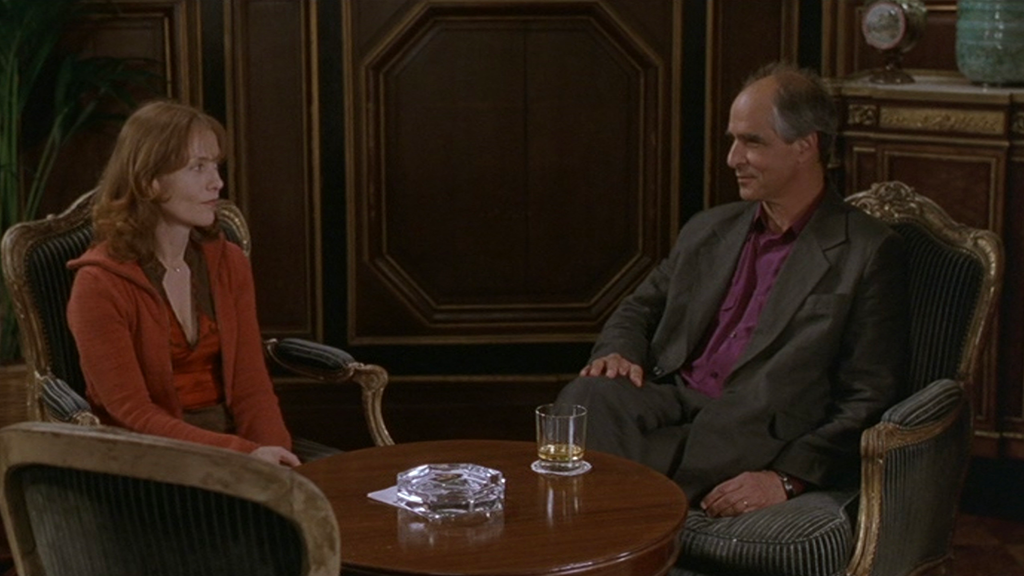
In 1998, Kramer played a singer-songwriter who is more or less Leonard Cohen in a French Robert Altman-style romantic character movie called La vie moderne. In it, he hangs out at a hotel bar and seduces Isabelle Huppert. He’s dapper, charming, and funny, and it’s totally different from the serious and intense Kramer from his more revolutionary era. There’s all these scattered chunks of Kramer in other films. He plays a sleazy artist in the Pigalle sex district in L'ennui from 1998.
NP: You could have a dual retrospective. Kramer, the director; Kramer, the actor. On an unrelated note, was Kramer ever able to finish the novel he set out to write in the first place?
WS: He spent years in the early ‘60s writing an arduous novel. It’s navel-gazing and very self-involved. It’s a running joke for people I interviewed from the era. He made everyone read it and nobody liked it. His first wife told him to give it up. And, he did.
But, he did write a second novel in 1979. It’s a fascinating, stream-of-consciousness beatnik Thomas Pynchon novel that features a bunch of characters from Ice and The Edge 10 years later. It’s got a bizarre, detective conspiracy story. It’s also kind of psycho-sexual. It’s a very strange book. He tried to publish it with Cahiers du cinéma, but he was involved in so many different projects when he got to France that it fell by the wayside. It’s got some ridiculous title, something like, Hi, How Are You? I’m Okay.
NP: It’s funny that of all the projects Kramer arrived in France with, Guns was the one that materialized. I love that movie, but it never coheres. Considering he had a T.V. deal and book all set, it’s curious he moved ahead with such a far-out project.
WS: The great counterfactual is that he could have, and probably should have, made genre B-movies in the mid-‘80s. Phil Spinelli, who he co-directed Scenes from the Class Struggle in Portugal [1977] with in Portugal, made a string of really lucrative but not very well-remembered straight-to-video B-movies in the ‘80s. To imagine Kramer doing that is one of my favorite things. He loved kung fu films and pulp fiction. To my mind, Robert Kramer, B-movie filmmaker, is the most rich and unexplored direction of his career.
Route One/USA screens this evening, July 18, at Woodbine. It will be introduced by Whitney Strub. Films That Explode Like Grenades: Robert Kramer and the Search for a Radical Cinema is now available in select bookshops across the United States.