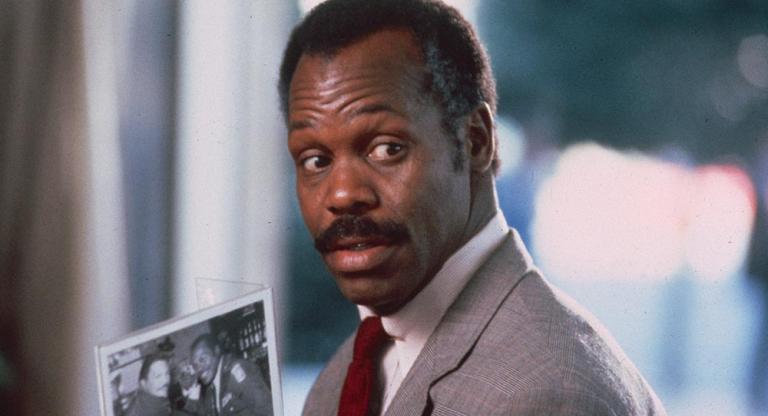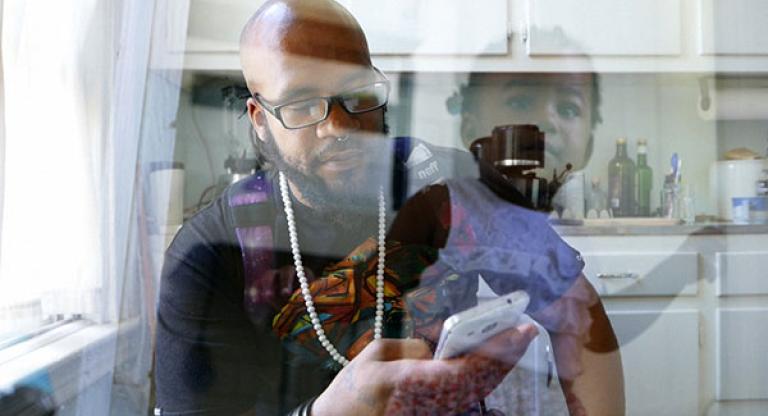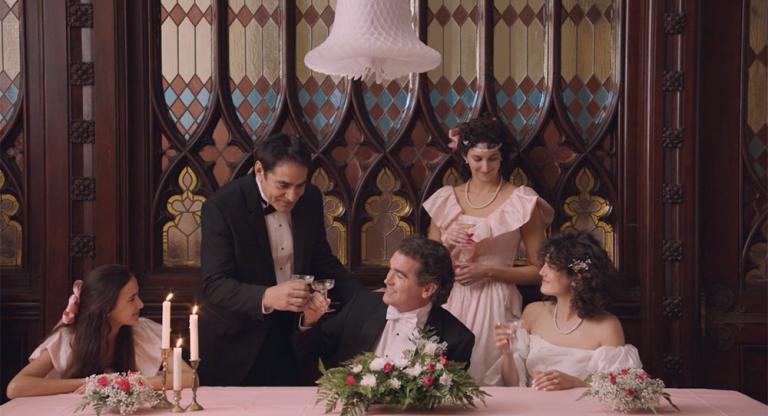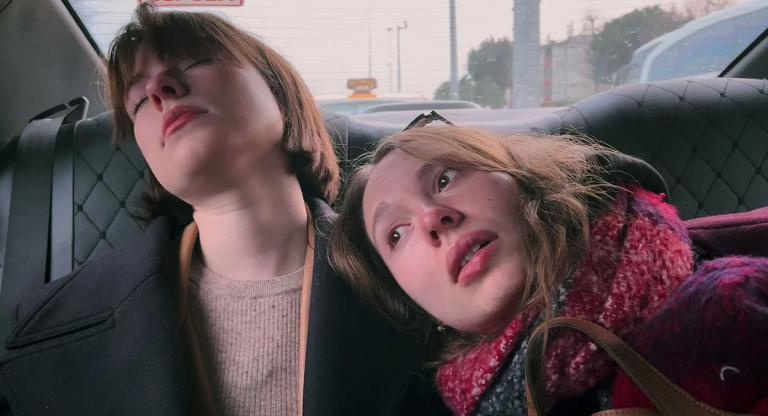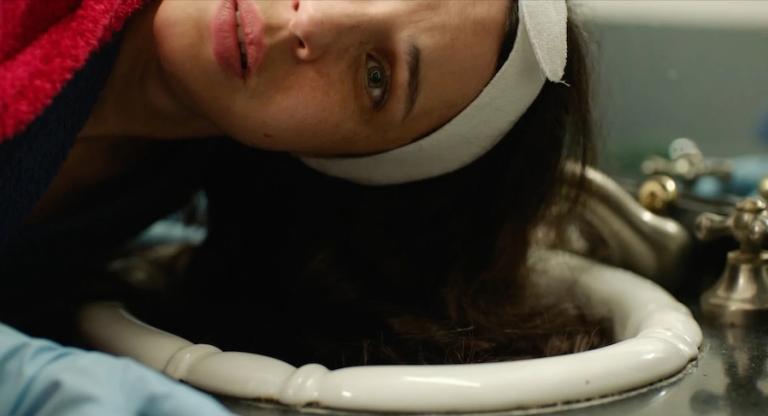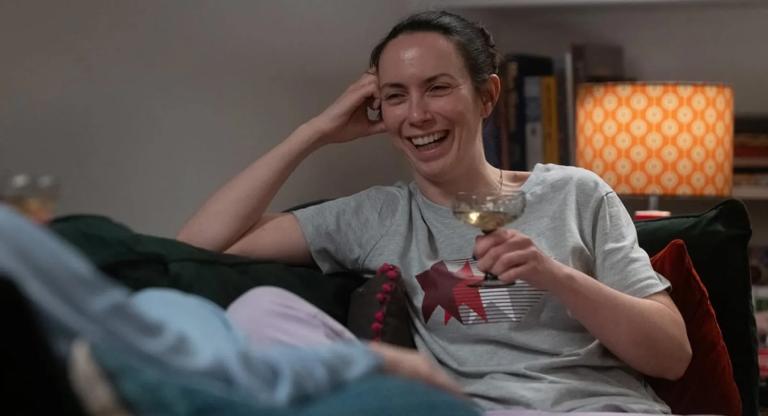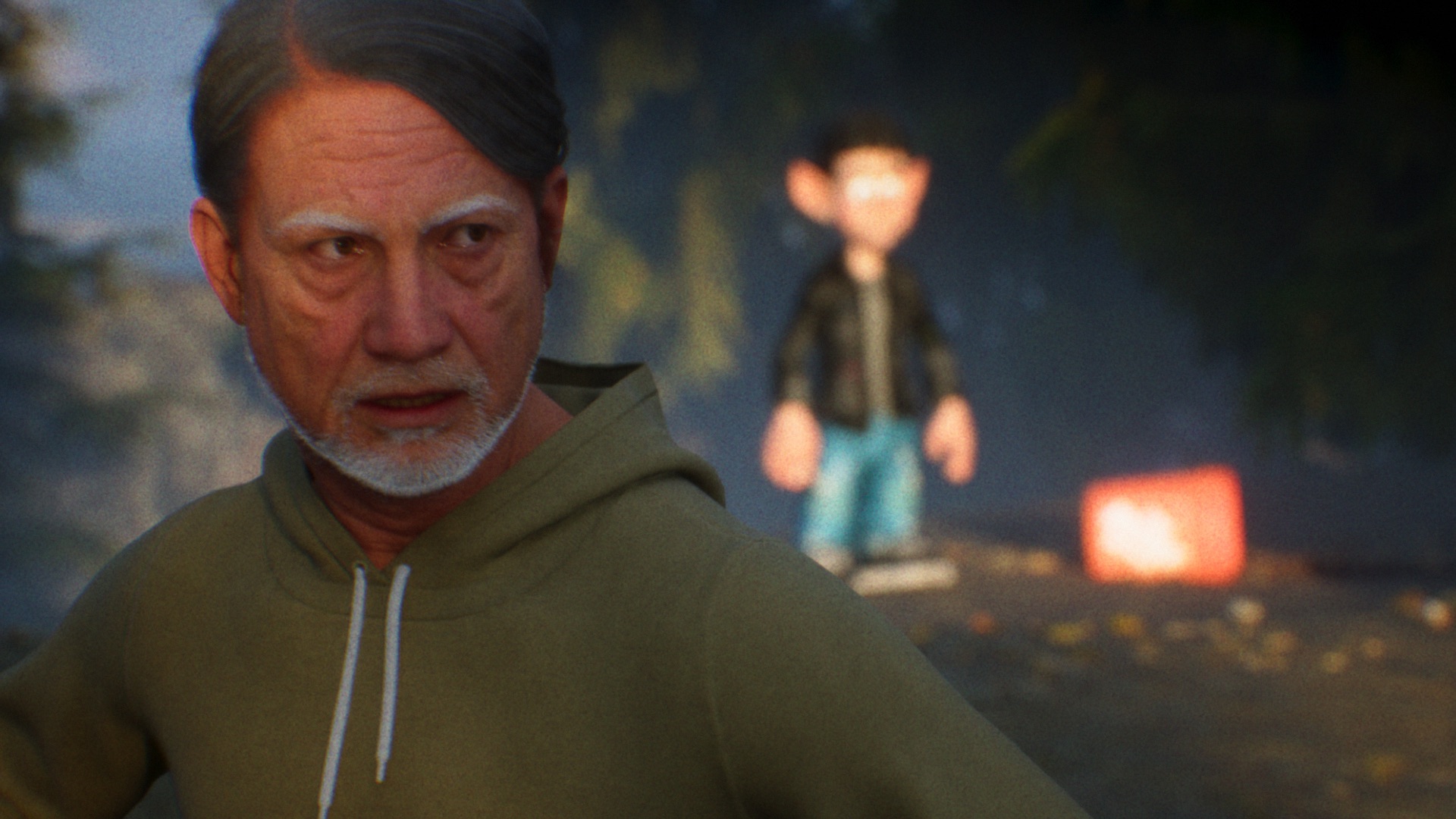
The 88 minutes of berserk unreality that make up James N. Kienitz Wilkins’s The Misconceived (2026) are difficult to describe without giving away the store. What can be said is that Wilkins, across six features, 10 shorts, and numerous essays (“I consider a lot of my essays to be films in hiding,” he’s said) has produced less a conventional body of narrative film work than a critical intelligence in motion, with its own peculiar laws, byways, jokes, and traps.
If Wilkins doesn’t fit comfortably inside either the art world or the film world, it’s because he’s mounted a private, sustained project of world-building and world-destroying. His movies (he prefers the word to “films”) are recursive, context-bound, simulated and simulating; they belong to a moment in which the old distinctions between artwork, platform, and delivery system have become harder to maintain, and much harder to discern.
I spoke to Wilkins about making a movie in a video-game engine, his exhausted relationship to filmgoing, and whether Colgate toothpaste is more real than human beings.
Ricky D’Ambrose: You’ve described The Misconceived as having been, in a sense, misconceived: first written as a live-action film that couldn’t get financed, then reborn through motion capture. Is that account right, or has the film’s production history already become part of the film’s own mythology?
James N. Kienitz Wilkins: Let me work backwards. It’s an unofficial sequel to The Plagiarists, which came out in 2019. With The Plagiarists, we knew what we were doing. Robin Schavoir and I co-wrote it, and it was a parody of the form: aspirational indie, low-budget calling card, premiere at SXSW, all the boxes you check on the way to your big Marvel sellout moment.
The character Tyler, in that film, was at this transitional age: late twenties into early thirties. And, he became a lightning rod for a certain kind of discourse, which was interesting to me. So I proposed to Robin: what if we take Tyler, just Tyler as an idea, and use him as the basis for a new movie while discarding the plot of the first one? Same archetype, same aspirations, but he doesn’t have the same girlfriend, he never met Clip. None of that baggage. He’s older now, at the point where questions of family, ambition, and artistic self-reckoning become harder to defer.
Tyler originates earlier than The Plagiarists: he’s based on the character from Robin’s play The Jag. So this is the third installment in something I now think of as one long project. There’s the project, and then there are the individual films. It’s hard for me to say there’s a right or wrong way to approach any one film, as long as it serves the larger thing.
I wasn’t open to the motion-capture idea when we wrote the script. I didn’t even know it existed as a feasible option. We wrote the screenplay over 2020 and tried to get it financed as live action. When that fell apart, I can pinpoint two moments when it clicked that motion capture could really work. Mary Helena Clark said something funny to me—I can’t remember the context. She said, “It would be really strange to see a James animated movie.” And I remember saying, “I swear to God, I’m going to do it. I’ll show you what that looks like.” Around the same time, I was talking to the digital artist Peter Burr, who has a long-term residency at the Onassis Foundation, and he basically said, come to the lab and check out what we’re doing here. That’s when my eyes opened to the accessibility of the technology.
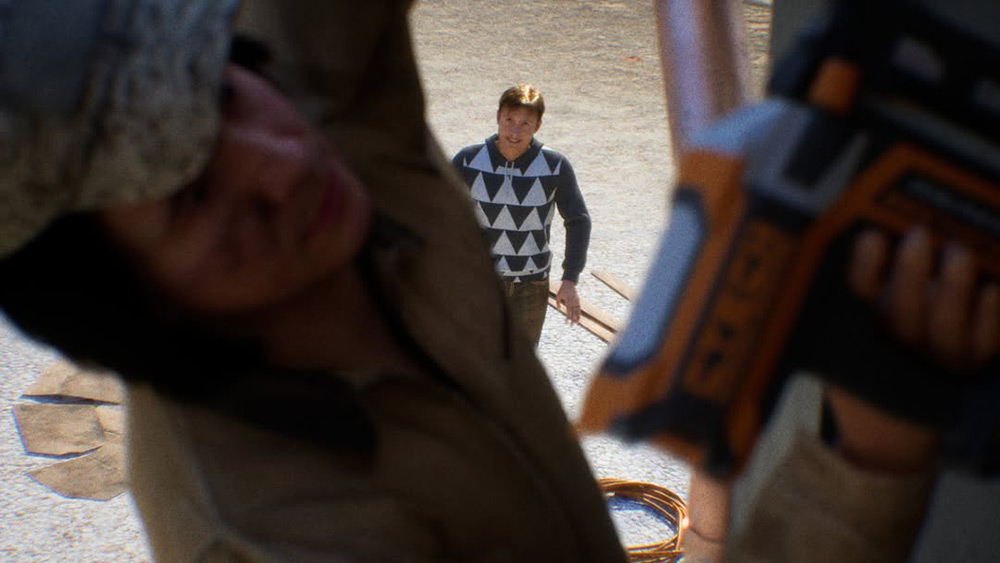
RA: You hadn’t worked with motion capture before. Most filmmakers at least share a working technical vocabulary with their cinematographer. How did you find your way into a process whose basic unit wasn’t exactly the shot, but performance data?
JNKW: That was the wacky part. The production was completely backwards. There were almost four or five separate productions, some of them simultaneous. Once I realized motion capture was possible, I could go through the script block by block and capture the choreography of the body. That’s all motion capture really is: the body and the facial movement, not the sound. We didn’t need to know how to render anything yet. The data just goes onto a hard drive.
That meant audio became its own production. I cast everyone, recorded all the audio à la Public Hearing [2012] or some of my other movies, and edited every single scene as audio first. The actors weren’t in the same room. I edited them together sentence by sentence. Then the motion-capture performers lip-synched to the completed scenes through earbuds. There’s this funny relationship where audio is dominant. I wanted it to be dominant because I knew the rendering would be lossy.
Emily Davis, who’s the producer and is also an actor, was credited as assistant director, and she was critical to communicating with the performers. Some actors are really good at this. They can tune out the conscious side of their brain and engage another one. It’s very physical, almost reptilian. You have to live in the moment and follow orders. Jesse Wakeman, who played Tobin, gave an amazing performance: he recorded the voice, then I cut it to the tempo I wanted, and then he had to perform Tobin’s body and face to that tempo.
RA: Like a musician performing to a click track.
JNKW: A hundred percent, but also flexible enough that if you exceed it or mess up, you keep going. You can’t have a fear of failure. The motion-capture takes were true takes. I’d watch three versions, and as long as the data was good enough we could bring it into the Unreal Engine and choose sections, or combine them.
It got really complicated because we were recording a facial stream, a body stream, and the voice already existed. Some characters are hybrids: Jesse did his own voice, body, and face, but Jess Barbagallo plays Mikey vocally and also performs the body of Thelonious without doing his voice. There are actually fewer motion-capture performers than vocal performers, because that technique was harder and it behooved us to use a smaller group who could gain experience.
RA: How long did it take?
JNKW: Three years. The last year and a half was just me in a room for many, many hours—learning, rendering, re-rendering, building, exporting, compiling, editing, going back in. I started to exceed the knowledge our tech crew had, not because I’m an expert, but because they’d never made a feature-length narrative movie in Unreal Engine either. About six months in, I realized I couldn’t afford to outsource it, and I’m too anal about details to outsource it. It became fun to build the world and it was within my control as long as I was willing to dedicate the time. Way more time than it would have taken to just shoot for two months upstate with a million dollars.
RA: There are almost no establishing shots. We never see the house in its entirety.
JNKW: The script implied a kind of jungle of construction: a maze, never a sense of completion. You hear the EVs are done, the fascia’s done, but you never know what state things were in to begin with. There are two pressures behind this. One is the indie-film trope of the close-up as a budgetary constraint: you limit the field of view and therefore limit how much has to be paid for. The other is specific to the program. Unreal Engine is an engine, not a 3D renderer. If we’d rendered everything in 3ds Max or something bespoke, even with motion capture, you’d just be making an animation.
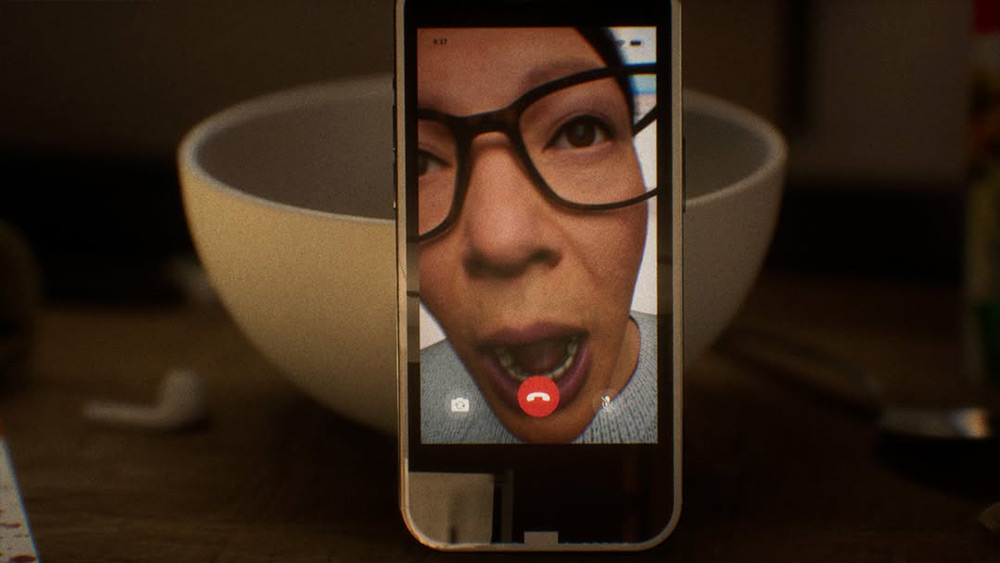
Unreal Engine is geared first toward video-game creation. It’s all particle-based and it’s really designed to simulate reality: depth-of-field, smoke, atmospherics, accurate spatial lighting that connects to the stars and the sun. You almost have to turn it on like a car engine and let it warm up. The world has to truly populate. You can sort of see it light up and vibrate and get ready to go. And, it’s extremely buggy. Every time I rendered, I was crossing my fingers that I’d get the shot, that my computer wouldn’t crash, that the output wouldn’t be insane.
There was no way I was going to build out every last detail, so I leaned on the cheat code of cinematic language. Everything bad can be hidden. The can I’m holding right now: in close-up you can see how badly it’s rendered, but framed at this distance, it’s just a can. The whole world is a kind of collage. A lot of it was custom-built, but it was built out of preexisting textures and assets recombined. The cinematic frame is the last stop where it all hides. So the establishing shot in the movie really only happens accidentally. The focus is on a character, the camera moves, somebody’s about to walk into frame, and you happen to glimpse a wider view.
RA: There’s a creaturely, almost uncanny quality to the way people move. But the consumer products—Colgate, Bengay, Trix, Toshiba—have an almost Pop Art clarity. They sometimes feel more real than the people.
JNKW: It’s a really nice observation. I hadn’t heard it before. I don’t trust the program’s rendering of humans—I don’t trust any program’s rendering of anything living. This movie will probably irritate the 3D nerds: “Why did you do it this way?” I’d say, “Well, you’re making a sizzle reel that can be hyper-realistic. Have you tried making an 88-minute movie with a script, by yourself?” There’s a certain economy that’s necessary.
But even at the higher end, even with AI, there’s still something off about the humanoids. You feel it. With geometric products, there’s already a familiarity, they’re touch points. It would actually feel fake if these products weren’t in the space. It’s about making the movie extremely contemporary. I’m dealing right now with the very annoying errors-and-omissions insurance question. This is a very unusual movie. There are no clips. I’m arguing fair use overall.
RA: The early Disney cartoon you use is now in the public domain, and I assume that had something to do with your decision to use it.
JNKW: Exactly. That’s the only clip and it was very purposeful. But the whole idea of the movie as a collage of objects, almost all of them purchased royalty-free, does involve a general fair-use argument. If you have a book, you have a cover of The New Yorker. Wouldn’t Tobin be a New Yorker subscriber? It’s an odd thing. There’s a strong case for it, but it’s hard to articulate inside the existing legal framework of indie film, which is risk-averse and expensive.
RA: The movie begins at Week 0 and ends at Week 40. Forty weeks is a pregnancy, and in the end, we learn that Gwen is pregnant. It’s a quiet thread that becomes structural in the coda. It made me think of something Michel Chion wrote about Eyes Wide Shut [1999]: that the film might as well have been told from the point of view of the couple’s unborn child. I wondered whether something similar is happening here.
JNKW: That’s an amazing take. I don’t have an answer for that, but you’re spot-on about the narrative thread. The weeks lead to the birth, but they’re also the construction phase. When Robin and I were writing the screenplay, we thought we were already writing about “before the fall.” Then it became much worse. We wrote it across 2020, left it alone, and I kept tweaking it to keep up with the rapidity of events. By the time we had a cut, last year, people were saying it was hard to place exactly what year it was. At first, I worried about that, but I’ve come to think the compression is the point. A single pregnancy that encompasses four years of churn… Maybe that’s the most fictionalized the movie becomes.
From the beginning, I wanted it to be a story of late millennials in crisis. People hitting the inflection point where the question of starting a family, of accepting the artist you are or aren’t, of rebirthing yourself, becomes urgent. Tyler in The Plagiarists was a more noble character. The struggle was real then. Tobin in The Misconceived is more of a realist—I’m not saying he’s sympathetic, but he understands something’s amiss beyond his own deferred dreams. There’s a type of art-making that even if you weren’t at the forefront of, you can’t make anymore. Tyler keeps dipping into that discourse and making fun of it, but it doesn’t really work to make certain kinds of art now. It could’ve always been the case—every decade has its cycles—but the attempt to make those things now is a different conversation. You might be having it in a room alone.
RA: There’s been a tremendous shift between the 2010s and the 2020s, in sensibility, in our relationship to knowledge, even in what counts as media. The Misconceived feels very much of our time: the collage form, the shifting registers, the buffering quality of the experience. Yet it remains, insistently, a movie. That seems important to me.
JNKW: I haven’t fully reckoned with the pandemic yet; I don’t think that we have culturally. We’re still dealing with the psychological fallout. It showed, in this anxious way, that society can collapse like that. Now nobody knows where the death blow comes from. The stock market is doing amazing, and it also could not exist tomorrow. I teach Gen Zers, and this is what they’ve grown up with: literally not knowing if tomorrow exists, but being told it’s fine. It’s nuts. Whereas coming up in the era we did, in retrospect there was a kind of dignity to the struggle, or it seems that way now. That’s what Tyler represents in my mind. Tobin is what happens when those conditions go away.
RA: Something I’ve been noticing more and more over the last few years, especially at New York rep screenings, is laughter from younger audiences at things that aren’t obviously funny. It’s not ironic laughter, exactly. It’s almost a display of defiance—a way of refusing to be assimilated by the film, or of demonstrating that they’re “on” to it. They want to surpass what they’re watching. I wonder whether The Misconceived was anticipating that kind of reaction.
JNKW: I do consider it a comedy, so there’s purposeful humor too. But a friend recently said that he thought there’s something that makes audiences uncomfortable about where Robin and I stand. Are you supposed to laugh? Are you supposed to take Mikey’s tirades seriously? Are you supposed to align with Tyler or Tobin? I feel it’s important to create a space that’s not ambiguous, exactly—almost the opposite of ambiguous. It’s that you can hold both. We all laugh at off-color jokes initially, and then we feel bad when we register what’s actually happening. That transition is the space I’m interested in: self-critique in real time.
What I’ve noticed is that audiences now have a kind of weird battle going on between people who find certain things acceptable and those who don’t. To me, that’s okay. That means something is being wrestled with.
RA: You’ve talked elsewhere about an exhausted relationship to cinephilia, but you’ve also made a movie that, as you’ve said, “assumes the familiar language of cinema.”
JNKW: I have a theory. People say cinema is dying all the time. There’s an industrial view of it and a personal-expression view, and they’re different. But, I do feel that auteur-driven art-house cinema, the Cannes-festival-level stuff, the kind of churn that when we were young you’d register as: Lars von Trier has a new movie, I have to see this regardless—that whole space feels like it’s on life support.
There’s a seeming resurgence of theatrical, of funding for people who deserve it. Kelly Reichardt seemingly can make whatever she wants now because A24 is drooling. The streaming titans battle it out. I’m not enough of an insider to know, but to me there’s an illusion in the last few years that there’s a vibrant space for the production of cinema as we knew it.
Maybe I’m obsessed with the pandemic, but I keep coming back to those two weeks at the start when, for the first time since the invention of cinema in the 1800s, basically nobody on Earth was watching a movie in a theater. Maybe Bezos in his private screening room. The world stopped turning for a second. And after that there was this mad rush to a kind of revisionist history of what the actual value of film is. To me, the A24/Neon thing is very similar to the hyper-inflated stock market—something’s amiss, even though it feels vibrant. Gen Zers are getting a misrepresentation of what’s actually possible for them. My students will say, “But A24 is putting all this stuff out, the Greek guy who makes whatever—”
RA: Yorgos Lanthimos?
JNKW: Yes, but the window is actually narrowing. The lifestyle application of cinema makes it seem more vibrant than ever and it’s not. That’s what bugs me about seeing movies these days. It’s a false flag that movies still matter. The biggest achievement of One Battle After Another [2025] was that Paul Thomas Anderson was given an obscene amount of money and still retained his voice. It’s almost passive success. He should have totally fucked it up because he was given too much money—nobody comes through that intact. But he survived. That’s where we are when that’s the assessment.
RA: The coda is a structural turn. Gwen tells the story of Tyler, Tobin, and Ryan to a friend, and talks about the differences between developers and designers, which gives us a rubric for the film. It becomes a retrospective key to the whole thing.
JNKW: It’s the structural flip we wrote into the screenplay from the beginning. The idea was that the whole experience of the movie could, in retrospect, be sacrificed to its summation. The party scene is what the whole film is building toward, and you don’t know it. My read, and I think we wrote it intentionally, is that it’s an indie film up until it gets eaten by the party scene. Then the final five minutes eats the rest. It was important to me that two women assess this story of failed manhood across the board.
You’re a perceptive viewer. I haven’t been asked about the developer-designer thing yet. In a sense, that’s what I had to become to make this movie. When I was deep in Unreal Engine, it got so complicated that I was almost entering the coding zone. I was patching things, wrestling with this uncontrollable piece of software. And of course, the construction process was mirroring the film’s content. We had to build the house to shoot in the house. As simple as that, and ridiculous. My RA, who was helping me learn the program, prototyped it. I bought an asset, said, turn this house into something. Add a second story, the staircase goes up to the right. Then we realized people wouldn’t have head clearance entering the second floor, so we had to raise it. The bathroom plumbing on both floors had to align because of the flow of water. The chimney faces north so it grows moss, not south. I really wanted the close-ups to do a kind of mapping of the house, where rooms reveal themselves only as they become necessary.
The producer, Joey Frank, keeps telling me we should release the behind-the-scenes. There’s a recreation of the deed for the property. It’s set on ten acres of land, all forested, with a highway running behind it. I could make a video game out of it.
RA: One last thing: I kept watching Teddy, Thelonious, and his hand gestures. Someone in the film mentions Rip Torn, or maybe Maidstone [1970] without naming it. Was Norman Mailer somewhere in your head with that character?
JNKW: That’s funny. No. The character’s actual name is Thelonious—the others call him Teddy. Jess Barbagallo performed and interpreted the voice as a smarmy, aggressive gay-elder presence. But you’re right, Mailer has the same impish quality. I’ve been getting deep into Mailer lately.
The Misconceived screens this evening, May 9, and throughout next week at Anthology Film Archives on 35mm. Director James N. Kienitz Wilkins will be in attendance for a Q&A tonight, as well as May 10 and May 14.
See Also