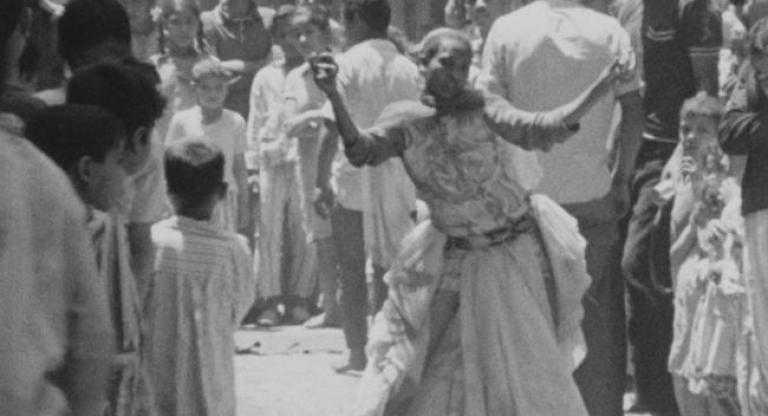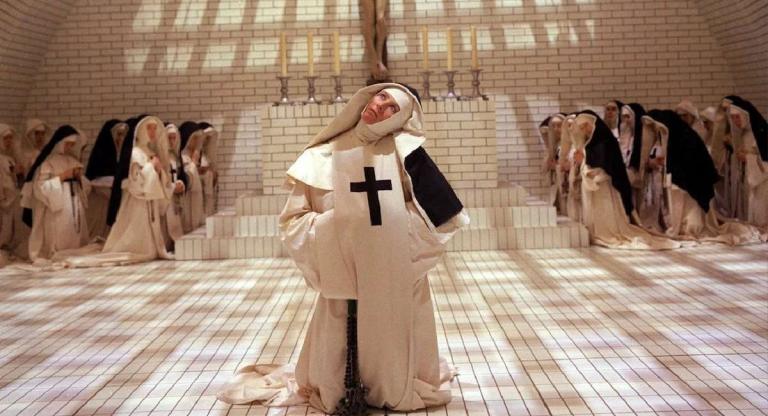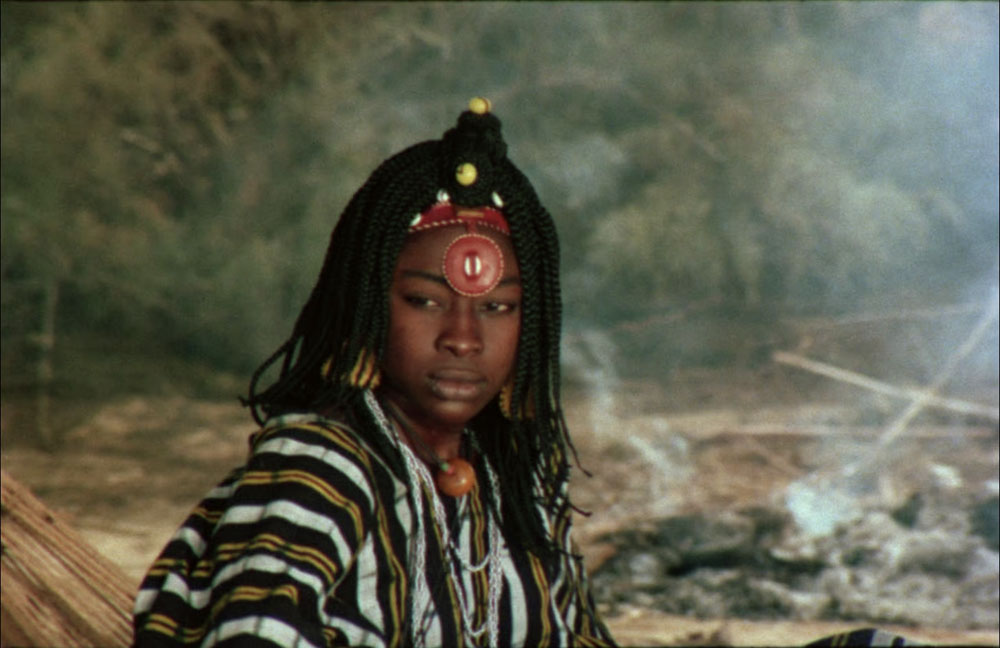
More than 40 years after premiering at Cannes, Férid Boughedir's Caméra d'Afrique (1983) remains among the most vital films ever made about cinema. Equally an act of advocacy, a cry of affirmation, and a feat of preservation, it recounts the story of Sub-Saharan cinema—Boughedir prefers the term "Black African cinema"—from its birth. It begins with Ousmane Sembène's Borom Sarret (1963), which arrived a full 68 years after the invention of cinema itself by the Toubabs ("White Europeans," in West African parlance), and depicts, in Boughedir's words, “a man of the people”: a cart driver on the streets of Dakar. Just as cinema itself began with images of workers—staged and recorded, naturally, by their employer—African cinema opens with its own portrait of labor.
As comprehensive as it is lyrical, Caméra d'Afrique is filled with extended clips representing the continent’s rich spectrum of cinematic expression. From the street-level allegories of Sembène to the caustic visions of Med Hondo, the plein-air satire of Oumarou Ganda to the elemental lyricism of Djibril Diop Mambéty, Boughedir interweaves these excerpts to show a cinema that slowly evolves from reflecting contemporary African realities to turning its gaze to the past, especially its pre-colonial history.
Central to Boughedir's narrative is the hardship these filmmakers endured. Directors describe productions where all volunteer their work; Jean-Pierre Dikongué Pipa recalls having to fish between takes to feed his cast and crew. Compounding the struggle is a local distribution landscape dominated by European exhibitors who have long preferred to fill the screens and minds of Africa with works depicting, in Boughedir's words, “morals and behavior completely alien to their own.” As Sembène sharply observes, “Europe is on the outskirts of Africa”—yet it mandates the culture remotely. With their own governments offering little support, and in some cases banning their films from local release altogether, these filmmakers are stateless laureates, true independents all.
Boughedir notes the interventions that helped forge solidarity among these disparate visionaries, all of them facing hurdles in production, distribution and exhibition: from the 1966 Carthage Film Festival to the birth of FESPACO in 1969 and collectives such as FEPACI and the CIDC. Though celebratory, Caméra d'Afrique ultimately poses some difficult questions: “What if mother Africa is… an elusive phantom embellished by an ideal?... Can the soul of a continent be captured on screen?” Perhaps the answer might be found in something Safi Faye, the first Sub-Saharan African woman to direct a feature, said about how she makes films for the “long run,” so that “what was” can be compared with “what is.” Caméra d'Afrique is an immortal tribute to that journey.
Caméra d'Afrique screens tomorrow afternoon, May 9, at Film at Lincoln Center as part of the “New York African Film Festival 2026.” Director Férid Boughedir will be in attendance for a post-screening conversation.