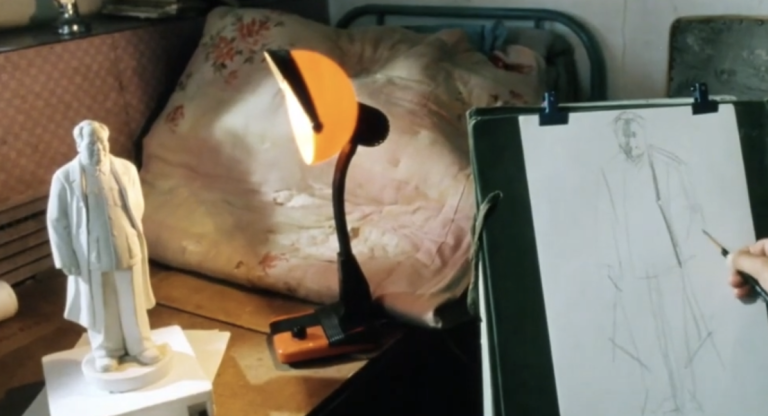
In 1977, Francis Ford Coppola stitched the two Godfather movies into one linear chronological narrative called The Godfather Saga: A Novel For Television, erasing the flashback structure of Part II and adding back over an hour of scenes that had been excised from the two films’ theatrical versions. Coppola undertook this project because he was well beyond budget shooting the interminable Apocalypse Now (1979) for Paramount, and the studio saw a chance to make money on TV ratings for this new supercut. While Coppola and Maurice Pialat have basically nothing in common besides filmmaking, the phrase “novel for television” kept clanging in my head as I watched the French director’s 1971 mini-series La maison des bois, which observes the end of World War I through the eyes of a child named Hervé (Hervé Levy) as he is raised by foster parents in the French countryside. Totalling 6.5 hours over seven episodes, La maison des bois is a massive achievement, but pointedly not an epic; the extra real estate gives Pialat more time to accumulate details, lingering on the Catholic rituals and social formations that comprise daily life in this village north of Paris.
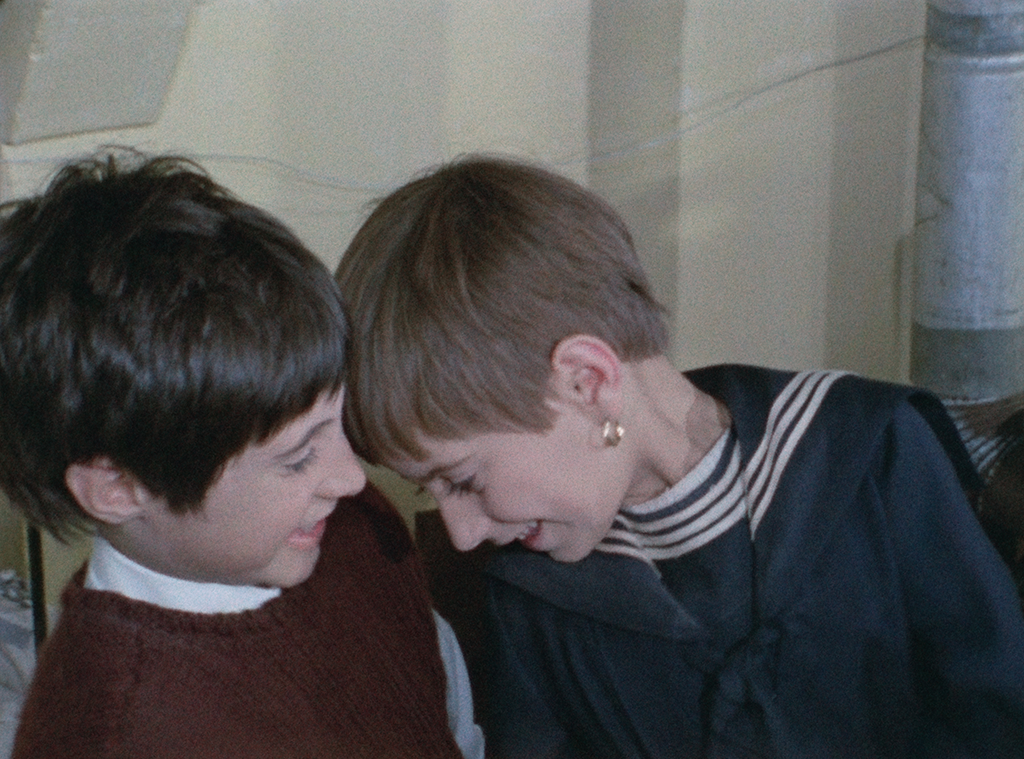
Long-unavailable outside of France, La maison des bois is the final missing puzzle piece in Pialat’s filmography. Like any great film, it teaches you how to better watch it as it goes along. Early on, we see a squirming mass of preteen boys corralled into a classroom, barely able to feign interest in dry coursework while there’s a war going on outside. Dark-eyed and a little awkward, Hervé gradually emerges from this crowd as the protagonist of La maison des bois; eventually, it is established his father is off fighting and his mother has been missing for years. While he and his fellow adoptees Bébért and Michel are treated as equals by their surrogate parents (Pierre Doris and Jacqueline Dufranne), he doesn’t even try concealing his resentment when his friends are visited by their mothers on Sunday afternoons.
Pialat is best known for his clean-limned narrative style and blistering view of human relationships (including his own, in 1972’s We Won’t Grow Old Together), so I initially wondered what drew him to this material. Hervé’s rebelliousness certainly anticipates the listless teens of those in later Pialat films like Graduate First (1980) and A nous amours (1983). For the seismic emotions that bottle up inside Pialat’s characters, he is sometimes compared to John Cassavetes; I would argue both are artists who see form exclusively as a means to create drama. La maison des bois is less disciplined than Pialat’s features: there are long roving takes and pre-programmed snap zooms that will be recognizable to any watcher of soap operas, while boom mics and the shadows of lighting rigs occasionally threaten to burst the onscreen bubble of verisimilitude. These will surprise anyone familiar with Pialat’s more rigorous and restrained features, but I think La maison des bois finds him more interested in emotional verisimilitude than seamless craft. He doesn’t withhold a repressed flashback or telltale line of dialogue that will decipher Hervé’s plight for a mass audience; his situation is established as a cruel but simple fact of life, and it leaves an impression on him that poses problems even when it seems things might be changing for the better.
This is also true for the war, which mostly proceeds offscreen; early in the second episode, you see a middle-aged soldier having coffee with his mother at the main village café before he must return to the front. Pialat takes a few extra minutes to linger on this bereaved elderly woman before she pulls herself together for the greater good. La maison des bois betrays a bittersweet acknowledgment of a bygone era of national identity and social cohesion. The filmmaker himself plays the school’s instructor, lending a cool severity to the proceedings that feels of a piece with the repressive and hypocritical authority figures in his better-known theatrical features. (When Pialat instructs an ashen pupil to fit a staggering, two-pointed dunce cap upon his own head after failing to recite a poem in class, it’s another stark, unforgettable moment whose inclusion serves no immediately obvious narrative benefit.)
In We Won’t Grow Old Together, a married filmmaker mistreats his younger mistress one scene after another, practically daring her to break up with him—the cruel joke being that he can’t bring himself to end a relationship he no longer wants. In a 1983 interview, Pialat cited Ravel’s Bolero in describing how he used repetition in that film to sustain a willfully thin premise. La maison des bois is more varied in form, but its episodic structure allows the use of repetition as recursion, each time a chance for the viewer to apply a little more context in trying to understand this world of patrician manners and offscreen dread. And while Bolero never appeared in We Won’t Grow Old Together, here Pialat departs from and returns to a quavering choral rendition of Ravel’s Trois beaux oiseaux du Paradis, an unmistakable reference to the three boys at the center of the miniseries. Taken as a whole, La maison des bois is an impassioned interrogation of childhood memory, a solemn acknowledgment of the spoils of wartime, and one of the most rewarding (and devastating) experiences a moviegoer can have.
La maison des bois today, April 23, and throughout the weekend at Film at Lincoln Center as part of the series “La maison des bois and Three by Maurice Pialat.”