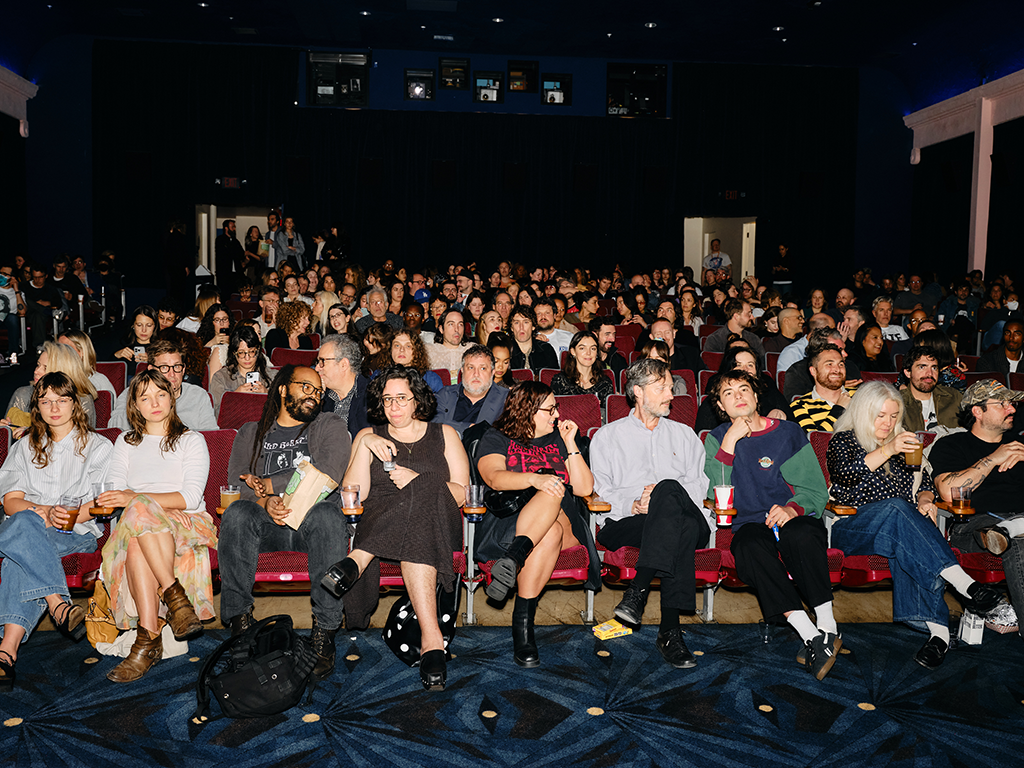
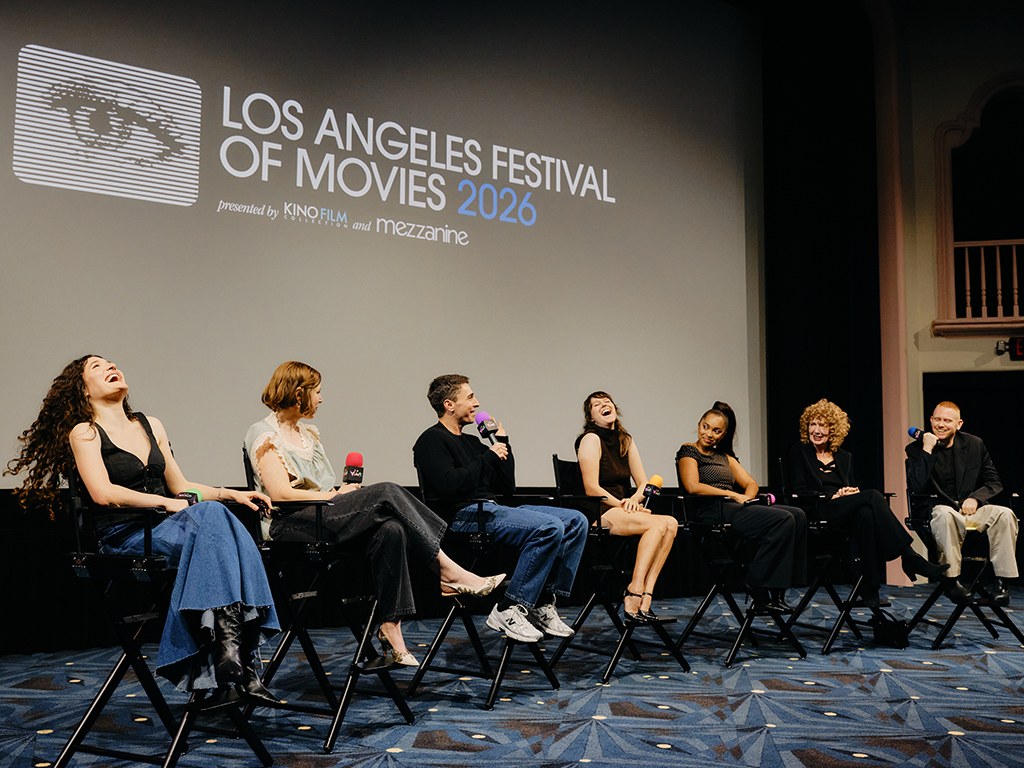
“Cinema is not dead! And we are not going anywhere! We are not giving up! Independent film is alive and well!” actor-comedian Kate Berlant told Screen Slate at the opening night of the Los Angeles Festival of Movies (LAFM). John Early’s debut feature, Maddie’s Secret (2025), packed the house at Vidiots, a non-profit video store and cinema in Eagle Rock, one of the festival’s homes for its four-day run. Berlant, Vanessa Bayer, Claudia O’Doherty, and much of the cast were there to support the film, supplying a very funny Q&A with many kind words about the absent writer-director. “I know it’s what everyone says, and it’s such a cliché, but [Maddie’s Secret] is a movie-going experience,” Berlant said. “It’s really something you want to see with a group.”
Berlant was right, and the laughs were big for Early’s comedy, which parodies Movie-of-the-Week fare (think: Kate’s Secret or Perfect Body) and classic Hollywood melodrama. At one point, during a monologue that’s an unmistakable nod to Joseph L. Mankiewicz’s Suddenly, Last Summer (1959), audience members hooted and cackled, much in the same way they did for Berlant’s fearlessly goofy mugging. These moments of exuberant audience camaraderie and cinephelic literacy very much illustrate the spirit of LAFM, now in its third year.
Though staged in the city most synonymous with American commercial film industry, LAFM’s curated programming taps into a curious ratio that’s become LA’s current reality: as Hollywood-based production has shrunk to a devastating low, a niche art and alt lit-adjacent cinephilia and the screenings that feed it, has grown. The brainchild of Micah Gottlieb, the programmer who runs the influential LA-based screening series Mezzanine, and Sarah Winshall, a film producer whose projects include Strawberry Mansion (2021) as well as previous festival-opener I Saw the TV Glow (2024) and Maddie’s Secret, LAFM focuses on presenting art house films and unique repertory restorations while facilitating community and conversation.
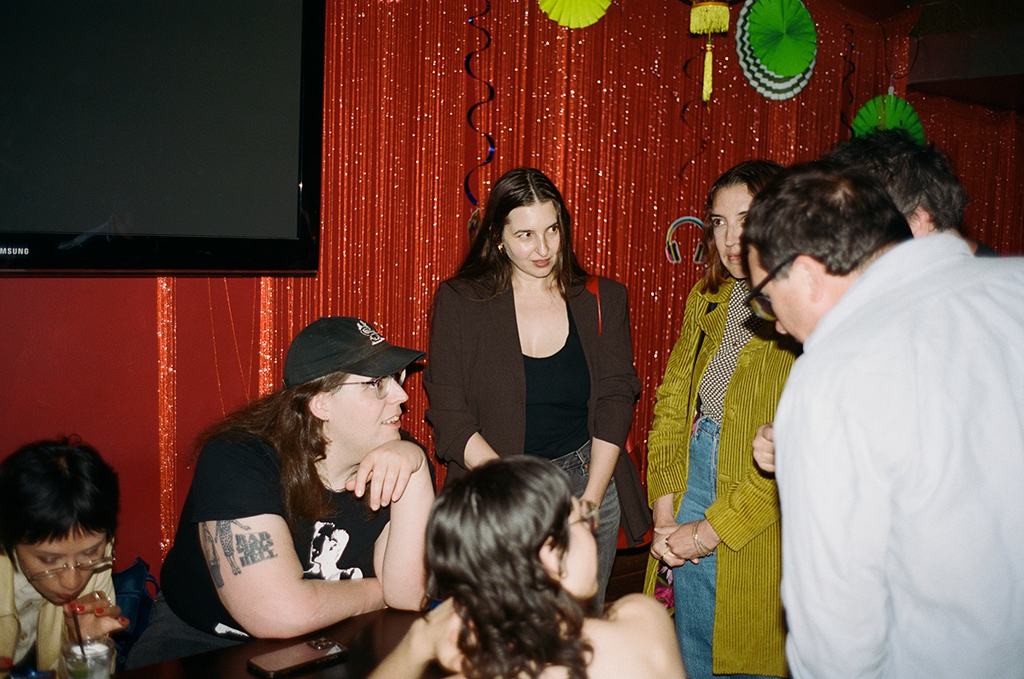
This year’s programming sprawled over a number of LA’s independent cinemas and art spaces, including talks at the perennially kooky Philosophical Research Society, screenings at Vidiots and Now Instant Image Hall, and screenings and a vendor market at 2220 Arts + Archives. Boasting a party every evening, the festival’s opening night bash at Grand Star Jazz Club in Chinatown brought the bi-coastal filmmaker/worker milieu out in full force. While Bayer loitered outside the venue like an episode of SNL had just wrapped, inside local micro-budget legend Devon Daniel Green rubbed elbows with one of the stars of Frédéric Da’s found-footage film Isaiah’s Phone (2025). At a table near the dance floor, Film Forum’s Andrea Torres was in from New York and sitting with T.A.P.E. Los Angeles’s technical director/VHS wizard Jackie Forsyte and Liz Purchell. The latter’s label, Muscle Distribution, is releasing the festival standout Drinking and Driving (2026). At one point, writer and artist Lily Lady walked into the venue draped in this year’s festival merch, which eulogizes Taix, the recently shuttered French restaurant and art party mainstay. Photographer Carly Hildebrant immediately snapped their picture.
“I feel like I’ve been sucked into this fun carnival ride,” Alexandria Brouwer, told Screen Slate after the West Coast premiere of the new 2K restoration of Mary Stephen’s Shades of Silk (1978). Brouwer, who co-stars with Stephens in the longtime Rohmer collaborator’s deeply sensual homage to Marguerite Duras, had lost track of the film for years and traveled from Seattle, where she works as a therapist, to view it at the festival. “I really love this new generation of film audience, and how generous they are. The pace of this film requires a lot of love and patience from its viewers, and it’s really gratifying to see that younger people are willing to embrace it.”
Shades of Silk, which has queer undertones in its loose narrative, screened alongside the world premiere of the new 4K restoration of Dreams of Passion (1989), a short film by Aarin Burch that is believed to feature the earliest depiction of a same-sex kiss between two Black women on screen. “You don’t always know who the audience is going to be.” Burch said. “I was thrilled to know that there were a lot of cinephiles and people who really geek out on film, and that’s who would be watching my work.”
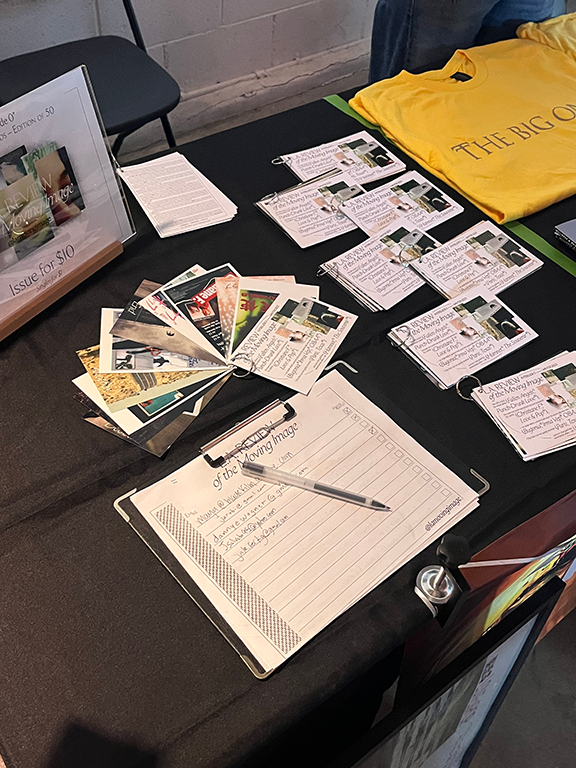
Anthony Tran, the editor of L.A. Review of the Moving Image (LARMI), the only print publication dedicated exclusively to film criticism in LA, noted that it was meaningful to have a presence at the festival because “both LAFM and LARMI share the revelation that film culture in LA has extended East of the 101/Hollywood.” The publication sold copies of its most recent issue and posters of films like Love & Pop (1998) and Fallen Angels (1995), alongside vendors like Stories Books & Café, video store Vidéothèque, and The Big One Magazine in 2220’s adjacent room.
It’s important to note that last year LAFM parted ways with former sponsor MUBI due to the company’s ties to Sequoia Capital, an American venture capital firm with connections to Israeli defense technology company Kela, and returned this year with a new sponsor, Kino Film Collection. LAFM’s divestment from MUBI is a stance against capital’s complicity in genocide that many other international film festivals haven’t been willing to make. It’s a refreshing acknowledgement of its audience and artist’s political convictions that makes the screening of a film like Kamal Aljafari’s With Hasan in Gaza (2025), an archival work that incorporates footage from three MiniDV tapes of life in Gaza in 2001, anything but pure optics.
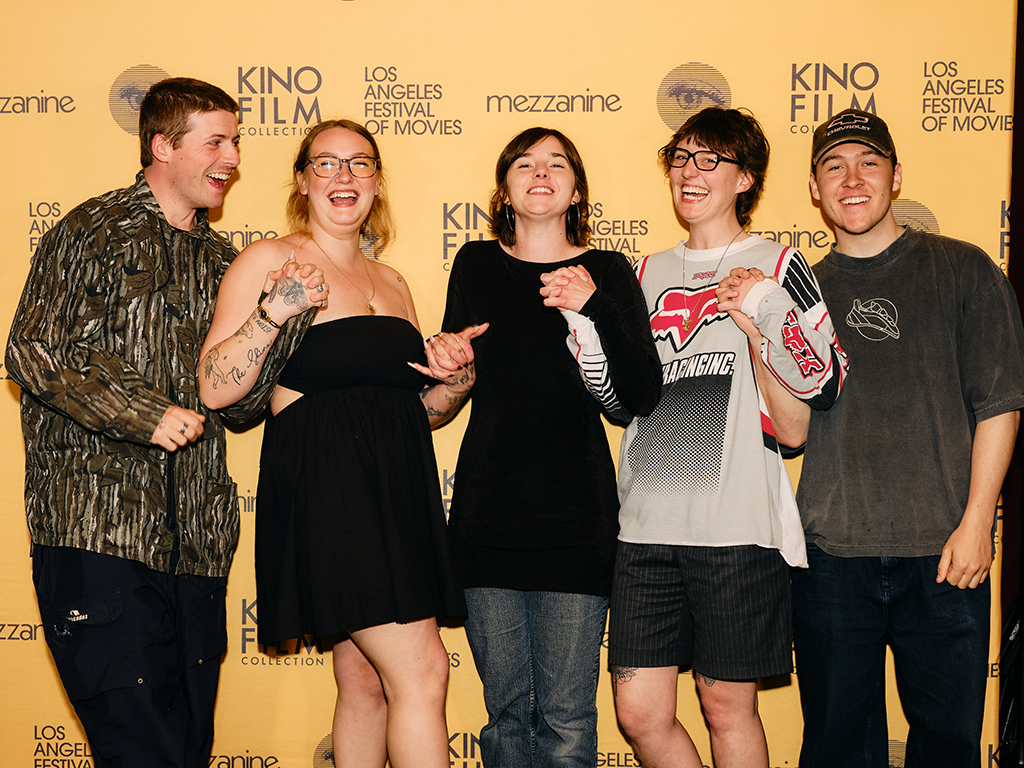
As alluded to earlier, one of the festival’s highlights was the world premiere of Drinking and Driving, starring, written and directed by Avalon Fast and Jillian Frank. The gentle, lo-fi film is set in a rural Canadian nowhere similar to where Fast and Frank grew up. It’s also chock full of bad behavior and tender emotions. Drinking and Driving’s earnest ode to friendship and youth speaks in a radically contemporary cinematic idiom, one the LAFM audience was ready to appreciate. “Something I was surprised by, and I mean this in a good way, was how not humorous people in the theater found the movie,” Fast said, after the screening. “I wanted that—to not hear as much laughter—because I don’t think the movie’s very funny, and instead it felt really emotional.”
Unique films require unique understandings, and LAFM excels at creating the opportunities that could lead to them. The audience the festival is courting, largely an emerging group of young cinephiles who came of age online and are hoping to see something new, spoke of discussing films on their Substacks and Letterboxd accounts while in lines for screenings and NA and non-NA seltzers. “Something we really believe in is community engagement. Building a culture means providing context, curation, and literacy, and those are the three things that I’m always trying to keep in mind both with Mezzanine and LAFM,” said Gottlieb. In essence, LAFM is attempting to manifest the new online cinephilia in real space, bringing the theater back into the equation. As Gottlieb says, “We’re really just trying to celebrate the act of going to the movies, but also the act of interfacing with filmmakers and talking about movies afterward.”