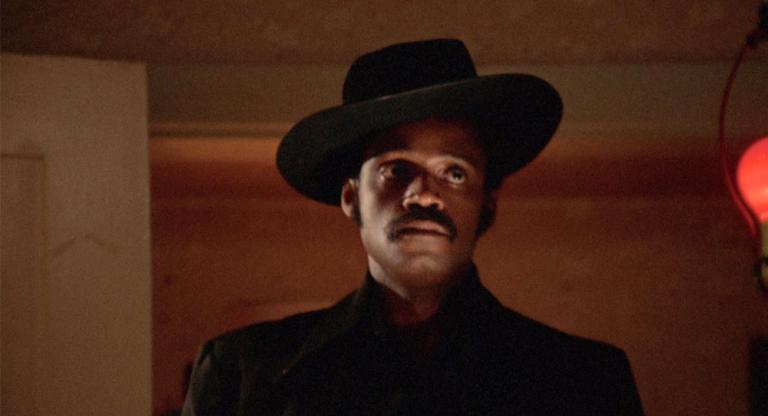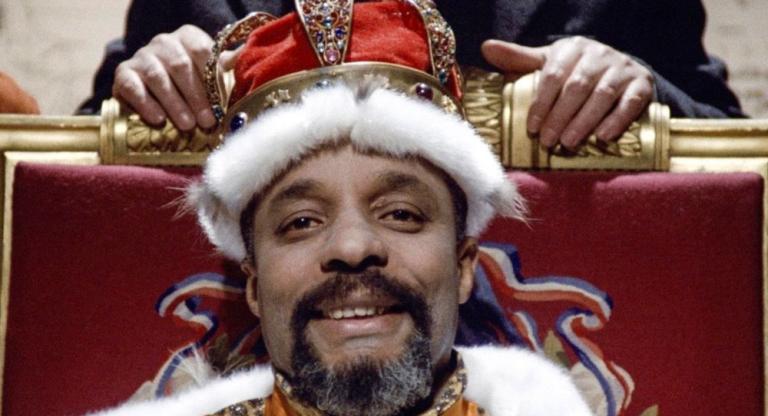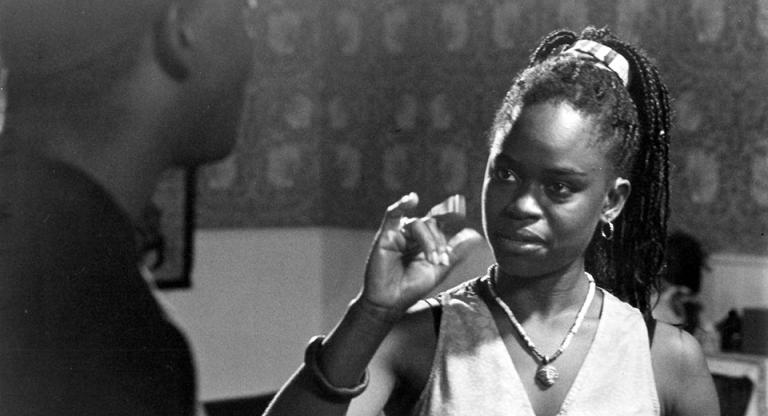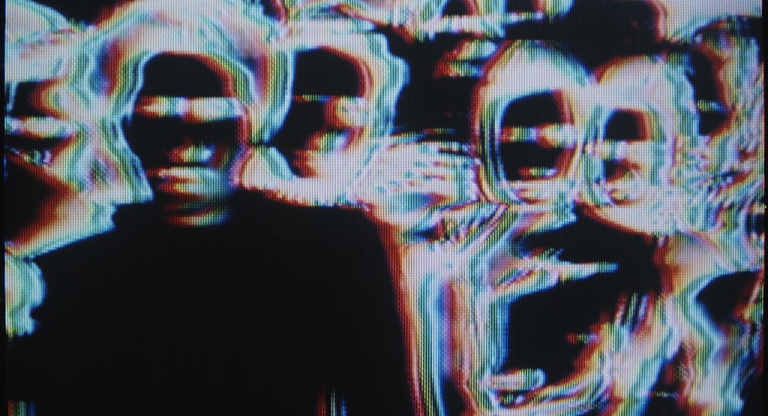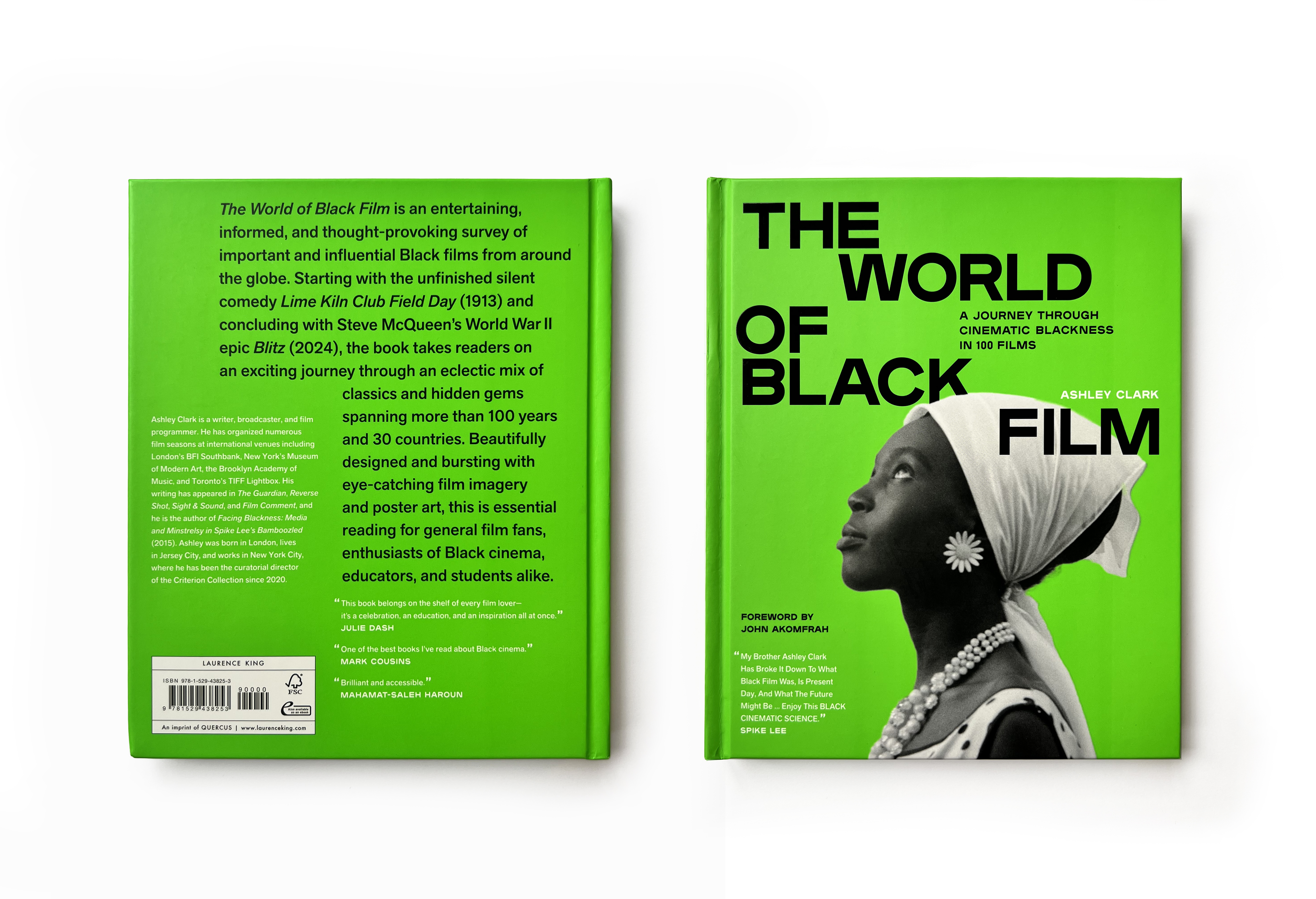
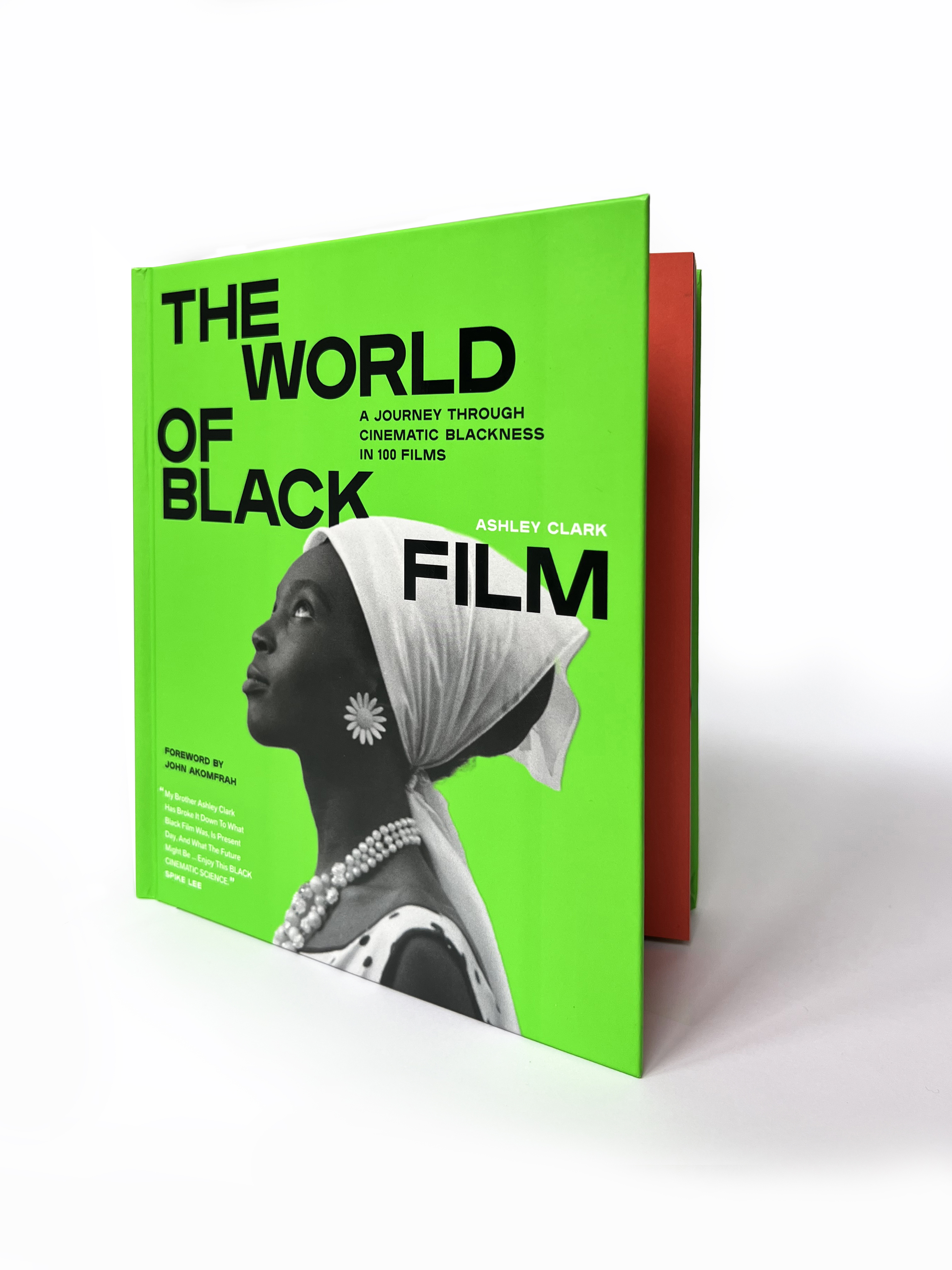
In John Akomfrah’s foreword to the film critic and programmer Ashley Clark’s new book, The World of Black Film, the knighted filmmaker and founding member of the Black Audio Film Collective writes not only of a world, but of a constellation of Black film “peopled by ghosts and phantoms.” Memories of meeting Paulin Soumanou Vieyra and Sarah Maldoror at a hotel in Ouagadougou, and having dinner with Safi Faye in London in the 1980s, are scored to the beat of Kofi Ghanaba’s drums in Haile Gerima’s landmark Sankofa (1993), and colored by the sensation of tears shed during the final scenes of Barry Jenkins’s Moonlight (2016). Clark’s survey of 100 films from more than 100 years of Black filmmmaking—a category he defines as films that center the experiences of Black (sub-Saharan African and diasporic peoples, as well as African Americans and their descendants) people and characters—unfolds in chronological order, with each film accompanied by descriptive text that is historically rich, contextually pointed, and radiates with a sense of personal stakes. For Akomfrah, the breadth and international scope of Clark’s ambitious assemblage coalesces into something akin to programmer Yasmina Price’s theory of Black time: rebellious, vivid, overlapping memories which expand the world of Black film off of the page and into the spaces where Black artists commune. Fitting, then, that one of my own enduring memories of Clark is attending a screening and lecture he organized at the New Museum in 2018, where I encountered the films of Akomfrah and the BAFC for the first time.
Always a skillful curator, Clark invites all of us with an interest in Black film to watch, remember, and get rowdy inside the tent that he raises with his generous and idiosyncratic vision of Black film history. Works as visually and thematically distinct as the Paul Robeson vehicle Borderline (1930), Ousmane Sembène’s seminal Black Girl (1966), Sara Gómez’s socially and formally astute documentary My Contribution (1972), John Singleton’s coming-of-age blockbuster Boyz N the Hood (1991), Nollywood classics Living in Bondage Parts 1 & 2 (Chris Obi Rapu & Christian Onu, 1992/3), Tyler Perry’s Madea Goes to Jail (2009), Cecile Emeke’s beloved web series turned feature Strolling (2014–16), Saul Williams & Anisia Uzeyman’s radical Afrofuturist musical Neptune Frost (2021), and many more iconic masterpieces and no-longer-hidden gems speak to one another across pages of the book. Meanwhile, Clark speaks to us with the knowledge of a hardened cinephile couched in the assured charm of a kindly tour-guide, laying out his own case for the persistence of Black filmmaking against all odds.
As he continues on his book tour, and on the occasion of his upcoming screening of Melvin Van Peebles’s The Story of a Three Day Pass (1967) at Jacob Burns Film Center, I spoke with Clark over Zoom about “Black film,” subjectivity, accessibility, Med Hondo’s West Indies (1979), dismissive criticism, and the vitality of Letterboxd.
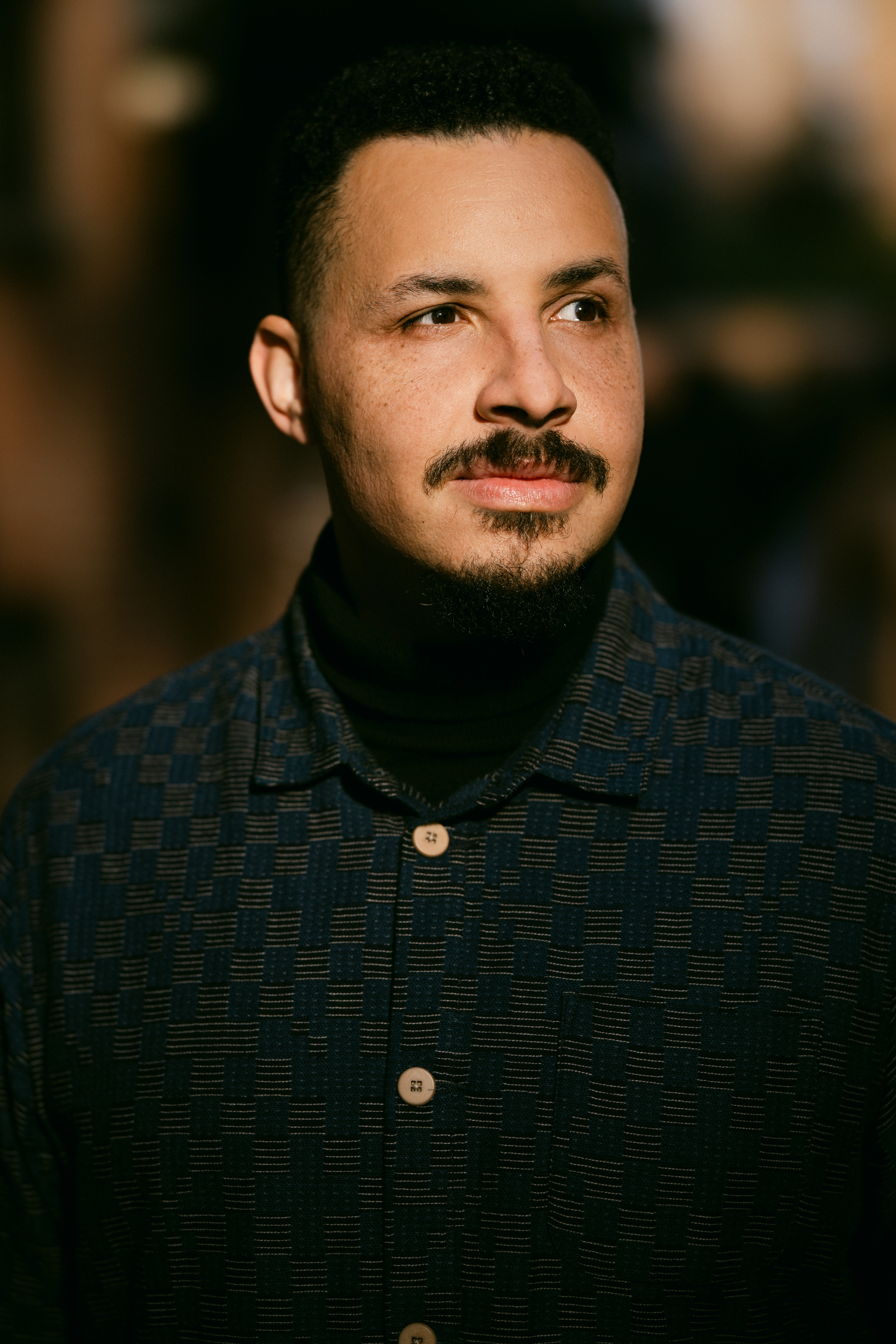
Ife Olujobi: In writing this book, you’ve had to offer your own definition of “Black film” as unique from existing scholarship. What is the specific contribution to definitions of Black film that you're hoping to make with this book? And, what do you think is gained by continuing to have this conversation about what Black film is?
Ashley Clark: The book was conceived, to a degree, as a response to what I felt to be quite a narrow, categorical definition of Black film, represented by these polls that were published in the Slate pieces “The Black Film Canon” and “The New Black Film Canon,” which conflated Black film with American film. In some respects it makes sense—it's the most visible and voluminous production of Black film in the West—but I wanted to open up the discussion to be generative and not restrictive. I wasn't interested in litigating specific definitions of Blackness, but I wanted to see how different national cinemas connected, and how different histories and paths of particular filmmakers and talent intersected, while also weaving in my own personal heritage and interest in Black film from around the world. Fundamentally, the project doesn't try to limit or define what Black film is, but it is an exploration and an invitation for readers to consider cinemas from particular demographics in a new light.
IO: You emphasize the subjectivity of this project in the introduction. I’ve seen list-makers do this to shield themselves from the haters, but the entries get personal in a way that surprised me. It feels like you’re trying to articulate that this is your world of Black cinema.
AC: 100%. The thing I've always responded to in reading criticism is a sense of subjectivity, even when it’s potentially quite contentious. I want to be engaged. I want to be invested to the point that I feel something. And I may disagree, but I don't want to dismiss it. In many cases, the films I'm writing about, I'm wrestling with my feelings about them. I don't love all the films in the book. I think they're all significant, but I wanted to foreground a sense of subjectivity and make it personal. I wanted there to be a sense of playfulness and a sense of humor in it as well, and a sense that I'm working through some of my own lived experiences as someone of Jamaican heritage who grew up in the UK, who's moved to America, who's engaged with film in a variety of different professional capacities. If there's things people find contentious, all the better for me, right?
IO: How did you go about researching and broadening your own scope of Black film across the globe, outside of just the Western context? You've been a programmer for years, but for this book specifically, where did that research start for you and how did it help you craft a narrative?
AC: In many cases, I was drawing on previous programs and articles that I'd written for various publications, and then I was reaching out to friends in the field and asking them if they had particular recommendations. There's a fantastic Brazilian scholar called Janaína Oliveira, and I asked her to pick one Black Brazilian film that she thought played an important role in the development of Black Brazilian film. She told me about this film called Soul in the Eye, or Alma no olho, from 1973. That was a discovery for me, and that was a beautiful experience. I was reading books like Ex-Iles by Mbye B. Cham, which is about Caribbean cinema. I was researching in the usual ways to try to find titles, but when it came to actually locating them, I was emailing sales agents, emailing distributors and people in France, finding any way I could to see these films. Some of them were available in really bad copies on YouTube.
There's a film called Amok from 1983, which is set in South Africa, but I found an Italian-dubbed version online, like a rip from VHS. I decided to include it because maybe someone reading the book will be interested enough to potentially rescue or restore this film, or might be able to contact some of the talent involved in it. The hope is that this book may, in a dream world, play a role in helping to make some of these films more accessible. Two films in particular, Mortu Nega [1988] from Guinea Bissau, and The Woman with the Knife [1969] from Ivory Coast, are going to be a part of Martin Scorsese's World Cinema Project, so they will be coming back into circulation. I didn't know that about Mortu Nega when I wrote about it, but it felt like such an important film to discuss because I didn't have much representation from Lusophone African countries, as opposed to the significant presence of Francophone African cinema. It felt like a significant film that also connected to other films in the book, and I was always looking in my choices for points of connection. Though the films may be vastly divergent in tone and style and intent, there are interesting ways to connect them that hopefully make for a satisfying reading experience.
IO: Because there's 100 films in this book, each individual entry is substantial but brief, and they seem structured to encourage readers towards further research. Do you have recommendations for books, or resources, or even physical spaces for further engagement?
AC: This is very self serving, but a lot of these films are available on the Criterion Channel. I've been working at Criterion for five years, and it's definitely been a part of my intention working here to help make more Black films available. Films like West Indies by Med Hondo, and Hunting Party [1964], which is this amazing film by a 19-year-old Sudanese filmmaker that was made in Germany and was restored by Arsenal in Berlin, are now on the Criterion Channel. A Different Image [1982] by Alile Sharon Larkin—the film I chose as the avatar of the LA Rebellion—is also on the Channel.
Elsewhere, there's a curator called June Givanni, who is amazing and I thank her profusely in the introduction. She has the PanAfrican Cinema Archive, so I would urge people to check out that website. She was also the co-founder of something called the Black Film Bulletin, which is very much the North Star for this project. It was founded in the British Film Institute in the early 1990s as part of the African-Caribbean Film Unit, and now it's all been digitized. It was a physical publication [with] interviews and reviews, but it was also sharing films in production looking for actors and castings, almost like classifieds.
Amy Sall's recent book, The African Gaze, is fantastic and a really good reference point for not just African film but photography as well. I've been so impressed with the programming of Yasmina Price in the last few years—she brings such thoughtfulness to what she's presenting and why she's presenting it, and she’s opening up new avenues to understand global Black film. And, in the book, there's a pretty thorough further reading list as well. When the book's finished, I definitely want people to keep viewing, keep reading, and see this as the start of something rather than a definitive statement.
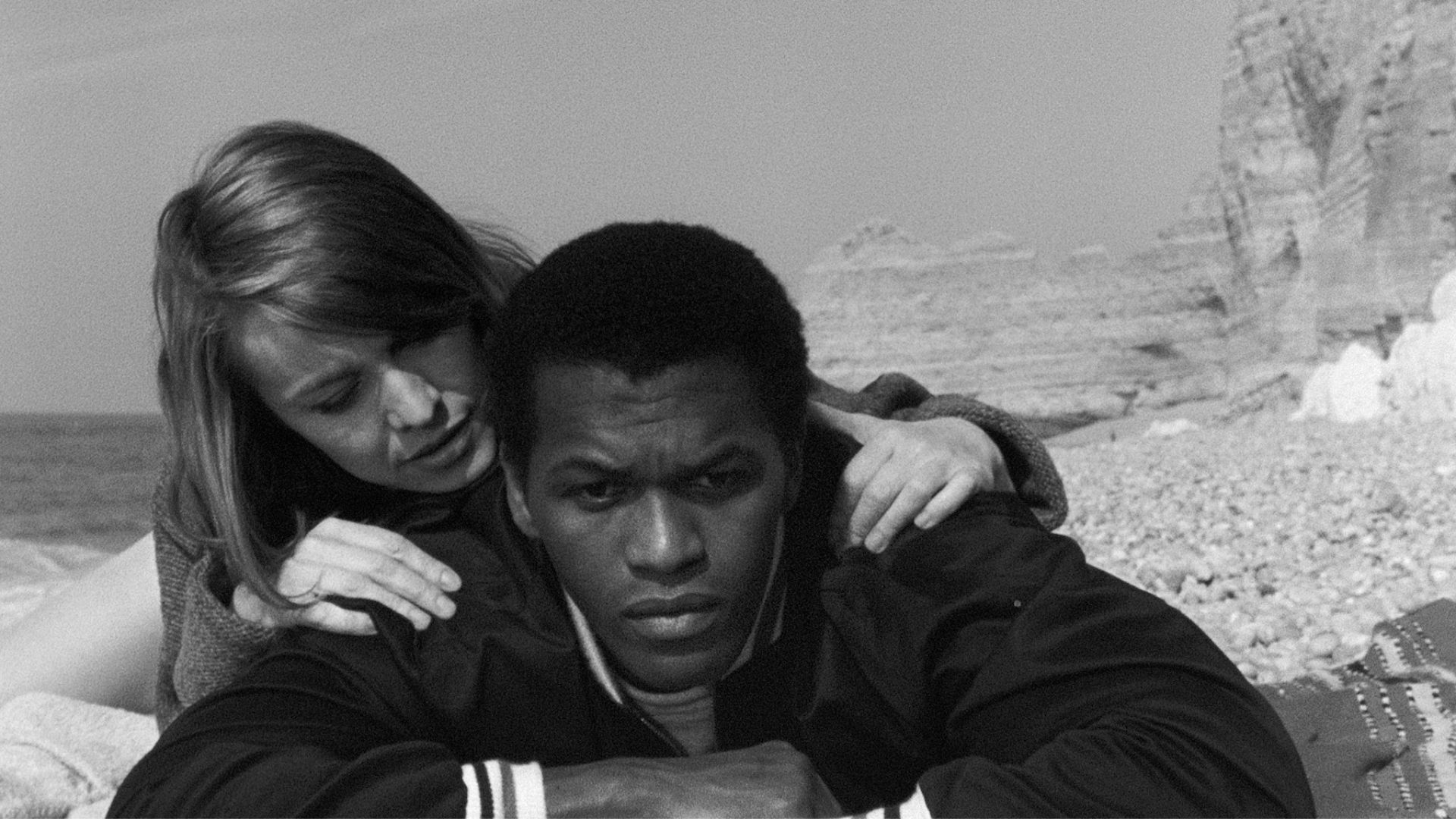
IO: You’re programming some films across a number of venues in New York, LA, London, and elsewhere to mark the release of the book. You’ve spoken before about the challenges of preservation, restoration, and accessibility of a lot of Black films for various reasons. Did you see this current programming as an opportunity to address some of that? How did you go about selecting specific films for these screenings?
AC: Something I'm always self-conscious about is not assuming knowledge levels in other people that I have as somebody who is very embedded in the profession. For years now, I've been talking about West Indies: The Fugitive Slaves of Liberty [1979] by Med Hondo, one of the greatest films ever made, but I can't assume other people have heard of this work, so I have to advocate for it. That was one of the first films I wanted to show. I showed that in London, I showed it at the Museum of Moving Image in Queens, and the film has been relatively recently restored and will be coming out via Criterion soon.
I was picking films that I really wanted to advocate for and that I think are big screen experiences, films that are well enjoyed and received in a communal context. The short answer is, I've just been picking films that I'm really excited about, that I want to share with people, and I've been presenting in lots of different venues so it's given me an opportunity to be quite open.
IO: I heard you on the Film Comment podcast talk about wanting to write this book for a younger version of yourself. Thinking about this theme of accessibility, what is the importance of having this book and these films made available for younger generations of cinephiles, and specifically younger Black cinephiles?
AC: In some ways, it's proof that this work exists. It's so crazy that year on year, whenever any awards season comes around, we're still talking about the same things, about the same types of erasure. I wanted to step aside from all of that and present something which confirms a history and a proud lineage of Black filmmaking, often against the odds. It's not intended to be canonical—I'm not saying these are officially the 100 greatest Black films ever made—but it's an assertion of presence. At 15 or 16 years of age, I didn't have that. I was picking up Empire magazine. There's a film I write about in the book called Welcome II the Terrordome from 1995, and the Empire review from that time misgendered the filmmaker—called Ngozi Onwurah “he”—and gave it the most dismissive review imaginable. That’s emblematic of how a lot of Black film was written about when I was growing up. It wasn't taken seriously. It was shuttled off into discriminatory tropes or ideas or categories. I think this book is an assertion of the formal and thematic diversity of Black film over the years, which is also an important statement. These restrictive, stereotyped categories still persist out in that sphere in which a lot of us operate. We come up against this discrimination and these expectations constantly, so to have in one place a book that insists on the presence of a multiplicity of Black filmmaking in myriad genres for over 100 years is a statement that I'm very proud to have put out into the world. It's kind of inarguable when you hold it.
IO: The existing archive of writing about Black film is flawed, to say the least. Do you think the landscape of contemporary film criticism has evolved in a way where it will be able to reencounter these works with more thoughtfulness and rigor?
AC: I don't think we're in a golden period of considered textual analysis. However, there is cheer to be had in looking at the enthusiasm of Gen Z, and perhaps older cinephiles, on Letterboxd. Compensation [Zeinabu irene Davis, 1999], for example, is a film that had been kept in circulation by Women Make Movies, the distributor, and it was through them that I was able to book the film to screen at BAM in 2019. When I moved to Criterion, it was one of the first films I wanted to acquire. It's terrific, and one really obvious metric of that film's impact is looking at how many hundreds of reviews it's racked up on Letterboxd by young people who are so moved by the film that they have to share their opinion and give it five stars and talk about what it means to them. “Where was this film all my life?” That is one metric, one orb of criticism, which is interesting to me. We're in a world where arts criticism is really taking a beating across the board, so I'm grateful for any space that opens up to dive into this work.
The Story of a Three-Day Pass screens this afternoon, April 12, at the Jacobs Burns Film Center. Author and Curatorial Director of the Criterion Collection, Ashley Clark, will be in attendance for a book signing.
See Also