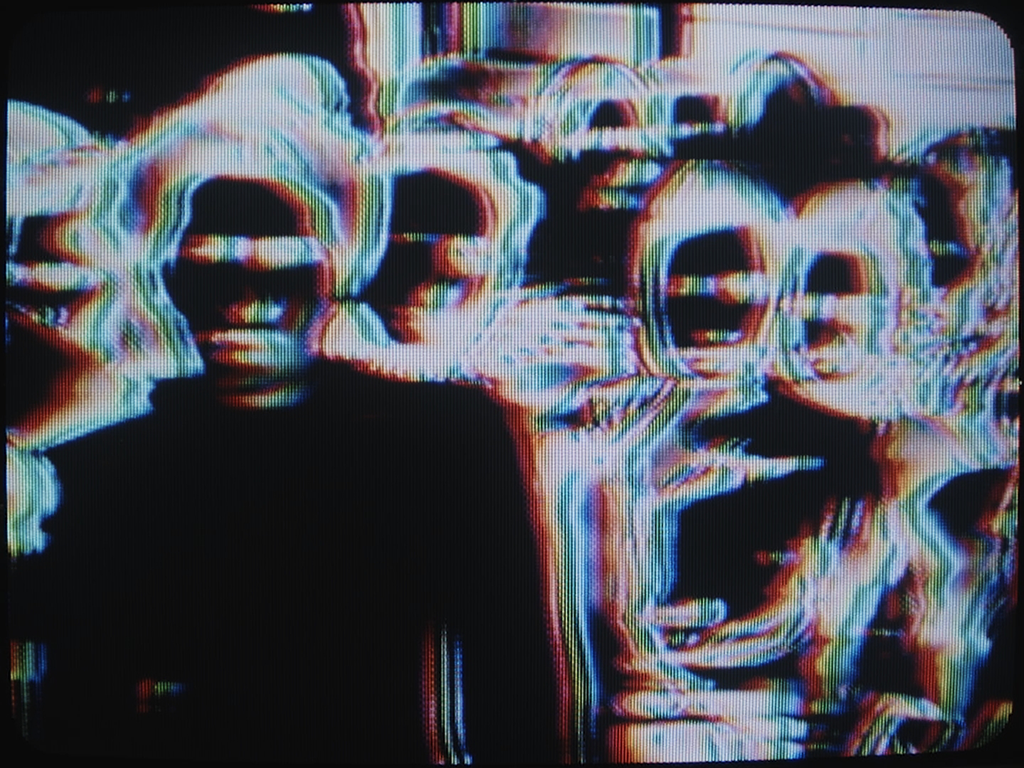
The films of Jack Auen and Kevin Walker, the directing duo behind the filmmaking collective and production company Cosmic Salon, consistently situate the catalogs, rituals, and technologies of the past as the wellspring of a mysticism that pervades and unsettles the present. Their feature debut, Chronovisor (2026), marks the apotheosis of their aesthetic interests thus far, taking inspiration from the literature of Jorge Luis Borges and Umberto Eco, and—as reflected in their selections for the recent “Bibliomania” series at Film at Lincoln Center—filmmakers as disparate as David Gatten and Jon Turteltaub.
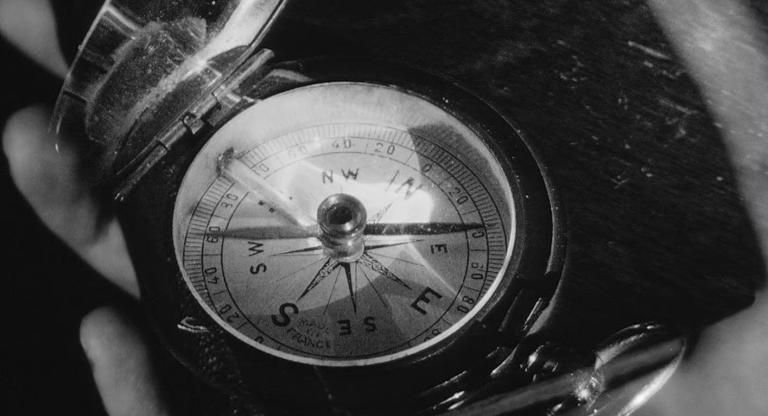
Chronovisor is as unique an American feature debut as is likely to arrive this year. It concerns Columbia professor Beatrice Courte’s (portrayed by behavioral scientist Anne Laure Sellier, in her acting debut) assiduous pursuit through the boundless materials of New York’s libraries and archives for the location of the Chronovisor—a fabled device, supposedly secreted away by the Vatican, that purports to endow its users with an objective, godlike view of any moment in history, from the beginning of all time.
With a rigorously applied aesthetic, and a riveting formal conceit that dissolves the boundaries between cinema and literature, Walker and Auen have crafted an armchair mystery that invites its audience to recline, as it were, in the life of the mind. Despite a dearth of action, Chronovisor nonetheless thrills with conspiracy, suspense, and a fatalistic momentum.
Ahead of its theatrical release, I talked with the directing duo about their literary influences, the temporal indeterminacy of their aesthetic, and the film’s spiritual worldview.
Connor Burns: I didn't know about the legend of the Chronovisor before seeing the film. How did you come across this story and settle on it as the idea for a film made in this particular manner?
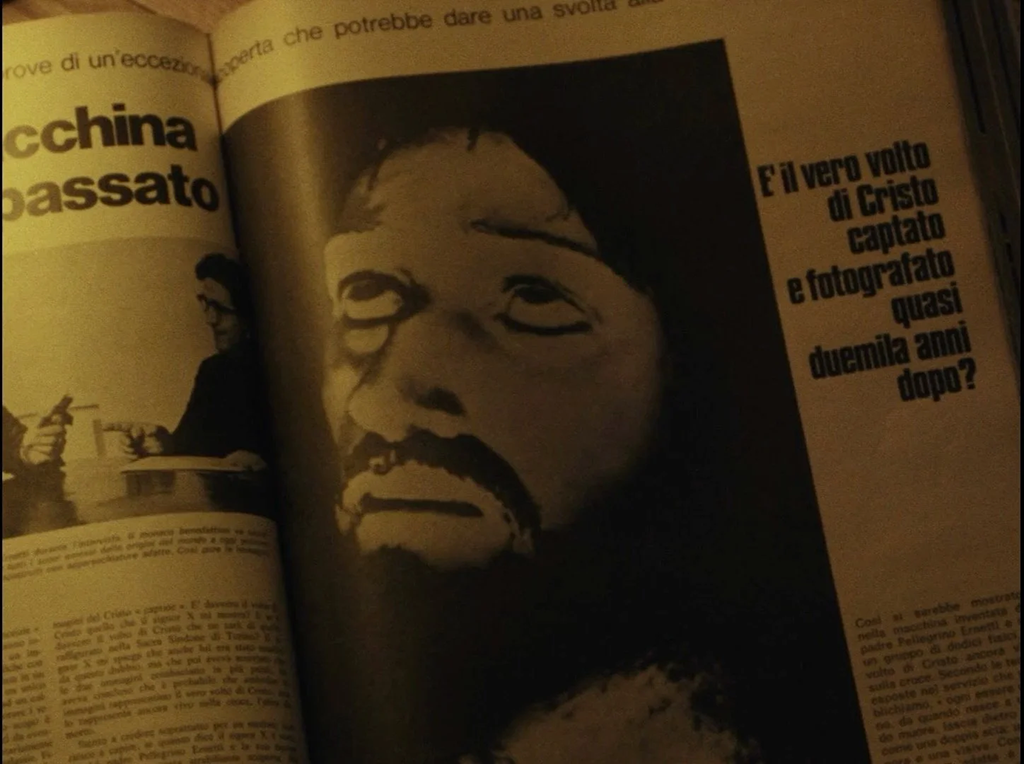
Kevin Walker: I was reading this book called Angels, Archons, and Aliens by this guy Ambrose Andreano about the evidence for extraterrestrial life as it pertains to theology. They call it exotheology. It's the perfect confluence of my interests. The author is great, super intelligent, a little credulous. There were a few digressions into stories that were less credible, and they were fun. One thing he included was this little chapter called “Father Ernetti’s Chronovisor.” Immediately, I was like, “I gotta tell Jack about this.” I studied theology, we're interested in mysteries and detective work, all that stuff. I have a very limited wellspring of creativity, and to the extent that screenplays can be written for us by reality, we will take advantage of that every time. So, it was this incredible story already. We thought, let's just interpolate it into a project that contains some of our other pet interests, and then we don't have to write that section of the movie. That was really what we did. Not to make us sound indolent.
Jack Auen: We are much more confident in our sense of excitement when we consume something than we are if we come up with something whole cloth. When we treat it almost like a work of adaptation, where we’re just adapting from real life, it makes us feel much more confident about our ability to translate to the audience what excited us about the material originally.
CB: How did you decide when to let the so-called truth of this story come to the fore, and when to let your own imagined interventions take the lead?
JA: As a general rule of thumb, if reality could work in the movie, that's what we would go with. We would only deviate when it was necessary to make the actual structure of the film work. That being said, we always knew that it was going to be a fictionalized story integrating documentary.
KW: It's funny because I don't remember using the word documentary at all as we were formulating it, and we certainly felt no compulsion to write with any fidelity to the real life story. It just so happened that it was so complete that there was very little tinkering we even had to do. I don't think we're documentary filmmakers by nature. We didn't see this as some hybrid piece. It was a real life story there for the taking, almost as an adaptation, as if it were a little book or a short story, and we never really thought of it in any other way like that.
CB: I was floored by what I thought were these incredible fabrications of archival materials, full of these brilliant details and characters, but they were all actual documents that you sourced. Is that kind of rigorous archival research something that either of you have experience with, or was it just a demand of the project that you had to meet?
KW: It was terrible.
JA: It was probably more man hours spent doing that than actually being on set and rolling camera. It’s definitely not something either of us has done before. We joke that we consider ourselves wannabe academics. It's something that we love the aesthetic of and the actual process of doing. We think it's underrepresented in a lot of films. It's a pet love of ours, but not something that we ever thought we would dip our toes as fully into. Maybe we would have been intimidated by this mountain if we had known what it would take beforehand.
CB: She's trying to find the device, so she has a very clear stopping point. But how did you know when enough was enough?
JA: We felt pretty confident that just about everything that was still available, that had been written or published about Pellegrino Ernetti, or this device, or anyone associated with it, we had found.
KW: We were really excited about the idea of a research movie, for thematic and aesthetic reasons. We like flipping through books. If that could be the filmmaking process, what a pleasant experience that would be.
JA: Could not have been more wrong about that.
KW: I was so wrong. Finding the resources, and then choreographing the sequences to create a narrative that was compelling, out of this seemingly infinite amount of text, was one of the hardest things we’ve ever had to do.
JA: We had to shoot a bunch of tests to make sure it would work before we could actually expend our precious 16 millimeter film on it.
CB: Explain that a little more.
KW: We filmed all those sequences on digital cameras first.
JA: When the pages flip, when to zoom, how long to linger on this sentence before panning over to this photo. We just worked all that out and actually cut it into the film to have a complete run through the whole thing. Then we went back and shot just the parts that we used.
KW: It was already set to music and everything, so we were able to have a 1:1 shooting ratio on the archival material.
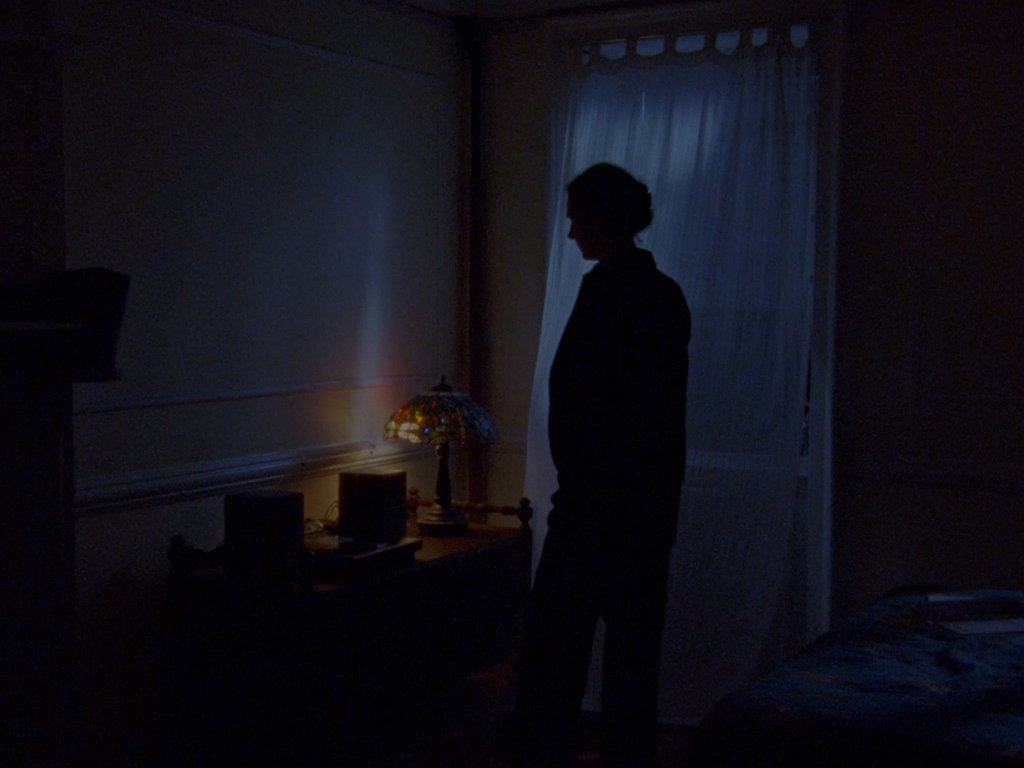
CB: Your short films, and now Chronovisor, all have a kind of timeless quality to them. They’re all set in the present, but with very few details that would give that away. In Chronovisor, you don't shy away from her using an iPhone here and there, but you spend a lot more time with analog technology and media. She’s doing all this research, but she never once uses a computer. I also notice that none of your characters are people who would be your contemporaries. They're all decades older than you. Your films seem concerned with this idea that the past is alive in the present, but at the same time they don't seem to want to assert the present.
KW: We’ve purposely set all of our films in the present day. We haven't done any period pieces, as I feel like you have to have a really good justification to do an actual period piece. Maybe it's just about how we spend our own time in our real life, but there is a lot about the contemporary world that we find uninteresting and distasteful, actively offensive, boring, and unrelatable. We are also not big fans of artistic works that feel tied up in their period in a way that they might have an expiration date, or are more social commentary or political commentary than they are art. Chronovisor very much does contain, as a part of, at least what we hope are, its interpretive possibilities, our thoughts about contemporary technology. I'd be interested to hear what audiences think about Beatrice's relationship to the Chronovisor as it pertains to the modern person's relationship to technology, because it was something we thought about.
CB: It’s a device that supposedly offers an objective view of any moment in time. One of the first things Ernetti claims to have done is watch the Crucifixion. Its omniscience starts to bring in ideas about determinism and free will. From its perspective, Beatrice's search for the Chronovisor is its own journey towards her. Is this kind of paradox of cause and effect something that represents for you just an enjoyable thought experiment, or do you see this as kind of a real problem for making sense of the past?
JA: I can start by saying two big literary influences for us have been Jorge Luis Borges and Umberto Eco. Both of them play with that all the time by creating these frames within frames or layers within layers. I don't know how to describe why it appeals other than just aesthetically; the idea that someone’s gone to the trouble of burying this interesting story amidst a layer of feasible noise. It's not like in a standard detective story where they turn on the television or flip open a book and the first page they turn to is their answer. All of that grants a level of believability and integrates the audience in the investigative process in a way that we've always enjoyed.
KW: I want to clarify your question. What do you mean when you say her journey to the Chronovisor is in some other sense its journey to her?
CB: Her future, every choice she made, was already contained within the device when she steps up to it. This is kind of a spoiler, I guess.
KW: But it's also an obvious fact about the Chronovisor.
CB: It's perfectly Borgesian in that it's this fatalistic commitment to a perilous idea. She wills herself down a path that is also very much her destiny. The way the movie ends is the only way it ever could have ended.
KW: We've been accused of having the ending be too obvious or inevitable before, but it does feel like the natural endpoint. The ending's hard to talk about without really diving into the way we structure Beatrice's personality. We needed a character for whom the device would be the perfect foil. There were some books on psychology and neuroscience that helped us identify the kind of person that could speak to this quality of the Chronovisor, its potential for an infinite regress of self-examination, which is, you know, a quality of the schizotypal mind. That aspect of her personality is a crucial part of how she decides to use the Chronovisor when she finally does.
CB: I lost track of how many languages are spoken and written in the movie. So much of the runtime is spent reading translated text on screen. At other times, there are long stretches of unsubtitled dialogue where you don't know what’s being said unless you happen to speak a certain language.
JA: I think written, it's English, German, Italian, Spanish, French…
KW: Latin.
JA: And there's one shot of Mandarin.
CB: I heard Portuguese.
JA: A lot of the textual language was out of necessity. Those were the languages the primary sources were written in, and so that’s what we had to suffer through figuring out how to translate for our own use, and then obviously working with real translators to translate it for the final version. There are all these variables, in terms of how much of it there is, how quickly it's spoken, whether it's monologue or dialogue, whether it's on screen or off screen, whether it's subtitled or not, intelligible or not, that can hint to the audience where their priorities should lie as they try to make sense of what’s important in the film or in a scene.
KW: We're interested in how to maximally subtextualize information, to have gobs and gobs of dialogue, or huge swaths of text. The more mundane or tedious it gets, the more it starts to hint at the fanatic core that undergirds it all. Language is this incredibly powerful thing that has seemingly infinite capability to inspire and move, but when it comes to the realm of the spiritual, it becomes this extremely blunt tool that actually can hinder your ability to understand something that is too deep for words.
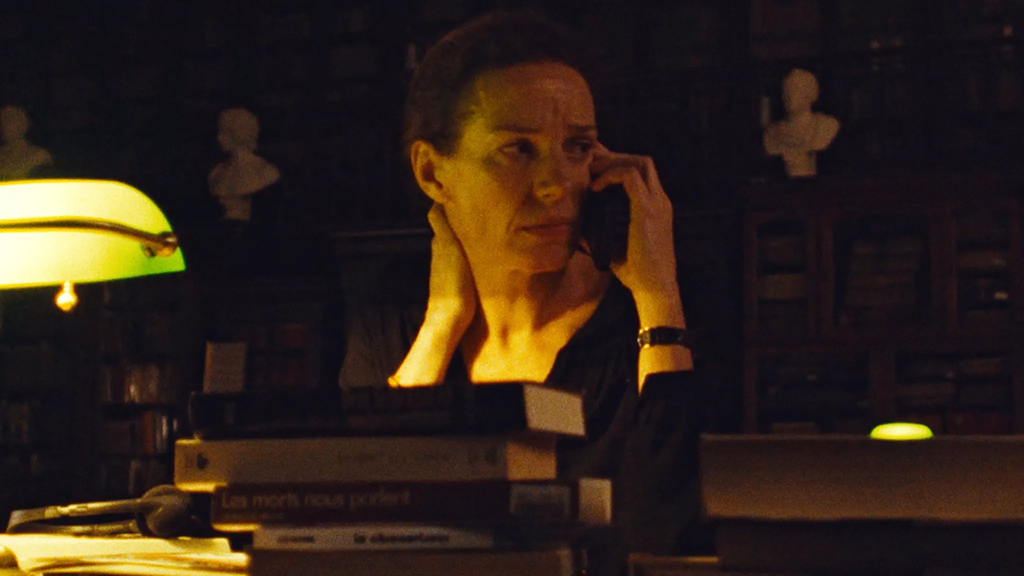
CB: There is a spiritual, faith-based dimension to the film. It's made explicit in the more conspiratorial elements involving the Vatican, but it's also there in Beatrice's quest. She has an almost fanatical belief in the totality of the archive. Did you know that this was something you wanted to put in the film, or was it another element that simply emerged from the material?
KW: Conversations about the spiritual are a daily occurrence as Jack and I are writing a film. We don't have the same spiritual background, which I think can create an interesting alchemy. I think it kind of flattens out the dogmatic aspects of our spiritual lives into something more syncretistic in a positive way.
The spiritual dimension of the film is incredibly important to me. I see every human being having deep within themselves an insatiable longing for the transcendent. The thing that was interesting to me about Beatrice, and also the way that she signals certain mental habits of the contemporary world, is that she has no access to that part of herself. This feeling that is drawing her like a lodestone to these transcendent questions of the omniscience of the Chronovisor and the power of the archive—she has no grammar with which to interpret those sensations within herself. We wanted to tackle a character who is extremely spiritually benighted, but with that spiritual core at her center desperately trying to get out and motivating her behaviors in a way that she can't understand.
JA: Beyond that, to be, at least on the surface level, affiliated with a religion does not guarantee you’re going to experience it in any kind of ecstatic way. We love movies and books that are like, the staunch British atheist encounters something that he cannot explain. The rationalist meeting the ghost.
CB: How do you feel about having involved yourselves in this conspiracy? Your movie is going to give the Chronovisor its highest profile since Father Ernetti made his claims in the 1970s. You could have a Dan Brown, DaVinci Code situation on your hands.
KW: We have no comment on the Vatican’s behavior as regards the Chronovisor.
JA: I’m nervously waiting for a representative of the Pope to come knocking at my door. But really, Kevin's home library now has got to have the single largest collection of Chronovisor materials that exists on Earth. We talked about that, about this movie becoming yet another document within the compendium of documents about this. If that ended up happening, if we did write ourselves into the Chronovisor narrative and unwittingly created an Umberto Eco story for ourselves to live out, that would be the coolest thing.
Chronovisor runs September 4-10 at Film at Lincoln Center. Directors Jack Auen and Kevin Walker will be in attendance for Q&As throughout this weekend.
See Also