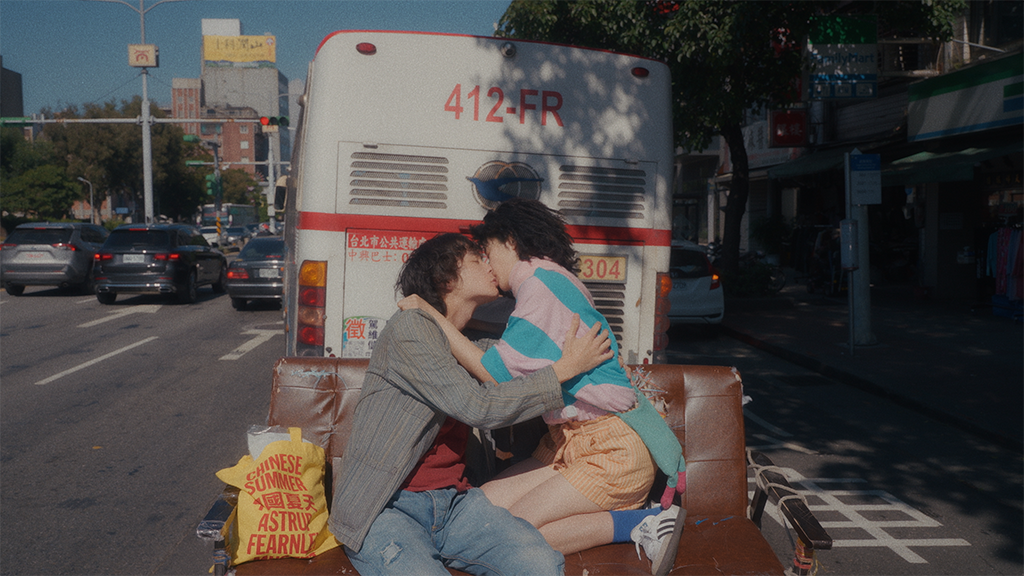
Tomorrow night at BAM Rose Cinemas, Ka Ki Wong's I Heard That They Are Not Going to See Each Other Anymore (2026) will initiate the first wave of programming for the sixth edition of Prismatic Ground. Following the romantic misadventures of two couples across Taipei, the film's dreamy sequences are punctuated by a vivid orange pincushion flower, which one of the protagonists, Melih, receives from his object of affection, the alcoholic Yu-Ping. Melih owns a noodle shop frequented by the eccentric Tao, whose infatuation with Shin drives her to physical antagonism, including stalking him and sending gangs to beat him up in cartoonish fight sequences. We intermittently view the lovers through the POV of Melih's flower, which becomes a metaphor for longing and memory as both he and Tao grapple with their doomed romances in yearning monologues interspersed with listless wanderings across the city and its surrounding ruins.
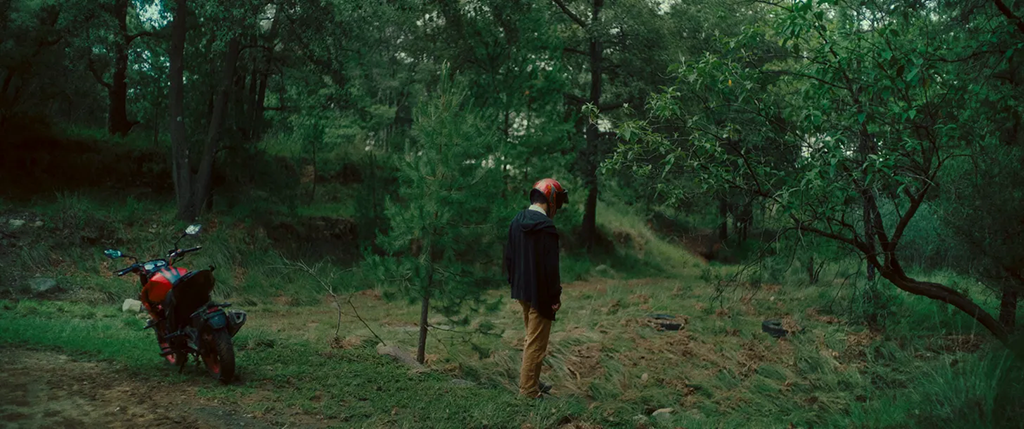
Wong's film will be followed by Nicolás Pereda's Cobre (2025), an enigmatic portrait of Lázaro, a worker at a copper mine in a remote region of Mexico who stumbles upon a dead body on his way to work one day. Already on bad terms with the mine's management for seeking sick leave for a respiratory illness contested by the mine's on-staff doctor, Lázaro is closest to his aunt, who supports his recovery while he struggles to maintain his health and innocence. Conducive to suggestions of intrigue and desire, Cobre explores the limits of trust in the relationship between viewer, filmmaker, and protagonist.
Prismatic Ground is a film festival curated by Inney Prakash that showcases experimental works in short and feature formats. Grounded in a postcolonial perspective, the festival provides a space for a diverse range of filmmakers to exhibit their work, which ranges from technically innovative structuralist works, to dramatic features, to historically resonant documentarian efforts. This year's selection includes a focus on avant-garde works from Asia and celebrations of queer life from across the globe. As with past iterations of the festival, a common invocation across films of wildly differing approaches and subjects is the fight for Palestinian liberation from the American-backed occupation by Israel. Further highlights include a celebration of June Givanni's Pan-African Cinema Archive in conjunction with the launch of Onyeka Igwe's book on Givanni at Anthology Film Archives, which will be followed by an evening of poetry and film curated by Shiv Kotecha and Courtney Stephens. Anthology will also host the festival's presentation of the Ground Glass Award, which recognizes outstanding contributions to the field of experimental media, to Kohei Ando alongside a screening of six of his films.
“A mandala for opening the மனசு (manasu meaning heart and mind in Tamil) to the frequency of love in revolt” is the subtitle to Karthik Pandian's Surrendur (2026), a vertiginous montage of footage documenting the political upheavals of 2020 in Minnesota, including the toppling of a Christopher Columbus statue orchestrated by American Indian Movement activist Mike Forcia (Bad River Anishinaabe). Forcia serves as a guide through the film's interwoven networks of people and actions related to the George Floyd Uprising, the Anishinaabe Seven Fires Prophecy, and the Dakota 38+2 Memorial Ride. A recurring formal motif in Surrendur is a circle centered in the square of the frame, embodying the awakening to the colonial violence of American life experienced by so many in that period, including Ta Pe'juta Wičháȟpi Win (Hunkpati Dakota Oyate), whose political consciousness was sparked as she danced around the fallen statue of Columbus. At one point Forcia describes a fiber optic cable connected to our third eye, through which the light of a future free of the imperialist project in which we currently live may reach us, if only we can get on its wavelength.
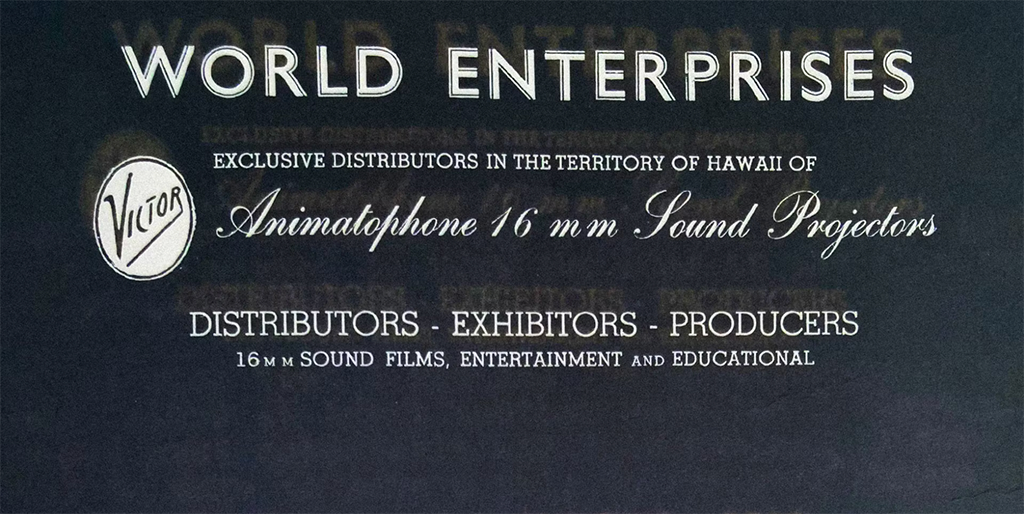
The American Midwest is also the setting for Eislow Johnson's short film Injured? (2026), which celebrates the fiftieth anniversary of attorney ads being legalized by looking to the future of American grift: manifestation influencers, numerology divinationists, and proprietors of the Marvel cinematic universe. The shorts in this year's festival constitute some of the most powerful moments of its lineup, such as Anthony Banua-Simon's WORLD ENTERPRISES (2026), a collage film composed of excerpts from the films available via mail-order from the distributor World Enterprises that were screened in 1940 for the workers of the Kekaha Sugar Company in O'ahu on their days off. Presented at an inflection point in the labor movement led by Filipino immigrant workers, the films depict the American settler project as an inevitable result of forward progress. Through Banua-Simon's reconfiguration, the films reveal the cracks in the façade of capitalist omnipresence and the power of community-based political action.
Among the rich selection of films exploring queer life and history is the visually and audibly stunning Joy Boy: A Tribute to Julius Eastman (2026) by the Collectif Faire-Part. Divided into four distinct sequences, the film embodies the revolutionary nature of Eastman's music in form and concept. Angelo Madsen's My Structuralist Film (2026) is a smart reinvention of the genre suited to the exploration of the trials of trans visibility and disclosure within the body politic.
In the final wave of programming, Lynne Sach's Every Contact Leaves a Trace (2025) presents a feature-length essay documentary structured by her investigation into seven people selected from the expansive collection of business cards she has accumulated over the last 40 years. What begins as an investigation into the impact of each encounter on the trajectory of both peoples’ lives eventually opens onto the legacies of broader geopolitical developments and the subjective nature of memory, both personal and collective. The festival concludes with a standout group of Chinese avant-garde shorts curated by Tone Glow, including Branches from Concrete (2026) by Zhou Zhenyu, a film shot in an abandoned shopping complex in the filmmaker's hometown of Hengshui that has been taken over by nature and local residents who have repurposed certain spaces for community activities. Following the movement of gleaming humanoid metallic beings throughout the structure, the film's juxtaposition of technology and ruin feels quite apt for our present age.
Prismatic Ground runs April 29-May 3 across BAM, DCTV, Anthology Film Archives, Light Industry, Metrograph, and online with wave ∞, a virtual selection free to watch at prismaticground.com.