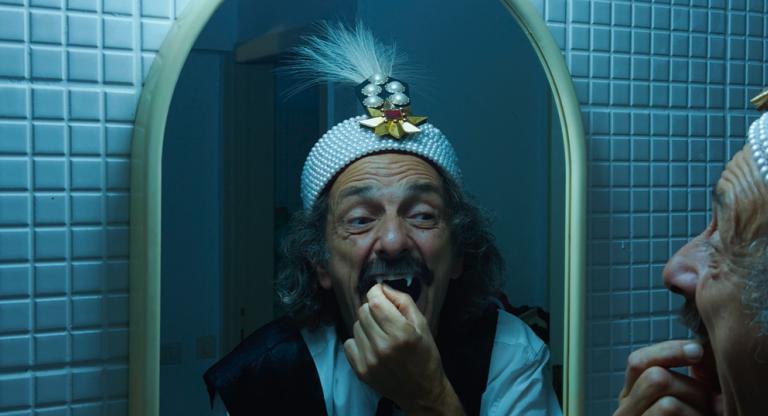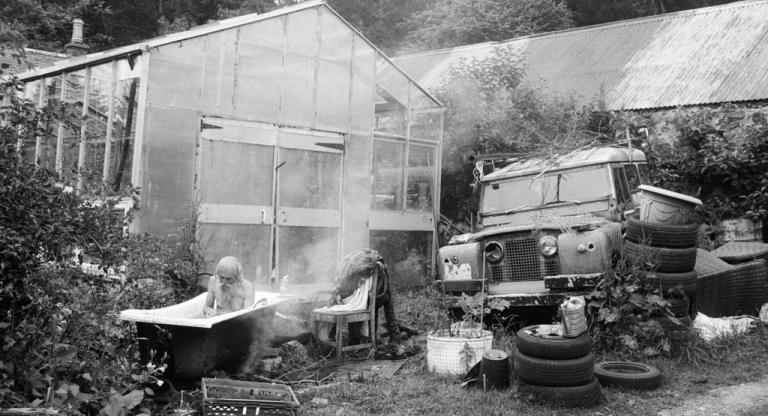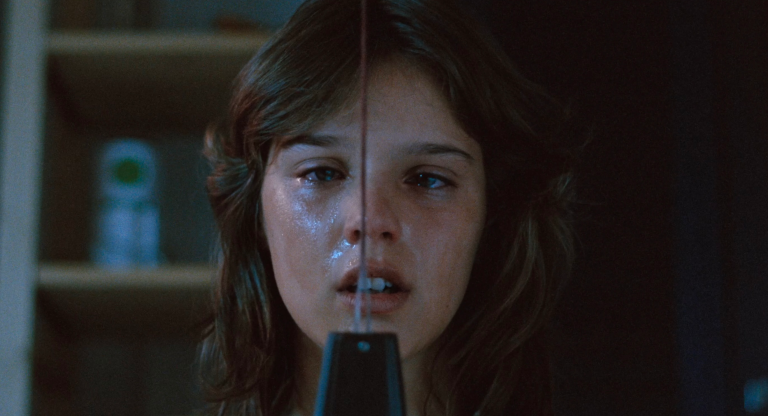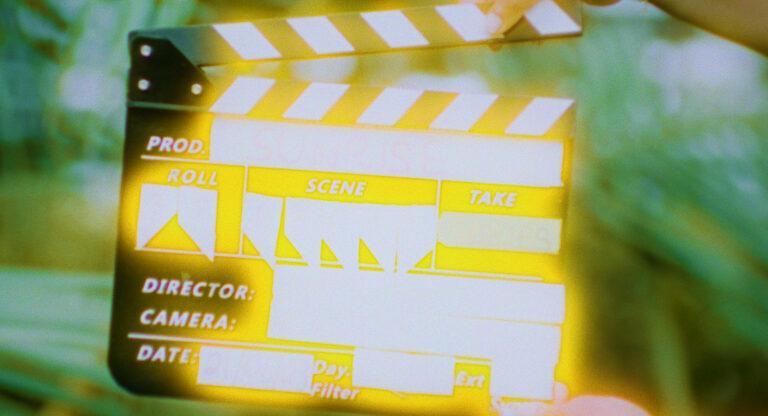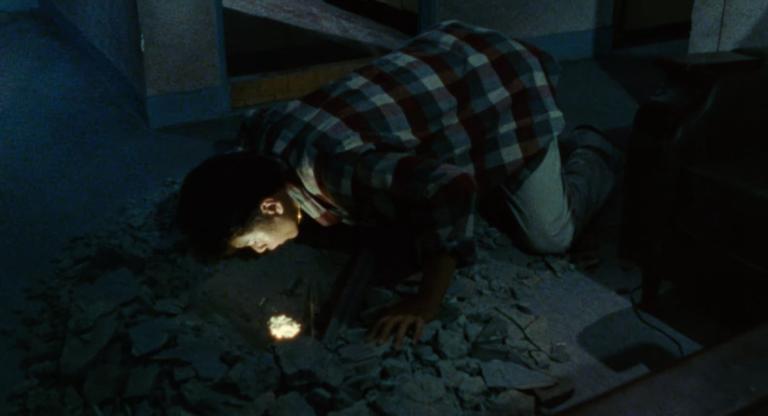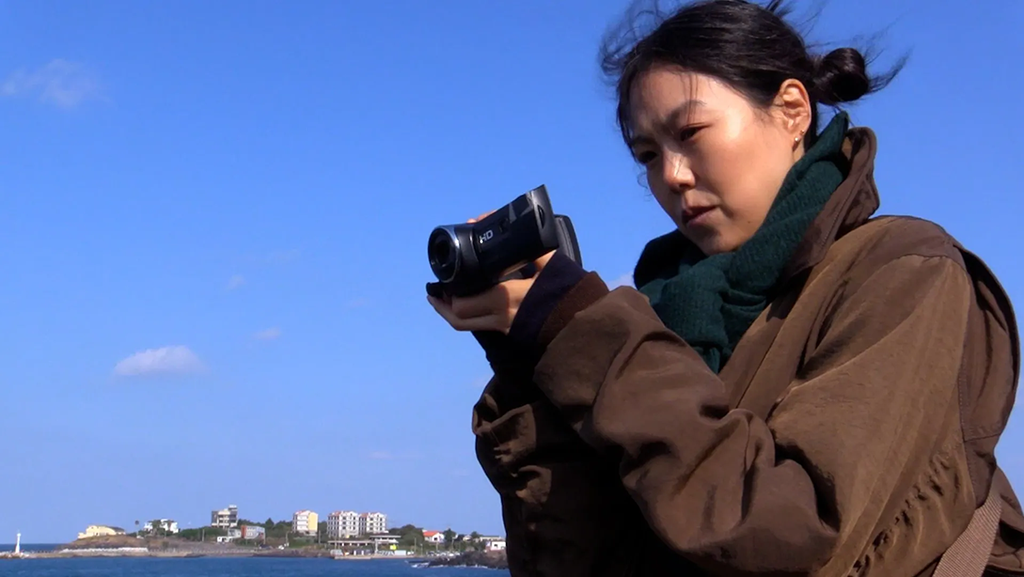
“Experimental film, what’s that?” asks Sanghee’s (Kim Min-hee) mother about Sanghee’s work with bemused condescension in Hong Sang-soo’s latest film, Nowhere to Lay My Eyes (2026). Watching said film during its premiere at the 79th Locarno Film Festival reminded me that film festivals are, behind the pomp and circumstance, an invitation to reflect on the meaning of cinema. Hong, one of the least commercially-minded, celebrated narrative filmmakers working today, is nothing if not reflective and often offers the perfect opportunity to look at the fundamentals of the artform. With an ironic eye set on filmmakers and artists struggling to make simple works that touch on the basics of human experience and natural beauty (Sanghee’s most recent film is about a flower on the side of the road) his films gently question the entire meaning of cinema. While Hong’s films are pretty different from those of his protagonists’ films, one can sense that, at the core of Hong’s philosophy, is this notion that films should capture the tiny, everyday details of life. While never explicitly stated, it amounts to a belief in the idea that art is able to offer us a deep and vibrant connection to the real world that can, hopefully, move us into closer harmony with our environment. That cinema can do much more than that is obvious, but I often find that films like Hong’s, which focus on the smallest, simplest connections in life, are not only the most moving, but also the most capable of effecting change in me on the personal level because they strike at the fundamental dynamics of how one relates to the world.
It’s especially pertinent to not lose sight of this kind of cinema during a film festival, where one is constantly ranking movies even before one has seen them, trying to sniff out what's important, what's major, what's topical, and what could be an award winner. Festivals are places where a wide variety of well-crafted art cinema is often experienced more like a buffet than a tasting menu. If one wants to get a sufficient grasp of what’s on offer, one has to stack one’s plate high until one leaves not in a state of grace, but exploding into a mess of regurgitated bile like Monty Python’s Mr. Creosote. It’s a tiring game of constant comparisons, offering so many variegated ideas of what important, worthwhile cinema is, that it can be hard to focus on simple things such as the beauty of a flower on the side of the road, as Sanghee gestures to. Then again, usually the point of going to a film festival is not to find beauty in ordinary things, but to arrive at a panoramic view of a moment in time of cinema and to discover future masterworks. A festival, by design, is a distillation of the contemporary into a curated hodgepodge of films that certain programmers feel are worth elevating. In fact, the very exceptionality of traveling to a foreign city and dedicating time to do nothing but engage with the films on offer sets an expectation of exceptionality in the films and programming inherent to the entire ordeal.
It was my first time attending Locarno, which I’ve largely only known for its reputation as the most adventurous of the major festivals—the one that always manages to squeeze out exciting talents on the cutting-edge of cinema even if its status is one notch below Cannes or Venice. Since artistic director Giona A. Nazzaro took over in 2021, it has been the launching ground for career-defining works by Alexandre Koberidze, Radu Jude, Eduardo Williams, and Helena Wittman, just to name a few filmmakers. I was disappointed then to feel a palpable lack of films that felt capable of pointing the way forward for cinema or providing me with hope in the medium, let alone the world. It’s never an insult to say that a film festival accurately reflects its times since that’s partly what it’s meant to do, but when the current moment feels so rudderless, cynical, and meaningless it’s also a bit disappointing. There were many decent films, a few great ones, some terrible ones. But, what pervaded was a lack of clarity or consensus on what, if anything, might actually prove to be politically or aesthetically important now.
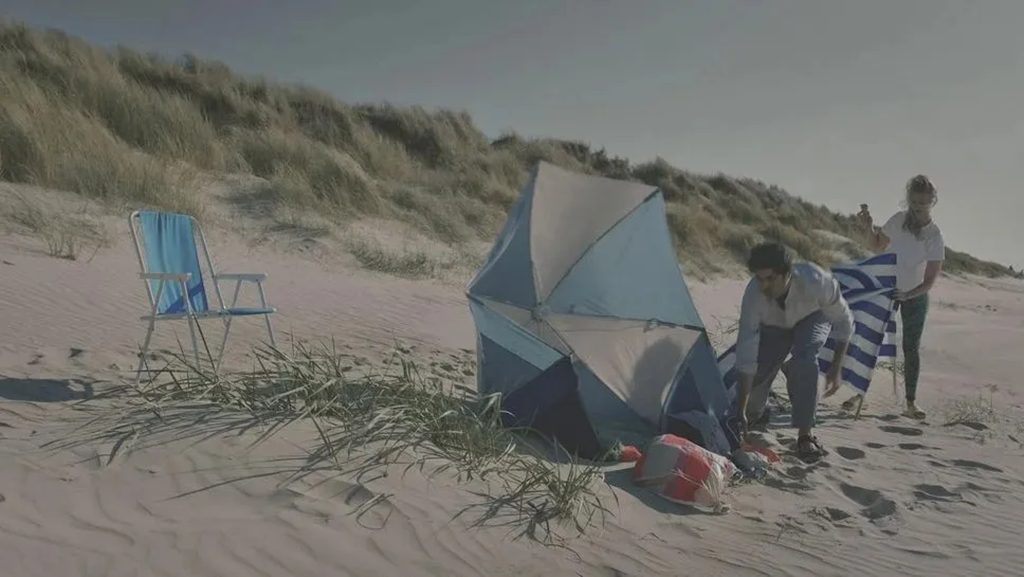
If there was a movie that felt most uniquely attuned to today, in the most derogatory meaning of those terms, it was Nicolaas Schmidt’s September Afternoon (2026), a dreary film that annoyed me throughout its scant 75-minute running time. It is an exercise in unending futility for both characters and audiences. The film starts with an opening card that declares it “a post post modern persistence parable.” More taken with form than plot, it follows a family on a beach outing as the father tries to set up an umbrella while the mother eats ice cream as she slowly strolls the shore. The film is dialogueless and consists of highly choreographed, tedious camera movements that Schmidt captures through a series of unending zooms, pans, and static close-ups. The camerawork is absorbing, even though the film is largely dominated by a sense of unending affectlessness. This pervasive apathy is most felt in the sound design, which largely consists of howling wind and a 15-second loop of a vaporwave-ish beat that starts quietly and slowly rises to an almost ear-deafening volume over the course of 40 minutes. If Samuel Beckett is Laurel and Hardy without much genuine joy, September Afternoon is Beckett without any palpable sense of the human, suggesting, in its own post post-modern way, a world where even the meaningless of life no longer has any meaning. It’s an idea that I found deeply cynical and borderline contemptible. Almost a noxious antithesis to Nowhere to Lay your Eyes, it was, however, at least compelling in its own mean-spirited manner and provided a genuine feeling of the contemporary along with a deep emotional reaction in me—which, is what a worthwhile film should do.
Comparing a festival’s retrospective to its selection of new films is always a form of cheating, but this year’s sidebar dedicated to the Hollywood blacklist was unique in that it provided not just a collection of great films, but also an implicit philosophy about the meaning of cinema. The importance of the Hollywood blacklist to both its victims, its perpetrators, and its scholars lies in the idea that cinema can be a vehicle for political thought and expression. As idiotic and contemptible as Joseph McCarthy was, he firmly believed in the notion that cinema could be a political art, one capable of swaying the masses with distinctly leftist possibilities. Besides the tangible effects the blacklist had on its victims and the ways in which it drove Hollywood further toward the notion of mindless entertainment as a virtue in its own right, the primary importance of this period of film history is in the argument it staked over what the power and purpose of cinema is. Across the 39 films programmed for the series by Ehsan Khoshbakht, one finds a powerful belief in the idea that cinema can affect material conditions. Pressing contemporary concerns were everywhere across the series, from muckraking masterpieces like John Cromwell’s Caged (1950), a vicious woman-in-prison film that tears into the carceral system, to brutal social dramas like Clarence Brown’s Intruder in the Dust (1949), a matter of fact depiction of Southern racism based on the William Faulkner novel of the same name, to thinly veiled genre-critiques of McCarthyism itself like Allan Dwan’s Silver Lode (1954), a western where the heavy is a sham federal agent named McCarty.
Whether one believes in the power of cinema to enact real world change, the idea of a cinema deeply connected to its immediate circumstances and capable of cultivating that same form of engagement in its audience, is, in its own way, not too far from Hong’s fascination with a cinema that closely observes the everyday. This impulse was present in many of the other standout films from the festival, such as Ana Vaz’s Hanabi (2026), an impressionistic essay film on the Fukushima nuclear disaster that compellingly mixes first-person, second-person, and third-person perspectives; Luise Donschen’s Tomorrow a Long Time Ago (2026), a fragmentary narrative that is Schanelec-like and moves between German reunification, a classroom today, and descriptions of the 16th century German Peasants War; and Ann Oren’s Objet a (2026), a kinky Dead Ringers-like story of two hand surgeons who get off on fetishizing the contemporary feeling of impending apocalypse.
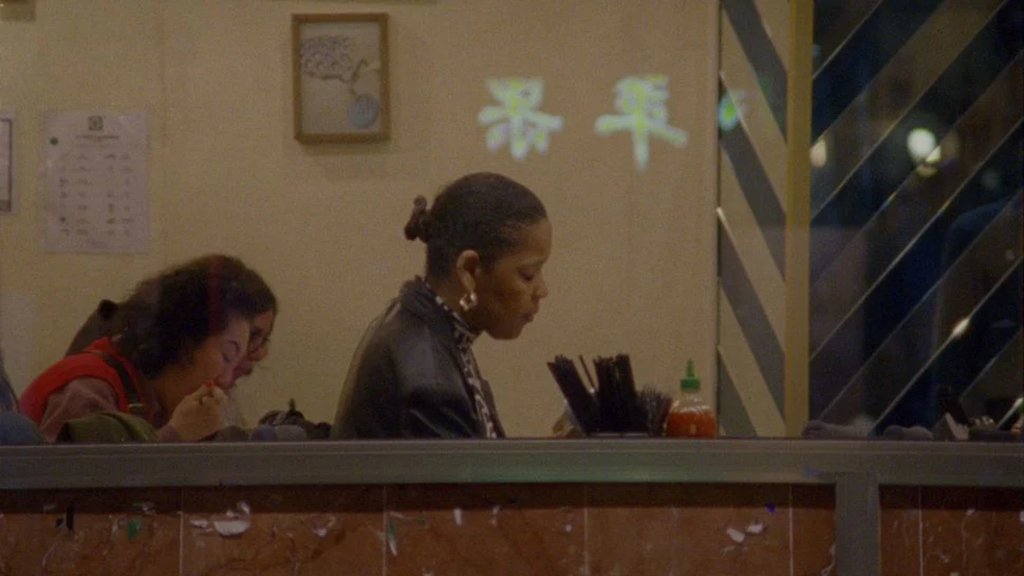
One of the films at the festival with the deepest connection to the ways in which we belong to the world was Beatrice Gibson’s At Night (2026), a major standout from Locarno’s program dedicated to first and second time filmmakers, “Concorso Cineasti Del Presente.” Opening with an Alice Notley quote that begins, “I am a tone of voice…,” the film gracefully hones in on a very specific timber of emotional experience and interhuman connection, conveying a subtle affect of feminine experience that is at once alienated and communal. It’s a polyphonic work that aims at a collective sense of being as it shuttles between Akerman-esque views of Paris at nighttime and monologues delivered by various women on their feminine experiences of sex, relationships, childbirth, and labor. Shot on film by the filmmaker Ben Rivers, At Night is beautiful to look at and richly structured, oftentimes blending scenes, environments, and characters together in subtly mysterious, yet graceful ways.
The film’s centerpiece sequence, a long conversation set in a café between various women, is delivered in a series of close-ups that avoid typical patterns of shot/reverse shot while still emphasizing the process of talking and listening. Speakers are often withheld until they’re nearly done talking; reaction shots linger past their moment of initial significance until they take on new meanings as portraiture; camera pans around the table have a probing, documentary-like quality as if they were motivated by pure curiosity. The result is a vivid realization of the dialectical relationship between the individual and the community that bleeds out into the film’s sound design and relationship to urban space as well. Dialogue and ambient sound effects fade in and out in mysterious, sometimes asynchronous ways as one scene gives in to the next gently, yet without warning. As vibrant as the city feels, the presence of men is kept almost entirely offscreen, heard, but rarely seen, becoming either a structuring or utopian absence depending on how one wants to look at it.
“I can always like something, regardless…” Sanghee says in voiceover during her film, which we see at the end of Nowhere to Lay My Eyes. It’s a good motto for a film festival where the point is really not to rank and evaluate films, but to hold them against one another in order to see what interesting similarities and contrasts emerge. A good festival, like Locarno, looks janus-faced to the future and past, holding cinema’s potential against its history to create a powerful glimpse of the present. While a strong vision of cinema’s future might not have been abundantly clear from my time at Locarno, its best films, like Nowhere to Lay My Eyes and At Night, were able to provide something of a means for understanding life and cinema, for sensing and feeling the present. When the path forward is as foggy as it feels today, such films can act as lighthouses, orienting us even when we’re still spinning around in the dark.
See Also