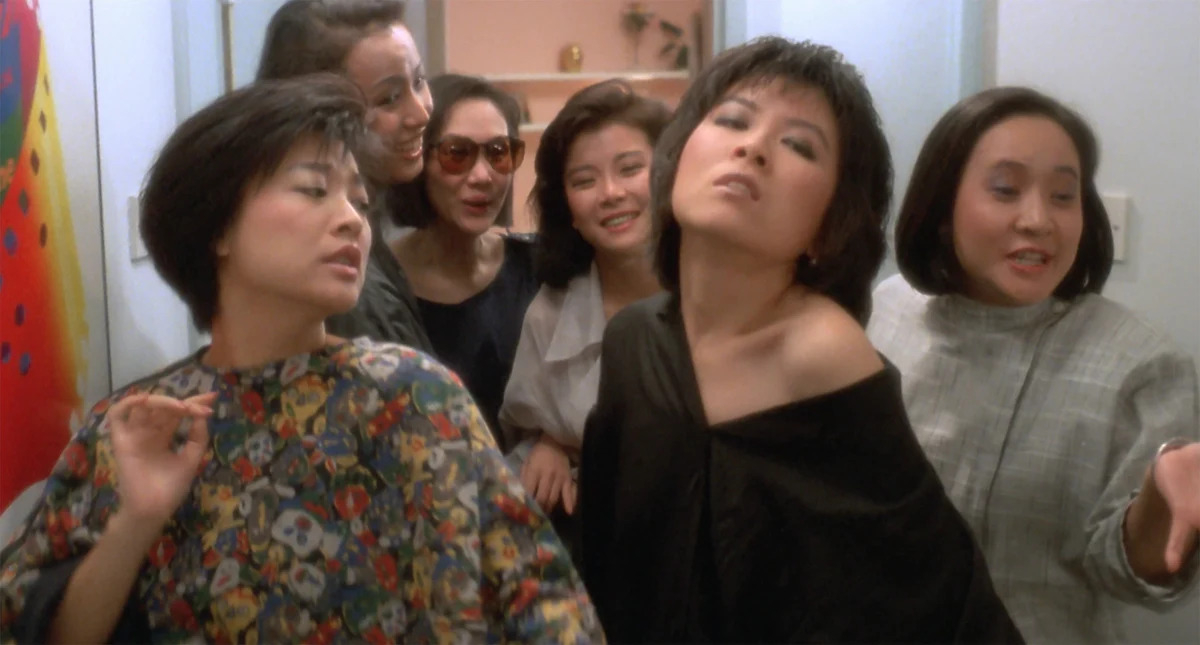
“Women are so tacky,” says a woman, surrounded by her girlfriends and a couple of bachelors they've invited to lunch to test their dating eligibility. The ladies are sharing what they're attracted to the most in men: one says she likes strong hands that aren't slim and dainty; one says she likes hairy chests; one says she likes tiny butts. “Tacky” can mean many things, but it usually refers to low-brow or cheap taste that lacks elegance or style. It's not anyone's body type here that is tacky, it's how anyone could assess partnership eligibility based on checking surface-level visual boxes. But, for the women in Stanley Kwan’s Women (1985), dating is a social pastime that in the best cases leads to romance and in the worst cases leads to stories of a dud. These women are divorcées, singles, mothers, childless, suicidal, and gay. The tackiest thing about them is the idea that they could settle for one easy, shallow idea of happiness; but, none of them are seeking ways to put their individual desires aside for the sake of upholding traditional family values or images.
At the center of the ensemble is Bo-er (Cora Miao). Within the first two minutes of the film, she says she wants to divorce her egotistical husband of eight years, Derek (Chow Yun-fat). While they have an adorable son together, Dang Dang, he’s shuttled between them throughout the three weeks of their pending divorce in a classic form of custody torment: Derek and his much-younger bratty girlfriend, Sha Niu (Cherie Chung), spoil the boy, while Bo-er must remain the disciplined mother. Dang Dang loves each parent when he’s with them, but understandably is caught between sides, with no autonomous comprehension of the situation at his age yet.
Bo-er unflinchingly moves into this new phase of her life: an apartment of her own, meeting new men (and women), and parenting on her terms. “I put up with everything while I was married,” she tells her mother. “I had to fart in the bathroom, lest he think I'm crude. How pathetic!” Shirking off family and marriage customs, Bo-er and her girlfriends want to be honest with themselves about what and who they want, without being beholden to any of the expectations tied to their gender roles. Like a chaste precursor to Sex and the City, Kwan's debut gives Hong Kong women independent attitudes and plenty of style. Having been a closeted gay filmmaker in Asia until publicly coming out in 1996, Kwan demonstrates a personal understanding of what it means to resist, or be restricted by, societal norms, being more sincere with Women than provocatively critical.
Women screens this evening, June 11, at Asia Society as part of the series "Stanley Kwan: Ladies Man."