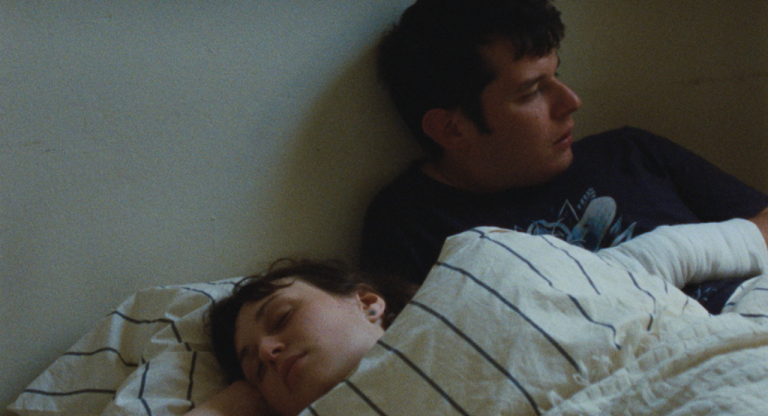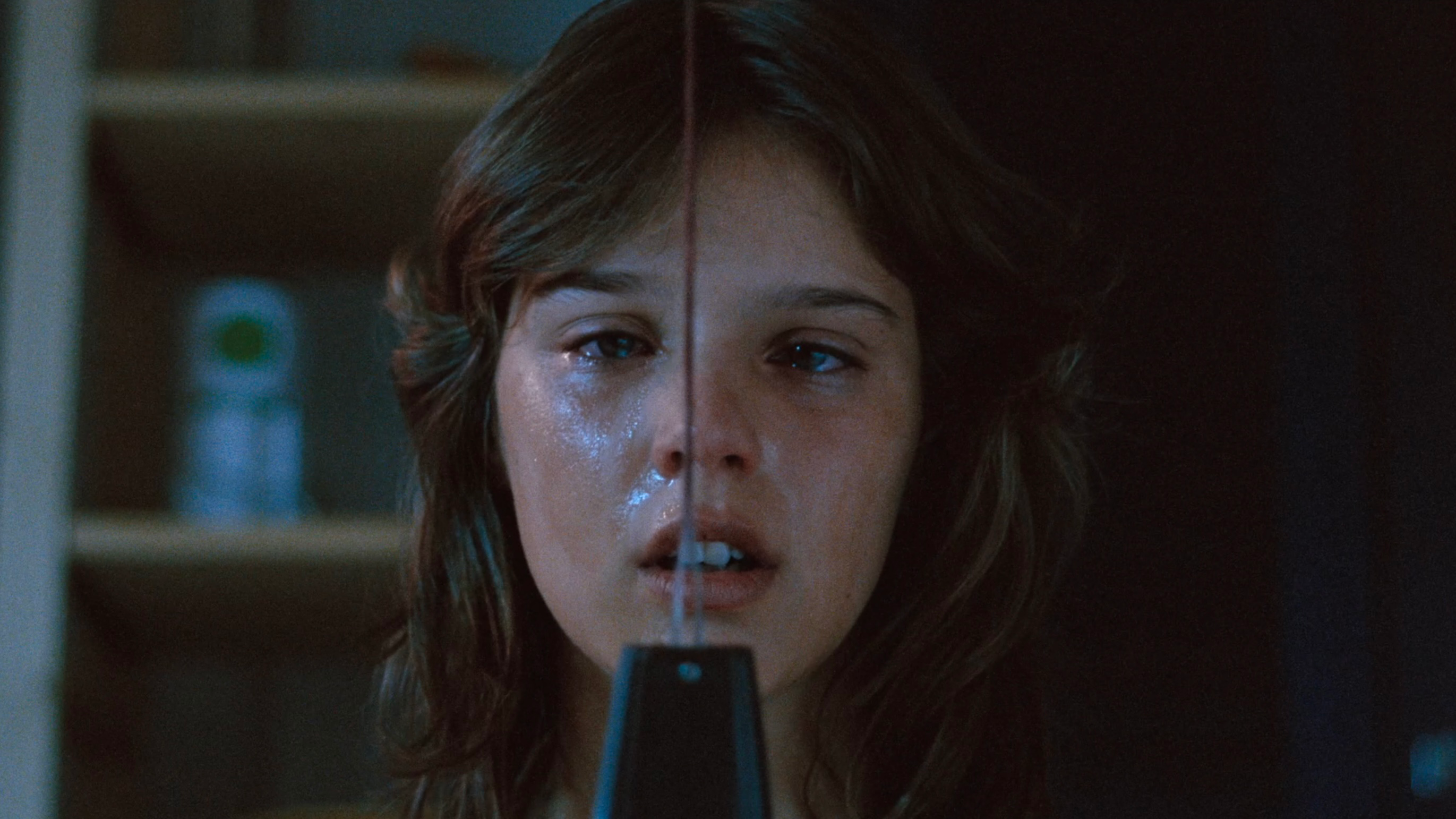
The boutique film label Fun City Editions recently released Eckhardt Schmidt’s Der Fan in a new 4K restoration sourced from its original 35mm camera negative and its original soundtrack, unheard since 1982. To coincide with the film’s ongoing run at Metrograph, we’re pleased to publish an excerpt from Jacqueline Castel’s new essay about the film, which will be included in full with Fun City Editions’ forthcoming Blu-Ray release in early 2027.
Der Fan is writer and director Eckhart Schmidt’s long underestimated 1982 German New Wave psychodrama, exploring fanaticism, sadomasochistic obsession, and body horror as a metaphor for the rise and fall of Nazism.
Long captivated by this haunting West German allegory, I set out to program a series of “Cold Wave” screenings of Der Fan in the winter of 2017 to mark the film’s 35-year anniversary. I was determined to bring Der Fan to North American audiences for the first time on 35MM–and while working in London I smuggled out a loaned print in my suitcase.
My dedicated trafficking led to personal conversations with Schmidt himself, who confirmed my presentation of Der Fan as a political statement on the legacy of a divided Cold War Germany. Schmidt had sought to pose the question of who was to blame: Hitler or the public who supported him?
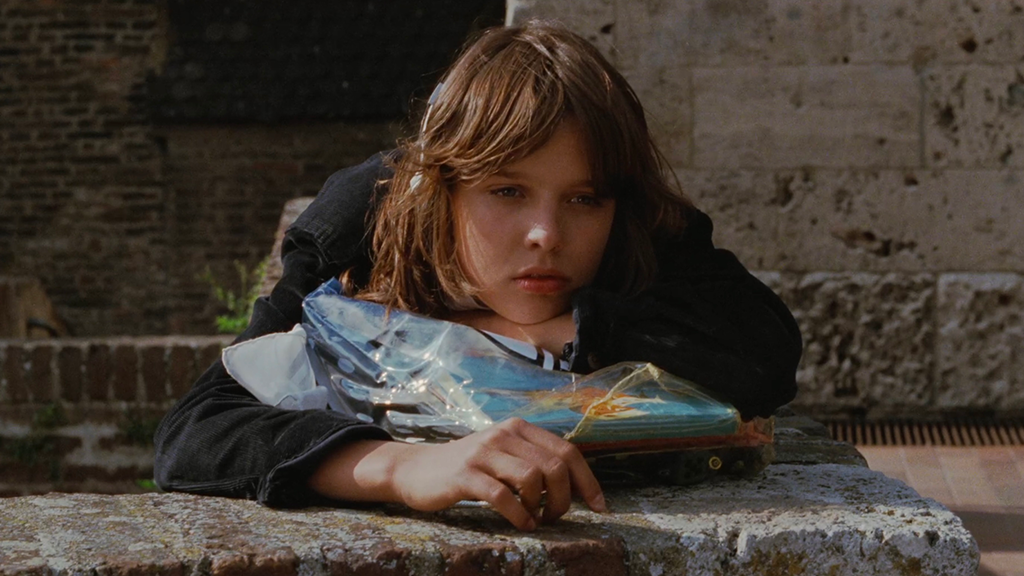
The story of Der Fan was first conceived as a short diary entry of an obsessive teenage girl, authored by Schmidt and published in the second issue of his German punk fanzine S!A!U! in 1978, and was later adapted into Der Fan’s screenplay. Shot in just ten days, Der Fan was the third role for 16-year-old Luxembourgian actress and TV host Désirée Nosbusch, whose nude scenes caused a scandal upon the film’s release, both with the public and between the director and star, when Schmidt refused to remove two meticulously storyboarded and pre-approved nude shots of Nobusch from the final cut.
Der Fan’s domestic launch suffered from negative critical response, as its analysis of National Socialism was lost on alienated reviewers. The film that most critics and viewers dismissed in 1982, however, has slowly been reassessed and understood for its subtextual layers, a testament to Der Fan’s potent and urgent legacy nearly half a century later.
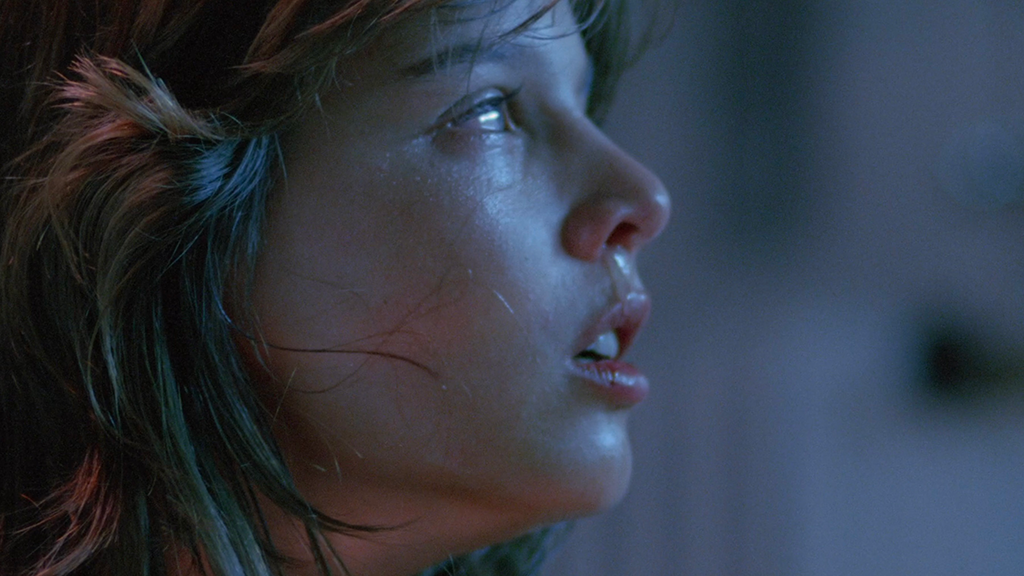
Der Fan opens with antisocial crypto-fascist teenager Simone ascending the hallowed spiral staircase of the Ulm Minster. Simone gazes out across Germany and prays for her tyrant savior, known only as “R,” to rescue her from her angst-ridden existence.
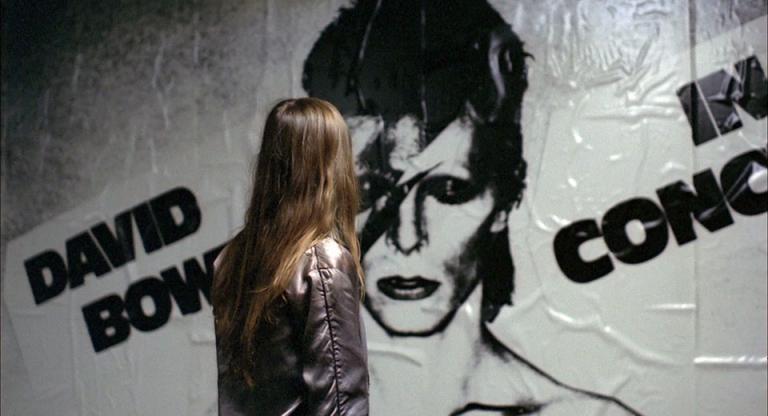
For any despot, image is everything, and synth pop star R is at the height of aesthetic opportunism—think a Telekon-era Gary Numan leading an Oswald Mosley rally backed by an industrial soundtrack. His logo, two B&W lightning bolts encased in a circle, is a mix of the Sig Runes of the S.S., Ziggy Stardust, and Throbbing Gristle. Played by Bodo Staiger, actual front man of Neue Deutsche Welle band Rheingold–who also supply Der Fan’s minimal synth soundtrack–R embodies the fetishized aesthetic of state control.
Alienated by her family, school, and peers, Simone withdraws into a perverse realm with R instead, penning daily suicidal love letters, memorizing the lyrics she imagines him whispering in her ears, and plastering her bedroom with a dizzying array of teen-rag fanfare. In an early montage, R’s mass-produced replicas stand before an army of the German public Sieg Heiling their Führer as the rally chants of the Third Reich collide with the songs Simone can’t stop repeating on her headphones. R’s penetrating gaze supervises the most intimate moments of Simone’s childhood bedroom, presiding over her nocturnal fever dreams and summoning her to his life-size altar in the middle of the night.
Tensions rise at home when Simone’s father threatens her with boarding school, prompting her to embark on a perilous journey to the dark heart of Germany. Like some New Wave pilgrim, Simone hitchhikes to Munich, the ideological birthplace of the National Socialist movement and the launchpoint of Adolf Hitler’s political career. She arrives in an idyllic Munich landscape of Grecian columns and lush nature, populated with frolicking nubile maidens–a promise of racial purity in a metaphorical Garden of Eden, free from the sorrow and disparity of post-WWI Germany.
Simone stalks the local television station, restlessly awaiting the arrival of R. When confronted with her idol, Simone collapses in the parking lot. Waking in R’s arms, Simone is later ushered into the darkened studio audience as he performs live. Donning a shaved head and an 80s riff on the Sturmabteilung paramilitary uniform, R mechanically repeats to the camera “das steht dir gut” (“that looks good on you”), beckoning his followers to conform.
Post gig, R whisks Simone off to an abandoned estate, a reliquary to the ghosts of the past. A large painting lies hidden at its center, a replica of the painting produced for the cover of the Berliner Illustrirte Zeitung in honor of the 1936 Berlin Olympics. Authored by artist Ludwig Hohlwein, a dedicated member of the Nazi party, this is one of Schmidt’s most overtly political references in the film.
Entering a darkly hallucinogenic chamber of hanging silks in red, white, and black, Simone disrobes as if on the stage of an opulent political spectacle and makes love tenderly with R, consummating their apocalyptic affair.
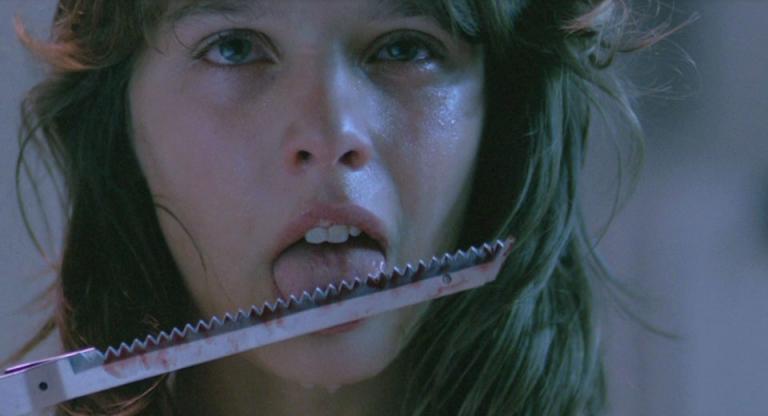
Their tryst ends typically, like any rock star does his groupie. Seduced and discarded, a tear-stained Simone cries out in disbelief as R leaves. In a strike that echoes the shattered ruins of Germany, she assaults R with a statue of the goddess Diana, martyring him in a bittersweet farewell. Lost in a delirious rite of communion, Simone ritualistically cannibalizes his body, preparing R for candlelit meals like a deranged Last Supper.
Returning to Ulm, a bereaved Simone sports a freshly shaved head, clad in her lost love’s uniform, in an eerie allusion to “les tondues,” the French women whose heads were forcibly shaved for “horizontal collaboration” with the Germans. Instead of humiliation, R’s death has only strengthened Simone’s convictions. When confronted with a TV broadcast depicting R’s disappearance, she muses: “I know where you are. Don’t worry, I won’t betray you.” Her lips form a veiled smile as she reveals she’s missed her period, whispering “I will not give you away… I will deliver you into this world.” Her last words form an unnerving coda on the hidden and eternal sympathies of extremist ideology, still alive in the imagination of authoritarian regimes to this day.
As a complex portrait of totalitarian psychology at the peak of the Cold War, Der Fan warns of fanaticism, in all its forms.
Der Fan screens tonight, August 31, and throughout the week, at Metrograph.
See Also