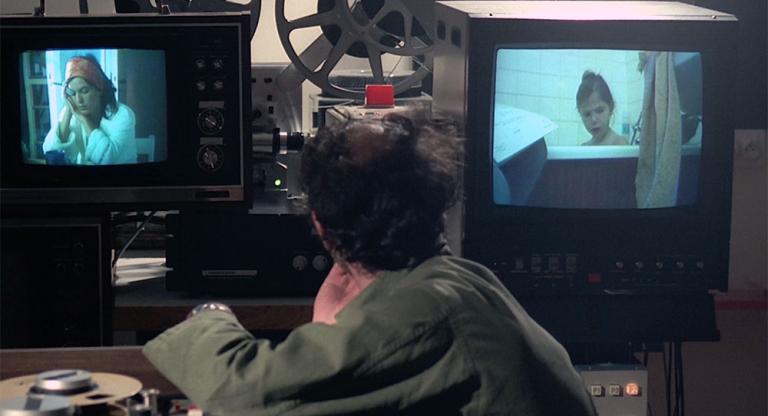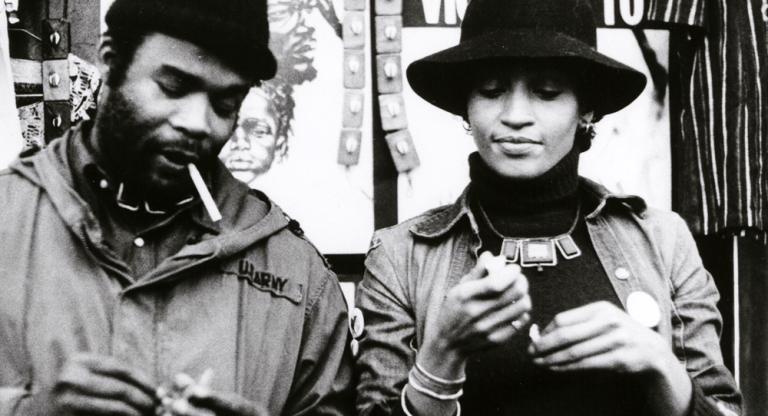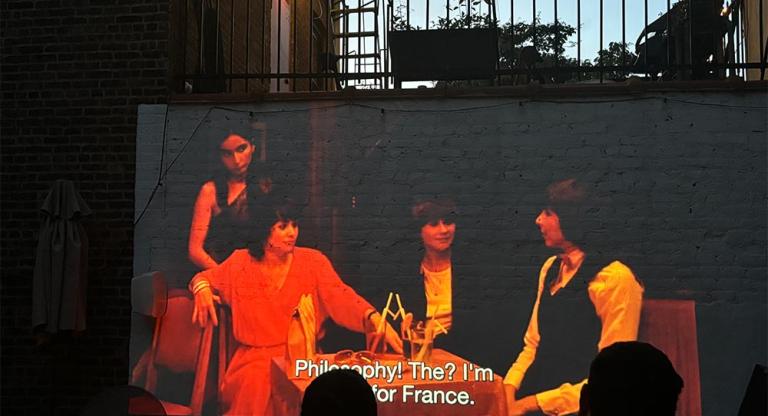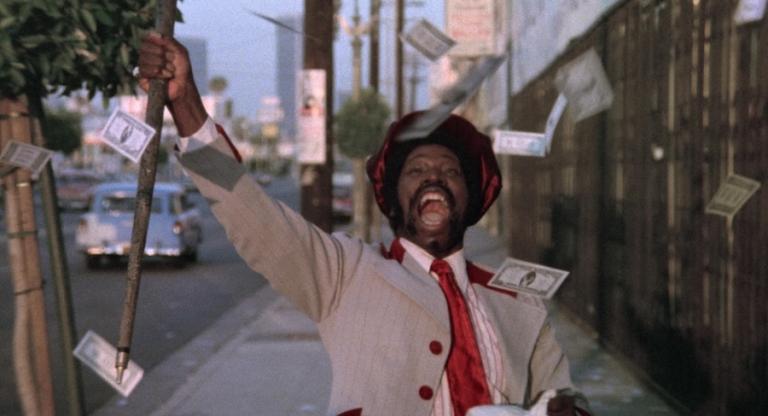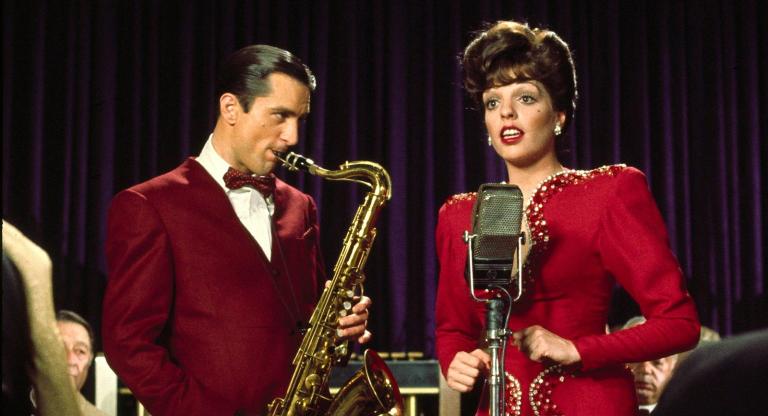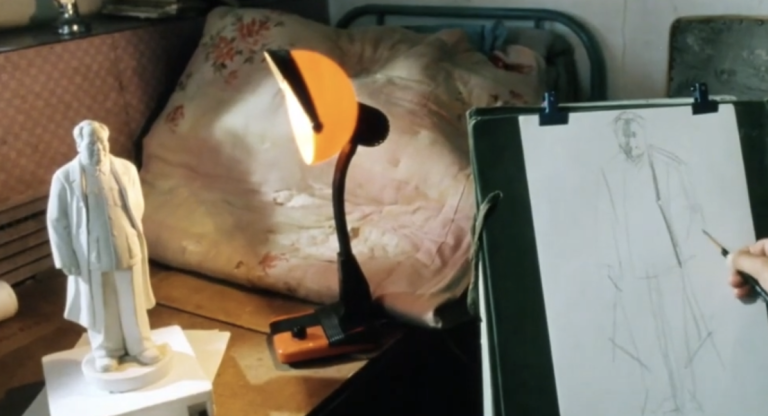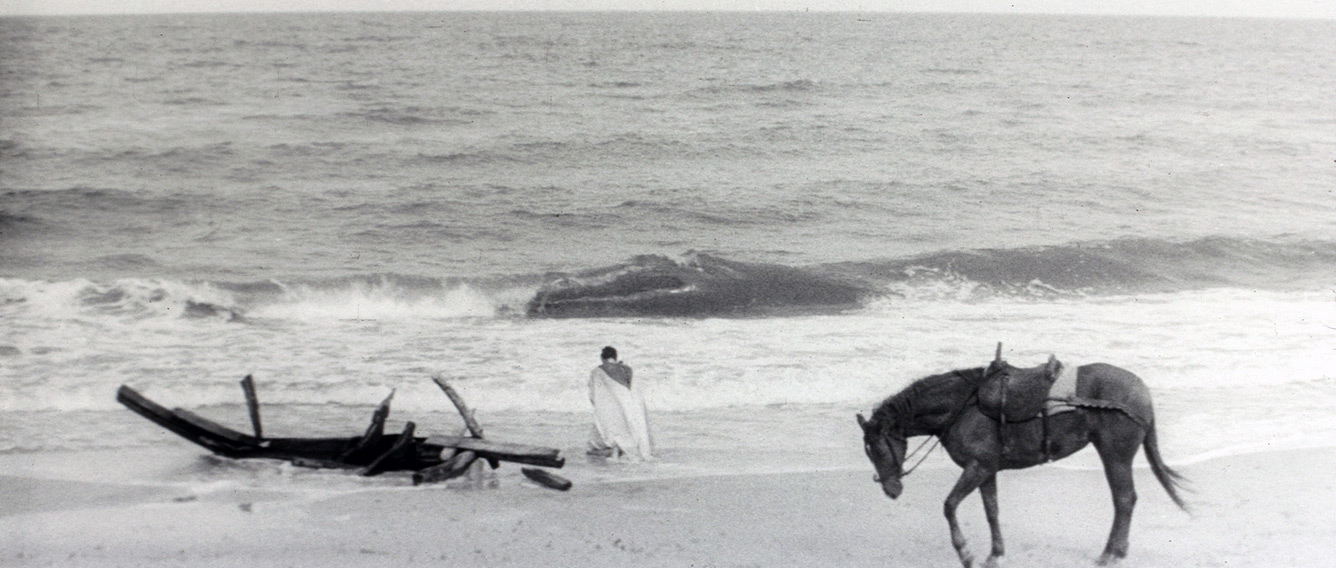
New York moviegoers were treated to a full retrospective of the East German director Konrad Wolf’s work at Anthology Film Archives this past month. Earlier still, I attended a rare presentation of the Czech filmmaker František Vláčil’s The Valley of the Bees (1968, pictured at top) at the Museum of Modern Art in late January. A month before that, Spectacle hosted a series dedicated to the Yugoslav Black Wave. And, while I was unfortunately unable to attend the screenings in these series, Metrograph hosted both a Juraj Herz retrospective and a Ukrainian Poetic Cinema program in November. It appears a wind from the East has struck New York movie theaters.
Since it was The Valley of the Bees that prompted me to write about this quasi-phenonemon, I’d like to begin there. Made as a follow-up of sorts to the widely beloved Marketa Lazarová (1967), Vláčil’s film depicts the tribulations of a young Teutonic knight who flees his order. It was made with the same props and sets as Marketa Lazarová, and much like that film operates in a heightened poetic mode—its camera light and wayward, like that of Miklós Jancsó or Andrei Tarkovsky. It also has an overt homoeroticism to it, and more than that, a directness about its representation of sex and violence that is shocking to this very day. The opening scene, for example, sees the young knight’s father throw him against a stone wall as a child. The audience at MoMA gasped. Later on, the knight kisses his step-mother in a passionate make-out session. The MoMA audience was silent through this scene, perhaps still speechless from that opener and all that comes after it. And while The Valley of the Bees is full of such shocking material, its poetic register balances out its provocations with philosophical commentary on the nature of religious and feudal orders, as well as more, for want of a better word, transcendent sequences. It feels like a film made straight from the heart with all of the emotion, zeal, and thoughtfulness such a venture would entail. Whether or not this is the case with all of Vláčil’s films is beyond me, as I have only been able to watch Marketa Lazarová and The Valley of the Bees. But, it seems that this is the case for most moviegoers on this side of the Atlantic.
Much of the Czechoslovak cinema New Yorkers are acquainted with, it seems, relates to the New Wave. Black Peter (1964). Daisies (1966). Closely Watched Trains (1966). While Vláčil was making films around this same period, his aesthetic sensibilities couldn’t be any more different from those linked to the aforementioned movement. “Vláčil is not to be considered a member of Czechoslovak New Wave,” Matêj Strnad, Head of Curators at the National Film Archive in Prague, told me. “That was very much a social thing, in terms of the people I mentioned [Věra Chytilová, Miloš Forman and Jiří Menzel] having all studied at FAMU in the early ‘60s and having their debut films come out in the mid-60s.” Vláčil's career started in 1950, when he was part of Czechoslovakia's Army Film studio. It wasn’t until 1960 that he started working at Barrandov Studios, where he directed his first feature-length film, The White Dove, and the three Medieval period films he’s most associated with in English-speaking countries: The Devil’s Trap (1962), Marketa Lazarová, and The Valley of the Bees. “That was the period of his greatest physical and mental powers,” said Strnad.
The films Vláčil made in this period are, indeed, astounding. They’re high-budget period pieces set in an abstracted Medieval period, as dense in plot as their source novels but totally free in terms of their editing and visual style. In Marketa Lazarová, multiple stories overlap as the film drifts from one place and time to another to almost delirious effect. It feels as if the film’s narrative is endlessly extending itself, with the camera being used to film it getting more erratic and adventurous as the tale goes on. It is a marvel to watch and it was a real feat to make, with reports stating that by the end of its three-year production Vláčil had reduced himself to a skeletal figure from stress, dedication, and drink. Yet the fact remains that this Medieval trilogy represents a rather small fragment of the filmmaker’s filmography. His career extended to the late ‘80s and Strnad shared that most of his work was set in more contemporary settings. What unified his films, above all, was a clear interest in interiority. So, whether his films were set in the Middle Ages, wartorn Czechoslovakia, or more contemporary times, they always dealt with psychological doubts and behavior. That his films reached such an epic scale in the ‘60s had a lot to do with the changing production landscape in Czechoslovakia, which was undergoing a period of liberalization that would impact all areas of social life and cultural production.
Similar freedoms manifested themselves in the Yugoslavian Black Wave, a loose film movement that saw directors explore taboo topics such as sex, social alienation, and war in the wake of the nation’s split with Stalin. Much of this movement’s early output was showcased in 2023 as part of MoMA’s “Black Wave to White Ray: Yugoslav Film of the 1960s” series, but more recently Spectacle turned its attention to three films associated with the Black Wave that came out in the ‘70s with their own program, “Yugoslav Black Wave: In Color.” The films included were Jovan Jovanović’s Young and Healthy as a Rose (1971), Miroslav Antić’s Breakfast with the Devil (1971), and Bahrudin ‘Bata’ Čengić’s Life of a Shock Force Worker (1972). The first of these is quite anarchic, but they all share a similar poetic sensibility that deepens their social critique and magnifies the beauty of what’s captured on camera—whether it be criminals in cramped apartments or long stretches of pastoral landscapes.
“In the early ‘60s you get a lot of black-and-white stuff that mostly focuses on the war,” said Manny Unger, volunteer at Spectacle. “Then, in the early ‘70s, which is what we ended up programming, it’s more colorful stuff that feels like a direct response to other New Wave movements in Europe, especially the French New Wave and Czech New Wave.” Perhaps the best example of such a film is Dušan Makavejev’s WR: Mysteries of the Organism (1971)—a radical venture that relies on Wilhelm Reich’s orgasmic theories to discuss sex and politics. But among those films shown at Spectacle it was Young and Healthy as a Rose that entertained this rebellious verve the most with its frantic account of a petty criminal’s rough and tumble life in Belgrade. “It’s like New Wave meets exploitation,” said Unger. “Someone genuinely does heroin in that movie and it’s really bizarre to think that was not, in any way, censored.”
This question of censorship, naturally, kept coming up in my conversations with Manny and Matêj, particularly in relation to the restoration of films from the Eastern Bloc. “For The Valley of the Bees it was a very straightforward process because we were able to discern which prints, of the ones we had, were period prints from the first release, unlike many other restorations that require tracking down the original versions and avoiding censored versions and their subsequent mutilations,” said Strnad. Manny noticed that a lot of the films he was researching shared a similar history. “What would happen was that a film was made and ultimately stored away for like 15 years and nobody knew that a copy of it existed until somebody found it in some cellar.” This has meant that certain films, especially of a lot of later Black Wave titles, are in an indefinite limbo, awaiting that moment when the right materials are found to carry out their restorations. The Yugoslav Film Archive in Serbia has spearheaded many restoration projects of earlier Black Wave films, but as is to be expected with the cultural heritage of a nation that came undone, the process of recovering these films has involved transnational cooperation among several film organizations in Europe.
Elsewhere, in Germany, it seems that state mandates have secured the fate of East German cinema. “We are very fortunate that the original negatives of all East German films—from the first film produced in 1946 until the last DEFA film in 1992—are available in the German Federal Film Archive,” wrote Hiltrud Schulz, Production & Outreach Manager at DEFA Film Library, UMass Amherst, in an email exchange with me. “This goes back to an archival law in East Germany, and it is an exception when you look into other film cultures.” In fact, it’s this archival preparedness that has allowed the DEFA Film Library to put together their Konrad Wolf retrospective at AFA. And while AFA was the only cinema in the world to screen the complete Wolf retrospective, DEFA Film Library teamed up with Goethe-Institutes worldwide to organize Wolf screenings everywhere from Tokyo to Buenos Aires. “We wish we could offer more retrospectives related to only one director, but the cost of restoration and subtitling would not allow this kind of series every year,” Schulz informed me. “We will celebrate the 80th birthday of our DEFA Studio for Feature Films this year and we plan to organize another, but smaller, film series focusing on more unknown films that need to be re-discovered.”
Questions of preservation and visibility have been on my mind a lot lately. In particular, because I have been thinking about the National Cinematheque of Venezuela and what might happen to its collection in light of the recent U.S. incursion. The Cinematheque doesn’t just hold Venezuelan films, but also several titles from across Latin America, particularly those of an anti-imperialist bent. To lose its collection would mean to surrender a wealth of countercultural cinema—if, in fact, it hasn’t already fallen apart due to the years of neglect that have been compounded by the longtime sanctions and general disinterest the world has shown toward Venezuela in the past decade or so. This could mean that, within a few decades, Venezuela’s cinema could find itself in a similar situation to that of the Yugoslav state—at the whim of lucky finds in random attics, preserved according to the laws of multifarious funding bodies with good intentions and strained resources. As Cuba’s humanitarian crisis worsens, I think similarly of its film heritage. And so on.
That film programmers in New York have turned their attention to states that no longer exist (East Germany, Yugoslavia, Czechoslovakia) is a wonderful thing. Such action embalms forgotten cultures and lives, preserving them for audiences of future generations to understand what has been lost to time. But how do we shift our attention to what is being threatened with erasure now? Film programmer Yasmina Price offers an answer with “Black Cuba” at BAM. The work New York theaters have carried out to showcase Palestinian cinema in recent years also provides an answer. AFA’s upcoming presentation of the Venezuelan documentary Morichales (2024) another. It is my hope that this desire to present more films from countries that are under the direct threat of American empire, or were once at odds with it, becomes more widespread, especially considering the alarming rate at which American aggression is growing. There are not just windows into other ways of living. These are, in fact, cinematic provocations—a means to incite political action, a push to offer aid, and a reminder that we must always rethink our place in society.
Feedback Loop is a column by Nicolas Pedrero-Setzer reflecting on each month of repertory filmgoing in New York City.
Special thanks to Juraj Machálek, Jed Rapfogel, Hiltrud Schulz, Matěj Strnad, and Manny Unger.
See Also