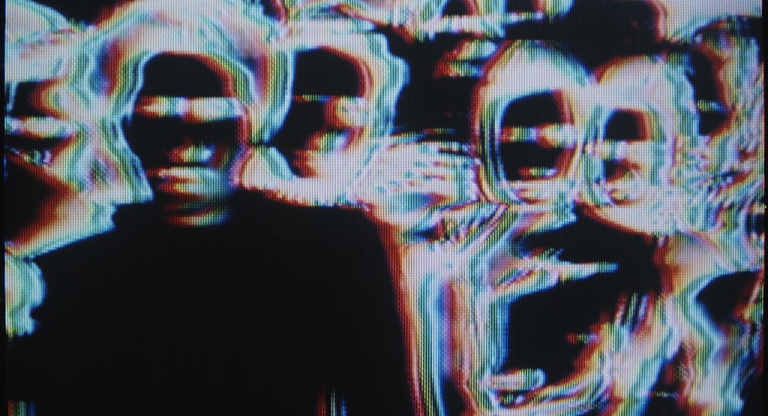
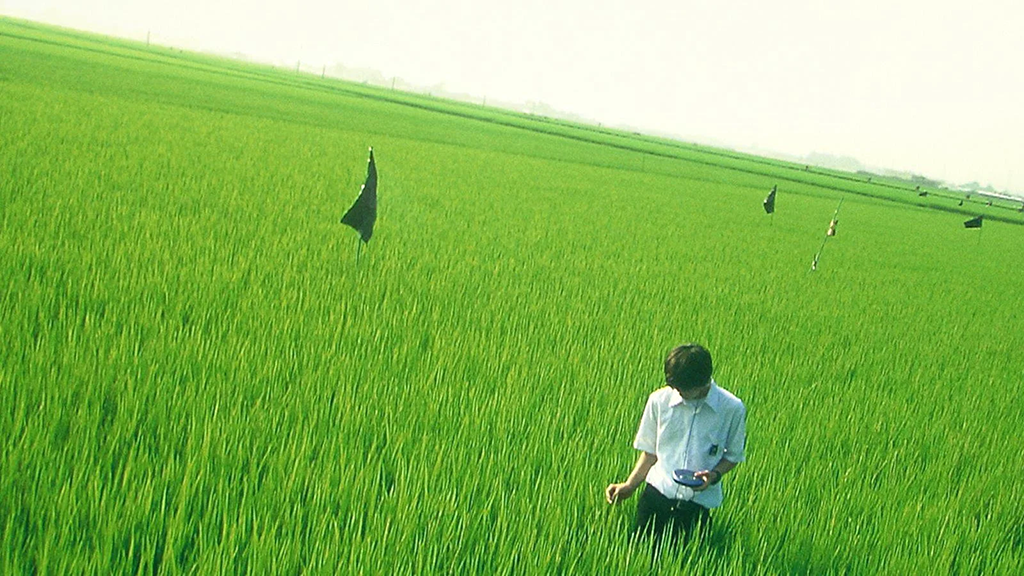
The perfect expression of Shunji Iwai’s filmmaking comes at the centerpoint of All About Lily Chou-Chou (2001), when a group of teen boys film their trip to Okinawa on a consumer-grade camcorder. It’s a moment during which the environment of the film is so lived in that it seemingly escapes the director’s hands; it feels like the characters themselves are creating the film, yet it is all still under Iwai’s careful control.
His sensibility—which pairs J-pop music with classical recordings, and delicate compositions with free-flowing camerawork—sees internal emotion heightened in the external world. Iwai’s work tends to focus on teenagers (Lily Chou-Chou, Hana & Alice) and people on the precipice of adulthood (Love Letter, April Story). He often presents this transitional moment in life by contrasting tenderness and naïveté with the coldness and violence people are capable of committing against each other. Even when he tackles adulthood head-on (Vampire, A Bride for Rip Van Winkle), Iwai preserves this melodramatic tension between two magnetically opposed ends of human nature.
Given his start in TV movies and music videos, Iwai demonstrates both flair and economy as a director. His signature blown-out windows are not only visually impressive, but work on a practical level too. Here, his camera finds frames within four-walled rooms, instead of approaching the axis of a set from the outside. Much like his characters’ emotions, Iwai’s locations feel simultaneously real and hyperreal. Even when he films a dystopian near-future, as in his sophomore feature Swallowtail Butterfly (1996), Iwai gives his shanty “Yentown” a handmade, junkyard texture rather than going for a more calculated aesthetic.
Iwai’s films are built from deep consideration (the director tends to write his films first as novels before adapting them for the screen) yet always feel like they are unfolding in real time. There’s another moment from Lily Chou-Chou’s production that exemplifies this: during the climactic concert sequence, when everyone is outside, Iwai and company wrote individual character cards for every single extra in the crowd, making what would otherwise be an anonymous sea of people come to life as a collection of individuals.
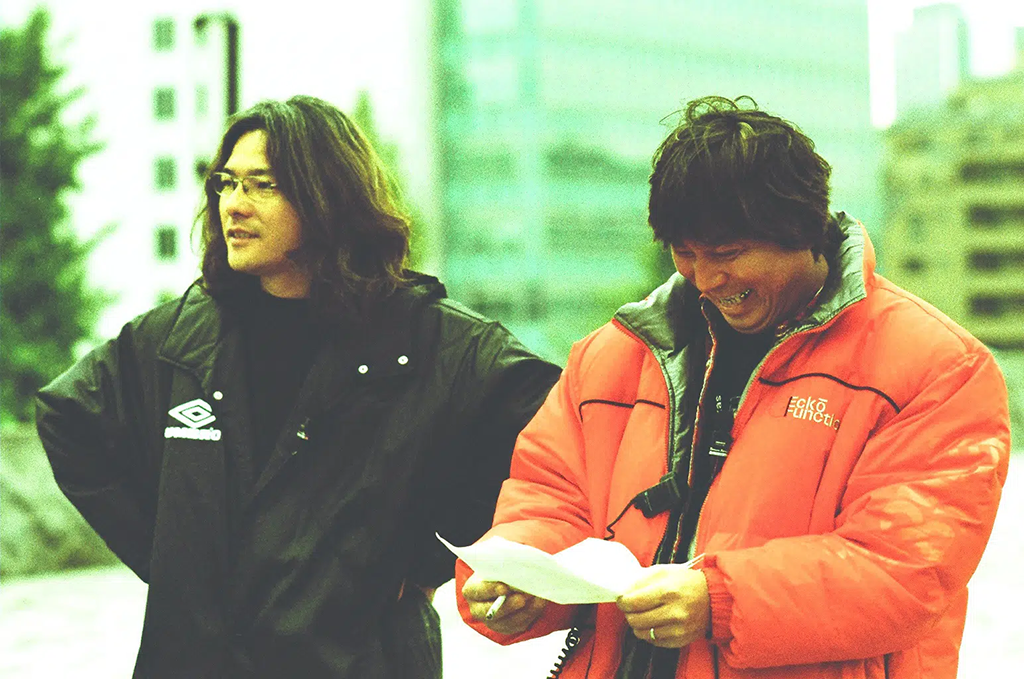
Ahead of Metrograph’s four-film showcase of Iwai’s work, I spoke to the director about his process. Our conversation was interpreted by Monika Uchiyama.
Alex Lei: What dictates the length of your films? You’ve made some shorter TV works, but a lot of your features run well over two hours.
Shunji Iwai: I don’t think it’s something that I dictate or decide. Something that I am constantly struggling with is the runtime. Most of my works begin as novels. I’ll write, within the Japanese format of a book, about a 200- or 300-page novel first. Then, I’ll translate that into film. It turns into a 70-page script. For me, a two-hour film is like a short story. If I really want to indulge myself and make something that is meaty, I need about two-and-a-half hours at least. When I’m permitted, I try to go as long as I can. Sometimes, I’m told I have to keep it within a two-hour runtime. In those moments, I have to make a lot of compromises.
AL: Do you always conceptualize the novels as stories that will be turned into films?
SI: Yes, most of the time. I can’t really think of a time when I’ve written a novel thinking that would be the final output.
AL: When you were doing the novel for All About Lily Chou-Chou, that was quite different because you were writing it on the internet. Can you tell me a little about that process?
SI: The first year I was writing that novel, I had been able to get to a good point with the story and promised my producers that I’d be making a film adaptation of it. But, I wasn’t at the point where I thought that the story was complete. Honestly, I was so dissatisfied that I gave up on the project, angering everyone.
I had made the music first and I wanted there to be a vehicle for the music. That’s when I had the idea of having a serialized internet novel as a means to introduce the music. I don’t think many people understood my thinking for that at the time, but that’s where I decided I would publish the story on the internet and have the general public interact with it. I did that for about three months and that process inspired me tremendously. By the end of the process, I had enough confidence to go ahead with the film adaptation.
AL: Sometimes you’ll collaborate with Takeshi Kobayashi on the music, but then other times you will compose it yourself.
SI: We worked together on Swallowtail Butterfly, creating music for the Yen Town Band [a band in the film that Iwai and Kobayashi created a real album for, as in All About Lily Chou-Chou] and releasing it within the J-pop scene. That was really well received. When I’m making a film that feels like a music film—this marriage of music and film—then that’s an opportunity to collaborate with Kobayashi, who feels like my companion in that sense. In other situations, I’ll choose classical music, or, when it seems like a project that I can manage myself, I’ll try to make music by myself.
AL: Can you tell me about this contrast in your films between classical music and contemporary pop?
SI: My own music taste is pretty narrow. When I look back at the films I made when I was a university student, the tracks that I used in those films are part of the same taste. My tastes really haven’t changed since then. I like a lot of pop music that is quite simple, particularly when it has elements of classical music or jazz.
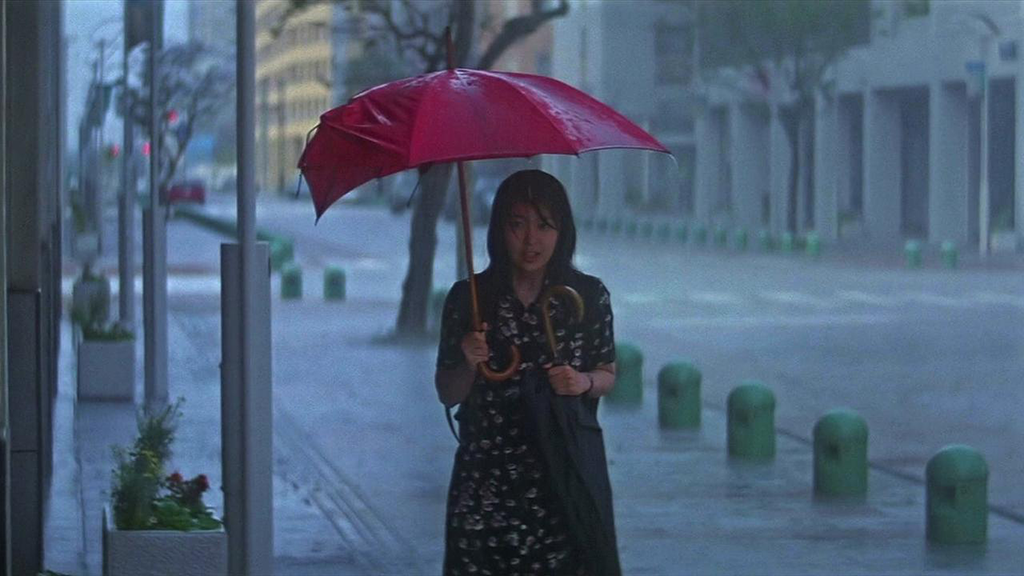
AL: Tell me about working with pop musicians as actors. For instance, what presence do Chara or Takako Matsu bring to the films?
SI: I don’t think it has to do with their backgrounds. It’s mostly that I’m inspired by someone and then there is something interesting about them that I’m drawn to. When I’m able to offer them the role and they can take it on, nothing makes me happier. But it’s not as if I always hit it with that kind of inspiration—in which I know who I want to cast. In the case of someone like Chara or Takako Matsu, I knew that I wanted them for the roles. The inspiration came first and I was able to cast them that way.
AL: You and Hideaki Anno have acted in each other’s films over the years. Have you two been mutually influential on each other as filmmakers?
SI: I can’t speak for him, but I’ve always been inspired by figures like Hayao Miyazake and Isao Takahata. I remember there was this animated film that came out called Nadia: The Secret of Blue Water [1990]. I knew it was made by someone from the same generation as me and the quality of the animation was just so incredible. I learned it was made by Anno Hideaki. That’s when I first learned his name.
When I was making Swallowtail Butterfly, Anno would have been making Evangelion. I always found it interesting that this person was working at the same time as me. It made me feel connected to him. Then we had chances to meet and we acted in each other’s projects. Today we’ll meet sometimes to chat over drinks.
AL: You’ve also been very interested in digital cinematography for a long time. I wanted to ask you about the Sony HDW-F900, because you were one of the first Japanese filmmakers to make a feature with that camera.
SI: I believe the F900 was the camera I used to shoot All About Lily Chou-Chou. It was the first digital camera able to shoot at 24 frames per second. I believe it was developed for the production of Star Wars: Episode I [1999]. I was able to get my hands on and borrow a beta version of it, so that’s what we used to shoot All About Lily Chou-Chou. But, compared to shooting on 35mm, there were a lot of issues that came up because of the limitations of the digital camera. Mainly, the sensor size. It’s a very small sensor. In fact, the DP, Noboru Shinoda, and I pleaded to the Sony team to make the sensor bigger, even if it meant keeping the resolution low. They were unable to help us with that.
Soon after that, digital SLRs became commonplace on the market. I knew that it would just be a matter of time until we would be able to use digital SLRs to shoot video at 24 frames per second. I thought that would be a lot easier to work with as a filmmaker, but that wouldn’t be developed until around 2007 or 2008. Nikon came out with one and then Canon. The Canon one was superior, so I immediately used it to film my movie Vampire.
Looking back on that now, I’d say the specs on that camera left a lot to be desired. But, technology evolved in precisely the way I imagined it would. Now we’ve entered a time when even university students shoot their films on full-frame digital cameras, which I don’t think they even appreciate the gravity of. Back when I was shooting Lily Chou-Chou, that’s what I was dying to get my hands on: a full-sized sensor.
AL: I know the filmmaker Kon Ichikawa was very important to you and I saw that he visited the set of All About Lily Chou-Chou.
SI: Yes, he did come to set. The first film I saw of his was The Inugami Family [1976], which, for people of my generation, specifically filmmakers, is a very influential film. Anno Hideaki also speaks very highly of this film. Not only is it an entertaining movie, but you really get a sense that the person making the film was having a tremendous amount of fun making it. I learned a lot about editing techniques from his work and, luckily, I had the opportunity to develop a project with him. I think that’s what brought him to set. Unfortunately, our collaboration never came to fruition and he passed away. But, I’m hoping that in my lifetime I will actually be able to make that project a reality.
“The World at Full Volume: The Cinema of Shunji Iwai” runs June 5-20 at Metrograph. Director Shunji Iwai will be in attendance for Q&As on June 5 and 6.