It is difficult to write about Clemente Castor’s work because it is often quite opaque. His newest film, Cold Metal (2025), which is screening tonight at the Museum of Modern Art as part of “New Directors/New Films”, is about men who disappear and reappear across Iztapalapa, on the outskirts of Mexico City. Throughout, one of them is afflicted with memory loss and “images that don’t belong to him.” It is as if the Earth swallowed him whole and spit a new man out: strange, confused, afresh. Such are the mysteries of Castor’s new film, in which the director reinvents characters, landscapes, histories, and myths scene by scene.
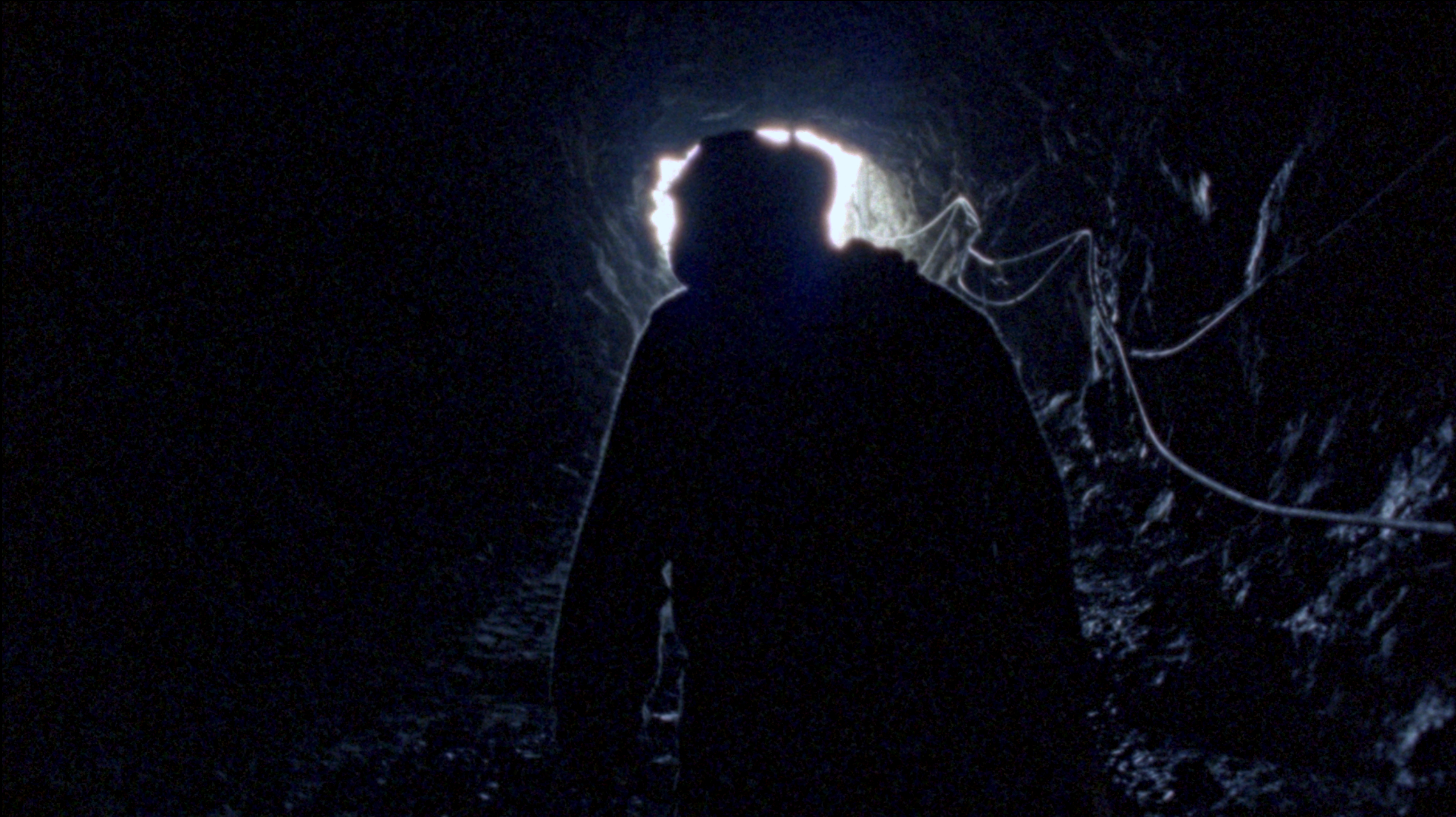
Alternating between dreamy black-and-white footage and hazy color vignettes of daily life in Iztapalapa, Cold Metal quickly establishes its unique, playful rhythm from the get-go. In his opening scene, Castor focuses his camera on a fruitless carnival game of roulette where players must bet on Lotería symbols in order to win some cash. This arcane mixture of faith, money, and chance establishes the lawlessness of his film, which mirrors the particular kind of mystic disorder that afflicts Mexico—a nation that I’d argue is not senseless, but often turns to devotion, cash, and convenience when it comes to sorting out social and political issues. With its depiction of disappearance, secret tunnels, and hidden labor, it’s impossible not to attach a political subtext onto Cold Metal; after all, it is set within the boundaries of a nation that has been dealing with the disappearance of hundreds of thousands due to drug-related violence, the furtive extraction of resources from both national and international agents, and unregulated labor practices. These paratextual matters are all there in Castor’s enigma of a movie, but most impressive is the fact that barring them all aside, Cold Metal sustains itself on the merits of its experimental spirit and visual prowess.
Though it might be unfair to place Cold Metal in conversation with similarly strange, cutting-edge films made across disparate corners of Latin America, it is impossible to dispel that it explores similar concerns as those found in the work of Kiro Russo, Carlos Restrepo, or Eduardo “Teddy” Williams. Or, that it operates with the same kind of freeform looseness that seems all too lost in American independent cinema. Perhaps that’s because confusion, violence, and disappearance has become all too common across the Americas; thus, for a film like Cold Metal—or El auge humano (2016), or Los Conductos (2020), or El Gran Movimiento (2021)—to come along and dance into these issues is a good thing. It shows that Latin American art is not disconnected from its land and its issues. More importantly, it proves that Latin American filmmakers are adamant about finding new ways to address our problems so as to force people to think about them, and that they are not content with any sort of cinematic laziness. Cold Metal, like the aforementioned films that came before it, is a clear example of a film that wants to disassemble narrative and formal expectations to arrive at a new kind of film to create or meet a new audience inhabiting or creating a new world.
Cold Metal screens tonight, April 16, at the Museum of Modern Art as part of the series “New Directors/New Films 2026.” Director Clemente Castor will be in attendance for a Q&A.