“This is Memphis,” intones the poet Darius “Mak” Clayton (aka Phatmak Pharaoh) as footage of the inferno that consumed the city's Clayborn Temple on April 28, 2025, fills the frame of Christelle Oyiri and Neva Wireko's eight-minute video Hauntology of an OG (2026). Almost exactly 57 years before the fire reduced the interior of the Romanesque Revival church to a total loss, the voice of Dr. Martin Luther King, Jr. reverberated throughout the temple's nave as he delivered his historic “I've Been to the Mountaintop” speech in support of the 1,300 Black sanitation workers who were on strike for better pay and safer working conditions; King was assassinated the next day, April 4, 1968, on the balcony of his motel in Memphis. Oyiri, who is based in Paris, and her crew happened to be in Memphis and shooting nearby when the fire broke out at 1:30 a.m., and most of the footage of the blaze in the video is original.
The centerpiece of Oyiri's exhibition “Belief May Vary” at Amant, Hauntology of an OG opens on another of the city's architectural landmarks, the Memphis Pyramid, a 321-foot-high glass-and-steel structure whose construction was spearheaded by railroad scion and Hard Rock Cafe founder Isaac Tigrett. Functioning as a sports and concert venue from 1991 to 2007 before reopening as a Bass Pro Shop in 2015, the events surrounding the Pyramid's initial opening have become a local legend: Tigrett was a follower of the Indian guru Sathya Sai Baba, who presented him with a small crystal skull in advance of the building's completion. Tigrett placed the skull in a box welded to a platform at the apex of the pyramid, but shortly thereafter the box was removed under mysterious circumstances. A strange combination of capitalist excess and spiritual symbolism, the Pyramid is an unlikely point of resonance within the video, which examines the African diaspora's resistance to drawing hard boundaries between secular and spiritual realms.
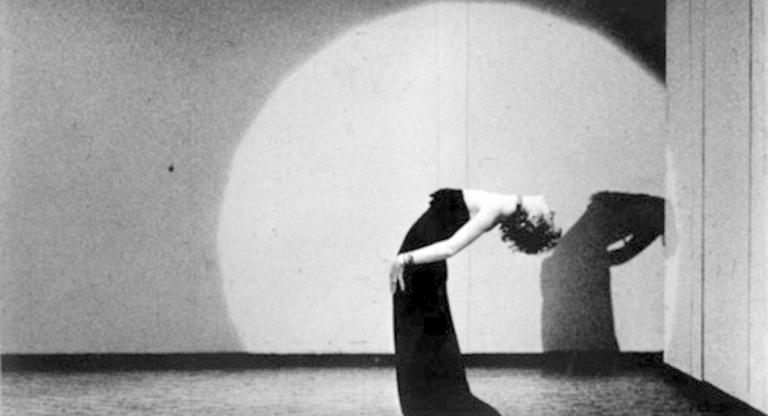
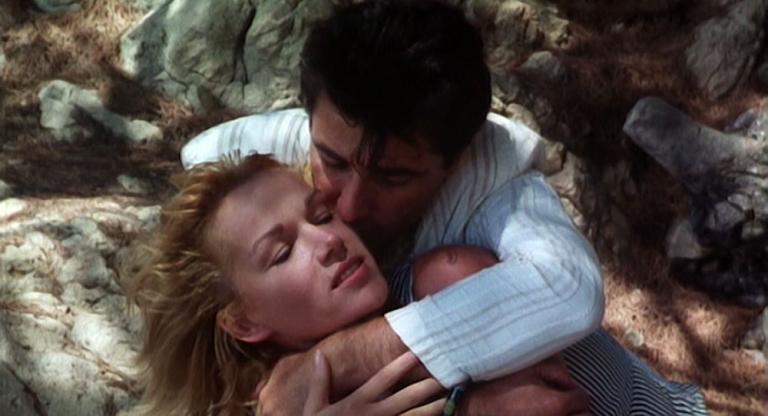
The introductory sequence culminates in a crystal-clear cassette tape serving as the film’s title card, with its B-side revealing the question “Do you believe in ghosts, problem child?” Whether or not you believe in paranormal phenomena or ascribe to a religious conception of the afterlife, the persistence of the dead in the realm of the living may be felt in the art, music, and words they leave behind, and Hauntology of an OG provides a set of parameters through which we might consider the ghosts that permeate Memphis. Interweaving footage of a dancer wearing horns, shots of Elmwood Cemetery's elaborately adorned tombstones, footage of firehoses projecting water into the flames of the burning temple, and dancers being showered with dollar bills in a nightclub, the central sequence of the film is narrated by Clayton's poetic reflections on the city's tragedies, contradictions, and beauty. Where the ruptures of death and displacement have wrought irrevocable damage to the Black community, these losses have historically been met with a blend of resourcefulness and adaptation that culminates in a (re)generative force: Four days after King's killing, Coretta Scott King and union leaders led approximately 42,000 people through the city to honor the fallen leader and continue the show of support for the workers, who reached an agreement with the City Council about a week later.
Hauntology's thematic concerns with the incarnation of ephemeral phenomena in physical form are carried on in the static works in exhibition, comprised of a lenticular print and a group of sculptures, including five wall-mounted aluminum cassette tapes embossed with the titles of iconic albums from the Memphis rap scene. Oyiri dedicates the film to departed musicians Gangsta Boo, Young Dolph, Lord Infamous, Big Scarr, and Princess Loko, the latter of whom is sampled in the film's soundtrack. After the video's conclusion, it plays again at 150% speed with musician Klein's “Marks of Worship” (2016) replacing the original audio.
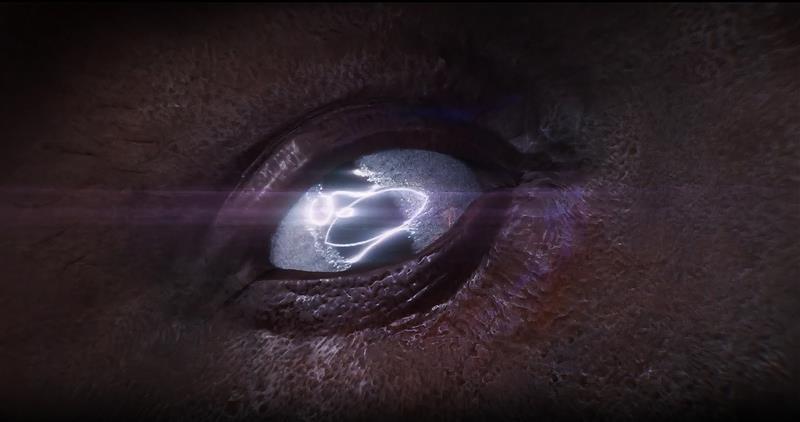
The concluding sequence of Hauntology ventures into the Afrofuturist territory hinted at in the opening, when a beam of light projects upward from the Memphis Pyramid’s point. A monument to capitalist commodification of cultural production in the form of an ancient, sacred sarcophagus built with slave labor and an important symbol in contemporary Black aesthetics, the Memphis Pyramid represents a range of paradoxical secular, spiritual, and historical meanings. But the reconciliation of extant signifiers is not really the point: through Oyiri's lens, we glimpse the recuperation of fragmented cultures into a new cosmological whole that is greater than the sum of its parts. In the last few minutes of the film, a close-up of a CGI rendering of the artist's face slowly zooms into her right eye, in which a sequence of Egyptian hieroglyphs are reflected—or perhaps beamed—into her iris. Immaterial as spirits may be, Hauntology reveals that the strength of faith lies in its mutability which, like light, renders it adaptable to the time and place in which it is most needed.
Christelle Oyiri: Belief May Vary is on view through August 16 at Amant.