The Polish filmmaker Andrzej Wajda, subject of an ongoing retrospective at Film Forum organized on the occasion of his centennial, made nearly 50 features over almost seven decades. Many of his most successful films drew on Polish literature, history, and politics, and while his work was consistently recognized at the international level, he considered this as imposing a limit on their interest to audiences outside his own country: “Those of our Eastern European film colleagues who have chosen emigration can—if they are young and talented and after they have spent years in the West, come up with some works of startling beauty,” he wrote in his memoir, Double Vision. “But they will not find audiences attuned to the same concerns that we in the Eastern bloc feel are vital.” The success of his own work contradicts this glum assessment, as Wajda was not only remarkable for his regular international success, but for the relatively consistent support he received from the Soviet-aligned Polish state despite the evident criticisms of the government and the Soviet system in his film work and personal political activities.
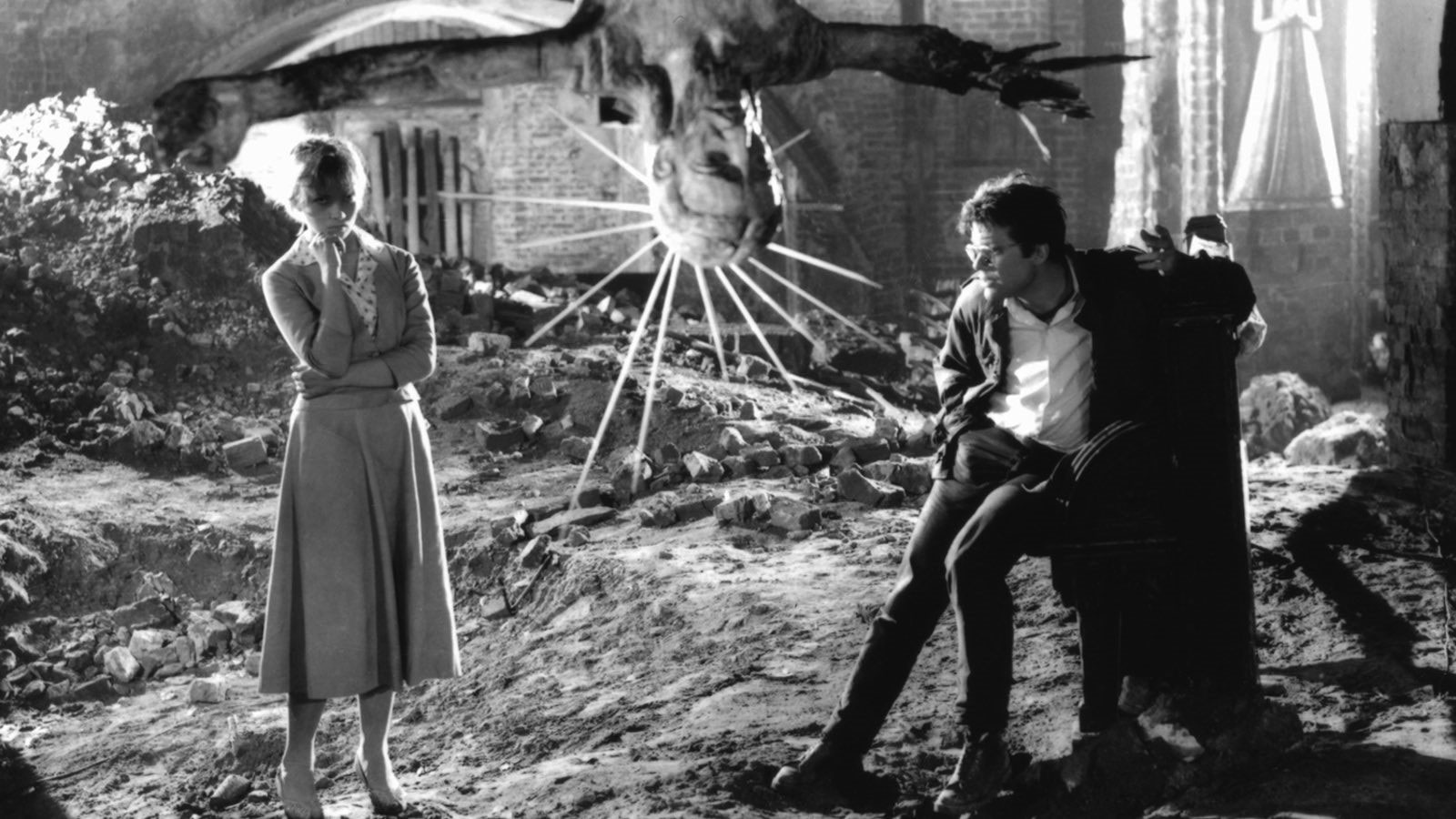
He was 13 years old when Germany invaded Poland in 1939, and World War II was a persistent subject for him throughout his career. He studied painting before enrolling to study film at age 24 at the Łódź Film School under Aleksander Ford. He cites Roberto Rossellini’s Rome, Open City (1946) and René Clement’s Battle of the Rails (1946) as “context” for his first two films, Kanal (1957) and Ashes and Diamonds (1958, pictured at top). These two films, along with 1955’s A Generation, make up a trilogy set during World War II that focus on the activities of the Polish resistance while aligning increasingly with the struggle for Polish independence.
World War II is perhaps the most important structuring event in Wajda’s oeuvre, and a subject he returned to repeatedly through his career. Lotna (1959) and Chronicle of Amorous Incidents (1986) take a slightly softer, more nostalgic tone, set in a verdant pre-war world of luxurious country houses full of pristine art objects waiting to be destroyed (to some extent, you can track the progress of the war in these films by the number of statues missing limbs). These films are enjoyable with or without access to their specific symbolic vocabulary; for example, the heroic, sometimes doomed Polish cavalry that appears over and over again in Wadja’s films, shown racing a train with swords drawn, making a last, hopeless charge against the invading Nazis, or, as seen in Ashes (1965), fighting in the Napoleonic Wars with the hope of reclaiming Polish territory that was claimed by neighboring empires at the end of the 18th century. The cavalry make a final appearance in Katyń (2007), which dramatizes a 1940 mass killing of Polish army officers (including the director’s father) by the Soviet Union that it blamed on the Nazis until an investigation by the Russian state confirmed Soviet responsibility.
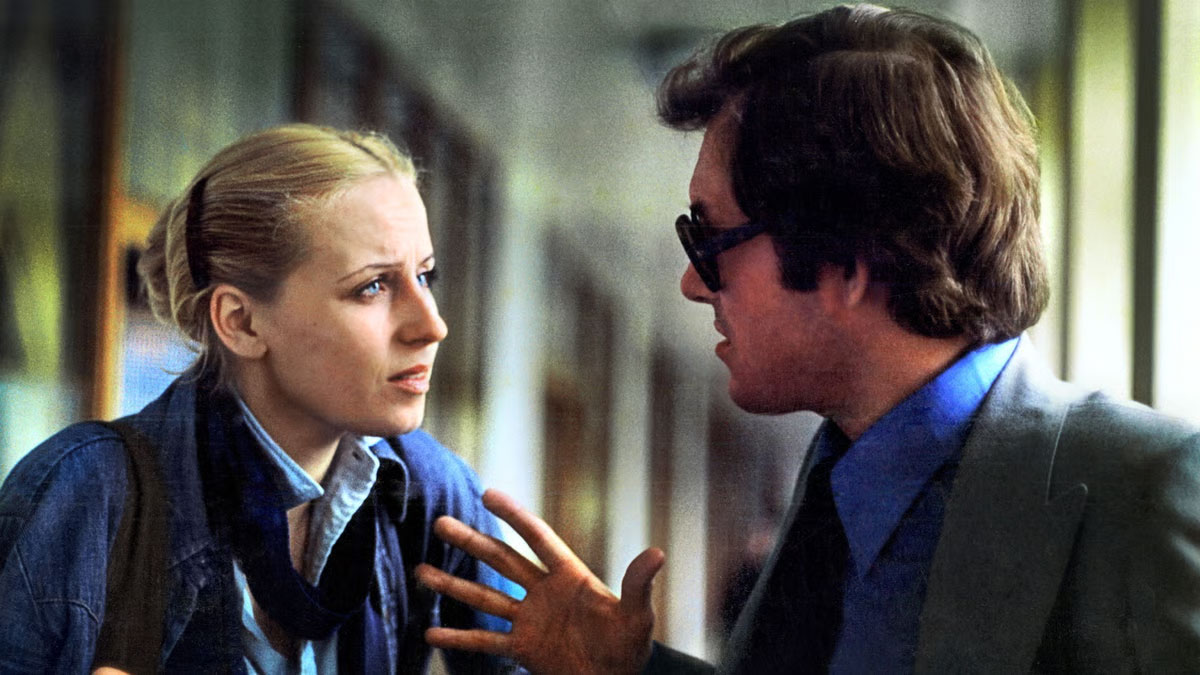
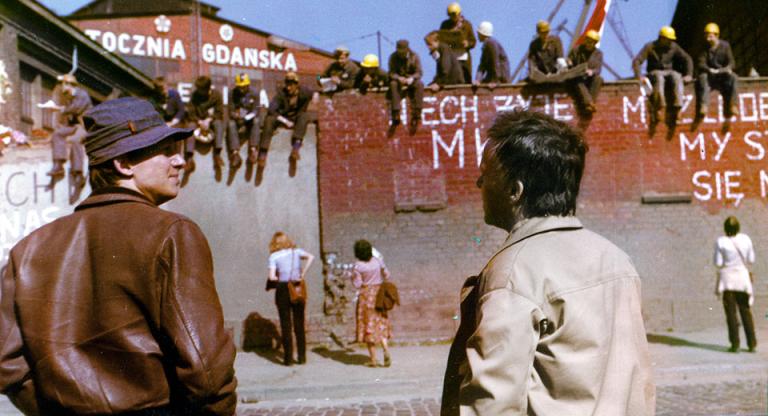
The other anchoring political moment is the Solidarity Movement, which emerged from strike actions in the shipyards of the city of Gdańsk in 1980 and gradually gained power and international support as a political bulwark against the regime in its final years. Wajda publicly supported and aligned himself with the movement (in fact, it cost him his production company, which was shut down by authorities), and Man of Marble (1977) and Man of Iron (1981) develop the character of the exceptionally hard worker who is disillusioned and ultimately betrayed by a corrupt and arbitrary state. Danton (1983), with Gerard Depardieu in the titular role, continues the theme, and was released after Poland had been under martial law for nearly two years. Depardieu’s Danton is a vital, charismatic, popular leader who wagers his personal political gifts against the supercilious Robespierre, coldly confident in the power he will nevertheless soon be stripped of. Lech Wałęsa, who came to prominence as a leader of the shipyard protests and served as the president of Poland from 1990 to 1995, is a real-life referent for the type—he makes a cameo as himself to officiate a wedding in Man of Iron, and is the subject of the hagiographic Wałęsa, Man of Hope (2013).
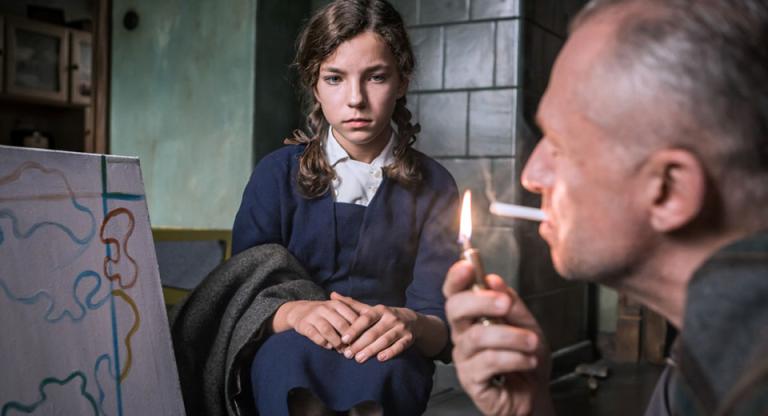
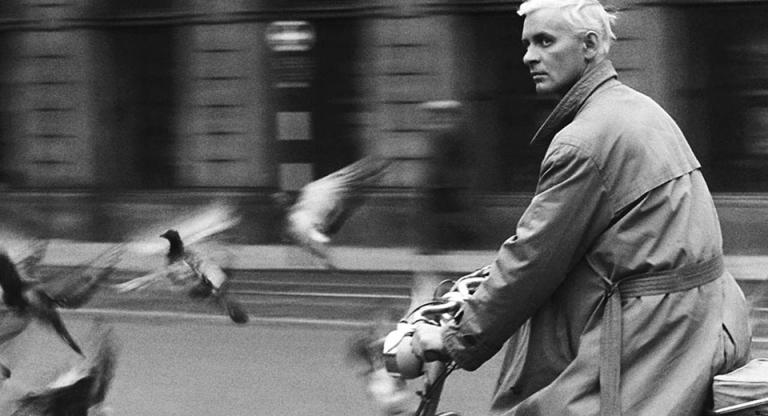
Film Forum’s series also includes several films that diverge from Wajda’s dominant style: Innocent Sorcerers (1960) is a New Wave-ish story of abortive young love—here, the primary obstacle is the nature of desire, rather than the horrors of war. The Wedding (1972) more fully explores the impulse for dreamy symbolism that elsewhere is limited to a single motif or episode in an explicitly theatrical, folkloric setting. Rough Treatment (1978) dramatizes the life of journalist Ryszard Kapuściński, taking stylistic cues from his reportage. This film, as well as Everything for Sale, Man of Marble, The Conductor (1980) and his final feature, Afterimage (2016), reflect on the process of filmmaking and the experience of returning home after international success as an artist. In the case of Man of Marble, the investigative efforts of film student Agnieszka make an argument for the process of filmmaking as a method of revealing systemic corruption, even within a state-supported film industry. Wajda’s films within a film reveal a devotion to the mechanics of a film set, perhaps influenced by his parallel career as a theater director. As a whole, the retrospective reveals a career driven by a tradesman spirit and a comfortable joy in the process of filmmaking.
“Andrzej Wajda 100” runs until October 22 at Film Forum.