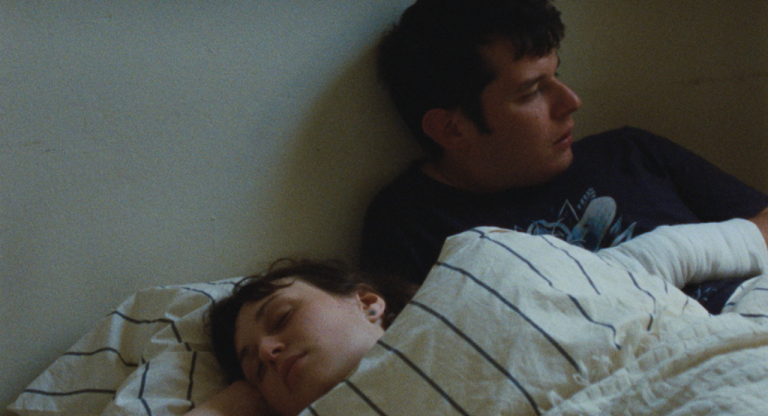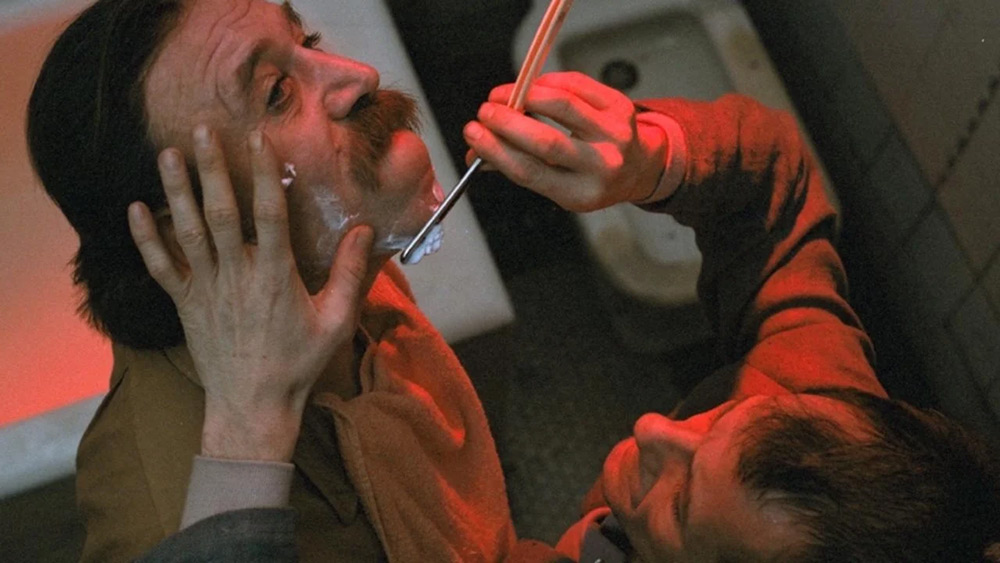
In Béla Tarr's singular body of work, one film stands alone: 1984’s Almanac of Fall is an acidic chamber piece bathed in artificial light. Set entirely within a spacious, dilapidated flat, it unfolds over an indeterminate stretch of days—presumably during the titular season, though the outside world is shut out entirely. The apartment is owned by an older woman and shared with her ne'er-do-well son, his disheveled, drunken teacher, her private nurse, and the nurse's lover. But it’s not the drama of these rootless characters or its single location that sets Almanac of Fall apart from Tarr’s subsequent and previous work. It is the use of color that makes this film an outlier.
Before and after this feature, Tarr worked exclusively in black-and-white for his theatrical releases (a 1982 television adaptation of Macbeth being the only other example of a color production in his oeuvre). So perhaps it's no wonder he is so experimental here: if this is a one-off, Tarr goes all in with gels blazing. There are moments in the film when each character seemingly inhabits their own chromatic register: two people can share a frame without sharing a hue. It’s an apt visual metaphor for characters who share a space, but likely little else in common.
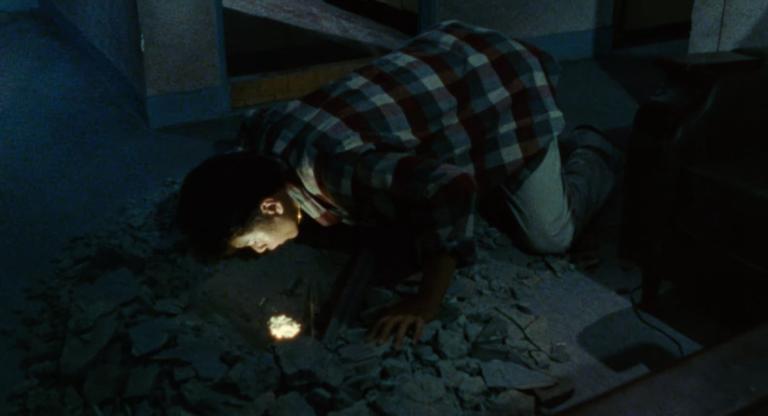
Almanac of Fall is chiefly a series of dialogues—or duels. The film's drifting rhythm is punctuated by sudden assaults, mostly between the men. Throughout, Tarr explores camera placements. In some scenes the camera is low and tucked under furniture, as if the viewer were a voyeur crouching in secret. In what might be considered the film's set piece, one physical struggle is filmed entirely from below, the characters’ faces pressed against a transparent floor.
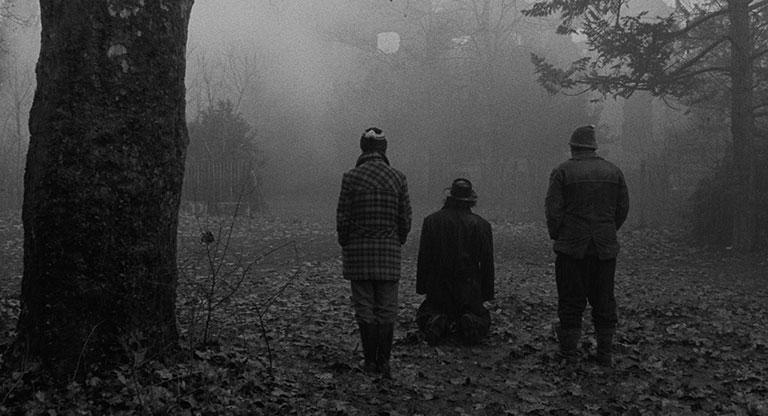
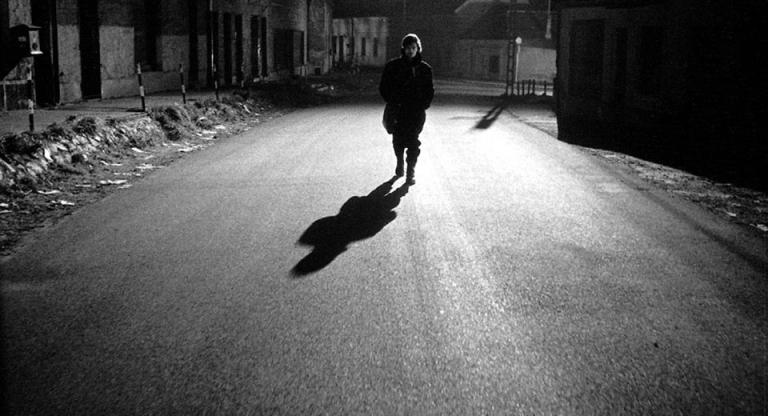
Across all of Tarr's films, home is either an illusory or contested idea. His characters have lost it or are struggling to hold on to it. At one extreme sits the epic Sátántangó (1994), where an entire village is in the process of disappearing; at the other, Almanac of Fall, with its aimless drifters scheming desperately to possess one. The latter opens with a section of Pushkin's poem “Demon,” which can be applied to all of Tarr's films from Almanac onward: “Even if you lead me / this land is unknown / the devil is probably leading / going round and round in circles.”
Almanac of Fall screens this evening, April 2, at the Museum of Modern Art on 35mm as part of the series “A View from the Vaults: The 1980s.”
See Also