Agnès Varda once wrote that the career of Liliane de Kermandec—a protégée of Varda’s who worked as the set photographer on Cleo from 5 to 7 (1962)—was “une entreprise héroïque,” a heroic enterprise, a commitment to art undertaken despite obstacles. The same could be said of the subject of de Kermandec’s Aloïse, a nearly lost classic of 1970s French feminist cinema.
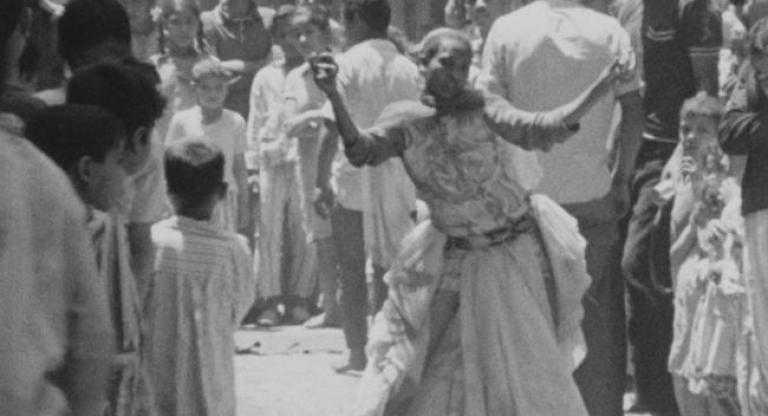
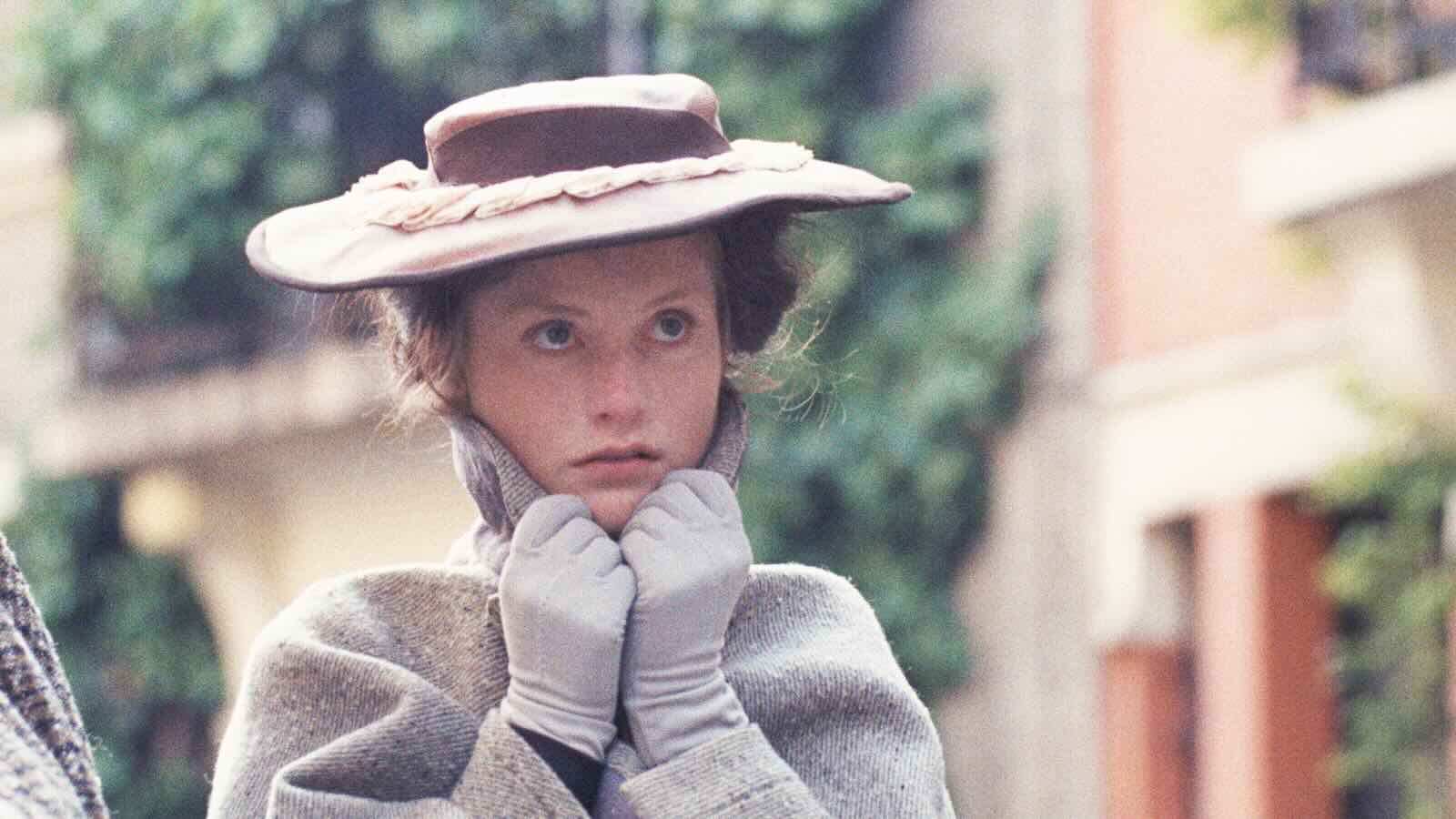
Made the same year de Kermandec produced Chantal Akerman's Jeanne Dielman, 23 quai du Commerce, 1080 Bruxelles (1975), Aloïse stars Isabelle Huppert and Delphine Seyrig as the Swiss outsider artist Aloïse Corbaz. Huppert, baby-faced, plays the young Aloïse with a roiling repression. When Seyrig takes over as the adult artist, Huppert’s reticence gives way to a quietly hectic mania. When war breaks out, she begins giving anti-war speeches on street corners. Eventually, she is institutionalized, and it is there that she begins to draw and write poetry under the name Lulu (“I have all the vowels in my name,” the child Aloïse told her sister; “I have an A, and O, an E and an I, but I’m missing a U. I’d really like to have one,” and so, she gives herself two).
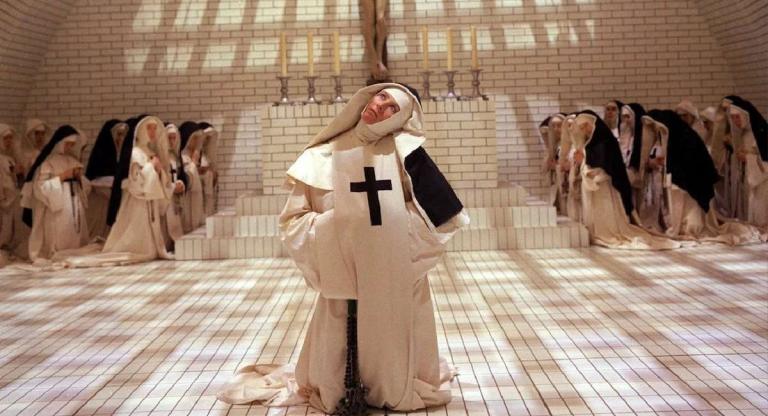
The movie forms part of a trio of landmark works of feminist cinema starring Seyrig from 1975, along with Jeanne Dielman and Marguerite Duras’s India Song. de Kermandec’s film patiently builds its political statement, relying on thoughtful composition—in one scene, Aloïse gives an impassioned pacifist speech while dwarfed by a military statue and at the sanatorium, the camera stays close on the bathroom door marked “Femmes” behind which Aloïse writes. de Kermandec demonstrates careful attention as a political practice, documenting the daily lives of the women in the sanatorium. While the film is resolute in its interest in Aloïse, that very interest requires knowledge of how hard it is to preserve the lives of those whom the world forgets, and so it upends expectations about biopics, individualist approaches to history, and star theory, focusing as much on other patients as on Aloïse.
Daringly, de Kermandec reserves depicting Aloïse’s art until the end of the movie, emphasizing her paintings’ ability to shock. Their vivid colors and exuberant style are a revelation after the uniformity of the sanatorium. The trip to see her work in a gallery is Aloïse’s first time outside the sanatorium in decades, and we see her observe the world of the 1960s, which has at once passed her by and only just started to make space for her. This is a movie about the passing of time, the dawning of modernity, and those it leaves behind. It was de Kermandec's second and final feature; it received limited runs and limited attention. She spent most of the rest of her career making documentary shorts for French television. It is more than a little ironic that this film, an effort to recuperate the story of a fugitive woman artist, fallen from history, itself nearly disappeared from view.
CONTOURS is a column by Saffron Maeve (and guests) examining films that thematize the world of visual art: painting, sculpture, illustration, and performance. Maeve also programs a screening series of the same name and premise at Paradise Theatre in Toronto.
Aloïse screens this evening, May 17, at Metrograph as part of the series “Liliane de Kermandec: The Price of Freedom.” The film will be introduced by filmmaker Theda Hammell and preceded by the short Qui donc a rêve?