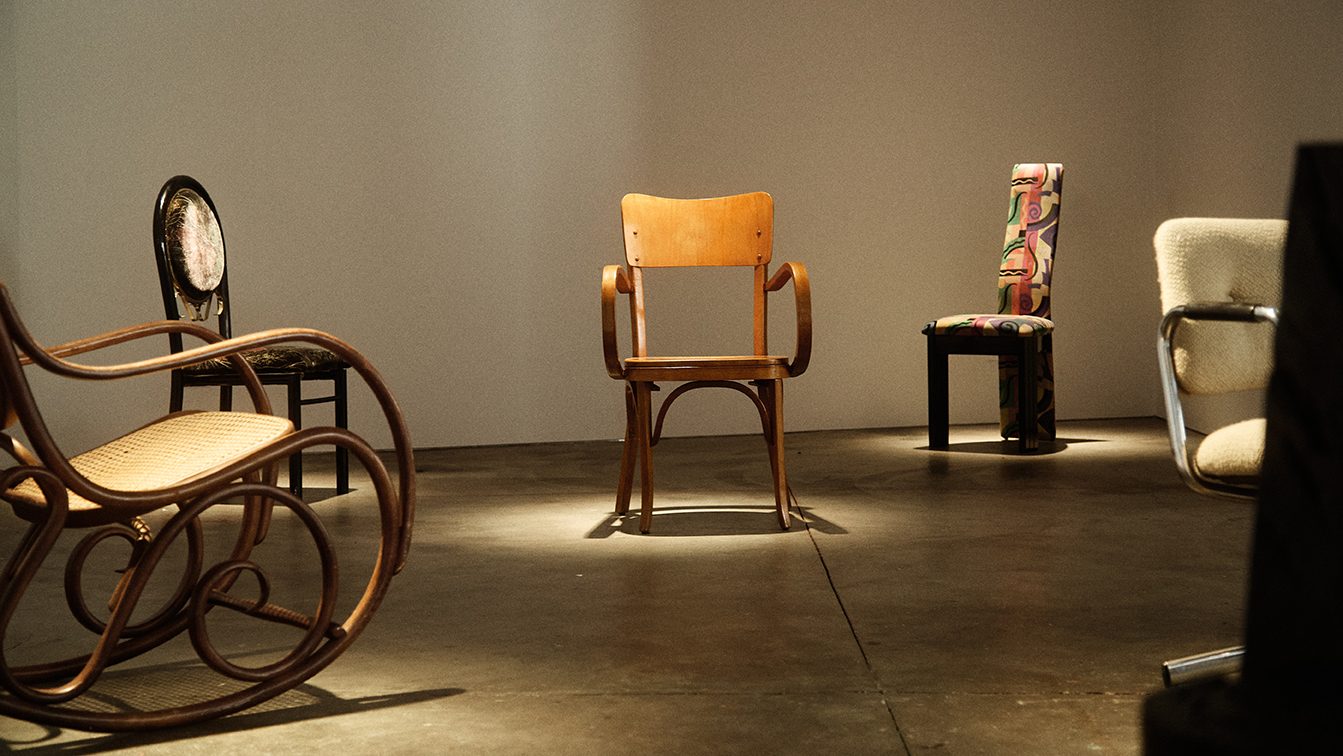
There’s something all too alluring in the idea of being an inanimate object, beloved by those who use and abuse those often fragile beauties. Amanda Kramer’s By Design (2025) literalizes that concept by having its protagonist, Camille (Juliette Lewis), swap bodies with a chair. While her “real body” simply lays there, with wealthy friends and family treating her as more of a human being than when she was actually living, Camille silently enjoys newfound appreciation from those who interact with this new “body”, particularly from Olivier (Mamoudou Athie). Though he has never met Camille, he is inexplicably drawn to the gorgeous chair she inhabits, finding beauty in the way that it, like him, can provide comfort and reprieve from a world that asks too much of him.
By Design unfolds in vignettes, with Kramer taking great glee in presenting the relative inanity of the affluent figures that surround Camille and Olivier, as much as she takes care to give these individuals a sense of interiority, be it by their own words or that of Melanie Griffith’s omnipotent narrator. These characters and situations straddle the line between sincerity and cruel comedy, tapping into a similar vein of adoration and insult as John Waters does in his own approach to his collection of weirdos across film and literature.
Take the duo of ladies who lunch played by Samantha Mathis and Robin Tunney, each talking at Camille’s inert body and discovering themselves through what they imagine she’s telling them. Or look at the exquisite Betty Buckley tragically finding more peace in this husk of a person than her actual child, with Griffith’s soft voiceover noting “a chair makes a very good daughter somedays.” Or, perhaps most tragically and amusing at once, Clifton Collins Jr.’s stalker, who has a melancholic tap dance on a balcony after realizing that he holds no power over this lifeless woman he’s been fetishizing for weeks.
By Design is the very definition of an ensemble piece, with each performer getting the chance to showcase their talent on the stage that Kramer has set for them. There’s a sense of the theatrical in every bit of blocking and choreography, with a gaze that is fixed on the nuances of body language, down to the elaborate interpretive dances that allow characters to process their tortured feelings in a manner similar to how Please Baby Please’s cast felt as though they could (and in one case did) burst into a musical number at any given moment. These beats, as well as the relative looseness of Kramer’s plot, emphasize how dreamlike the film feels. Yet, the grander emotional focus on loneliness feels all too real. The film presents a world in which those who claim to love us are content to have an empty husk of a person to pour their own feelings onto, an admittedly bleak but familiar sentiment. Just as Olivier wishes to be left alone with his beloved object after a particularly hard job, so do many of us retreat into the comforts of the inanimate after having to laboriously communicate all day simply to pay to exist.
If Kramer’s works are often about how we perform—the dramatics of teen girls in Ladyworld (2018), the desperation of Give Me Pity! (2022), the gender play of Please Baby Please (2022)—then By Design almost questions that by asking if we’re still performing a role of some use even when we feel entirely useless. To be of use is to experience the euphoric and the tragic, knowing that, no matter how useful one is, a potential disposal could be right around the corner. We’re all one moment away from feeling like nothing, even when we’re inhabiting the ideal design.
By Design screens this Wednesday, May 20, at Alamo Drafthouse New Mission as part of the series “Weird Wednesday.”