Carolco Pictures was in an envious position for a production company, especially an independent one, in the early ‘90s. They released Terminator 2: Judgement Day (1991), one of the decade’s first massive box office hits, and followed it up with Basic Instinct (1992). In the early ‘80s, established a proven track record of success with genre films like First Blood (1982) and by the time the ‘90s came knocking, co-founders Mario Kassar and Andrew G. Vajna were releasing more daring films like Angel Heart (1987). They had a tendency to hone in on the next hot thing and mere months after Basic Instinct spurred both protests and high box office earnings, Carolco decided to back the American debut of one Roland Emmerich, the German director behind future box office hits Stargate (1994) and Independence Day (1996).
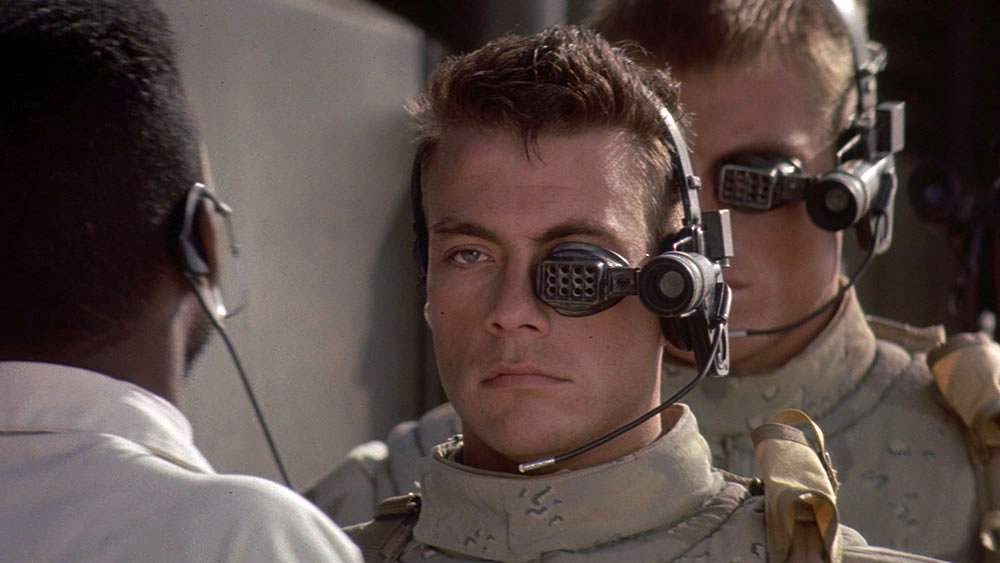
Emmerich’s modestly budgeted sci-fi action film Universal Soldier (1992) is an intensely violent high-tech war movie that, on paper, was really just an excuse to showcase Dolph Lundgren and Jean-Claude Van Damme in combat with each other. Like First Blood before it, Universal Soldier was intended to kick off a franchise for Carolco. Although the chronicles of John Rambo resulted in a successful franchise for the company, the Universal Soldier sequels didn’t pick up heat until a new studio revived the IP in the wake of Carolco’s declared bankruptcy in 1995. But what’s most interesting about Universal Soldier aren’t its explosions or the gratuitous shots of JCVD’s ass and brutal bouts of fisticuffs, it’s actually how somber the film is. Although Universal Soldier has the hallmarks of a blockbuster franchise starter, it’s really a deeply sad film about PTSD and the military-industrial complex. The film opens with a harrowing sequence set in Vietnam where an American soldier, played by Lundgren, has taken a civilian couple hostage and ends up murdering them in front of a fellow soldier, played by Van Damme, who protests their capture. The two end up shooting each other to death, only to be resurrected decades later. When brought back to “life”, they are injected with a serum meant to keep their memories at bay, but it doesn’t hold and both soldiers become victims to their past trauma, ultimately turning enemy against one another with Lundgren acting as the film’s sadistic villain and Van Damme as the noble hero.
TriStar Pictures released Universal Soldier: The Return (1999) in theaters, with JCVD returning and Lundgren nowhere to be found. Lundgren wouldn’t be the only person sitting the sequel out though, as Emmerich and screenwriter Dean Devlin had already moved onto other projects. Instead, Mel Gibson’s longtime stunt double Mic Rodgers took over directorial duties with a script from William Malone, who directed the remake of House on Haunted Hill that same year. The sequel kept the same premise from Emmerich’s film, but lost its moral complexity. It represented TriStar’s clear attempt to cash in on what they thought made the first film work despite getting it all wrong. Such is not the case for the two franchise entries that followed: Universal Soldier: Regeneration (2009) and Universal Soldier: Day of Reckoning (2012). Both of those films are hyper-violent reflections on sadism that not only do the first film justice, but surpass it in many regards. John Hyams, who directed the two later sequels, understood what made Emmerich’s first film work: not that it’s a mournful sci-fi blockbuster, but that it’s a downbeat film that just so happens to feature two super soldiers beating the hell out of each other for audiences’ entertainment. Of course, it helps that Hyams brought back both Van Damme and Lundgren.
Universal Soldier screens this afternoon, July 4, the United States of America’s 250th birthday, and throughout this weekend, at Metrograph on 35mm.