The waterlogged lovers at the center of Christian Petzold’s siren song Undine (2020) are constantly colliding and parting, throwing their arms around each other or being ripped apart. Reunification, both human and urban, undergirds the urgent, impossible romance between Christoph (Franz Rogowski) and Undine (Paula Beer). He is an industrial diver (“I’m usually underwater,” he introduces himself); she is a city historian in Berlin’s Köllnischer Park, on the bank of the river Spree, regaling the history of Berlin—from mysterious origins to post-war rebirth—to groups of international tourists. As her name would suggest, she may also be a water nymph, searching for mortal love, fated to kill any man who abandons her. Upon their first meeting, a nearby fishtank bursts with intensity. “Could this be just the beginning?” Liz Phair once sang, “We’re already wet and we’re gonna go swimming.”
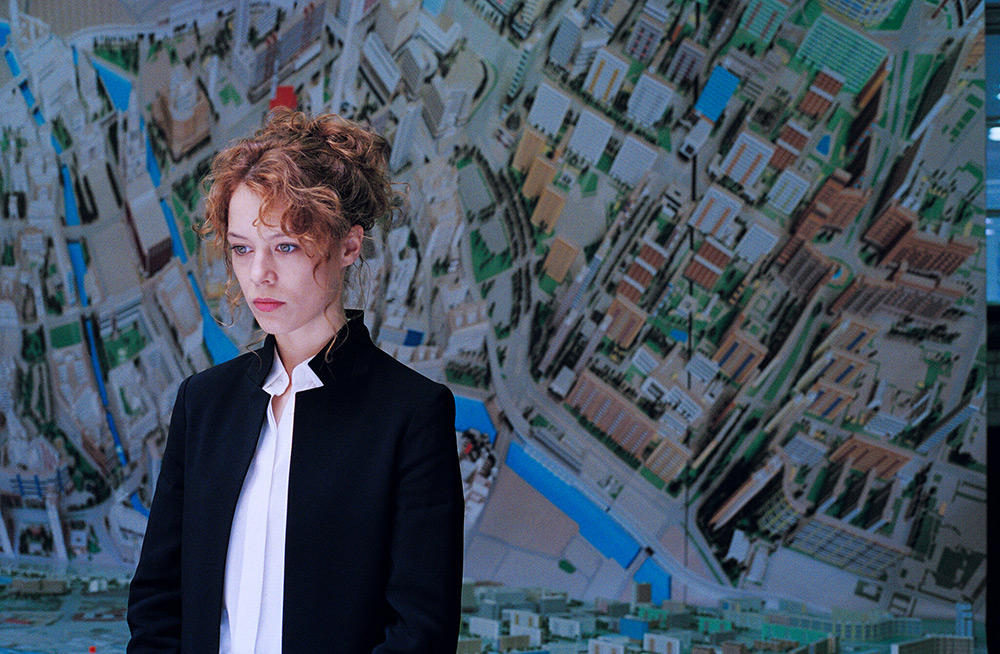
Borders—political, structural and elemental—and their liquidity define much of Petzold’s prolific output: the sea in Barbara (2012) and Yella (2007), as well as the safety afforded by visas in his anachronistic adaptation of Anna Segher’s Transit (2018). Undine traces the physical and spectral borders of Berlin in a lecture to the assembled visitors at her workplace, which houses several awe-inspiring miniatures of the city in an exhibition titled “Berliner Stadt-modelle.” A 1:1000 scale sprawl, constructed in 1990, shows plans for the city’s redevelopment, while a strikingly detailed and hand-painted 1:500 model makes tangible the GDR’s proposed plans for the East. There are gaps—buildings demolished or never built, public spaces constructed upon—and this haunted, temporally unmoored aspect of the city seems to play within the structure of Petzold’s narrative as some scenes of Undine and Christoph’s courtship seem missing, others erased. Petzold thankfully lets the scenes within the museum play out in full; Paula Beer is an excellent docent.
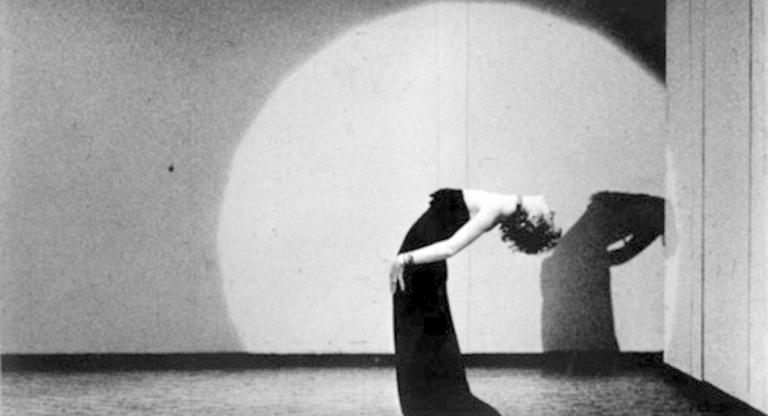
All of Petzold’s films come with an embedded bibliography, much like the essayistic work of his mentor and collaborator Harun Farocki. Literary and fine art works are mixed and matched with cinematic influences, most notably Carnival of Souls (in Yella), and Hitchcock, particularly Vertigo (in several others). Here, Petzold abandons remixing the iconography of classic film in favor of a German mythological romance from the early 1800s, perhaps explaining the more muted reception to the film by the cinephilic set. To this day I feel a swell or irritation recalling how unavoidable the word “minor” was in its reception, peppered haughtily into reviews and tweets.
Amidst a sea of citations and urban hauntology, it’s the bracing chemistry between Franz Rogowski and Paula Beer, often entwined in matching black leather jackets or submerged in lakes, that allows the film to maintain its humanity. Petzold seems particularly good at casting two beautiful people who appear convincingly hungry for each other for him to build a film around. Rogowski and Beer, themselves reunited from Transit, follow in the tradition of Nina Hoss and Ronald Zehrfeld in Phoenix (2014). Shafted by its peak-COVID release, the dense waters of Undine continue to cast an affective stir, a unique perspective of Berlin’s central Mitte, and an immediate desire to go swimming.
Undine screens tonight, March 16, at Film at Lincoln Center as part of the series “Christian Petzold in Person.”
See Also