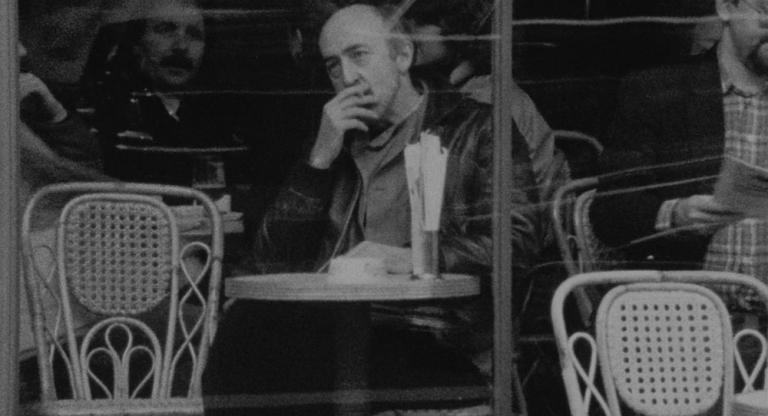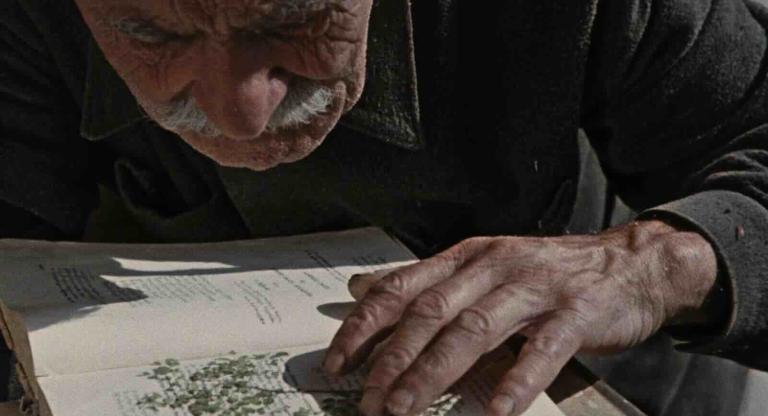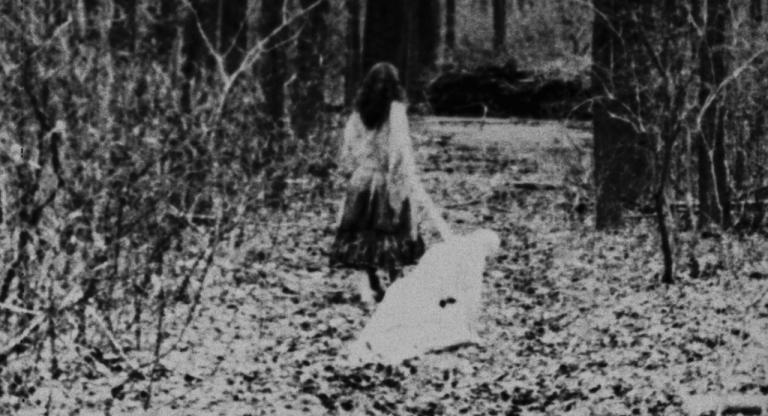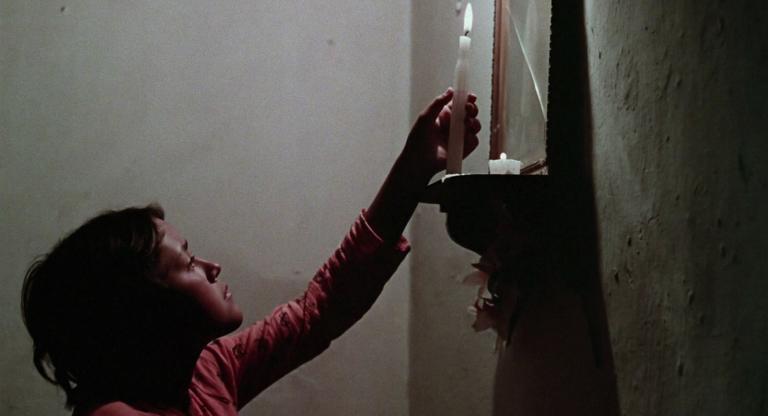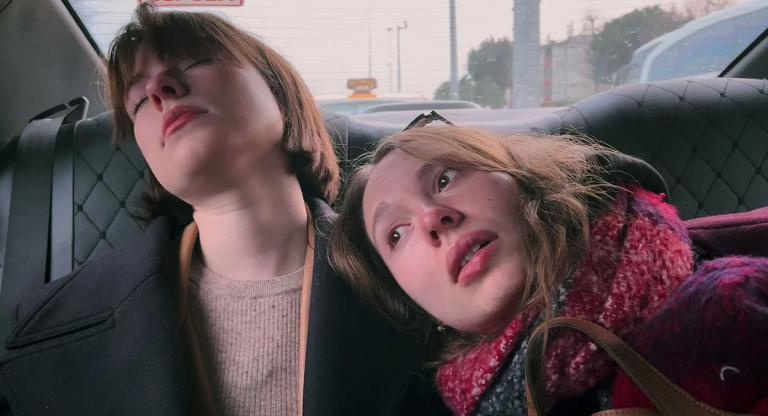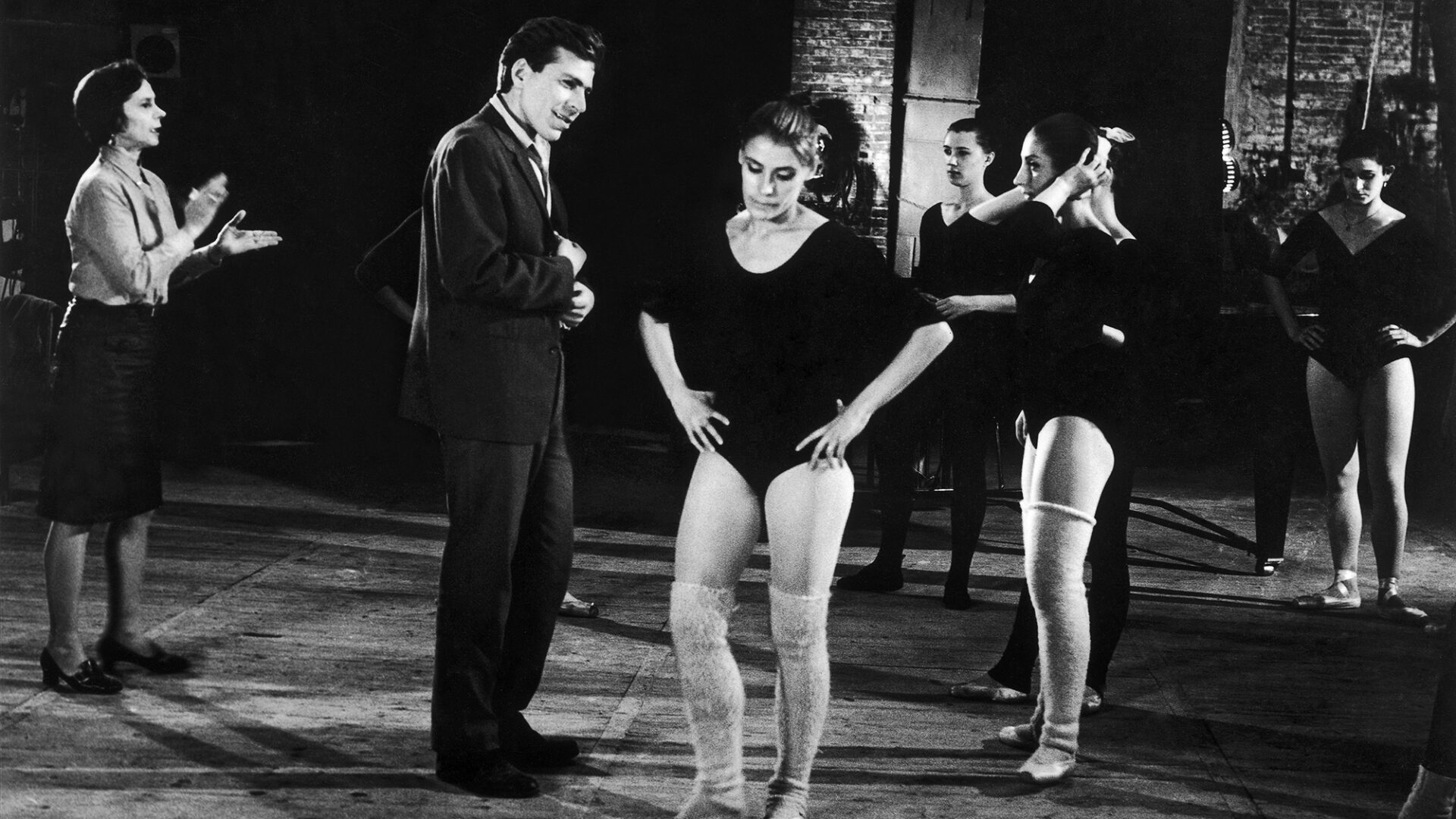
Only ever just on time to play his timpani for the ballet du jour at the Paliashvili Theater, Gia (Gela Kandelaki), the main character of Otar Iosseliani’s There Once Was a Singing Blackbird (1970), is something of a living contradiction: a Soviet flâneur, a loafer amidst the buttoned-up workman culture around him. Gia only ever gets his tie on at the last second before he performs, and in between his sparse drum beats, he wanders around the city, flirts with a bevy of women, and drops in on any room that has a door open, whether it hosts a science lab or a group of men huddling around a piano practicing Georgian polyphonics. With all the curiosity of a cat, Gia acts as both a vehicle for Iosseliani’s playful anthropological view of contemporary urban life and as a representation of the listlessness that took Soviet culture over during the Brezhnev era.
As a director coming into the industry just as the Thaw was freezing back over, Iosseliani’s career as a filmmaker in the USSR struggled immensely to keep traction. He did not have as hectic a relationship with Soviet censors as Andrei Tarkovsky or Aleksei German did, nor was he as compromising as Andrei Konchalovsky or Marlen Khutsiev (for more on this, see Bernard Eisenschitz’s recent interview on Iosseliani), and he certainly was not as embedded with the machinations of the state as the Shengelaia brothers. Iosseliani, instead, found himself in a similar position to Kira Muratova in Ukraine. Like her, he was stuck in a constant cycle of filming and being shelved. His VGIK diploma film, the short April (1962), took over a decade to release; in fact, Iosseliani briefly abandoned the medium altogether and spent two years doing manual labor before returning to filmmaking with his feature debut Falling Leaves (1966).
Like that film, There Once Was a Singing Blackbird played a sidebar at Cannes (Critics’ Week and Directors’ Fortnight, respectively). Yet, it still took Blackbird four years to be pulled off the shelf and screened internationally after it premiered in Tbilisi in 1970. While his international acclaim was growing, the brash Iosseliani was growing more and more frustrated with his frustrated position in the USSR. His interest in regional culture made him a good fit for the Georgian Film Studio (Metrograph is accompanying Blackbird with 1969’s documentary short Georgian Ancient Songs), while that same interest led him to characters who skirted around the collectivist quota culture of the USSR. Iosseliani’s subjects were hardly model Soviet citizens; this interest, in turn, made him hardly a model Soviet filmmaker—which, also, made him one of the greats. For a brief moment, Iosseliani’s camera glided down the streets of Tbilisi, catching glimpses of a new glassy modern world of rushing cars being built atop the old medieval city.
There Once Was a Singing Blackbird screens this evening, August 16, and on August 24, at Metrograph as part of the series “Otar Iosseliani: Fables of Modern Life.”