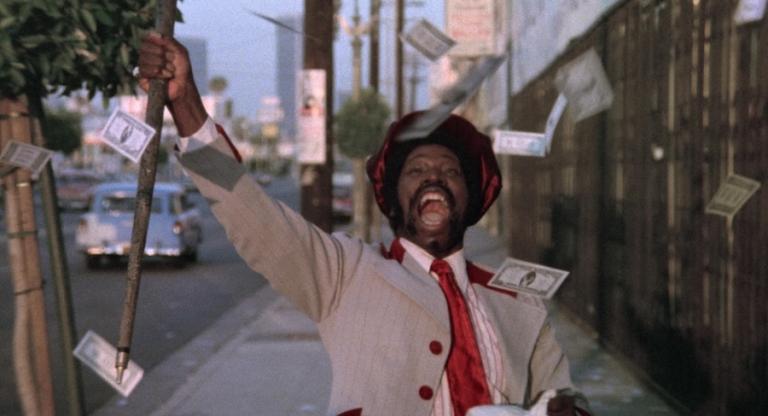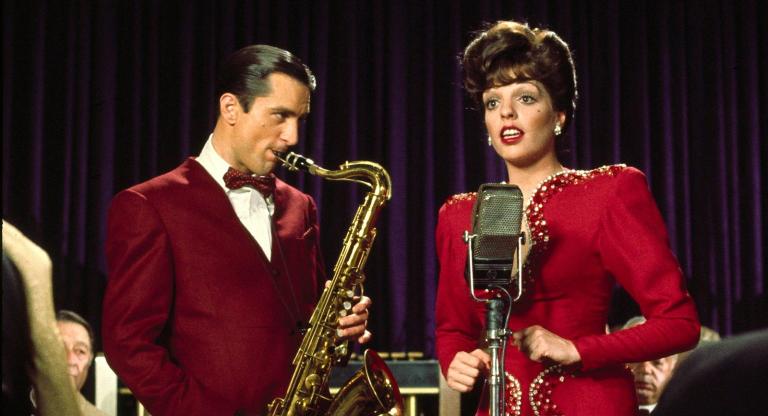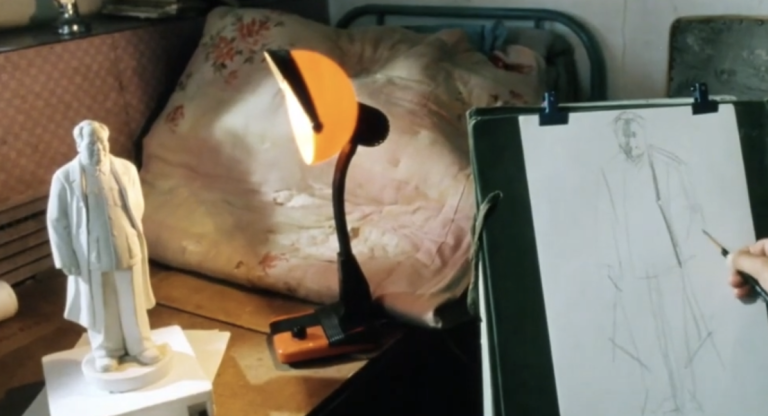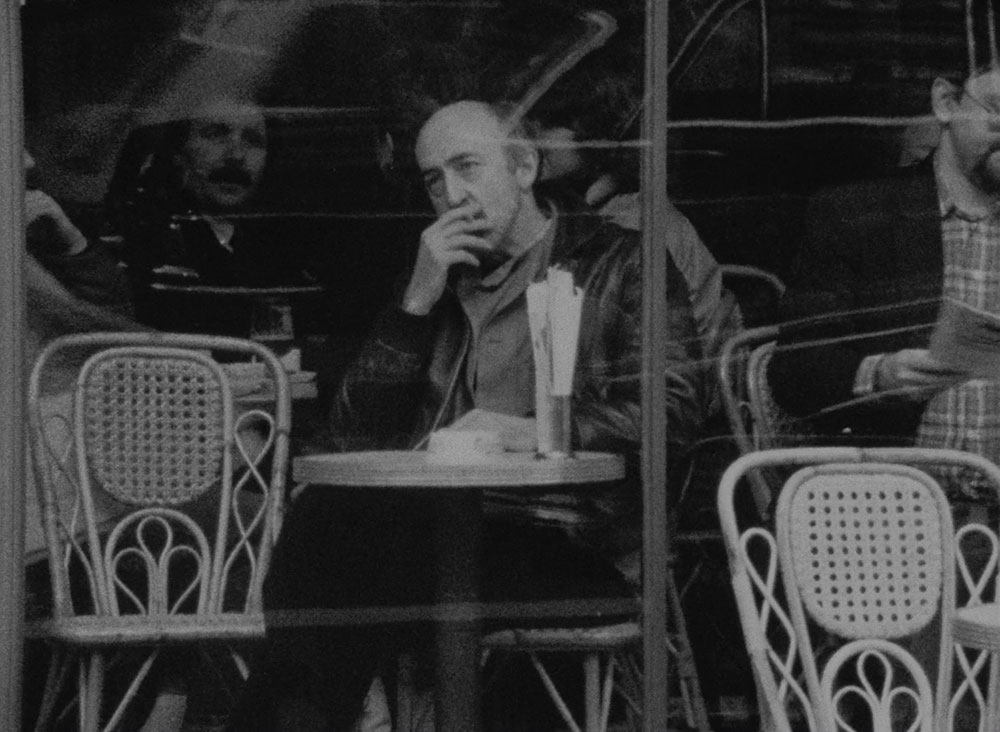
“I don’t take this profession seriously,” Otar Iosseliani told Cahiers du cinéma in 1979. At the time, the Georgian filmmaker was in Paris as an official delegate of the Soviet Union. He was there to present his films at the Cinémathèque Française—all of his work to-date, except his third and then-newest feature, Pastorale (1979). The print had been blocked by Soviet authorities without explanation. Well accustomed to bureaucratic woes, Iosseliani was unbothered: “There are people who adore cinema and would do anything for the chance to shout ‘action’ and ‘cut.’ For me, it’s more serious to spend three months doing nothing with the friends I admire. You spend three months in that world, but it’s worth fifteen years; that’s the essence of our lives.”
Four years later, Iosseliani would take up a full-time residence in the French capital. There, for the remainder of his career, he resumed the experiments he had begun in his native Georgia, an extension of his attitude toward life: nearly plot-less, gag-filled, and poetic films that move musically from one episode to another, peopled by an ensemble of close friends, strangers from off the street, and the occasional movie star, combining wild improvisation and rigorous structure—a style indebted, he claimed, to the ancient tradition of Georgian polyphonic singing.
Bernard Eisenschitz, a film historian, critic, programmer, and translator, was among the faithful who helped Iosseliani settle in France and build up a production system for his work. He also offered his talents as an actor in numerous Iosseliani films, as he has in other films by Jacques Rivette, Jean Eustache, Jean-Luc Godard, and Luc Moullet, to name a few. Eisenschitz was grateful for the chance to speak about his old friend, who passed away in December 2023. He touched on Iosseliani’s meticulous practice of drawing every scene, how he arrived at his preference for long takes, his distaste for cinephilia, and, briefly, the film he planned to shoot with Robert Kramer in Brighton Beach, Brooklyn.
Our conversation is presented here on the occasion of a rare retrospective of Iosseliani’s films in New York City, taking place jointly at Asia Society and Metrograph.
Edward McCarry: How did you meet Otar Iosseliani?
Bernard Eisenschitz: I first heard of Otar through another friend of mine, Pascal Aubier, a French filmmaker, who had been at the Moscow Film Festival in 1967. He returned to France completely enthusiastic about Falling Leaves [1966] and helped to get it shown in France. When I went to Moscow two years later, supposedly to work on editing and translating Eisenstein’s writings for Cahiers du cinéma, Pascal said I absolutely must meet Otar. This meeting happened on the first day of the festival and we never left each other after that, except for my occasional infidelity to Eisenstein.
EM: Who was Iosseliani?
BE: It’s important to note that Otar was a Soviet filmmaker, but not a Russian filmmaker. He was Georgian. Georgia was and still is a completely different country from Russia. It’s not like Russia and Ukraine, which have the same background. Georgia is another culture, another language, another religion. They grew out of traditions and morals which are quite different from the Russian ones—just as respectable as them, but deeply different.
Otar was born in 1934, 10 or 12 years after the Soviet Union had militarily occupied Georgia. But Otar never forgot the morality, the civilization of Georgia. He was a cross of these two things: a Georgian background and a Soviet upbringing, with all the troubled things that brought. Many of the good things, too. He received a very rich, powerful education. He first studied music, then mathematics, and later film in Moscow. And that was a result of Soviet socialism.
At the festival in Moscow, Otar had absolutely no problem speaking his mind, describing the Soviet politicians as crooks and liars—the way he later portrayed them in films like Brigands, Chapter VII [1996]. Otar and I never completely agreed on these things. I was more on the “communist” side, the French communist side!
EM: You wrote an essay on Boris Barnet, the patron saint of Soviet comedy, which ends with a recollection from Iosseliani. How does Iosseliani fit in the lineage of Barnet?
BE: In later years, Otar said Barnet was the only Soviet director for whom he had respect. What attracted him to Barnet was a never-ending capacity to dream. As Otar would say, Barnet made films “like a baby.” He was naïve. He loved the world. He wanted to show how beautiful the world is.
Barnet was enthusiastic about the Soviet Revolution. He had fought in the Civil War, and then started making films. In 1936, he made the most obviously fantastic film in the Soviet Union, By the Bluest of Seas, which was a film of a dream—a socialist paradise, in which Barnet wanted to believe and never could. He was never a rebel, never a protestor, but he simply made films according to his instincts. A lot of them got him into trouble.
Barnet was a hero figure for Otar: a man who loved women, who loved drinking, who loved company. He, of course, became very embittered by the end of his life, and Otar was a witness to that.
EM: Iosseliani ran into his own troubles and eventually left for France, which was maybe not an option for Barnet.
BE: But Otar worked far from Moscow, where there was relatively more liberty. Tbilisi Studios was a small company. If a shot was censored in Otar’s film, he had tricks to get around it. For example, at the end of Falling Leaves, there’s a shot of a church in the mountains. The shot was rejected by censorship, so Otar replaced it with a shot of trees or hills. Then he went back to the lab and replaced it again with his original negative, because no censor would ever go back and check. That sort of thing was possible in Georgia.
What mattered most for Otar was refusing all compromises. Of course, he was pestered with censorship, as everybody was. Things were made impossible for him. A dozen projects were rejected—finally, he got the opportunity to go to Paris. With help from friends, he met several producers and was able to build up a production system for his first French production, Favorites of the Moon [1984]. That was the beginning of a second phase of activity in his career as a “French” filmmaker.
EM: This is when he asked you to appear in his films, beginning with Favorites of the Moon.
BE: Otar was always working with friends from the start, in Georgia too. A lot of the cast in his three Georgian features were his drinking friends, including the most famous orchestra conductor of Tbilisi, who acts in Once Upon a Time There Was a Singing Blackbird [1970]. So, when he started on his first French picture, it was only natural for him to ask all of his French friends to act for him. Even the concierge of the place he was living in makes an appearance in the film. And a clochard, a real “hobo,” whom Otar had befriended, was given a role.
Otar didn’t mind using professional actors, as long as he liked them as people. Michel Piccoli has a part in one of his last films, Gardens in Autumn [2006]. He plays the hero’s mother. I think it’s the strangest part Michel Piccoli ever played. The role was modeled on a woman who acted in another one of his films, Chasing Butterflies [1992]. Piccoli met her and observed her, the way she moved and talked. If you see the film, you’ll see that Piccoli is not disguising his voice at all: he has Michel Piccoli’s voice, but he acts like an old lady.
Otar wanted to have friends around to make the films a kind of holiday. Of course, we all know that making a film is not a holiday. You need a very strong morale to make it one, which Otar did. He was very much loved by the crew, the technicians.
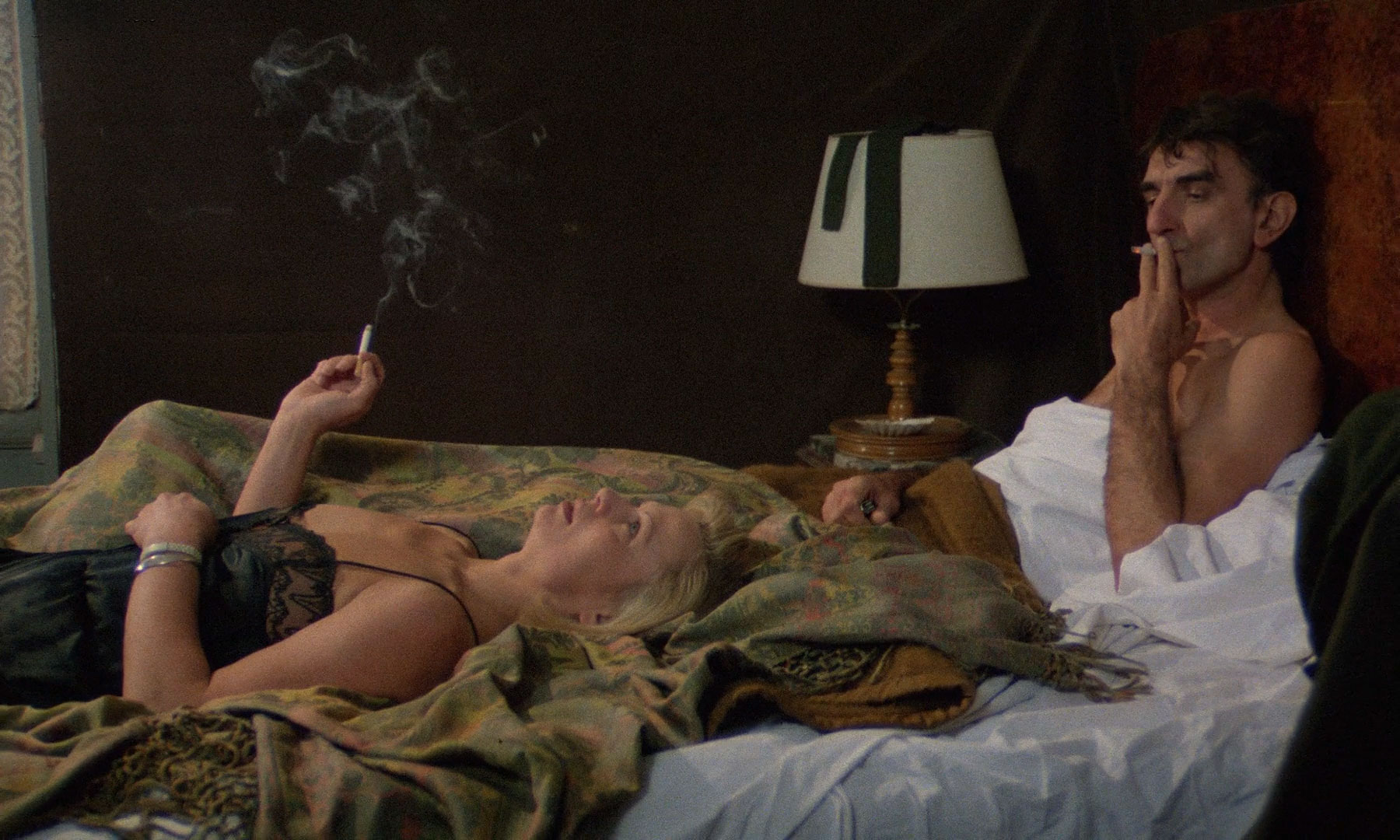
EM: There was a “naîve” side to Iosseliani, but there was also the mathematician side to him. From your perspective on set, how did he make his films?
BE: The films were extremely carefully prepared. First, ideas for scenes were dreamt up, written down, and glued to a wall. Slowly the ideas made sense, came together, and a kind of physiognomy would emerge of what the film could look like. Then came the writing of a so-called “literary” script—that was standard procedure. He would write the film like a novella or a short story. Then he would prepare the découpage, the scene-by-scene, shot-by-shot design. And, he would make drawings of each scene, first with the help of a storyboard designer from Tbilisi, and later on with his son-in-law and daughter. These drawings were immensely interesting—huge cardboard sheets with the story, shot descriptions, a list of actors, props, and so on.
In Georgia, Otar was used to working with post-synchronized sound. But little by little, because of French habits, he started learning how to work with direct sound. With Alix Comte, his sound man, Otar would create little symphonies of invented sound. They would record new things in the locations where they had shot, or in completely different ones, and they would compose the soundtrack with those things. The voices of the actors were their own voices, but the rest of the sound was really composed. It wasn’t Jean Rouch-type direct sound.
In the beginning there were several shots in every sequence, like in Favorites of the Moon. But this changed when he started working with William Lubtchansky, his director of photography. Under the influence of Lubtchansky, Otar’s way of thinking moved more and more towards plan-séquence—one scene, one shot. In the last film I had a real part in, Farewell, Home Sweet Home [1999], I think there were about 160 cuts, which is very little.
Otar disliked the Eisenstein/Vertov tradition. “There is not a second of truth in any Dziga Vertov film,” he would say. He completely disregarded the idea of montage editing. His idea of editing was more influenced by musical composition than by the history of film montage. It’s important to keep in mind his musical upbringing.
EM: The choreography of the actors and the camera in his films is remarkable. It’s almost silent film-like in terms of how eloquent the image is, the staging, and the burden placed on it, rather than words, to communicate.
BE: There is a great distrust of language and the spoken word in his films. Some of the early ones are completely wordless, like April [1961]. His second film outside of Georgia, And Then There Was Light [1989], was shot in Africa, and the dialogue is in a dialect of a small province in Senegal, which is not subtitled. Instead, he put around 30 silent film-type intertitles throughout the film. When he translated his films in the beginning, he would only subtitle one sentence per sequence, much like the early subtitles in the beginning of the sound era.
The dialogue was almost completely improvised on set. There was very little written that had to be remembered. In the morning, he would start by talking to the director of photography, Lubtchansky. They would decide where to put the tracks, what the camera would have to do, how it would have to move. Then he would talk to the actors, figuring out what they would say—whatever came to their mind. Pierre Etaix was in the last film I worked on, Chantrapas [2010]. If you know Etaix, he was a silent actor, a clown, and a filmmaker. Etaix would improvise dialogue, and he was very funny that way. We also had a quote-unquote professional screenwriter in the cast who insisted on making up witty dialogue. But this dialogue was destroyed take after take, completely atomized, until it became something almost inaudible by the end.
Preparation for a scene would take all morning. After lunch, the scene was shot. He would always shoot several takes, making changes between takes. For the first film, Favorites of the Moon, it was much more découpe—more cut-up. He was preparing a scene with László Szabó, of Godard fame. Szabó is a wonderful actor, and he’s also a great ham. [Laughs]. So he would always invent something for himself to do, which Otar would enjoy a lot. But each take would create an almost completely divergent story, so this take became “Version A,” that one “Version B,” et cetera. It was difficult. Once he started using sequence shots, these things became easier.
When Otar spoke about his work, he insisted that the script and everything had to be completely rigid—a very “Film Institute of Moscow” way of thinking. But this rigidity allowed him to find his own freedom on set.
EM: Buñuel would talk about his love for mundane things like “What time is it?” or “Do you have a light?” and how he dreamt of making entire films out of these actions. Iosseliani seems to have had the same dream.
BE: I agree. At some point after he left for the States, Buñuel agreed to tell stories. He had no interest in stories, so he told them, but with tongue-in-cheek. He was always inventing gags. From the start, Otar completely disregarded the idea of telling a story. His idea was to bring characters, a place, a situation together, and to show people as they are today—in the beginning, the people of Tbilisi, his city. Of course, there is a story in the end, but you don’t have to understand it. Most of the time not even the actors knew what was happening. I certainly didn’t know. When we did Favorites of the Moon, we didn’t know who was married to whom, who was whose lover, who was a terrorist, who was blowing up a statue. [Laughs].
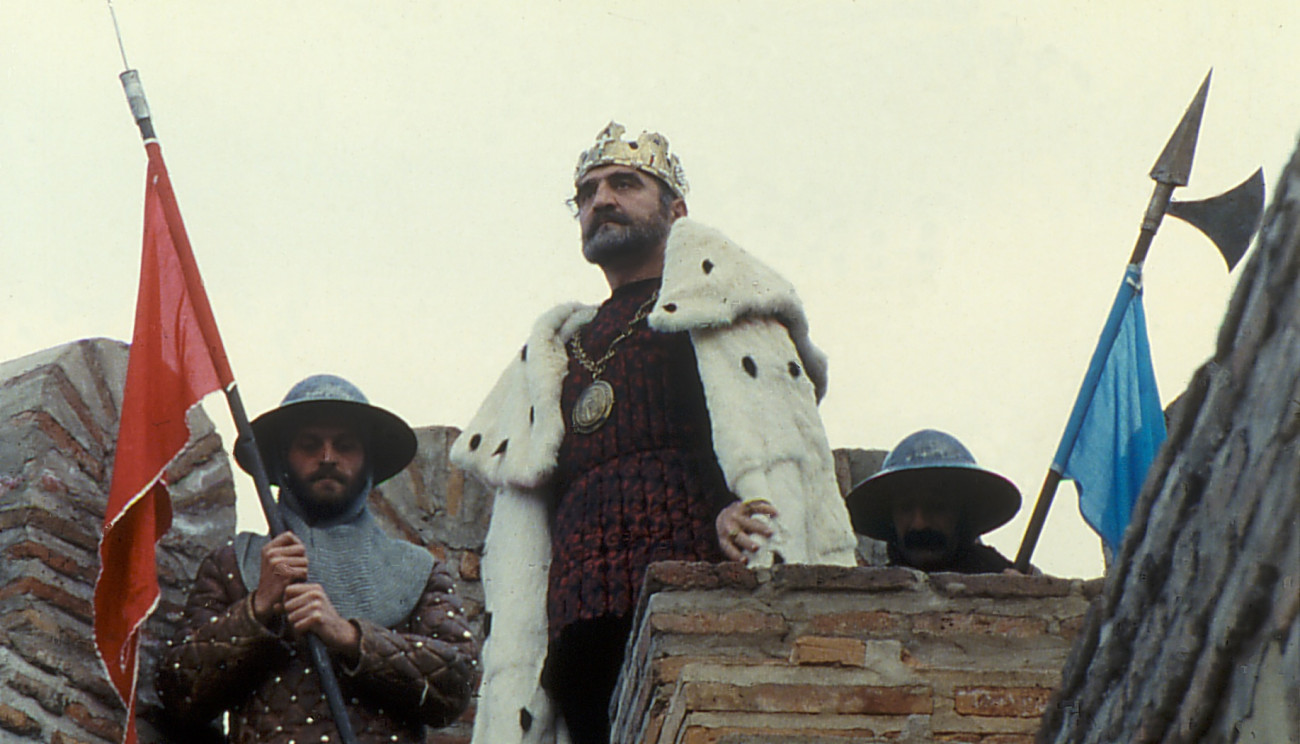
The scenario of the African film is also very simple: there are people in a village, trucks come and start cutting down trees, and the trees end up as small, fake idols in the city markets sold to tourists. In Brigands, Chapter VII, it goes back from the Middle Ages, to the revolution, to Stalinism, to mass murders, exile, and finally we end up in Paris, where the hero who was once a king is now a beggar.
EM: Maybe that’s something he learned from Barnet: as long as you end the film where it began, you can get away with anything in between.
BE: I think it came from his musical studies. There’s a feeling of wrapping up, the ending joins the beginning, and the circle is closed. It’s interesting because the endings were not always in the script. In Brigands, Chapter VII, he wanted to end it with a lot of pigeons… I don’t know if you’ve been to Paris, but pigeons are a disgusting race.
EM: Well, in New York we’re very familiar with pigeons.
BE: Otar hated pigeons. It was a bed scene, and outside the window he had glued a few pigeons. He wanted to end the film on this very, very bitter note—a massive flight of pigeons. But at the end he just gave up, and instead he used a moving shot down a hill under a beautiful sunset. It’s something that makes you atone for all the horrors that you’ve seen.
EM: I often think of Iosseliani together with certain filmmakers from around the same time, people like João César Monteiro and Jacques Rivette, who were “lost children of the 1930s,” in the sense that their films are somehow a memory of the popular cinema of that era.
BE: Yes, but these filmmakers you mention were also children of the Nouvelle Vague, which was not Otar’s case. He hadn’t seen the films of the Nouvelle Vague when he started making films. When he did see them, he didn’t like them especially. The Nouvelle Vague only came to Russia in the last days of the Soviet Union. There was a festival in Riga, I think in 1989, where screening rooms were crowded with people trying to see Breathless [1960], which had never been shown in the Soviet Union.
But Otar became fast friends with people, and he started meeting other directors. I remember he had a very good relationship with Robert Kramer. Robert would call him an old aristocrat, and Otar would say, “Oh, you Polish Jew…” or something like that. They enjoyed that kind of duel. The two of them had a project together, which they never really planned to make. But they loved talking about it.
When he was living in Berlin, Otar got along very well with Jean-Marie Straub. They enjoyed each other’s company. Straub was also a good drinker, after all. I think Otar saw one or two of his films. He liked that kind of cinema, he felt close to his rebellion, to his independence, but I doubt that he was craving to see more. Of course, Otar was extremely sarcastic about people like me, the “cinephiles.” That was something he couldn’t stand—the people who have seen everything. Cinephilia was really a dirty word for him. [Laughs].
EM: It’s been about three years since Iosseliani passed.
BE: Yes, it was around the time I was finishing the book on Boris Barnet, which I felt was my real tribute to Otar…
EM: When did you last see him?
BE: The last time he was in Paris. He and his wife had returned to Tbilisi to be with their daughter. He had money from a Russian businessman to make a new film, but it didn’t get off the ground. Then his producer, Martine Marignac, died. He sent a message, but he couldn’t come to Paris for the memorial service. Friends were calling him, including myself. I told him, “I’m coming to Tbilisi to say hello.” He said, “Yes, come, I’m very bored.” He was very dejected at this point. I was in the middle of buying a plane ticket when the telephone rang. It was Otar: “No, don’t come, I couldn’t see you in this state.” So I gave up.
He spent his final days looking at his old films. He died while watching Falling Leaves... But he wasn’t alone. He was surrounded by his family. His wife. His daughter. And he was in Tbilisi, his city. He always felt that’s where he belonged.
“Otar Iosseliani: Fables of Modern Life” runs July 24-August 16 between Asia Society and Metrograph.