The usual notion that the Venice Film Festival is a red-carpet runway for awards contenders was no match for reality in 2026. Or, to put it another way, those who met the current moment with work about authoritarianism and social inequality just somehow kept being more compelling than the alternatives. The Venice jury, led by Maggie Gyllenhaal in gloriously sarcastic suffer-no-fools mode, acted accordingly, giving the top two prizes to Woman Unknown, May el-Toukhy’s rigorous look at a servant in post-collaboration Denmark, and Lee Chang-dong’s Possible Love, a barbed portrait of a working-class couple befriended by a documentarian and her rich husband. But it was the number-three prizewinner that nearly overshadowed the rest: NAZA, Yuval Abraham and Rachel Szor’s coolly definitive account of Israel’s surveil-and-kill system for attacking Palestinians and destroying Gaza—essentially a feature-length confession by the Israeli military to what the world knew or suspected was happening.
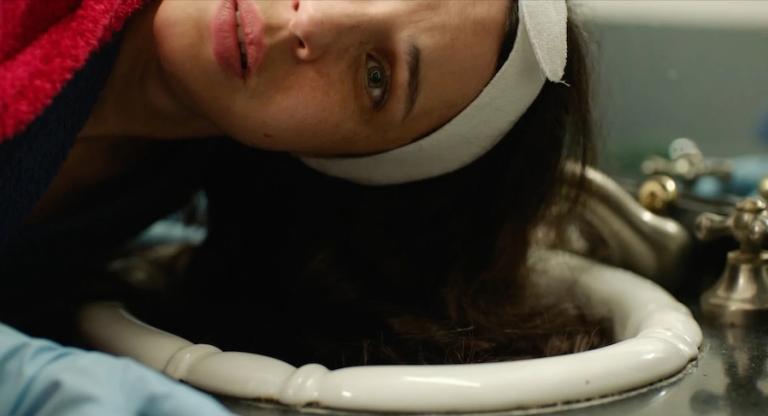
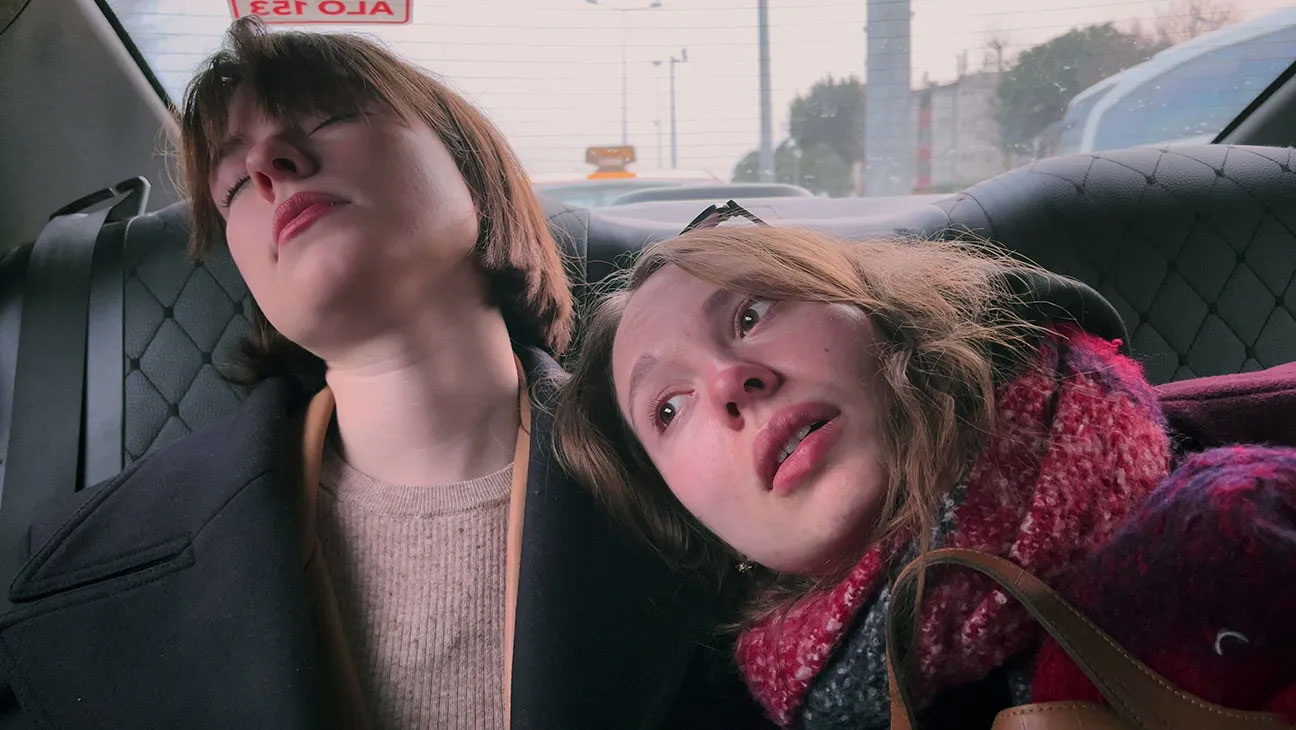
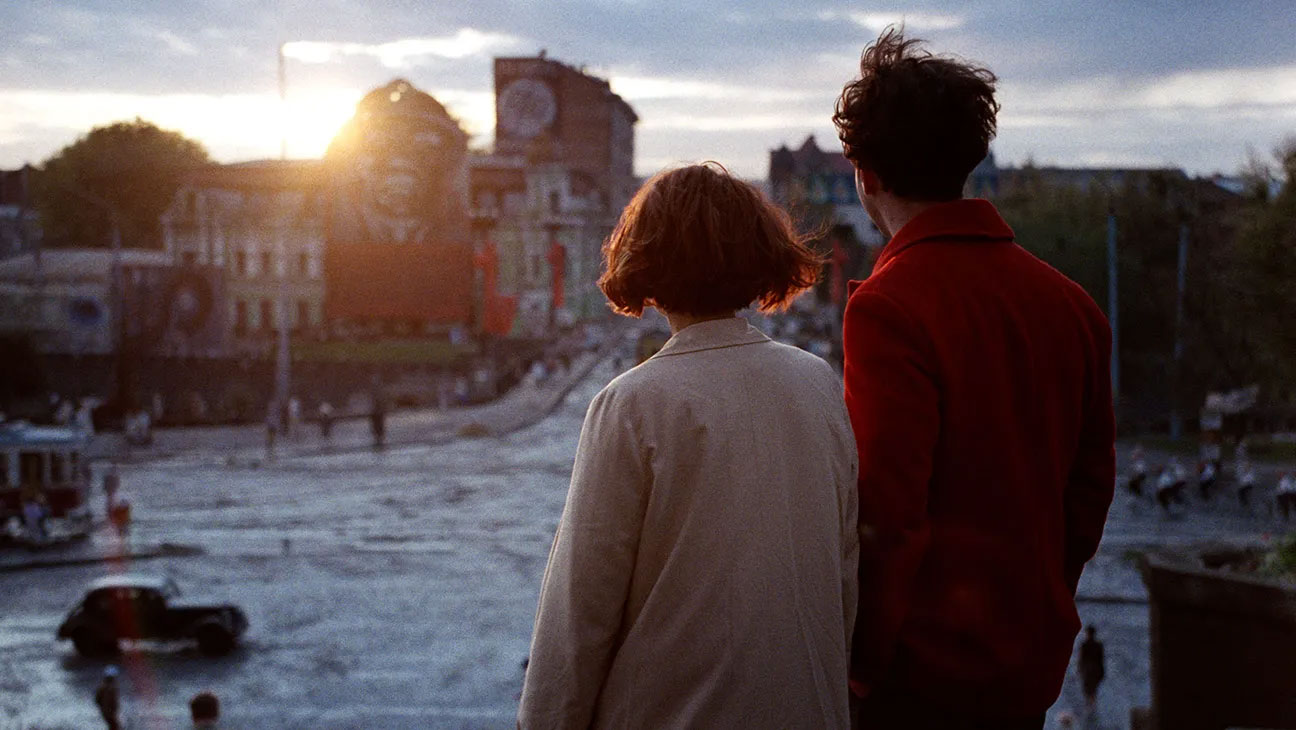
Fortunately, Possible Love and NAZA are already speeding toward release, Lee’s beautifully modulated film soon to stream on Netflix, and Abraham and Szor’s exposé recently set for self-distribution in the United States on September 30. Movies like these just can’t seem to sit on the shelf. Likewise, Julia Loktev’s My Undesirable Friends: Part II—Exile (pictured at top), which continues the director’s at once vivacious and devastating chronicle of independent Russian journalists, opens at Film Forum on October 9. I remain absolutely besotted with this project because of how uniquely well it unifies its ambitions—emotional, political, formal, journalistic—across six hours, no less. Showing early in Venice, it extends Loktev’s close-up account of the young women who, having left Russia after Putin’s full-scale invasion of Ukraine, keep paddling away madly and pursuing their risk-taking journalism in Latvia, New York, Ukraine, and elsewhere. Loktev continues in her dual roles as confidante, eliciting the equivalent of on-the-fly exile memoirs and monologues, and one-woman crew, wielding her iPhone with the intimacy of a friend chat and casually reinventing what we’ve come to accept about cinéma vérité. Leaning here into love—through the relationships between couples, both lovers and friends—Loktev's tough-and-tender chronicle pushes back against oppression and fear as the organizing narrative imposed upon the world by Putin and his ilk, but also does not spare the extent of Russia’s aggression, from incredibly intrusive spying up to and including murder attempts.
Russia could be hard to escape in Venice, its vast footprint visible through Ilya Khrzhanovsky’s DAU and Sergei Loznitsa’s Imperium. Sprawling across five decades of Soviet history and 195 minutes of screen time, DAU circles and then stays with a scientist based on the Nobel Prize-winning theoretical physicist Lev Landau, who helped develop the country’s first nuclear bomb. Khrzhanovsky, part of a 2000s vogue in shock-and-awe auteurs, shoots DAU in bravura fashion, with Boschian visions of St. Petersburg crowds and lurid montages involving pig slaughter—all ostensibly part of a little-understood multi-film project he supposedly made on a Synecdoche, New York–like immersive set. But this particular Khrzhanovsky film (which won a Silver Lion here) can stand alone as a Soviet dirtbag Oppenheimer, showing Landau’s journey from rebelling against orders to build a weapon and being tortured, to finding ways to get along with an increasingly brutal surveillance state. Instead of Oppenheimer’s Bhagavad Gita-quoting romantic scandals, we get a transparently sleazy Landau shtupping his friend’s wife during a dinner party and ultimately employing two housekeepers dressed in negligees, while his own wife manages his mess. Ukraine’s Ministry of Foreign Affairs objected to the film’s inclusion at Venice, which is understandable, but DAU basically portrays a thoroughly corrupt, cynical, and sadistic state that rhymes with the fallen country that targeted Loktev’s journalists.
DAU joined a lineup of Competition titles that featured a stately prestige entry in Bunker, starring Javier Bardem and Penélope Cruz as a power couple facing a billionaire’s indecent proposal (namely: build me a postapocalyptic bunker!). But its other high-profile titles seemed intent on mussing things up a little by embracing the unsavory. Wild Horse Nine felt like writer-director Martin McDonagh’s bet to himself that he could write a sympathetic comedy about two CIA agents who are in Chile to help overthrow President Salvador Allende in 1973. John Malkovich, playing a terminally ill agent, and Sam Rockwell trade Ugly American banter with aplomb, and it’s often quite funny. But how to shake the feeling that McDonagh is having his cake and eating it too? In Primetime, Robert Pattinson has a whale of time smarming it up as To Catch a Predator host Chris Hansen, opposite a superb Merritt Wever as his ethically adaptable producer. The bruised, bleary, pre-HD look successfully felt like nausea visualized, but Lance Oppenheim’s debut fiction feature naggingly remains suggestive and static, creating a vibe around exploitation that clings to you yet feels undercooked in the watching.
This is where some genre movies would come in handy, though they were thin on the ground: Rami Kodeih’s Furies mines a knotty feminist crime drama from the desperation of Lebanon’s bank collapse, and Competition horror title The Spiral from Paolo Strippoli extrapolates a mother’s devilish Faustian bargains to save a sick child into more and more death and suffering (though I preferred Strippoli’s The Holy Boy from last year’s Venice). Maybe I’ll go back to multi-hour documentaries? Mariano Llinás’s Life of Jorge Luis Borges was a film I both looked forward to and slightly dreaded, with the game-playing storyteller of La Flor fanning out about a personal literary hero. But the opening sequence won me over with Llinás (or someone) piling book after musty book on top of a table. The film then goes on to obsess over manuscripts and old buildings in its paper chase of the author’s biography and the exact point when Jorge Luis Borges became Just Borges. Llinás’s ego-tripping, with Borges expert Ernesto Montequín as a foil, turns out to be well-suited for delineating the turf wars that affected both Borges’s practice and his legacy—without soft-pedaling the author’s noxious late-in-life views. And, what can I say, I also enjoyed watching Luca Guadagnino in the I-don’t-know-how-many-hour Joie de Vivre having smart chats with Martin Scorsese, James Gray, Catherine Breillat (“You film the flesh!”), and several critics about the formally dazzling work of Bernardo Bertolucci, with sober looks at Last Tango in Paris and 1900, as well as the making of The Last Emperor (with Jeremy Thomas, R.I.P.). Also, among the nonfiction heavyweights, I’d take Sergei Loznitsa’s pointed found-footage travelogue of 1970s-era USSR Imperium—with recovered audio from passing workers!—over Alex Gibney’s Musk, a punishing digest for anyone alive and reading news for the past 15 years.
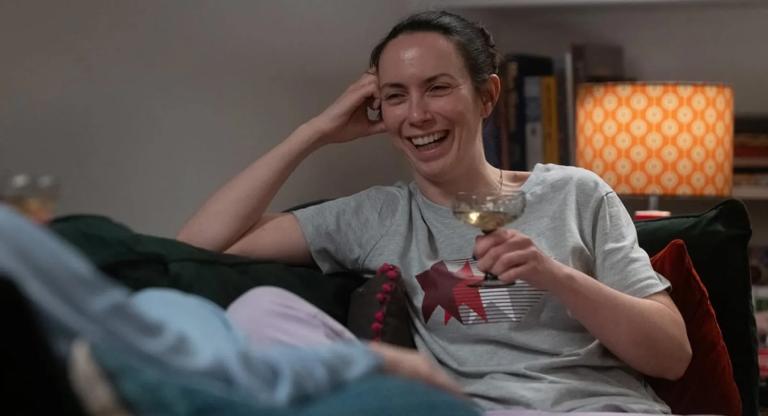
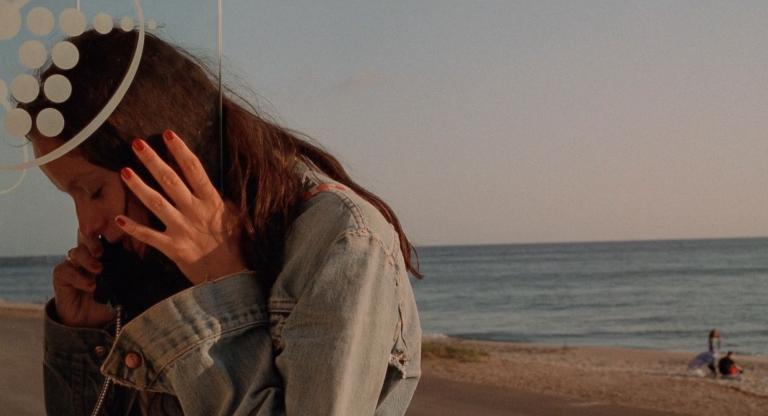
Three final titles to go out on, from different phases of careers: Jacqueline Lentzou’s debut feature A Day in the Life of Jo: Chapter Phaedra, a fearsome teen’s coming-of-age, with an organically restless style and an ending that enters another realm entirely; Too Much Sugar, the latest and possibly my favorite hybrid yet from Robert Greene, about a sort-of-reforming Missouri dad and his complicated family life (and their dream lives); and Bucking Fastard, starring Kate and Rooney Mara as codependent sisters who speak in unison and, like old-school Werner Herzog protagonists, pursue their mesmerizingly odd path to the bitter end.