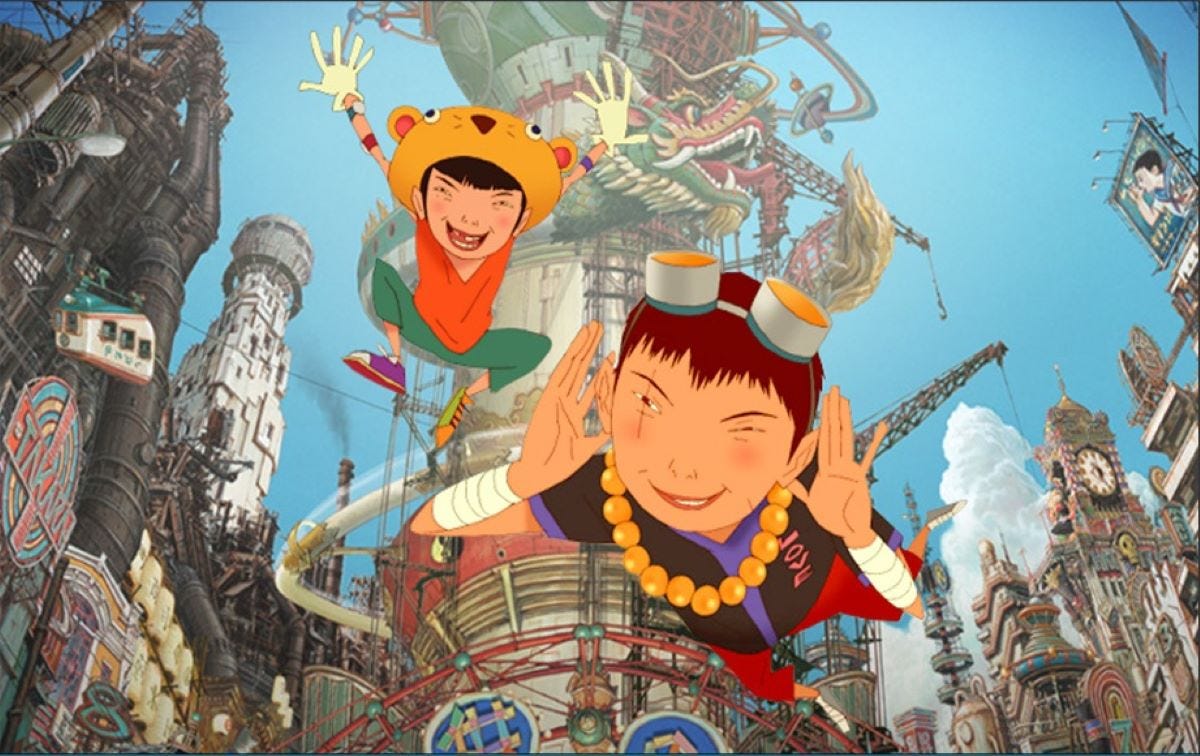
Tekkonkinkreet’s (2006) Treasure Town is a city that breathes and groans. It has a life of its own, lovingly constructed by Studio4°C through intricate animation and rapid camera movement. While Kuro (Black) and Shiro (White), two young street urchins living together in an abandoned car, carry the plot forward, their little city is the film’s main character; it is a dense, chaotic environment of alleyways and narrow streets packed with local shops and apartment buildings. It possesses an internal logic all its own, drawing inspiration from pan-Asian cities including Tokyo, Shanghai, and Hong Kong. Much like real world cities around the globe, Treasure Town is under threat: outside property developers have recruited the local yakuza to systematically bulldoze the old city in order to make way for a family-friendly, profit-driven amusement park. Local policemen, and even Rat, a member of the yakuza, wax nostalgically about what the city once was. They operate with the awareness that gentrification is a process inflicted upon a community by outside forces.
Our two wild children perch atop Treasure Town’s highest buildings, leaping from rooftop to rooftop with a fierce possessiveness amidst cultural and physical demolition. Kuro is a fearless boy willing to fight anyone—including the hulking alien thugs summoned by the developers to hunt him and Shiro down—who calls Treasure Town “his” with a fire that any city kid who’s seen luxury condos or a Whole Foods pop up in their stomping grounds can relate to. Shiro is Kuro’s counterpart: a playful, sweet soul who never loses his innocence despite the violence and loss that surrounds them. All Shiro gives to the world is love, and the two balance each other out. Their existence within the city that raised them is fragile, standing in stark contrast to the sterile new development that threatens to consume Treasure Town.
Two decades after its release, what makes Tekkonkinkreet continue to resonate is its nuanced relationship to urban development. Despite their allegiance to the developers, even the yakuza mourn the old days, and cops reminisce about when the streets used to feel more familiar. Through calculated violence, the aliens are bringing a future that has no room for the messy, rich chaos of Treasure Town: they prioritize efficiency over character and profit for the already wealthy few at the expense of a working-class community. Yet the city’s spirit is not easily extinguished. Treasure Town remains vivid and alive even as it is torn apart. The struggle between the nostalgia for home and the impersonal forces of gentrification is the film’s eternal tension, speaking truth to anyone who has ever watched their neighborhood change beyond recognition.
Tekkonkinkreet screens this evening, June 24, and on June 26, at Low Cinema.