Lawrence Jordan is one of the most influential directors in the history of stop-motion animation. Although often associated with the avant-garde, Lawrence describes his work simply as “personal films,” each conjuring an interior world inhabited by surrealist characters and steeped in mysticism.
From having Stan Brakhage as a roommate to being mentored by Joseph Cornell, he created timeless work using engraved images across both the United States’ East and West Coasts. Lawrence taught at the San Francisco Art Institute for over 30 years while creating his animated collage films, stating that he is “using cinema as a way of describing the soul.” An animation pioneer and an early arthouse distributor, an artist like Lawrence comes once in a lifetime.
It was an honor to speak with Lawrence over the phone ahead of his mini-restrospective at the Film-Makers’ Cooperative. Our conversation has been edited for length and clarity.
Brian Ratigan: You have a quote on your website that states, “When I astonish myself, I put it in the film. When I don't, I leave it out.” I thought that was very inspiring.
Lawrence Jordan: Well, it happened like this. I was at Harvard, in 1952. They had a film society that hit me right between the eyes. They were showing the first wave of avant-garde films from Europe: Duchamp, et cetera. At that time, I thought I was going to be a writer. The film society just made it very clear to me that I was more interested in the image rather than the word. They had a film club, so I joined. My neighbor in the dormitory was a skilled still photographer, but he'd never used a movie camera and neither had I. We borrowed the club's camera and he very quickly figured out how to use it. He held the camera and I told him what to shoot around the campus. That was my first footage.
When I got to San Francisco, I got serious about it. I got a camera, I started to read the literature, the cinematographers' magazine. Little by little, I became a fairly good technician. My first really good live color film was made when I was in the Merchant Marine, called Waterlight [1957]. After a couple of films that were kind of psychodramas, because I was very interested in Maya Deren, I got into Max Ernst's collage work. I began photographing his collages in a book. As they came up in the solution, one after another, I realized it was like a movie in slow motion. That’s when I had the brainstorm: I could make these things move. So, I started collecting engravings at that time. All the secondhand shops had old books with engravings in them. I amassed quite a backlog of material, did quite a lot of cutting, and I started moving things. I would put up a background, put the cut-out pieces on it, and move them one frame at a time.
The first thing that I did, I shot on what we'd call threes—three frames that move. It was pretty bad. I figured I have to move and shoot each frame. So, I started shooting on the ones. It was years before I found out that commercial animation never shoots on ones, they're always on twos. But shooting on ones is called full animation, and I'm talking a lot technically here, but what was really happening was that a whole world seemed to be opening up. I could put any kind of surreal incident into the animation. If I worked out the pieces and worked out the shooting scheme, it started to look fairly good. So I made the first film, Duo Concertantes [1964], sent it off to the Ann Arbor Film Festival, and it won first prize. It didn't even have a soundtrack at that time.
I had maybe eight or 10 films by then, and I was taking them from where I lived in San Anselmo into San Francisco on the weekend. There was a coffee shop that would let me show films in the back room and make a little money. I was showing Duo Concertantes one evening—it was silent, but I was improvising on the radio. A classical piece came on as I began the film, and it ran exactly with the film all the way through and ended as the film ended. It was perfect. I called the station, found out what it was, and that became the soundtrack for Duo Concertantes. Then I began collecting a lot of music so I would have a backlog of possible tracks, and that's how the whole thing got off.
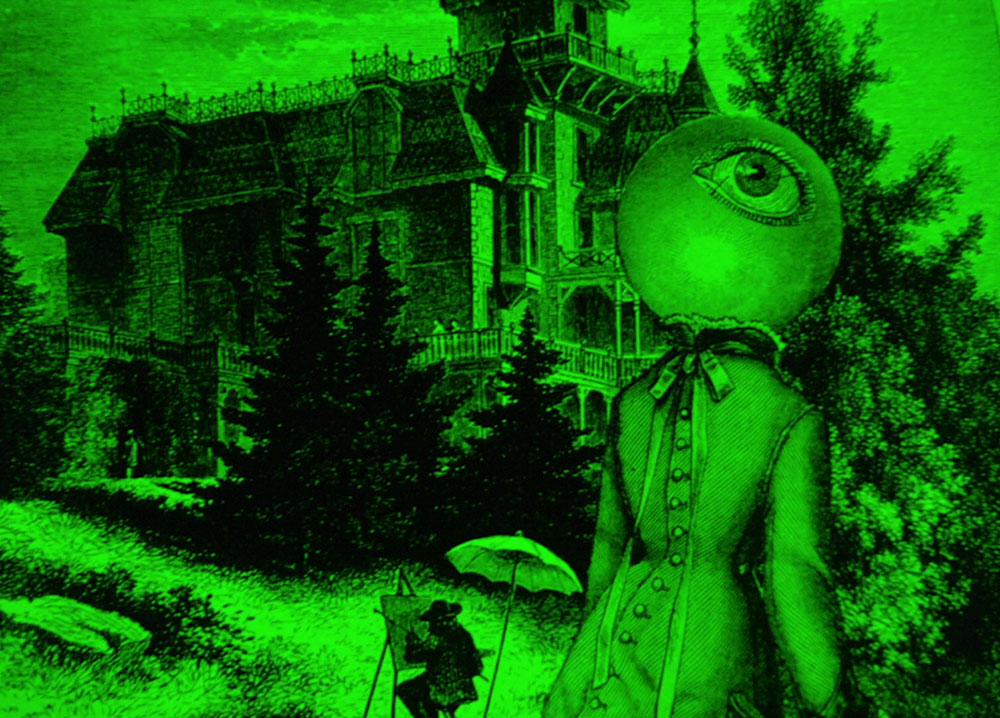
BR: Your animated films, along with your documentary Cornell, 1965 [1978], are being presented in this weekend’s retrospective. What influence did Joseph Cornell have on your own filmmaking? I know you helped prepare his “boxes.”
LJ: I was into Max Ernst and all the surrealists. I was looking at them in books, and work by Joseph Cornell would pop up in those books and magazines every once in a while. I was really attracted to them right off the bat, then I spent some time in New York early on in the late ‘50s. I saw a show of boxes at a little gallery called the Stable Gallery and was just amazed.
At that time, I was sharing an apartment on the Bowery with Stan Brakhage. One day, there was a knock at the door. I answered it. I opened the door and there stood the most emaciated human being I had ever seen. It turned out to be Joseph Cornell. He had a very beautiful young woman with him. He sat in a chair and he talked to us. He talked for two hours without stopping. I cannot remember one single thing that he said, but it was an enchantment. I had no idea whether he would remember me or not, but back in San Francisco, I published a little book of photographs of Ivan the Terrible and sent him one. He wrote back and was very cordial. That began a 10-year correspondence. All that correspondence now is with my papers at Harvard. He would occasionally send me one of his films to look at and I would return it.
Then, in 1965, Cornell called and asked if I would like to help him. Could I come for a month in the summer? I jumped at the chance, took the camera, and went and lived in his house in
Flushing. He skirted around the issue of whether or not I would film him. He was very shy about being photographed. It turned out that he was more interested in showing the boxes than in showing himself, so I figured he's never going to let me shoot him. But one afternoon, I saw him standing in the doorway of the garage, and I was above the house, so I took a few shots of him just standing there in the doorway. As far as I know, they're the only film footage of Cornell. So, you see those in Cornell 1965.
I was there as his assistant working on boxes and I edited one film. He had various people shoot films for him. Brakhage shot film on the Third Avenue El for him before they tore it down. Brakhage edited it, but Cornell didn't like it, and that was the same with the footage he gave me. He didn't like it when the photographer edited the film, so he would have somebody shoot footage and then give it to another person to edit. Otherwise, it wouldn't be a Cornell film. He would look over the editor's shoulder, but he had very primitive editing equipment down in the basement. I would be down there putting together a sequence and he would come down the stairs and look at it. I remember he would say something like, “Well, I don't agree with what you've done there,” and go back upstairs, never saying anything about what he would like. So I would take the footage apart, try it again, and he would say something like, “Well, I think we can get along with that.” That’s the way Fable for Fountains [1972] was edited. We took it over to the house in Long Island, where a collector of his boxes lived, who also had a projector. We showed the film to a small group of people. That was the premiere of the film and, as far as I know, he personally didn't show the film again.
BR: Who were some of the other filmmakers in your circle?
LJ: Willard Maas, Marie Menken, Maya Deren. Stan and I stayed at Maya Deren’s studio for a couple nights before we found an apartment. Kenneth Anger was still out in California, and he was also another influence.
BR: Between opening Camera Obscura Film Society with Bruce Conner and co-founding Canyon Cinema, you played a major role in shaping the avant-garde and independent film scene on the West Coast. Is it true that you modeled Canyon Cinema after the Film-Makers' Co-op?
LJ: Yeah, that was a reasonable model, because everybody was sending films out from their houses and it was a drag. We wanted a central place to send out the films. They were doing that at the New York Film-Makers' Co-op, so that looked like a good way to go.
Robert Nelson and I built a little office in the basement of a church in San Francisco. They gave us space there, and we got someone to work in that office. We put our films in, and they were sent, received back, inspected, and collected. At that time, it was 60-40 split with the filmmakers. Later, it had to be 50-50. Robert Nelson, myself, and Ben Van Meter started Canyon Cinema Cooperative. There are a lot of other stories out there about Canyon getting started, but that's actually what happened.
BR: Do you have a favorite personal film?
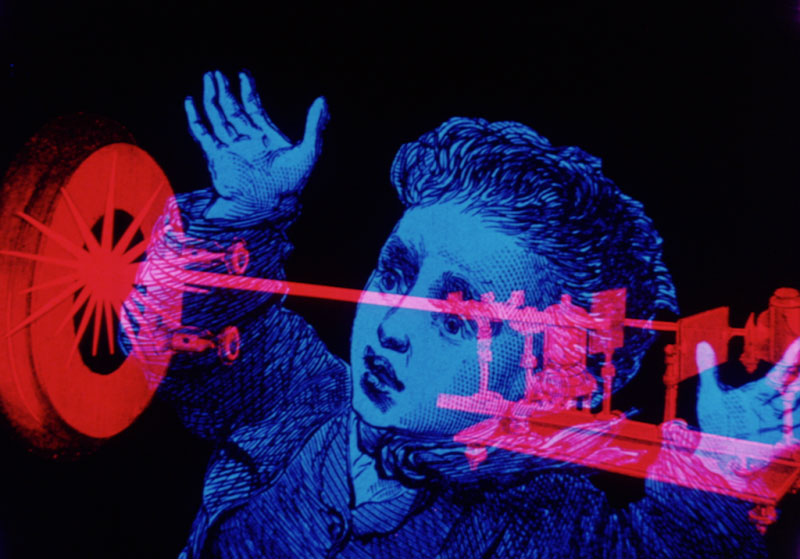
LJ: I never played favorites with the films. However, last year I did a mini retrospective at the San Francisco Museum of Modern Art and it turned out to poke at the corners of films I’ve made. It was a knockout! It bowled the audience over. I would have to say that those eight films would be my favorites today. Cornell 1965 and Our Lady of the Sphere [1972, pictured at top] are on that list.
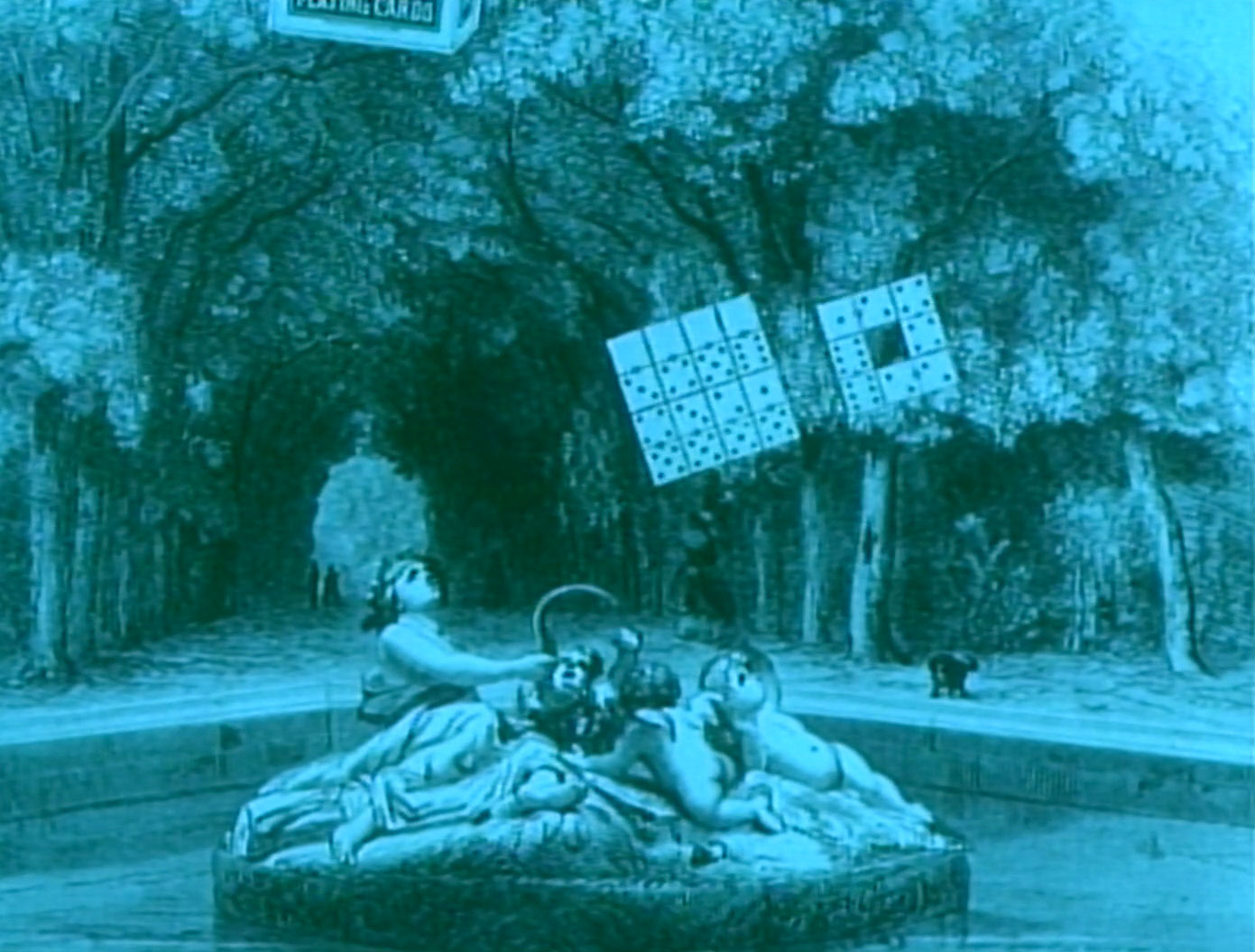
BR: Tosh Berman, Wallace Berman’s son, strives to preserve the legacy of the West Coast avant-garde and underground movement. Why did you dedicate The Rime of the Ancient Mariner [1977] to Wallace Berman?
LJ: I knew [Tosh] from the time he was a child. Wallace Berman was a mentor of mine and he was a great fan of Orson Welles, so that was a natural dedication.
BR: What was it like working with Orson Welles on The Rime of the Ancient Mariner?
LJ: The story behind the soundtrack is interesting. I knew from the beginning that the only voice I wanted on the soundtrack was Orson, but how was I going to do that? I was on the Board of the American Film Institute in the ‘70s and one year when I was there we gave the Life Achievement Award to Orson Welles. I thought, “Oh, here’s my chance,” because I had acquired a beautiful set of the Gustav Doré engravings of the poem. I put together a packet of information and xerox of the illustrations, and I was able to give them to his secretary when we had a banquet. About a month later, I got a call from Orson Welles’s lawyer saying, “Orson would like to do this.” Great! I applied to the National Endowment on the basis of Orson narrating the film and they gave me the grant. I got back in touch with the lawyer and offered Welles a quarter of the grant. They agreed. But since Welles was in LA, and I was in San Francisco, how was this going to work?
The director over at the Pacific Film Archive got hold of this story and said, “Before you work with Welles, you have to hear this audio cassette I have.” She sent it to me. It was Welles being directed in a radio commercial by a squeaky-voiced little Englishman. He was tearing this guy apart who was trying to direct him. I said to myself, “I’m not going anywhere near Orson Welles.” I told him that he had carte blanche on the poem and he could record it and send me the tapes. That was agreeable. Eventually, I got a whole box of tapes, and what was on the tapes was quite daunting.
He took every two-line couplet and did it at least four times. Each time it seemed to be getting better and he seemed to know where he was going. In almost all cases, the last take was the best. I had to splice each couplet to make it sound like he could just pick up the book and read the poem. He wasn’t good because he was born with a silver spoon, he was good because he worked hard. That was a big lesson for me.
BR: You did an amazing job, because it truly sounds like he just sat down and read the story. He has such a commanding voice that you don’t tend to question it.
LJ: Well, it doesn't hurt that the myth goes on. The reality is that he worked very, very hard. He also said that in his acting he never felt anything. That it was all technical. The only time he ever felt anything was in that scene in Citizen Kane [1941] when he tears the wife’s bedroom apart. Other than that, he was a technical actor, and he would work until he got to a place where he felt that he could live with it.
“Lawrence Jordan: A Mini-Restrospective” takes place this evening, August 1, at the Film-Makers’ Cooperative. Special thanks to Matt McKinzie and Elizabeth Yoo.