Long before the contemporary use of the trendy adjective “immersive” appeared in all sorts of descriptions that try to convince us to buy an experience, let’s say, spend a ridiculous amount of money purchasing a ticket for an “immersive” art exhibition or an “immersive” theater play, the Argentine auteur Lucrecia Martel had spoken a great deal about “immersion,” developing her own theory of cinema based on what it means to be immersed in the world.
Contra the current cringey use of the term, for Martel, immersion names something simpler that, nonetheless, we tend to forget: that our whole corporeal sensorium is immersed in air, in vibrations and waves of sound that touch our skin and muscles whether we notice it or not. There is no need to purchase an “immersive experience,” since our essential condition of bodily immersion within the flesh of the world is what constitutes experience.
Yet, a key idea in Martel’s reflections on perceptual immersion defines her cinematic philosophy. Our perceptions are far from neutral: they are acculturated, trained, conditioned, and disciplined by the socio-cultural milieux we grow up and live in, as well as by the brutal histories that have shaped our contemporary social organizations—histories that are often forgotten or intentionally omitted. Thus, immersed as we are in our social fields, we learn to perceive meanings in an almost automatic way, without noticing that what seems to be a natural order of things is, in reality, a dangerous mythology. Lucrecia Martel’s cinema is rooted in the absolute conviction that films have the capacity to shake up our socially conditioned perceptions and, by doing so, we, spectators and listeners, might see the arbitrariness and violence of the normal order of things we exist in.
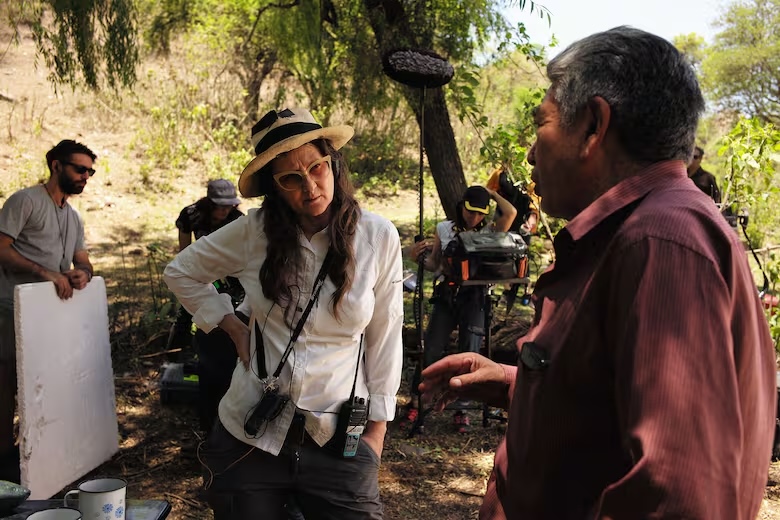
I had the pleasure of speaking with Martel over Zoom ahead of a retrospective of her films, organized by BAMPFA, which will run from April 4 to 19. This interview has been translated into English and edited for clarity.
Andrea Avidad: You have said that cinema can, and should, alter our everyday perception because it can make us see and hear what has been rendered invisible and silenced by the perceptual regime imposed by a nation’s mythology. What are the political implications of altering our perception through cinema?
Lucrecia Martel: There are a lot of aspects of reality that we consider part of the natural order, when in reality they simply stem from the exercise of a culture in a position of power: from the ways that culture naturalizes a reality.
Let’s say something very simple about Indigenous communities. In Argentine schools, we are taught nothing about these communities. When the standard Argentine sees on television what happened to the chieftain of the Chuschagasta people, Javier Chocobar, and hears that there is an Indigenous community claiming land, it’s completely understandable that the first thing that will cross their mind is that this isn’t real—that these people are pretending to be something they are not. It’s incredible how perfectly this works.
During these days, surrounding the premiere of Our Land [2025] in Argentina, which has been quite intense, I’ve received so many letters and messages from people who say that, through the film, they caught a glimpse of something about their own lives or how they judge others. They send me texts that are almost confessional, as if for the first time they have realized how they see things. What the documentary allows us to do is see the hidden background of a historical trajectory that normalizes the order of reality and offers the possibility of perceiving it differently.
Film can simply tell you a story or present an argument. It can tell you the story of “How lucky we are that Hispanic culture and heritage came to the Americas!” It can retell us what we have already been told, or we can say: “Look, let’s make a film with the opposite narrative, with a counterargument.”
But for me, that doesn’t work. So, what do I think about cinema? If the world is so complicated, why don’t we harness the power of cinema to reshape perception? If we were all living in a wonderland with jobs, access to education, and healthcare, it would truly be foolish to alter people’s perceptions. But that’s not the reality we’re in. We live in a world of uncertainty and fear. We cannot put off rethinking our ways of thinking, our habits, and our ideas. Just today, I heard a news report stating that the acceleration of climate change is far greater than expected at this point. There was a wealth of information available to us that did not change our behavior. Now, we are at a point of no return and that is why it is urgent to shake up our usual perceptions.
AA: Culture exerts a power that immerses us in a hierarchical and exclusionary perceptual regime. The philosopher Jacques Rancière has a notion that I find interesting in this conversation: the distribution of the sensible. He describes how the field of perception is partitioned: political subjects recognized as such in a society are heard as emitters of intelligible discourse; those rendered invisible are heard as emitters of “noise” or “incomprehensible” discourse.
How is it possible for Indigenous peoples to be heard not as sources of “noise,” but as producers of intelligible discourse when they have been rendered invisible throughout our entire history?
LM: One thing that was very clear to me from the start is that we, in Latin America, aren’t used to seeing Indigenous peoples speak calmly in the media. We always see them in the media when they’re dealing with crimes, expulsions, or desperate pleas. We never see people calmly reflecting and sharing their thoughts with us, and giving them the space to do so mattered a great deal to me in Our Land.
In order to communicate with us, Indigenous peoples have to use the language that we—the criollos, whites, mestizos, whatever you want to call us—can understand. For example, if an institute for Indigenous affairs says that they are now called the “originary peoples,” then they have to adopt that language to communicate with us, and that language also becomes an obstacle to expressing themselves.
Indigenous peoples have to learn a language that comes from the university quickly, because it is used in the law and will help these communities make themselves understood, to be heard as producing comprehensible speech. It’s terrible.
AA: It’s a kind of perverse ventriloquism, isn’t it? Adopting the other’s language to be understood instead of being heard as the source of “noise.”
LM: Of course. In all the independent nations of Latin America, the contempt for Indigenous peoples continues. The underlying sentiment that remains is disdain for Indigenous identity.
For Indigenous communities to make a claim, they’ll have to use this official language, seek legal standing, go through whatever procedures, and prove to the State that they are a community. That they exist. It’s always our hegemonic culture that imposes conditions on them for recognition. It’s humiliating.
AA: In your public lectures, you have reflected on “the line” as a representational framework of time that reduces all temporality to a very simple chronology: a concluded past, an unfolding present, and a messianic future. The line is also the infrastructure of the colonial logic: the encounter with the so-called New World required the construction of the “primitive.” For Europeans, “primitive” natives existed in a mythical time, and as such, Indigenous forms of knowledge and existence were considered “outside” the line of “universal history.”
Your cinematic work dismantles the line and draws on sound to shape alternative temporalities and narratives. How do the observation of sound and orality contribute to the demystification of the colonial line that still pulses in the present?
LM: That linear chronology of our nations’ history is preceded by the antiquity of Greece and Rome. So, it is a timeline marked not only by extreme temporal arbitrariness, but also by spatial arbitrariness.
We must understand the role that religion played in the Americas. By the time the colonizers arrived, the entire continent already belonged to the Catholic God. Any part of the continent that did not recognize God as its fundamental deity was a continent of unfaithfulness to the supposed owner of the land. The operation went like this: the colonizers arrived in a place and told those who lived there, the natives, who had brought them there, that is God. Anyone who did not recognize God was someone who had to be eliminated or converted.
Sound is a physical category I have used to organize my thinking. Sound already contains a wealth of information that, if we listen to it carefully, with a heightened sense of attention, we can observe within the discourse we are accustomed to and detect falseness in it. That was the approach in Our Land. When those who testify in defense of the crime they have committed against the Chuschagasta community, there is no need to explain anything to realize what they are doing: concealing the crime in an oral testimony, claiming that they are “honorable” and “respectful” members of our society.
Cinema allows you to do that: to observe rhythmic sound conditions in which what is hidden in daily life can finally be noticed.
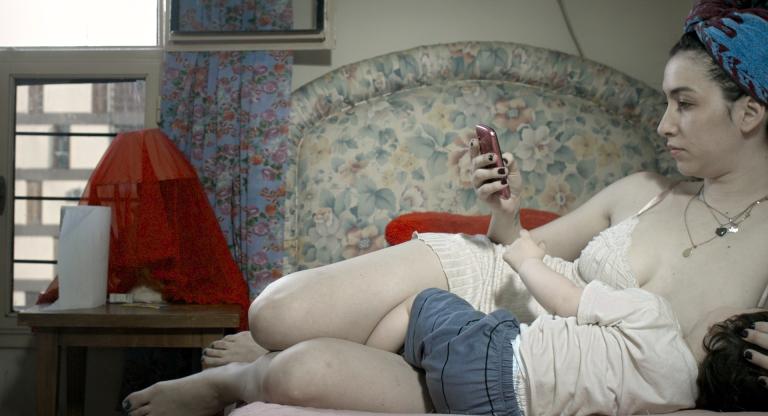
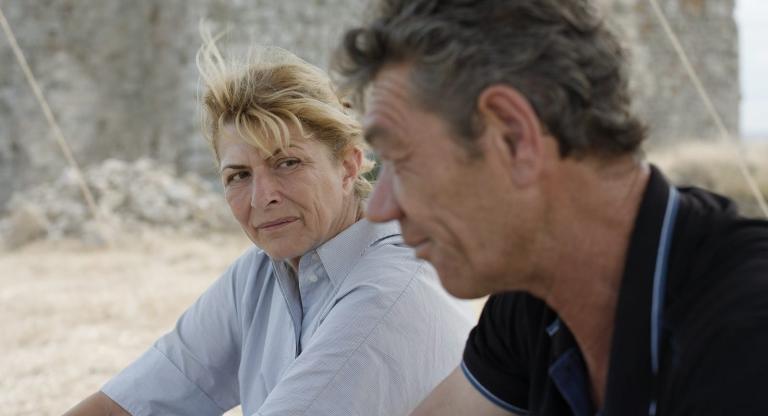
AA: In mainstream cinema, the background of the image must not distract attention from the central figures. Audibly, ambient sounds typically lend a certain realism to a scene, with an identifiable reference point. Instead, in your films, you treat the background space, the periphery, and the out-of-focus elements as fundamental components of the cinematic image. In La Ciénaga [2001] and The Headless Woman [2008], Indigenous existence appears on the periphery, and you manage to redirect the viewer’s attention to that space. In Our Land, on the other hand, there is a shift toward foregrounding Indigenous existence in image and sound. Can you tell me a bit about this shift and how it connects to your previous works?
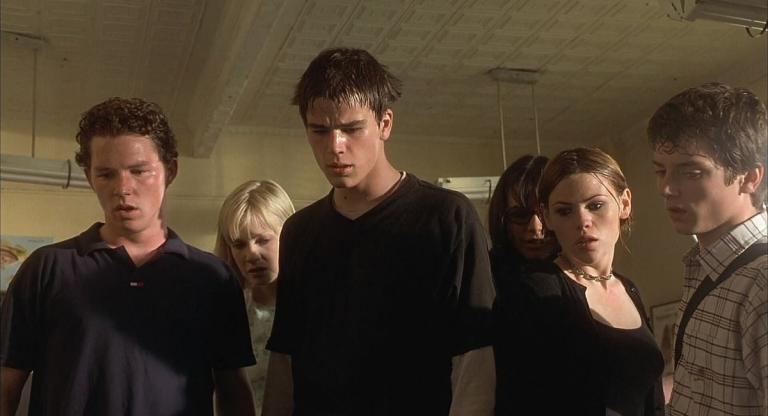
LM: These visual and auditory techniques you mention are often used in horror films, which have always been an interesting source of observation for me. There always arrives a moment when these techniques—these much more compelling ways of seeing and hearing—arrive, but then they are quickly abandoned. The monster is, so to speak, put in the foreground instead.
In La Ciénaga and The Headless Woman, I wanted to show the average Argentine what they weren’t seeing: that Indigenous existence still is a fundamental part of our social reality. In Our Land, during the trial, the focus is on the criminals who believe they own the territory. They are the ones whose voices are heard most during the trial, and they are also in the foreground. But it also happens, as you say, that the film leaves them behind at one point to focus on the Chuschagasta community. The violence of the case causes those considered the “other”, the Indigenous, to emerge as the main actors in the documentary. Undoubtedly, that is a major shift for me, and I think it will significantly alter what I do going forward.
AA: For you, sound conditions how we perceive the cinematic image. How do sound and orality mediate our view of the image within cinema’s audiovisual contract?
LM: One very interesting thing you can do with sound is that, among the vast array of sounds in a scene, you choose some and not others. That already creates a kind of absence of something you’re traditionally accustomed to hearing. When you see, for example, an image of the countryside, you expect to hear a sound associated with that image.
When that sound is missing, and another unexpected one appears, tension arises. You barely notice that physical tension in your body, but it is the tension of something missing. For me, that’s a very important element in cinema.
Regarding orality, I believe that we become echo chambers for everything we have heard. When someone says, “Oh, you’re talking just like your mother,” it’s because sometimes we adopt the same tone and, even more so, use the same phrases that we once rejected from our family. That echo chamber, which is largely unconscious, is a very interesting source for me in cinema. Words are not just what a character says; they are everything that has resonated and continues to resonate in the environment, and that is transmitted through speech. When you see and hear a character say something, you are seeing and hearing much more than what is readily apparent.
AA: Acousmatic sound [a sound or voice whose source is not visible] can function as a tool for narrative resolution. For example, in scholar Michel Chion’s analyses of sound of The Wizard of Oz [1939] and The Testament of Dr. Mabuse [1933], the visible revelation of the source of the off-screen sound leads to a narrative resolution. Your use of acousmatic sound intentionally sustains the ambiguity of an event without offering a resolution. By permanently dissociating sound from its source, is the power of the acousmatic in your work that it invites interpretations beyond a final resolution?
LM: For me, [the acousmatic] makes the viewer interpret things differently—that is, not to seek only certainty but to begin asking other questions. If a film gives a viewer certainty, it places them in a passive state of mind. To me, films are good when they shake up your thinking.
When an idea is closed off, there is no further activity. Films should stimulate mental activity. Unfortunately, the kind of cinema we call “entertainment” believes in something else; it resembles the amusement park, which is about taking you here, there, and everywhere through a clear plot, perhaps showing you that a character was bad but has repented and is now a good person. None of that makes you think.
Although sound belongs to the realm of hearing, it also belongs to the realm of vision, because it allows you to see some things and not others. You’re seeing something, but the sound informs you of something else you don’t see.
And, returning to the point of the argument, if I counter the colonial narrative or the official history with a revision of that history, I’m not doing anything different; I’m simply affirming the same temporal forms. People might see a counterargument to official history and say, “Oh, that could be true!” but that doesn’t lead to a transformation of thought. What really works for me as a shake-up of perception is not substituting one truth for another, but observing how a truth is constructed.
AA: Kafkaesque bureaucracy runs throughout your entire filmography. In Zama [2017], Diego de Zama waits for a letter that never arrives. In The Headless Woman, it becomes evident from the bureaucratic connections with the police and the medical system that Indigenous life is administered as a disposable way of life. In Our Land, the Chuschagasta community’s struggle for the right to their land is a Sisyphean task: an eternal battle against a legal system that seeks to strip them of all rights.
Could you tell me about the recurrence and critique of bureaucracy in your filmography?
LM: What is so terrible about bureaucracy is that the processes it imposes on people take no account of urgency, distress, or chronic illness. The real “genius” of the bureaucratic process is that, on the surface, it subjects everyone to the same rules. But this is not true, because anyone who knows the judge, anyone who knows an official, or anyone who can slip a few pesos [money] under the table, skips the process.
So, ultimately, the bureaucratic process is the means not by which society is organized but by which you prevent a sector of society from entering or, let’s say, exercising its rights. It is the way to make people believe that we are all equal before the law, as if we all had very democratic, very noble principles. But those principles are not upheld because some people will never be able to complete the process and others will skip it. The bureaucratic process is a fallacy.
Bureaucracy is entirely structured so that people without connections to officials cannot obtain their rights. That is why Demetrio Balderrama, a member of the Chuchagasta community, says you have to gift a chicken to the person working at the front desk of the bureaucratic system, the one who handles the paperwork, because he understands that’s how the system works. Obviously, that group of public employees is made up of poor people, but surely less poor than those who go there to complete the paperwork: the members of the Indigenous community.
AA: In your short film Pescados [2010], we see a car on a highway and in the shot of the fish, the animals say, “We were traveling down a road… we were all in a car… we were all listening… there were no dogs… time to sleep.” These voices echo the events of The Headless Woman, where the question of who the victim in Veronica’s car accident is—the dog or the Indigenous teenager—never gets a final answer. “Time to sleep” also resonates with Veronica’s drowsy state of mind, incredibly played by María Onetto. Could you tell me about the authorial intertextuality in your filmography?
LM: Oh, look at that, I hadn’t noticed that connection! I hadn’t thought of that interpretation you’re suggesting. It’s very interesting!
For that short film, I had footage I’d shot separately for different reasons. They asked me to make a short film, so I decided to put it all together. I’d filmed one day, on my way back from a town in Buenos Aires, on a highway in the rain, and on a trip to Seoul, I filmed the fountain with the fish.
And then I went to put it together. What interested me was a kind of interplay: these organic beings, the fish, all dream together and become almost mechanical. I loved that idea.
AA: Right after watching The Headless Woman, I saw Pescados. I found the shared themes interesting, especially the part where the fish also say, “sleep… sleep.” Perhaps some of our perceptions are dormant, and we must awaken them through a profoundly ethical gesture?
LM: I think people are not necessarily asleep: they also deal with very complex issues in their lives. A relative gets sick; parents grow old; children need to be raised. Let’s say all of those are very complex things that any person deals with in their life. But when someone suffers in society, cinema can bring about a profound transformation to end their suffering. That is precisely what cinema must do: shake the deepest structures of our perception of the world.
If we had an absolute ear for everything, for perceiving all reality in its fullness, and an absolute vision of the world, things would be different. But that’s not the case. Everything has been organized since we were born with a certain meaning and that organization becomes second nature. My theory of cinema consists of disrupting that naturalization of perceived meaning, because when you’re born and grow up, there’s already an organization of perception that we learn everywhere—through family, through what your mother says, through what they teach you at university, on the street. Everywhere and in everything.
I believe that shaking things up a bit, breaking free from that ossified perception, is part of a political project. Undoubtedly, that political project isn't partisan. The political project doesn’t have to be, let’s say, “Now we’re going to be all communists!” It’s simply a matter of thinking about what kind of coexistence we want among humans and what kind of global order we have in mind.
AA: Continuing with the topic of non-human animals, they have always been present in your filmography: sometimes representing fragility, sometimes functioning almost as protagonists, sometimes as something repudiated by the middle class. Could you tell me about the significance of non-human animals to you?
LM: I believe we have a very particular relationship with animals. It seems to me that they are entities we cannot fully comprehend, yet we believe we have a right to dominate them. It’s as if we have all become estranged from the animal world, estranged from other species, just as we have become estranged from one another, from other humans. When it comes to other species, it’s as if they were animated objects, not living beings. I think we owe a lot to animals… At least a few reflections.
AA: There is eroticism in the Salta trilogy: a secret intrafamilial desire that circulates multidirectionally through private spaces. In The Holy Girl [2004], there are many diegetic references to sound: the theremin, microphones, and feedback; we hear murmured prayers, almost in ecstasy, and whispered secrets. Desire functions as vibrations that generate sound waves propagating in all directions. Can we think of the materiality of sound as an analogy for the functions of desire?
LM: Sound has a lot to do with space; it’s something that gives you continuity with space and with the body. Desire has no order. Desire goes far beyond the forms of organization we have invented, and even if someone strictly follows social rules, it doesn’t mean that person isn’t permeated by desires on all sides. I think the idea that people follow certain paths—the moral paths of a society—is pretty stupid. In relationships or partnerships, some things are allowed, and others aren’t. But this doesn’t mean the world is already set in order.
For me, the idea of consciously taking sound as an organizing principle is simply a way of avoiding clichés of thought; it is a way of avoiding the typical clichés of Western culture, which centers on sight as the principle around which everything revolves.
What’s interesting about sound is that it’s the realm of the untamed, where references aren’t so clear. That’s why all of this makes it comparable to desire, as well as to the undefined, the continuous, and the difficult to legislate.
AA: I’d like to wrap up our conversation by talking about God, even though for many of us, there is no God. At the end of Our Land, a voice-over asks: “Your Honor, can you hear me? The Chuchas have been here for 350 years… Do you believe in God, Your Honor? Is God watching all of this?” The legal system appeals to divine justice, but it seems that neither human nor divine justice is really listening.
LM: Yes. That’s because our country is Catholic. God is tremendously important in our culture. In the legal system, they ask 500 times if the witness is going to swear by God. They ask you, “Do you have any beliefs? Do you swear by God?” As we see in Our Land, the most common belief among everyone is in God, and the judge, tired of asking the same thing, says, almost automatically, “Do you believe in God?”
I don’t want to eliminate the concept of God entirely. The possibility that there’s an intelligence out there, I don’t know… Science can’t oppose it; it can’t deny that there’s something beyond black holes at the edge of the universe. We really don’t know, and a lot of people perhaps suspect there is. Honestly, I couldn’t care less.
What I don’t believe is that, if a God existed, it would be that paternalistic, moralistic, and arbitrary figure that we imagine him to be. That monotheistic God who is used to claim that one group of people is the chosen one and others are not. All of that strikes me as a ruse.
Those are the people who believe in that God: the ones pulling the strings in this country.
Lucrecia Martel: Un destino común runs April 4-19 at BAMPFA. A 35mm print of La ciénaga opens the series on Saturday, April 4.