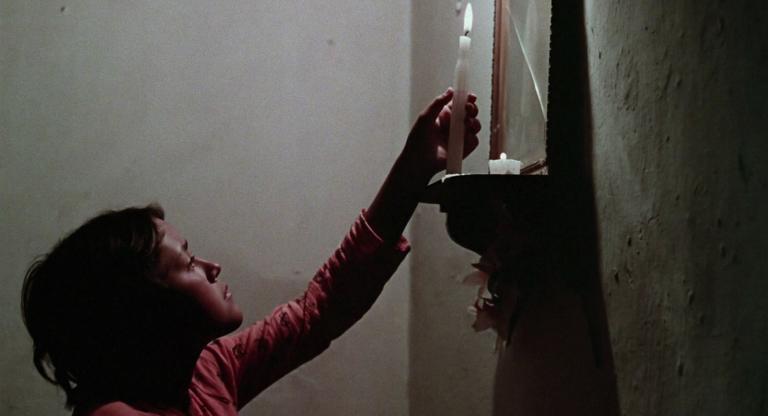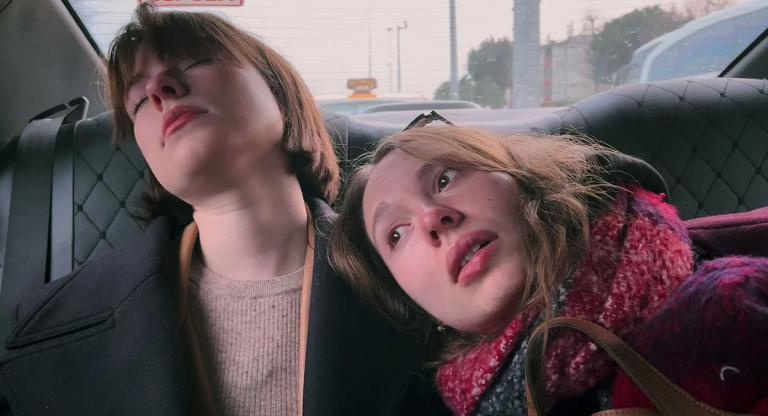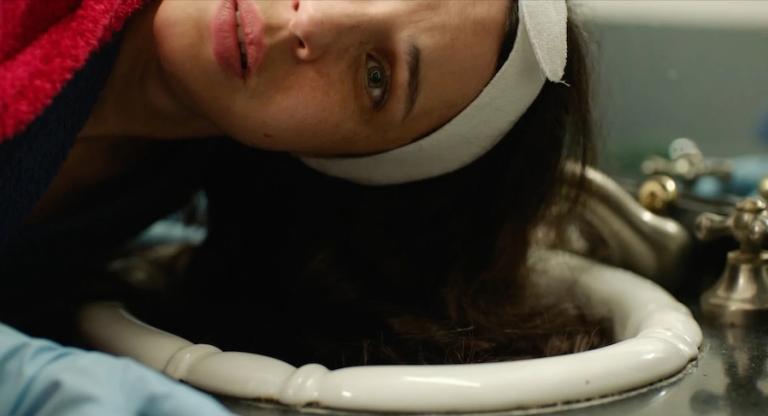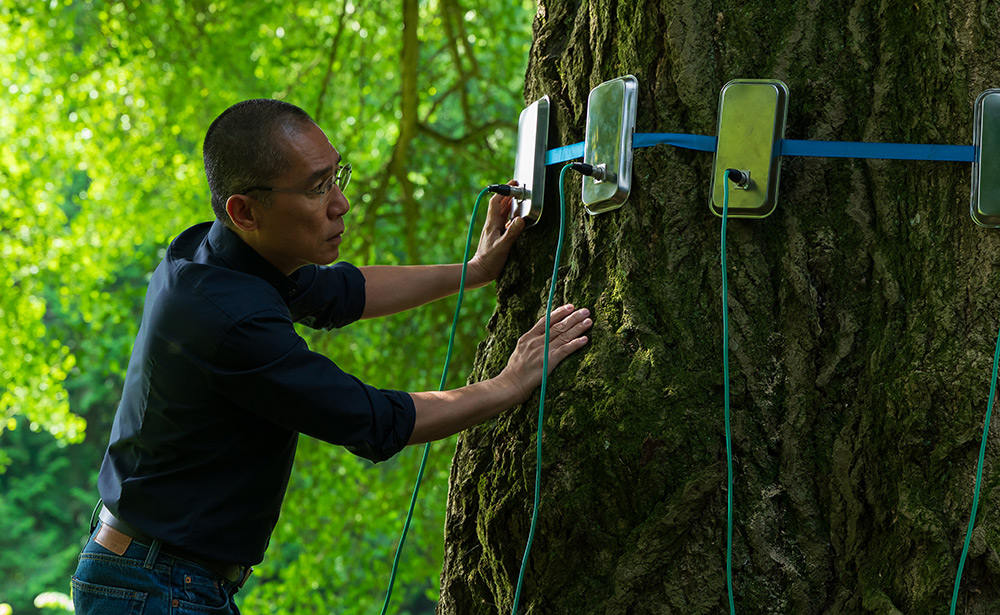
In Silent Friend (2025), the latest feature film from Hungarian director Ildikó Enyedi, outsiders find solace among nature. Three strangers navigate the tumult of their respective time periods: the nascent years of Imperial Germany, the era of Cold War counterculture, and finally the start of the Covid-19 pandemic. The solitary lives of Grete (Luna Wedler), Hannes (Enzo Brumm), and Dr. Wong (Tony Leung) are all anchored in a singular space, a gingko tree that rests at the center of a half-century old university garden. Through each of their unique experiments surrounding plants, a deep sensorial connection takes root between them and their subjects. Conversations without words take place over decades, unifying the solitary experiences of humans and plantlife alike.
On paper, this film bears all the hallmarks of its critically acclaimed collaborators. Enyedi’s previous films, like her Camera d’Or-winning debut My 20th Century (1989), have ventured into the inexplicable mystique of the scientific world. While this is only his first European production, and his second outside of Hong Kong, Leung’s casting as a quiet and contemplative professor seems to fit right into his oeuvre, which is full of melancholic men. Yet, this unexpected convergence between two world cinema talents, is an ode to slowness and life on the margins that isn’t quite like anything else found in their combined bodies of work.
With Silent Friend playing theaters citywide, I spoke with Enyedi and Leung about realizing academia on screen, life under lockdown, and making a film where a tree takes center stage.
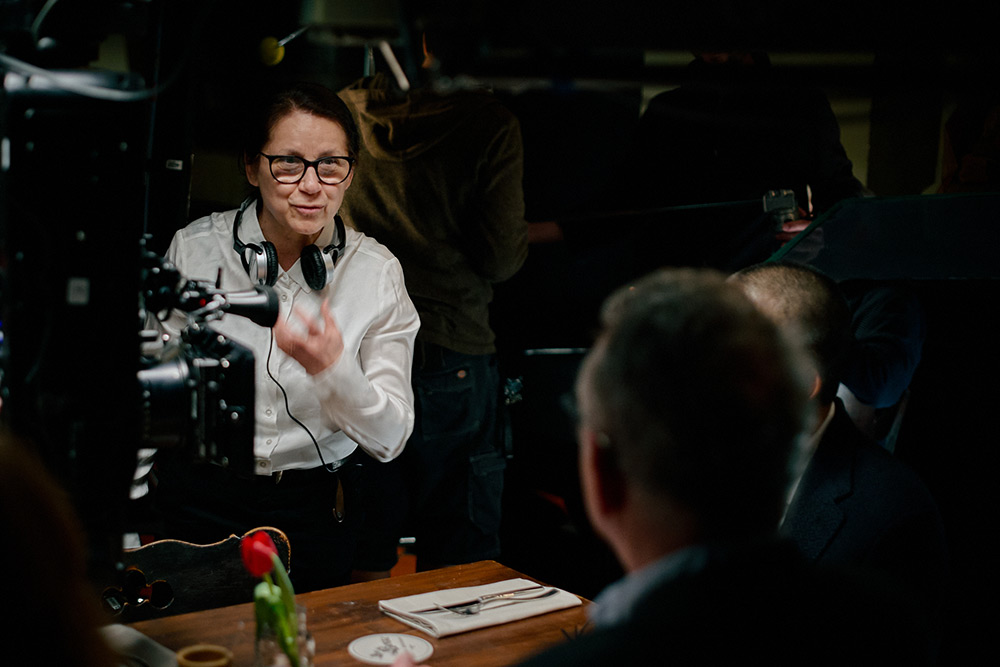
Mick Gaw: You have said that the role of the neuroscientist was specifically written for Tony Leung. What qualities about him attracted you to write this role for him?
Ildikó Enyedi: Well, this role is for someone who tells a lot without words and without actions. [Leung] is very special, very strong, and full of presence on screen. That was something that decided this. And, I guess behind the exceptional actor, he is also an exceptional person. I need to work with people I respect and love, and I had the feeling that the role is very similar to many of his previous roles, where he is a silent, quite introverted person. In another way, it's something new. What I hoped for was that he would be interested in showing off himself—to reveal a different color that I had the feeling I saw in him. It was hidden on screen until now.
Mick Gaw: Do you remember what you and Enyedi spoke about the first time you met regarding the role?
Tony Leung: I only asked for a quote that came with the script by the scientist Anil Seth. The quote is, “We are all hallucinating all the time, but when we agree with hallucination, we call it reality.” I remember I said, “This reminds me of Buddhist thinking, life is just an illusion.” That's how we started.
MG: As much as the film deals with philosophical questions about isolation and man’s connection, or lack thereof, to nature, it is also concretely rooted in the experiences of those in academia. What was the personal significance for each of you in bringing these experiences of the academy, past and present, to life?
TL: This character is very, very special to me. I never tried to be a neuroscientist before. My character has to give a lecture in Germany, so that's why I really needed to study neuroscience and lldikó provided a lot of material for me. And, not just for neuroscience.
My field is early cognitive development. I went to different universities to find different neuroscientists to do research and to experience the EEG [electroencephalogram]. It's not easy in Hong Kong, because we don't have a baby lab. I would have to apply to the hospital and receive permission from parents. Fortunately, I'm glad that some doctors showed me how to read the graphs, how to know when the brain is working, when the kids are sleeping or not.
Besides neuroscience, I had to study plants too. Plant intelligence. That really changed my perspective towards the world and my perspective towards trees. Now, I think they are something like me. They are sentient beings. I now treat them as nothing different from me. To me, this was not just an enjoyable shooting journey, but also very inspiring. I never had the chance to learn that much for one movie. I spent six months preparing for this.
IE: I wanted spectators to have fun, because this film has quite a bit of layers with regards to the beauty and the passion of scientific work. It is such a rare field, where fear is part of the process. You pour years of work into something and don't know what the outcome will be. Today, when academic autonomy is harshly attacked and science is questioned in a very dumb way, in my opinion, I thought I could not be militant and instead just show the beauty, show the passion, show the richness of science.
MG: When you, Enyedi, were working on the script, you described the more than a century old Gingko tree in Marburg as a “main character,” yet it feels like this can be extended to its surrounding courtyard and the university campus as well. Could you talk about your first encounter with and experience shooting in this location?
IE: I have known this botanical garden and this building for many years. The Botanical Garden is of the University of Marburg and it is more than 400 years old. The university is 500 years old. It is beautiful to feel the layers of time in such a small space—the layers of different world views.
Our very first shooting day was very memorable for me. It was with the old ginkgo tree, with Tony's ginkgo tree, because we shot the scene when he finds it in the garden, with his phone and with the photo in hand. Those were also the first moments of working together and trying out how we could make it visually possible to see this couple, these two friends, the tree and the human. It was, in many senses, a very memorable moment for the whole team.
TL: It's a new experience when an outsider goes to a foreign country and experiences the atmosphere. I tried to explore and I could feel the aura of a university town. I never had the chance to go to university and this time I could really feel the atmosphere there.
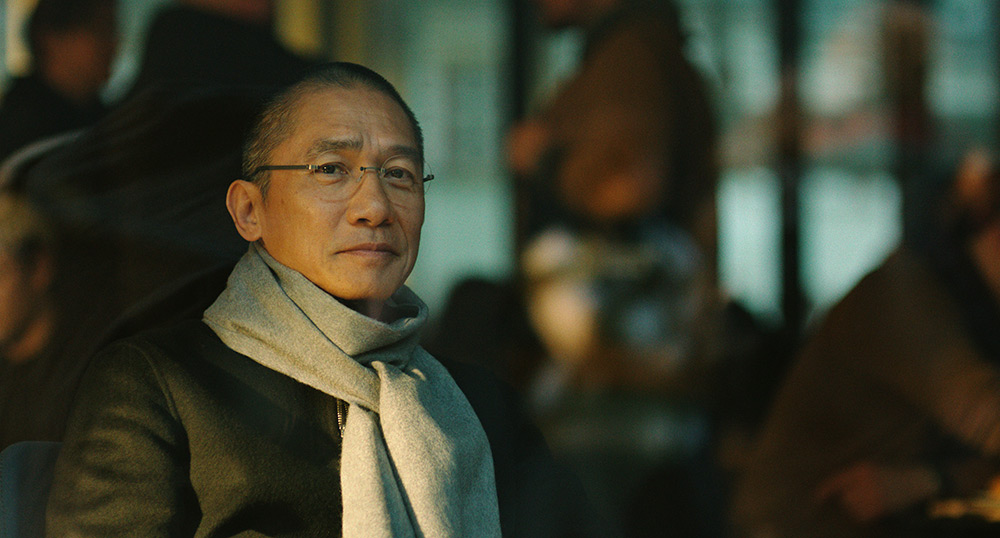
MG: As a performer, having spent months studying plants, what was it like to arrive on set to not only be surrounded by plantlife, but also have to act with the plants you were studying?
TL: I think I have a different perspective towards plants. You look at them differently after you have some knowledge about them. I used to go to the park all the time and enjoyed watching big trees, so I didn't feel any difficulty working with them. I was just trying to enjoy how amazing they are and look at them without any labels. I enjoyed it very much.
MG: You have talked about the differences, both good and bad, of working in Hong Kong and Hollywood. How would you compare the making of the Silent Friend to your past projects?
TL: I think Silent Friend is more or less like the Hong Kong movies that I've worked in, say Wong Kar-wai or Johnnie To. It’s more flexible. We can improvise. I didn't make a lot of Hollywood movies, but in big productions you can't change anything. You have to follow everything.
MG: Can both of you recall instances where you got to exercise that flexibility on set?
TL: I remember I was working with Ildikó and the crew, and she suddenly saw a very beautiful shadow on the sofa. She just asked the cameraman to shoot that beautiful moment. We can do whatever we want when we feel something special. In Hong Kong, Wong Kar-wai and I always work without a script. It’s like an adventure. We don't know what is going to happen next. We just focus on what we have to do and then we try to improvise and develop the character.
IE: This is a relatively small team. Intimate work. Focused work. We were not shooting a plot, we were hunting feelings, evoking sensory experiences. What we tried to create with my good friend, the production designer Imola Láng, and also with the cinematographer, is a sort of field where we hoped that Tony would feel safe and free enough to explore the space, explore his inner reserves. Same with the plants.
MG: Was a pandemic lockdown always a part of your original idea for the screenplay? As both a director and an actor, did you incorporate your own experiences from that time?
IE: I wrote the first version of the script way before the pandemic, but I set it aside and made two other feature films. We started to work on it after the pandemic, but it somehow came in handy, because all the heroes, humans, and plants, of this film are outsiders. They are outside of the system. It is not just about the bitterness of loneliness, it's also about the beauty and the freedom of it: the freedom of discovery when you are alone, when you are not following the rhythm of a crowd or a system.
I think many of us, even if it was a really horrific, very tough time, got time to stop and step out of the routine of everyday. I got Covid very early, when there was not yet a vaccine. We didn't really know how it worked, how dangerous it was. The first wave was quite dangerous. It struck me, perhaps these are my last days to spend on this beautiful earth. I just want to feel this immense beauty and immense love be alive. That remained with me and I wanted that to be part of the film.
TL: I also went through the Covid period. At that time, I was shooting Shang-Chi [2021] in Sydney. Suddenly, we could not work anymore because of Covid. Then I went to Tokyo, and the next day the country locked down. I spent most of my time there. Three months, just by myself, because my family is in Hong Kong.
I think I brought some of my feelings or my experience into the movie. The time I spent [in lockdown] is very similar to the situation in the film. There is no one on the street. The hotel is closed down. No shopping mall. There's no one. I'm riding on my bike. I can still remember… April is the sakura [cherry blossom] season in Japan. Can you imagine there are no people at the sakura spots? And I went everywhere. Some tourist spots were supposed to have so many people, but suddenly no one was there. I think I brought that experience into this film unconsciously.
Silent Friend is now screening in select New York theaters.