Pedro Costa once recounted an observation Jean-Marie Straub shared regarding Jacques Tourneur: “He's a good watchmaker. We need that type of guys [sic].” One of Hollywood's finest cine-horologists, Tourneur was a filmmaker whose polish and precision seemed effortless, though of course both were honed over years directing B-movies.
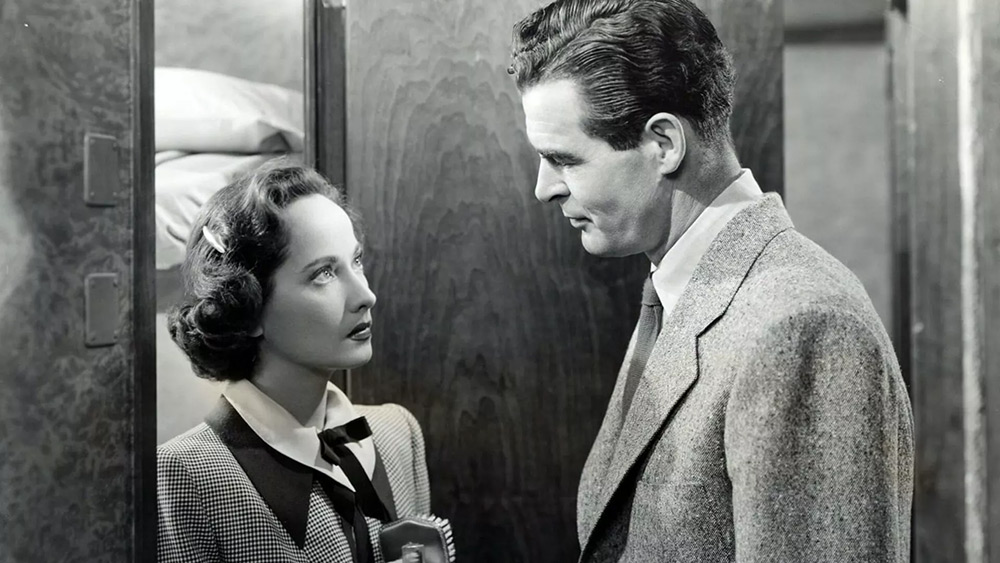
1948’s Berlin Express was Hollywood’s first Trümmerfilm and the first American production shot on location in Europe after the war. It begins with a prologue in postcard-perfect Paris involving a carrier pigeon and the postwar culinary mores of Montmartre's residents. But things pick up when agricultural expert Robert Lindley (Robert Ryan) finds himself sharing a carriage on the army-run train from the French capital to Berlin with a band of strangers from France, Great Britain, and the Soviet Union. These Allies quickly become enmeshed in each other's lives when they witness a grenade-cum-time-bomb obliterate a nearby compartment believed to belong to a peace-seeking German diplomat.
What follows resembles a film noir in story if not texture: a spiral of double-crosses and false identities set against “a world of rubble under strict military control,” as the film's prolix narration proclaims. (Bonus points for a Teutonic fortune teller and her creepy clown sidekick.) Merle Oberon, as the diplomat's faithful secretary, acts chiefly in profile. When Berlin Express deviates from its cat-and-mouse machinations, it gazes on street-level realities with documentary-like attention. Tourneur's film is based on a story by Curt Siodmak, who had recounted the ennui and bustle of big-city German life in the prewar masterpiece People on Sunday (1930). Here, however, Siodmak crafts a twisty thriller informed by trauma, a city symphony in a minor key.
Benefiting immensely from Lucien Ballard's inky cinematography, Tourneur balances sunlit scenes in the devastated cityscape of Frankfurt with passages of light and shadow in grim interiors. A climactic battle inside an enormous brewery tank ranks among Tourneur's greatest visual set pieces—desperate, chiaroscuro fisticuffs. Tourneur also excels in scenes of maximum diegesis, in which silence carries the weight of an unseen threat and, as in Cat People (1942), offscreen sounds suggest danger just outside the frame. Ultimately an allegory not just of occupation-era allegiances and prejudices, but also of the lingering unease of a country facing an indeterminate future—haunted by the ghosts of the displaced and the snares of the ex-Nazi underworld—Berlin Express could have borne the title of the Tourneur masterpiece that immediately preceded it: Out of the Past (1947).
Berlin Express screens this evening, May 14, and on May 20, at BAM on 35mm as part of the series “Pychonesque.”