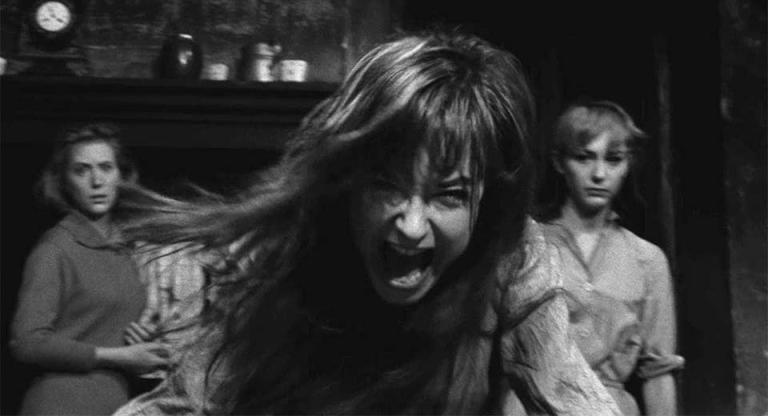
In 1933, French sisters and live-in housekeepers Christine and Léa Papin were convicted of brutally murdering their employers. The case inspired numerous works, including A Judgement in Stone by Ruth Rendell, Les Abysses (1963) by Nico Papatakis, and arguably Les Bonnes by Jean Genet.
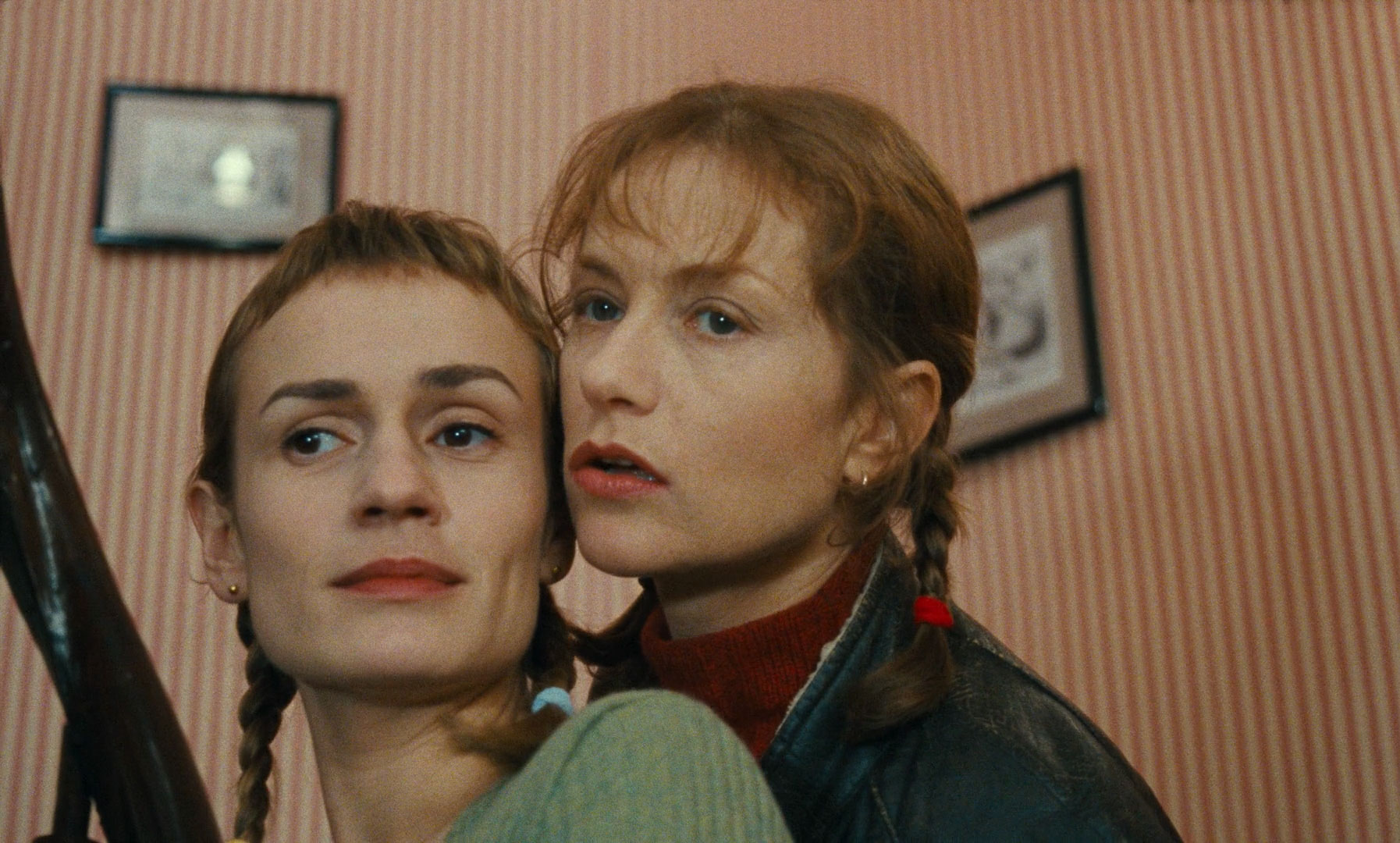
Claude Chabrol’s adaptation, La Cérémonie (1995), examines the relationship between a wealthy family living in the Brittany countryside and their live-in domestic worker, Sophie (Sandrine Bonnaire), who befriends Jeanne (Isabelle Huppert), an unstable postal clerk in town. Within the bourgeois household, tensions gradually rise as hints of Sophie’s secret begin to emerge. During a tour of the house, she hesitates to enter the library, won’t dust the books and papers in the office, and feigns poor eyesight whenever she is asked to read something. Sophie is illiterate. Perhaps as a repressed manifestation of this handicap, she carries herself with constant restraint and impeccable composure. However, a handwritten note from her employer pushes her into a state of panic as she desperately fails to decipher it. She nonetheless continually tries to conceal this impediment throughout the film.
Sophie and Jeanne, already linked by social class, further relate through their disturbing past. Sophie’s father died in a fire presumably caused by her, while Jeanne was accused of accidentally killing her baby daughter. In one notable sequence, Jeanne insists “the judge couldn’t prove anything!” as though uncertain herself and dependent on that verdict. Sophie, in her defense, slyly repeats “they couldn’t prove anything.” Like little girls, or perhaps lovers, they tickle one another and fall into hysterical laughter on Sophie’s bed. Their intimacy here is emphasized through the camera, which pans as they move around Jeanne’s apartment, keeping them together within the frame. Whenever one briefly leaves the shot, they quickly return within the same frame. In this scene, the characters reach a shared psychosis and complicity—class resentment and social alienation, long simmering beneath the surface, finally seeping into a folie à deux.
There’s a dryness and simplicity to Chabrol’s filmmaking that creates a striking emotional detachment from moral judgement. The same pacing and angles that characterize the rest of the film persist during its final act, as though the murders that take place in it are observed with complete indifference. Just as with the restrained camera movements, the family’s relative lack of overt malice heightens the suspense and shock of the gruesome climax. The understated camerawork amplifies the violence precisely in its refusal to sensationalize it; at the same time, it creates a certain unease as their fate feels disturbingly inevitable and perhaps not so shocking after all. There’s an ambiguity present in the morality of the act, keeping the viewer’s intrigue engaged with the humanity of the victims themselves over an easy condemnation of their murder.
La Cérémonie screens this evening, July 7, at L’Alliance New York as part of the series “Chabrol & Huppert: Doing Wrong.”
See Also