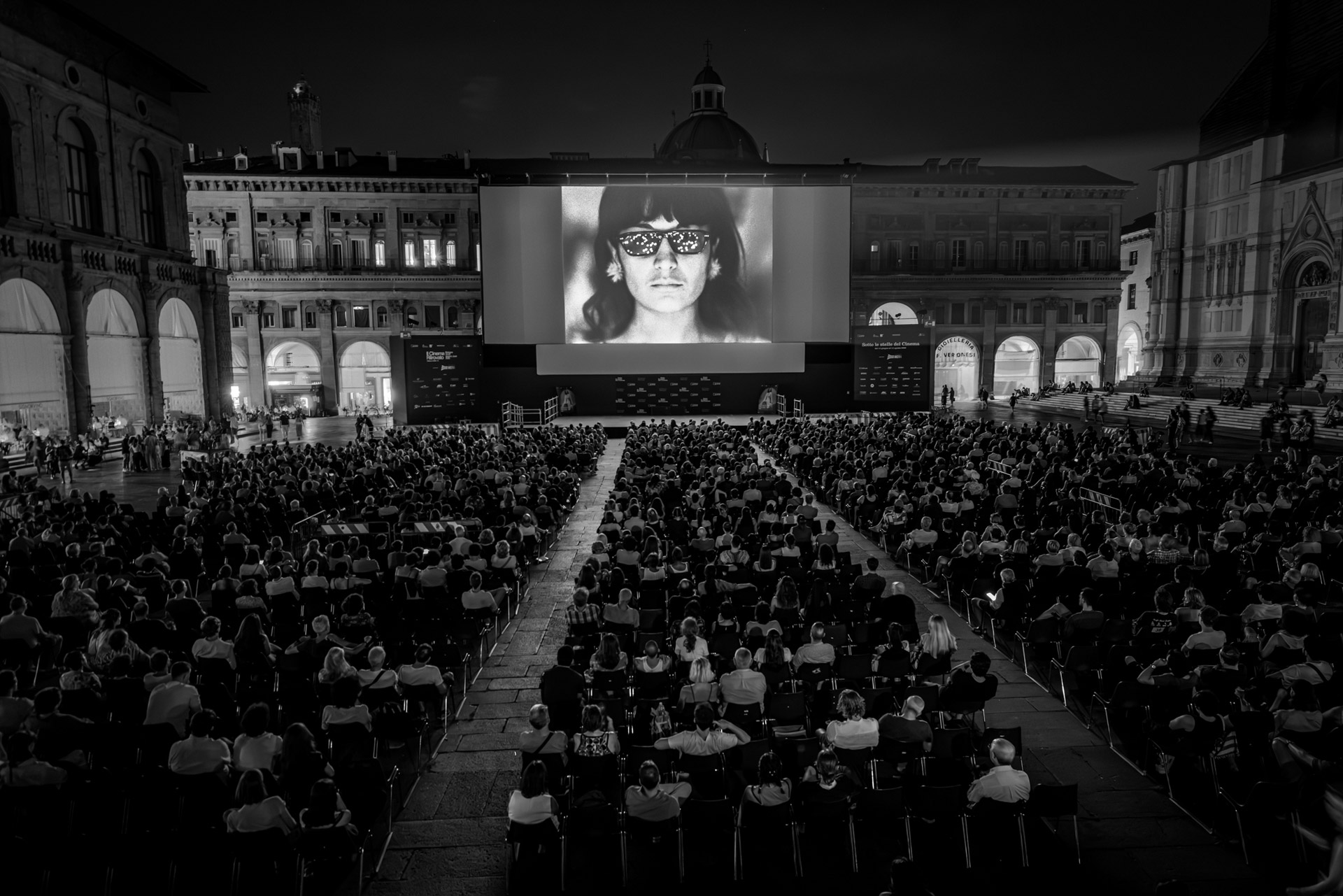
Our dispatch on the 40th edition of Il Cinema Ritrovato comes courtesy of Joshua Bogatin, Bernardo Rondeau, and Stephen Fisk, who made their ways across the gargantuan festival’s varied retrospectives and offer their thoughts on the joys, surprises, and mishaps this latest edition offered.
Joshua Bogatin, “Century of Cinema: 1906” and “One Hundred Years Ago: 1926”
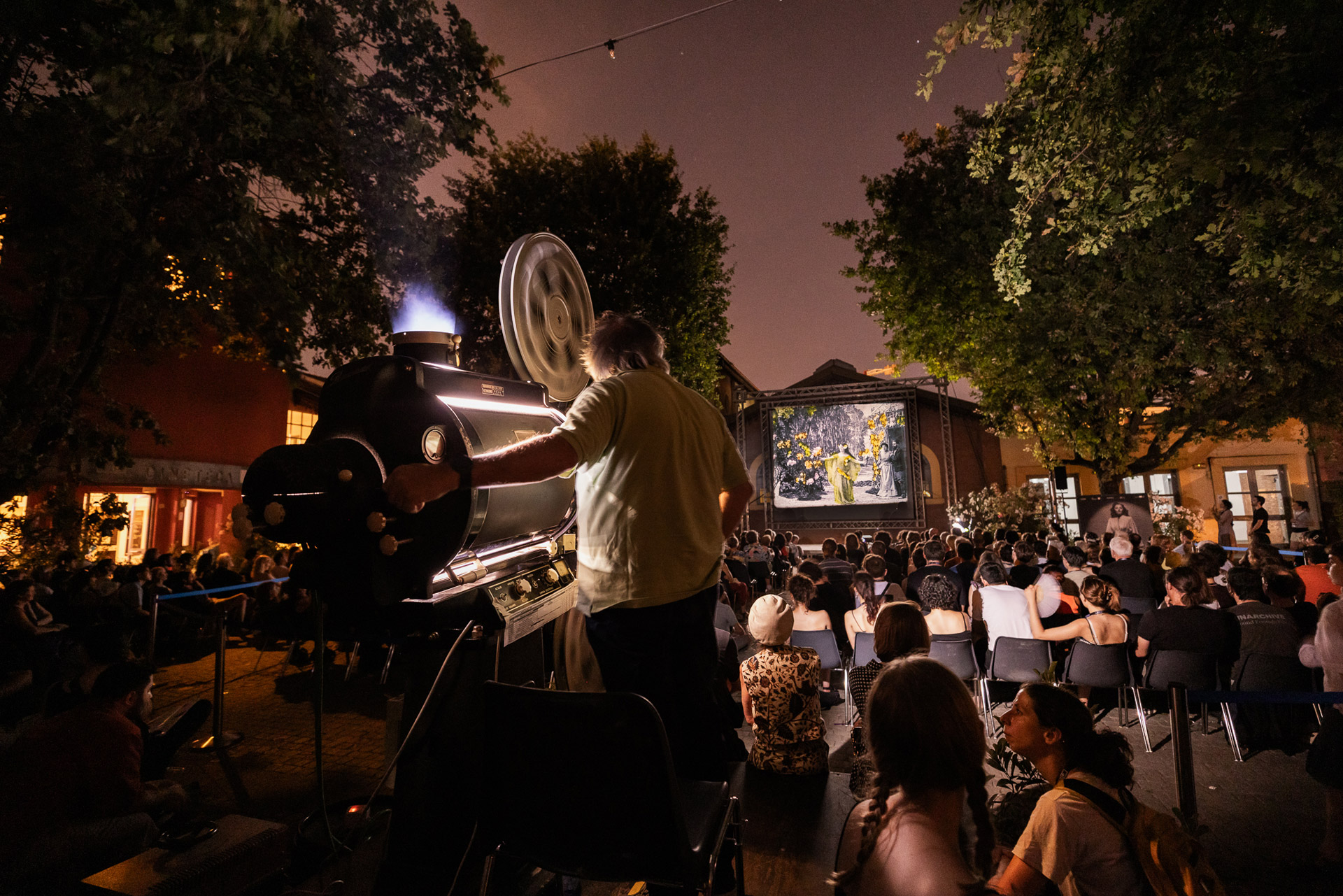
There are so many ways to look at films and parse through cinema history that it's somewhat dispiriting how limited film discourse often is. Auteurism, nationalism, and genre might be our prevailing sorting systems, but if one wants to really expand one’s idea of what the medium can be, then escaping from these decades-old schemes is vitally important. One of the amazing things about Il Cinema Ritrovato is that it invites one to continually reassess what one knows about the art form. No matter how awesome and overwhelming the festival is with its 500-page catalog, each year I walk away feeling as if I’ve found something fundamental that I’d long lost sight of. And, despite the numerous masterpieces of their section dedicated to restorations, what has inspired me most are the robust silent cinema offerings that focus on specific years. With one strand dedicated to 100 years ago, 1926, and another to 120 years ago, 1906, the historical value of cinema and its dialectical relationship to the present takes the foreground.
Early cinema is often burdened by the idea that it was a phase in the development of film, a 10+ year long prototyping stage during which the medium’s pioneers, limited by their naïveté and technological limitations, stumbled their way toward what we now know as classical narrational style. One of the most wonderful things about watching a program dedicated to a year like 1906 is discovering how little movies actually needed to be ossified into the standards of classical film grammar in order to achieve a beautiful expressive potential. In previous editions, the presenters at the festival have described early cinema as a pre-bourgeois cinema, a form focused on vulgar visual pleasures over narrative and the moralism that comes with it. What one often finds in these movies is the pure joy of seeing; when watching them, I often feel a will to naïveté, a desire to put aside all that I’ve come to expect from films in order to sit in simple jaw-dropping wonder.
How else to explain the purely sensorial delights of films like Tartans of the Scottish Clans—a series of gorgeously handpainted fabrics, each meant to correspond to a different character from Macbeth—or Trip Down Niagara Falls—a travelogue through the great waterfall with sweeping vistas of aquatic motion. In Dog Smugglers, a comic piece following six dogs carrying contraband across the Spanish-French border, the canine action is plodding and overly-long by our standards, but the languorous tableaux of dogs running across beautiful landscapes have a primitive delight. Combined with that wonderful sensation that you are seeing what 1906 audiences saw, indulging in a sense of humor both oddly antiquated and immediately familiar, make for an experience equally enjoyable and fascinating.
By 1906, film was being strongly pulled toward narrative and one can feel its sway even if the narratives one finds have a drastically different sense of time, pacing, and spatial framing than what we are accustomed to. In the work of Albert Cappelani, a prominent director at Pathé featured heavily across the festival’s programs, one finds a certain bluntness of melodramatic effect that’s rather disarming. Melodramas like Carnaval Night or The Wrestler’s Wife build slowly through tableaux of spectacular group scenes–a carnival in the former, a circus in the latter–until they deliver swift fatal conclusions that are stunning in their prosaicness. The standout of the Cappalani films shown was Poor Mother, the story of a mother driven mad after her daughter falls to her death. At six minutes, each scene is terse, escalating rapidly to a stark moment of emotional suffering–the child’s funeral, the mother’s subsequent alcoholism, her crying on the shoulder of a stranger’s daughter, and her death. By the end, the emotions are so bare and devastating that one barely has room to escape.
If 1906 is something of a polyphonic year, a heterogenous display of multiple stylistic and generic modes unwilling to yet coalesce into a formalized grammatical language, 1926 is more of a summative year in film history. It finds classical silent film style at its artistic peak. A prime case is F.W. Murnau’s Faust, which marked the end of Murnau’s work in Germany and almost bankrupted UFA, the largest studio in the country. An overstuffed assortment of cinematic tricks, Faust is filled with swooping panoramas over medieval cities, otherworldly chiaroscuro lighting, angular framing, highfalutin title cards prone to allegorizing the action, and performance styles favoring pronounced gestures over naturalism. Faust feels like not only the culmination of German expressionism, but also an encyclopedia of everything particular to that style that was lost with the coming of sound.
A more underseen masterpiece featured in the festival was Grigori Kozintsev and Leonid Trauberg’ The Overcoat. Kozintsev and Trauberg, founders of a Moscow acting school known as Factory of the Eccentric Actor, take Gogol’s absurdist class satire and turn The Overcoat into a frantic display of stylistic mannerisms equally stunning and confounding. Featuring a large assortment of grotesque faces molded into performances that oscillate between glacial drawn-out movements and bursts of hysteric action, the film is feverish, often eschewing coherence for effect. In one stand-out sequence, petty bureaucrat Bashmachkin finds himself taken into the lavish salon of a passing noblewoman, a space both sparse and nightmarish, every corner stuffed with a different manner of bizarre sight: snake charmers, jugglers, harpists, large indoor fountains, secretaries shoving forms in his face to sign, smoke billowing in from no logical location. With its overwhelming delirium, it reminded me of Alexei German’s dense histrionics.
Viewing films by year opens the work up to be viewed as a passageway between two moments in time: the future and the past. Doing so allows us to see them closer to how we see films from our time. Modernity perpetually traps us in an unstable moment of history, a rapidly changing world that transforms itself almost as soon as we’re able to grasp it. To look at these two cinematic years offers a reminder of how the artistic pinnacles and technological harbingers of doom we concern ourselves with today–the coming of A.I., the collapse of the multiplex, the great late masterpieces of the Boomer generation–might be better understood less as definite phenomena than as expressions of the tumultuous currents of unceasing technological and cultural change that have defined cinema throughout its entire history. Cinema, as a temporal art of constant pictorial movement, might be the full aesthetic embodiment of Marx’s notion that with capitalism “all that is solid melts into air.” Privileging cinema’s relationship to historical time is a great way to grasp this. It’s a way of approaching cinema’s essence in a manner one very rarely has the ability to do. It’s one of the things that make Il Cinema Ritrovato not just special, but an essential experience capable of changing one’s entire relationship to the medium.
Bernardo Rondeau, “Recovered and Restored”
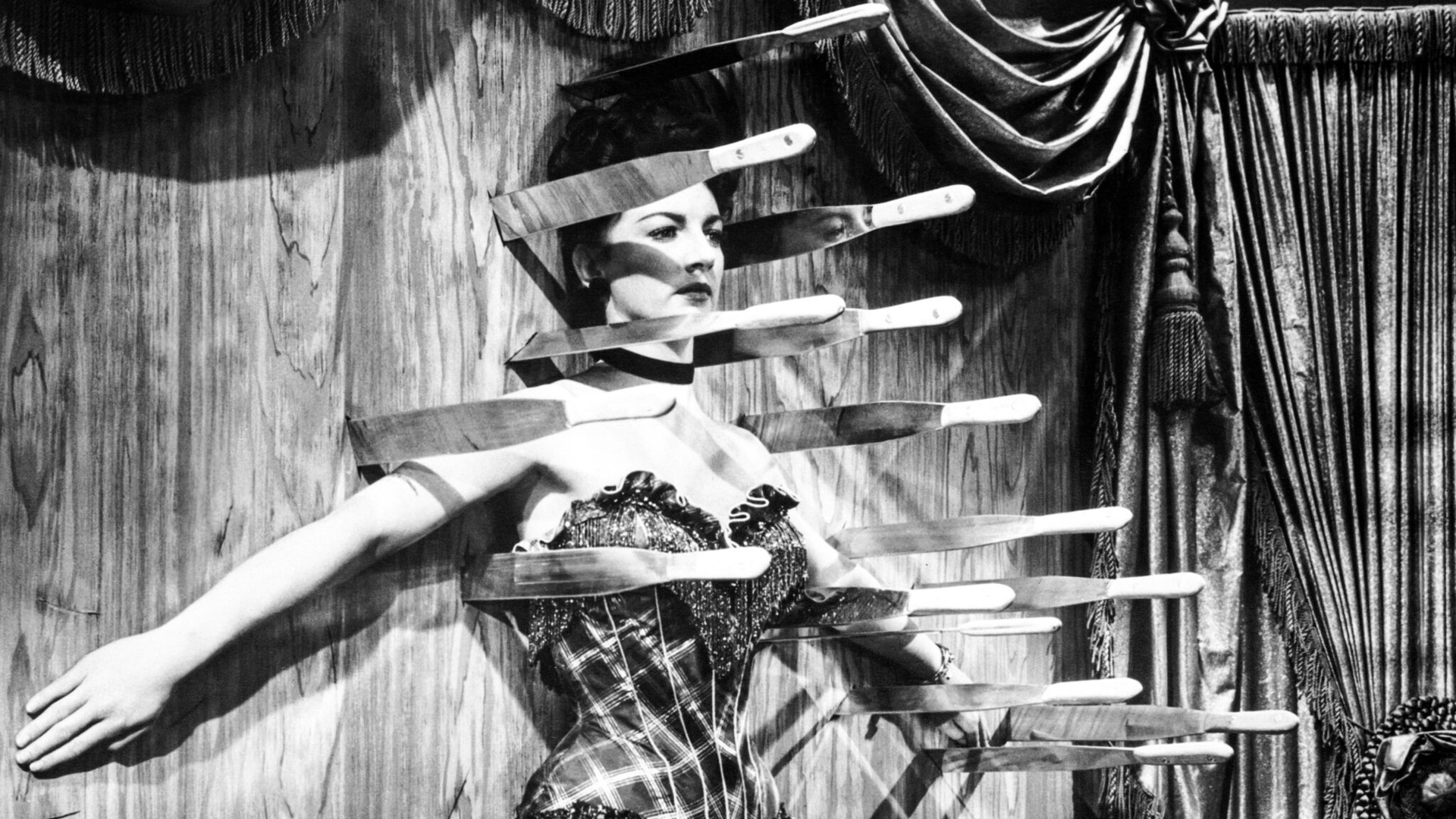
In the festival's “Recovered & Restored” section, individual titles hang suspended, set apart from thematic groupings or retrospectives. Phantom of the Rue Morgue (1954) is a singular specimen, even if it belongs to a new set of 3D restorations by Warner Bros Discovery that has returned these films to their original screen-popping splendor—among them, a paranoid Western by the monocular auteur Andre de Toth making his second and final 3D feature after kicking off the short-lived craze with 1953's House of Wax. Helmed by Hollywood veteran Roy del Ruth and freely adapting the Edgar Allan Poe story "Murder on the Rue Morgue," this WarnerColor grand guignol updates the source's pre-Haussmann Paris to a fin-de-siècle city of (gas) lights. A series of gruesome late-night assassinations has stumped the unflappable Inspector Bonnard (Claude Dauphin). That is, until the murder of showgirl Yvonne (Allyn Ann McLerie) leads him to cross paths with Professor Paul Dupin (Steve Forrest) and the eccentric, Freud-citing Dr. Marais (Karl Malden). Del Ruth and cinematographer J. Peverell Marley, both Tinseltown lifers whose prolific careers date back to the late silent era, activate every plane in rendering this madcap murder mystery. Whether dollying into spaces brimming with activity—such as a crowded cabaret with uncorked champagne bottles geysering, balloons raining down, and all manner of dancing, playing, and cavorting—or protruding objects out through the frame—most impressively flying knives, several screaming heads, feats of acrobatics, and one crashing rock—Del Ruth and Marley explore every opportunity afforded by the stereoscopic image. Here, 3D is not so much a gimmick but an avenue for gleefully anarchic modernism.
Another similarly playful film is Mirages of Paris (1933) by Fedor Ozep. Russian born, but buried in Beverly Hills, Ozep's career spans filmmaking in the USSR, Germany, France, and Hollywood. This early sound effort was shot simultaneously in French and German with entirely different casts. The French version presented in Bologna suggests Jean Vigo's Zéro de conduite (1933) by way of Ernst Lubitsch. Young Jacqueline Francell escapes from her provincial boarding school and hops a train to the capital to seek fame as a vedette. She quickly discovers the entertainment industry in Paris is already brimming with hopefuls and divas alike. A case of mistaken identity scrambles her plans and affords Ozep plenty of visual gags and physical comedy. Bordering on surrealism—in one scene, a stone monument comes to life and opens its umbrella to stay dry during the rain—and interspersed with a Greek chorus of singing newspaper hawkers, Mirages of Paris is exactly the sort of delightful rediscovery the section affords.
Speaking of recovery, Cuba's Siete Muertes a Plazo Fijo (1950) is one of the earliest surviving examples of the country's pre-revolutionary cinema. This new preservation from L'Immagine Ritrovata and the Cuban Institute of Cinematographic Art and Industry (ICAIC) lays bare the fragile state of the source material. Occasionally, frames are missing and some print damage remains, but none of these artifacts negatively impairs the viewing experience. As a group of friends and acquaintances gather for a New Year's Eve celebration, their festivities are crashed by an escaped convict (the evocatively named Siete Caras [Seven Faces], played by Alejandro Lugo) and a mysterious soothsayer who identifies the exact dates and times each of the partygoers will die. What ensues is a cross between film noir and Buñuelian black comedy (particularly thanks to a rapacious undertaker) interrupted by lavishly staged musical numbers that have little narrative connection but add to the film's Twilight Zone meets Twin Peaks waking-dream drift.
One of the festival's selections with perhaps the most harrowing preservation backstory, Yuri Ilyenko's A Spring for the Thirsty (1965) was scanned during wartime in Kyiv with equipment provided by Poland's FixaFilm, running on generators as power cuts plagued the capital. The cinematographer of Sergei Parajanov's seminal Shadows of Forgotten Ancestors, Ilyenko decidedly avoids the swirling handheld camerawork that made the prior film a singular, nearly lysergic visual experience. Speaking of that film, Ilyenko said he was “striving in some way to imitate a whirlpool which draws everything into it.” A more measured approach is employed in A Spring for the Thirsty. Ilyenko focuses on a lone figure, an old man (Dmytro Miliutenko in his penultimate role) in a barren field, astride his well. A windmill on the horizon. A whitewashed mazanka nearby. Between these coordinates, a world of memories, dreams and hallucinations surface. Ilyenko’s film seems to foretell the visionary dilated time and deliberate movements of The Color of Pomegranates (1968). This black-and-white hymn offers stark tableaux staging, albeit when Ilyenko’s camera isn’t gracefully craning or gliding in the open air. The world may stand still, but the past comes back in rushes, specifically abstracted images of war: a gargantuan statue of a stoic soldier is uncrated and stands mournful guard, waves of faceless infantrymen pass through, the occasional bomber shrieks across the sky. Ilyenko's wife and Shadow's star, Larysa Kadochnykova, emerges and fades, a cross between a remembrance and ghost. Lush trees become scorched. All the while, the water flows. A story stripped bare to the mechanics of poetry, Ilyenko's debut is a total masterpiece—one which, due to so-called “ideological deviations,” was banned and unavailable to audiences until the dawn of Perestroika in the mid-1980s—now preserved to entrance audiences anew.
Stephen Fisk, “Easy Living with Mitchell Leisen”
Mitchell Leisen remains, seemingly forever, one of Classic Hollywood's best kept secrets, an underdog auteur who gets respectable retrospectives in certain cinephilic cities once a decade and, in the interim, devotion from a small group of slightly overzealous fans (myself among them): London in 1979, Toronto in 1986, San Sebastián in 1997, Paris in 2008, Los Angeles in 2012. This year’s Il Cinema Ritrovato brings us the 2020s’ attempt at the Leisen-aissance, though it might have officially begun a few weeks before ICR with a screening of his masterpiece Midnight (1939) at the Nitrate Picture Show from a precious original release print; the smash hit of that festival, I suspect it indoctrinated at least a few new Leisen-ephiles.
Leisen cut his teeth in Hollywood designing costumes, then sets, and then overall productions for a decade's worth of Cecil B. DeMille's films. It’s this background that Billy Wilder and Preston Sturges weaponized to dismiss him as a “stupid fairy” decorator who butchered their scripts, cementing an unfair yet common view of Leisen’s career. After DeMille, he got his start directing by doing more than assisting on two pictures “under” Stuart Walker, a mostly forgotten Broadway man brought out to teach silent stars how, as Moses supposes, to speak in front of a camera. Leisen claims he "stuck him in the sound booth" and handled everything outside of it, and the reliable coterie of actors, cinematographers, art directors, costumers, hairstylists, and others he worked with over the decades would attest that was well within his capabilities. Despite even the films’ stars advocating for Leisen, Walker refused to allow him credit as a co-director on Tonight is Ours (1933) and The Eagle and the Hawk (1933) (neither, frustratingly, in ICR’s program). When Leisen was subsequently offered his own choice of projects, he pettily poached two that he knew Walker wanted: Cradle Song (1933) and Death Takes a Holiday (1934) (both, thankfully, in ICR’s program). The latter is a wonderfully odd Ruritanian fairy tale of Death become mortal, pitched somewhere between The Seventh Victim (1943) and Portrait of Jennie (1948) on the morbid romance scale. The former, usually billed as Leisen’s “directorial debut,” has never had any official (or even bootleg) release at all. As it is otherwise completely unavailable and has been very rarely screened in the decades since Leisen's death in 1972, it was, on its own, reason enough for at least a handful of we devotees to justify a trip to Bologna.
Cradle Song is a bracingly earnest story of a woman's nebulous faith and even more nebulous desire, seemingly designed to both squash (nuns!) and capitalize (lesbians?!?) on the reputation of its star, Dorothea Wieck, known to American audiences from Mädchen in Uniform (1931), the German success de scandal international about a romance between a boarding school teacher (Wieck) and her student. She was brought to the United States to be "the next Dietrich," a brief which Leisen and cinematographer Charles Lang aimed to meet, even if Wieck didn’t. The story follows Joanna, an orphaned governess who, having come of age, is leaving the family of the poor, widowed tinsmith whom she served and loved as substitute mother, to become a novitiate nun in an order that never leaves its convent walls and never interacts with men unveiled. Their sole contact with the world is through a small portal with a lazy susan, open on one side only, on which locals place offerings that the nuns spin into their domain with no interaction beyond a bell ring. Leisen reveals its purpose to us in an elegantly simple tracking shot: after intercutting our introduction to Joanna and her adopted family with a long procession across a Spanish village of girls solemnly singing their way to the novitiate ceremony, he cuts to a long shot of the cavernous portal of the church as they enter; the camera tilts gently down as heavy wooden doors close, drawing the eye away from them by foregrounding the corner of a public fountain, then pans left to follow a peasant as he leaves the fountain and carries a basket of offerings along a portico, pushing in as he delivers it to the nun's comparatively pinhole-sized passthrough, through which lies Joanna's future.
The quiet containment of her new world is disrupted when an unseen woman leaves an infant on the turntable. Joanna, desperately missing her adopted family, pleads for them to keep the baby and raise her in the manifold bosom of the convent. Leisen was fond of the theme of families coagulated by circumstance or broken and re-formed under (sometimes comic, sometimes dramatic) duress across his career, but it surfaces first here in a queer spin on a nun's tale: Joanna's earthly desire to be motherly develops a perverse intensity, complicated further as the communally-raised daughter, whose life we see in brief milestones, grows up and her curiosity about the world beyond the convent grows as well. Does Joanna hope “their” daughter, Teresa, will herself join the convent, or rather that she’ll leave, marry, and become a mother herself? Is she tempted to forsake her vows and follow “her” daughter out into the world? Her struggle, obliquely explored in quiet conversation among sisters, is conveyed in emotionally over-wrought compositions with Dietrich-esque high key and ethereal back-lighting. The film's climax, when Teresa's fiancé comes to meet her assembled and veiled “mothers” cordoned off in the anonymous darkness of a choir stall behind a vast ironwork grate, is one of the tenderest moments of 1930s Hollywood.
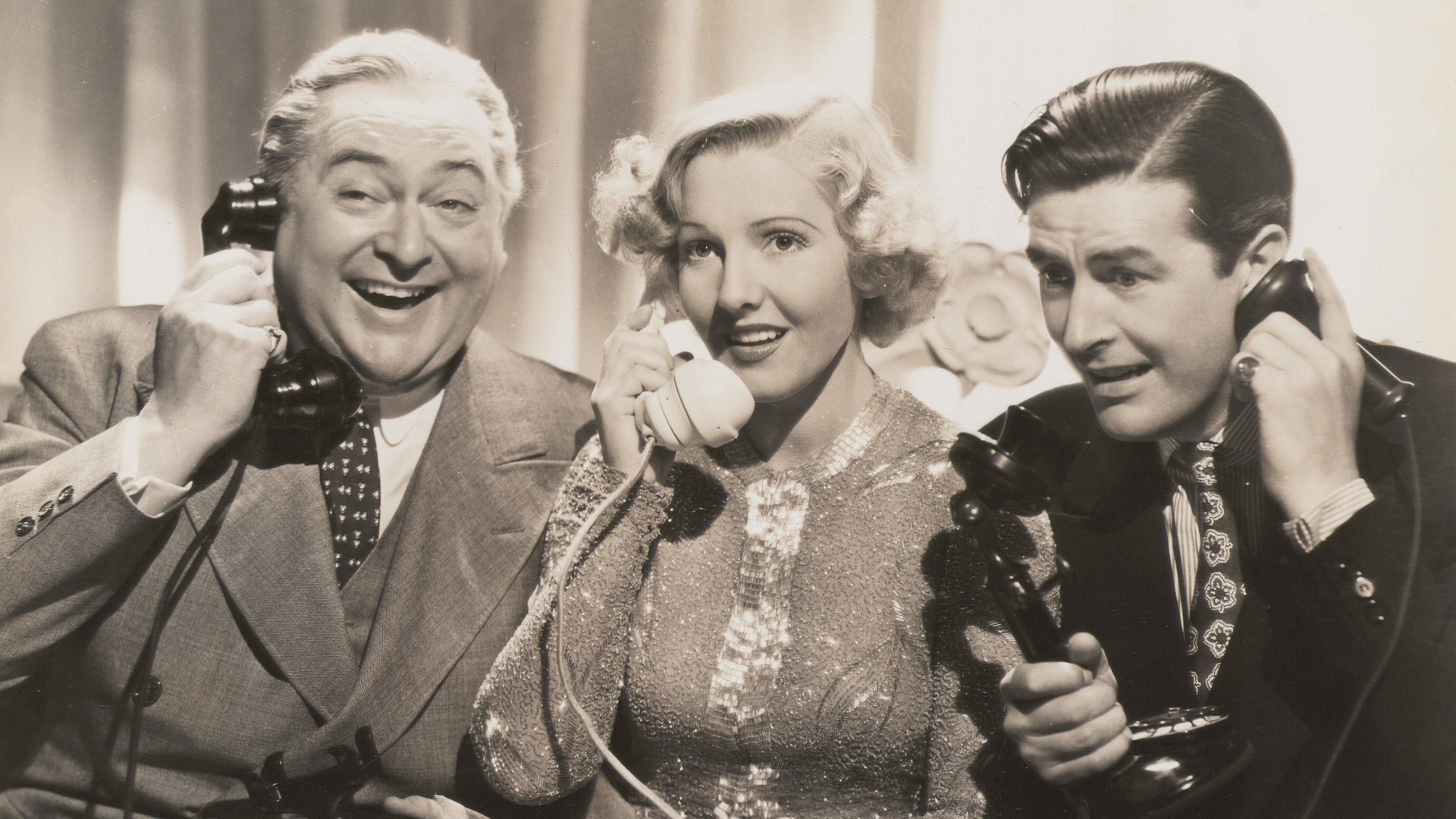
To survey Leisen's career beyond this rediscovery, you might expect a retrospective to either be selective enough to make the best case, or exhaustive enough to show that a career's strengths outweigh its weaknesses; so, it was frustrating that among the ICR selections, several superior Leisen films were missing and several lesser ones featured (which, in turn, makes the downward drag of an essential, fascinating failure like Lady in the Dark stronger). The series opened with Darling, How Could You! (1951), about a couple (Joan Fontaine and John Lund) returning from a decade in Panama to reunite with the children they left in New York; comedy ensues after the just teenaged daughter is accidentally dropped off at a saucy matinee instead of Peter Pan and receives it as her handbook for adulthood. How obvious, then, that her newly-returned mother's easy friendship with another man is a clandestine affair, one she must scheme to end to save her parents’ marriage. The film has its Liesenian charms for we who are already convinced, among them the unashamedly bisexual Leisen’s typically restrained sexual subversion: when we meet the parents, Lund looks gleefully on as Fontaine is passed from man to man to man around their returning ship’s dancefloor, and their later discussion of how unbothered he is with her flirting has not a whiff of veiled jealousy. There’s also his typical balance of earnest pathos and feather-light comedy as Fontaine frets about meeting her three children for, essentially, the first time, and then disastrously over- then under-compensates when she does. Yet even I can see how naysayers might dismiss it as an over-elaborated sitcom plot when it’s their introduction to a director forever struggling to escape Andrew Sarris’s left-handed compliment of “lightly likable.”
Why not set a record straight and lead with The Eagle and the Hawk? It bears enough of Leisen's mark that he was eventually credited on the title card as “associate director” during its WWII re-release (otherwise compromised by cuts to dampen the anti-war message) and yet it still drops on and off Leisen's filmography across various sources. Leading with, or at least including, it at the world's premiere repertory film festival, more widely attended than any cinematheque survey ever will be, could have corrected the historical record. It also has the boon of giving Cary Grant his first real role as more than arm candy for Paramount's leading ladies and, in that regard, it bolsters the common case—reiterated by Ian Christie, programmer of the first Leisen retrospective in 1979, during his introduction to another rarity, Swing High, Swing Low (1937)—that one of Leisen's many gifts was working with actors, whom he treated not as cattle but as collaborators, much to their delight and improvement (and Billy Wilder’s chagrin). Other oversights, to name only two, include To Each His Own (1946), a wartime melodrama that earned Olivia de Havilland her first Best Actress Oscar, and class-anxiety comedy The Mating Season (1951), featuring a rare leading role for Thelma Ritter as a retired burger slinger mistaken for her newly-married, ladder-climbing son’s live-in maid and rolling with it.
While I’m happy for the chance to see those deeper cuts, I’m nevertheless dismayed that Leisen’s international spotlight is a slightly dimmed one. Here’s to the Leisen-aissance continuing in spite of it.