This introduction was first written for the 11th Annual Brakhage Center Symposium: Featuring the Life and Work of Ken Jacobs in 2015 at the University of Colorado, Boulder.
I might introduce Ken Jacobs by saying he is a two-eyed creature, a two-eyed filmmaker, a two-eyed commentator. What do I mean by this— don’t most of us have two eyes programmed into our biology? Yes, but one might not guess it looking at most of our images. I am invoking here, of course, the perceptual nature of our binocular parallax in vision, so essential for seeing the world in the round, and seeing around the world, the third dimension that comes from the convergence of two slightly different viewpoints. This fact, evident to us and used by us every day, but neglected in many ways in our description of the world as a picture, or diagram, and in our maps collapsed into a two-D world. Most directly, I am referring to Jacob’s exploration of cinema as three-D. But beyond the literal perceptual aspect there is more to the convergence of Jacobs’s double vision.
Perhaps I could state this urgrund of the double vision as a wonder tale of my own invention, but patterned a bit on those that make up part of Yiddish folklore. There was a man whose two eyes saw different aspects of the world. One eye saw joyful possibilities. The delights of the flesh: sex, food, vision; the spontaneous gestures of performance: dance and the playful acts of children; the varieties of light, and the space it created with shadow and highlights. But with the other eye he saw a world of cruelty and suffering, hatred and violence, small-minded hypocrisy, large-scale maneuvers of power to gain at the expense of others, exploitation, and reduction. He tried to shut one eye or the other in order to see consistently, but found he could no longer move about this collapsed single-minded world, whether of joy or stern judgment. Instead, he found he had to learn a sort of vision that acknowledged both visions, and even found the roots of one in the other. This was not a reconciliation, compromise or a resignation. The eye of joy had to take the lead. But the common vision acknowledged the suffering in the midst of joy and the roots even of terror in lightheartedness.
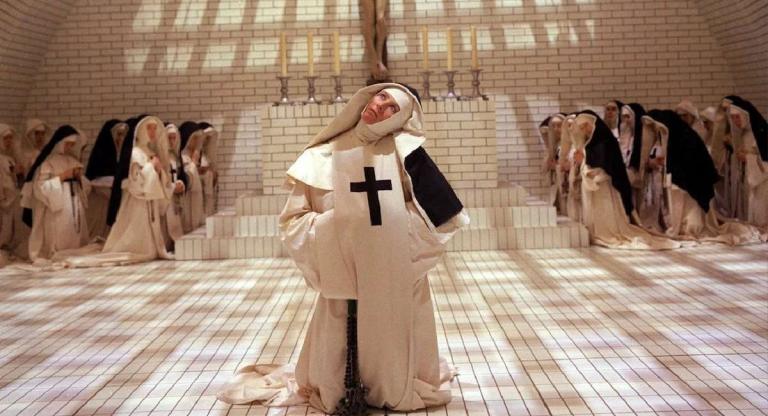
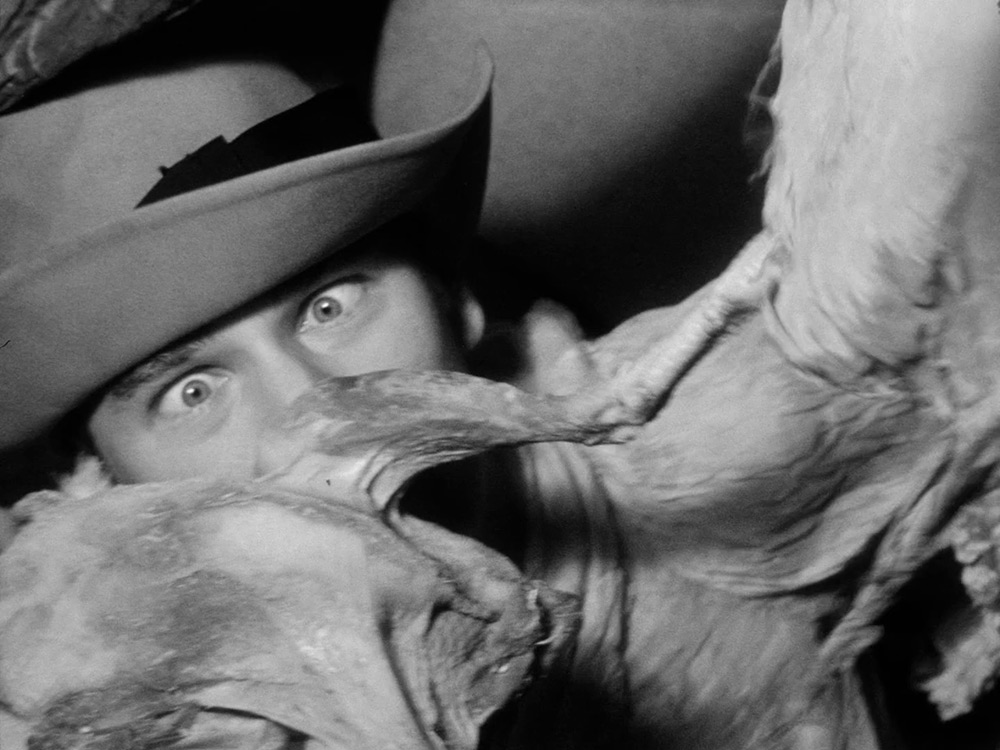
Showing my students the films Jacobs made with Jack Smith and a cohort of other conspirators I want them to witness this regaining of a sort of child-like joy, but to see this not as innocence or simple pleasure, but as an act of revolt against a constriction of life, which these cavorting games also acknowledge, even as they try in some tragic sense to defeat it. Jacobs found an imp of the perverse, an angel of energy in Smith, whom he once described (referring to his film Blonde Cobra) this way:
It’s a look in on an exploding life, on a man of imagination suffering pre-fashionable lower East Side deprivation and consumed with American 1950s, 40s, 30s disgust. Silly, self-pitying, guilt-stricken and yet triumphing on one level over the situation with style, because he’s unapologetically gifted, has a genius for courage, knows that a state of indignity can serve to show his character in sharpest relief. He carries on, states his presence for what it is. Does all he can to draw out our condemnation, testing our love for limits, enticing us into an absurd moral posture the better to dismiss us with a regal screw-off.
Anthology Film Archives will present “Ken and Flo Jacobs: Late Digital Work, Part 1 and 2” this evening as part of the series “The Whole Shebang.”