The work of writer, thinker, broadcaster, and occasional actor John Berger spans television programs, films and countless published works ranging from essays, novels, poems and non-fiction. Film Comment has arranged a multi-venue celebration of Berger's centennial across 9 programs in three venues. Titled “Hold Everything Dear – John Berger and Cinema,” the series offers an expertly guided tour of Berger's film world.
Born in North London in 1926, Berger spent his youth in boarding schools, witnessing the barbarism of a British private education firsthand before enrolling at the Central School of Art to study drawing and painting. During World War II, he refused a commission as a Light Infantry officer in favor of a post as a lance corporal in the village of Ballykelly, where his trajectory as a storyteller began modestly, as he wrote letters on behalf of his illiterate, working-class colleagues to their loved ones.
After the war, Berger commenced a prolific writing career that lasted until his death on the second day of 2017. First contributing art criticism to left-wing publications such as the New Statesman and New Society, Berger published his first book in 1958, the novel A Painter of Our Time. He went on to publish another 11 novels, including the Booker Prize-winning G (1972), for which Berger donated half of his prize money to the London chapter of the British Black Panthers, four plays, and nearly 50 works of nonfiction, many in collaboration with other artists and writers. Easily his best-known work of nonfiction came in 1972. In the four-part BBC Two series Ways of Seeing, Berger offered a plainspoken, expansive discussion not just of art history but more importantly of what looking at art can teach us about perception, ideology, and power. The series’ texts were collected in a book of the same title and have gone on to become a staple of college syllabi.
“Hold Everything Dear” omits Ways of Seeing in favor of three lesser-known and rarely screened works that Berger made for British television. A pair of shorts, Pig Earth (1979) and Parting Shots from Animals (1980), made for BBC One's Omnibus series in collaboration with the director Michael Dibb discuss peasant and animal life, respectively. In both cases, Berger mourns the breaking of an ancient lineage by the very forces of modernity that should have promised freedom and equality. The peasant is becoming a city dweller, estranged from the cycle of the seasons and a direct relationship with the visible world. The animal—once a tool of agriculture, an offering for sacrifice, and a totem of nature's wild potency—now exists either as image (from the Esso tiger and Guinness toucan to circus attractions and zoo displays) or as mere sustenance, slaughtered far from view out of shame.
The best of this trio is Germinal (1973). Released a year after Ways of Seeing and shot in stark black-and-white, it finds Berger in Derbyshire using Zola's epic novel of the same name to discuss the toil of miners and what it means for a person of privilege like Zola (and Berger himself) to speak on behalf of them. Like a reporter, he descends into the earth with the miners, but he's not there merely to document their harsh reality. By the time he made Germinal, Berger had relocated to Quincy, a hamlet in the French Alps, where he was able to live, befriend, and toil beside the very peasantry he had written about and advocated for throughout the rest of his life.
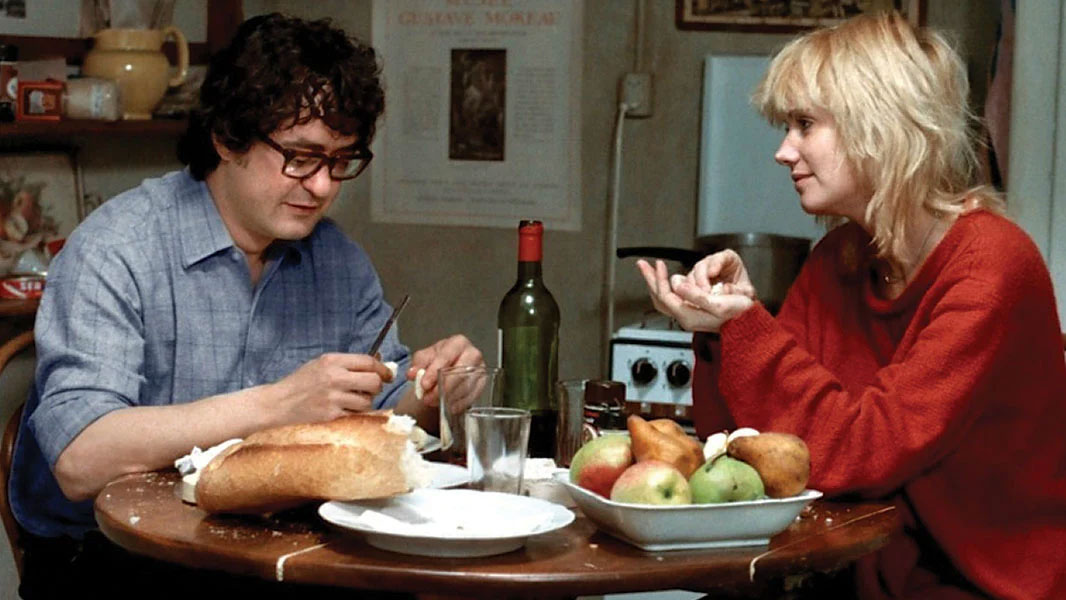
Berger’s best known cinematic collaborations remain the two films he co-wrote with the Swiss director Alain Tanner. Both of them are set in and around Geneva and center on a duo played by the trench-coated, urbane Jean-Luc Bideau and the bespectacled, rhapsodic Jacques Dennis, each disconsolate in his own unique way. In La Salamandre (1971) the two spend autumn attempting to write a screenplay based on a news story involving a young woman accused of shooting her uncle. The woman in question is played by Bulle Ogier (in her Out 1 prime) and both men become rightly enraptured by her enigmatic charisma. Truly free and fearlessly independent, she is not defined by her labor—whether that's filing sausage casings in a factory or selling shoes in a shop. Her itinerant life contrasts with the desk-bound morass of Bideau and Dennis, perhaps best exemplified by the random visits they receive from inspectors of all sorts, droll reminders of the modern world's arbitrary covenants. Funnier and in color, Jonah Who Will be 25 in the Year 2000 (1976) is the anti-Big Chill, avant la lettre. A loose ensemble of friends and acquaintances becomes a collective of sorts in the face of a post-May ‘68 reality where “nothing has changed” and the promise of revolution is replaced by being “enchained by our institutions.” But this playfully discursive film—a generous length of blood sausage is used as a visual aid for the course of history—has a much lighter touch than this précis may suggest. Tanner films in elegant, curving long takes that equitably survey all participants in a tabletop discussion or the entirety of a high school classroom, from students to lecturer.
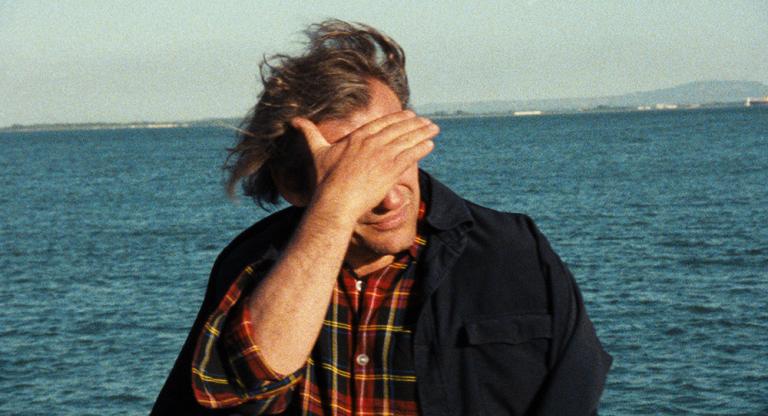
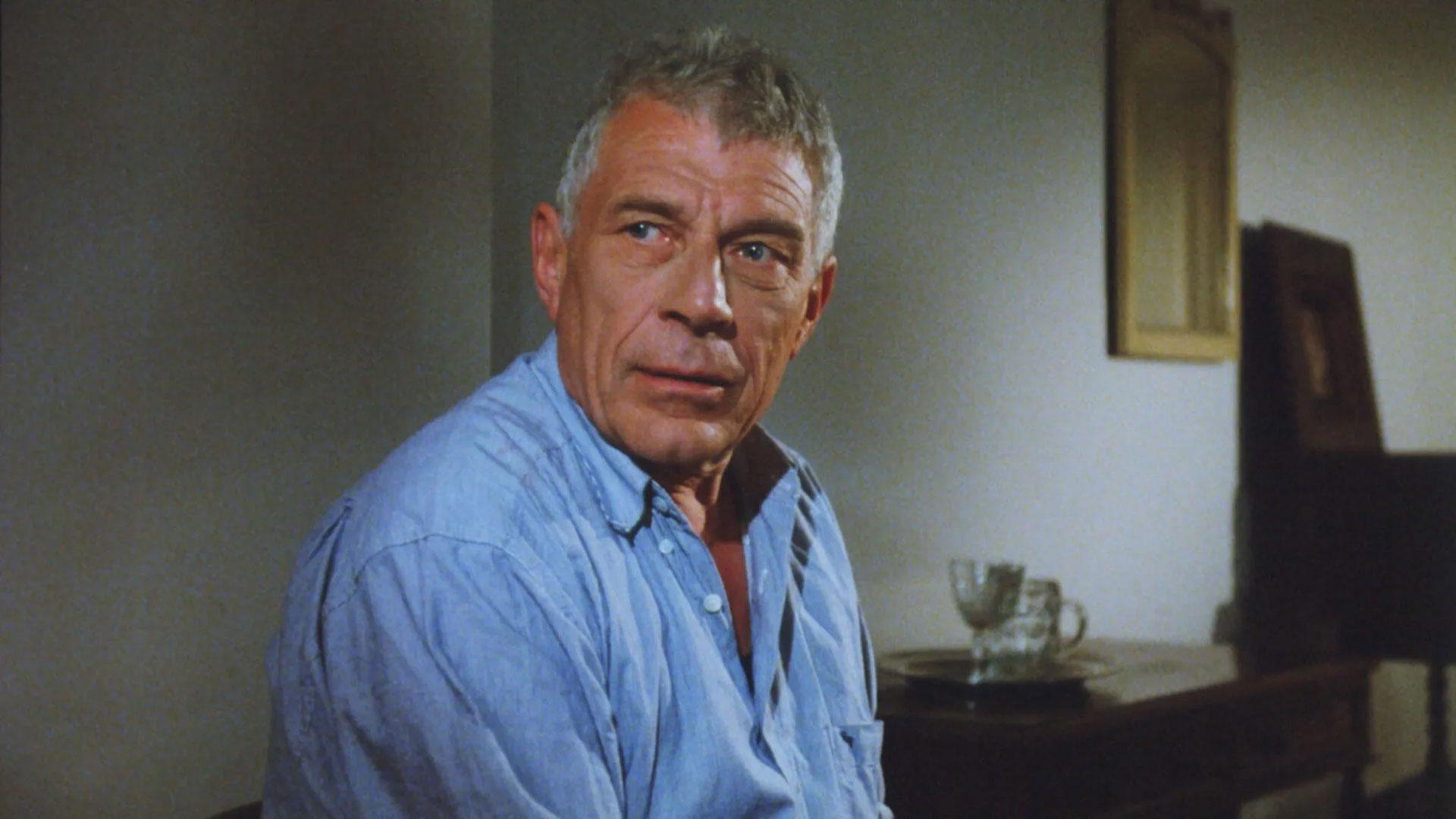
Two films that have rarely if ever been shown in the States find Berger collaborating with the Scottish poet Timothy Neat. In both, Berger has a scene-stealing turn as a mysterious yet magnetic raconteur. In Play Me Something (1989), Berger is an unnamed figure, dressed like a cross between Buster Keaton and a Southern preacher, who appears out of the fog and delights a group of passengers (a young Tilda Swinton among them) stranded at an airport on the remote Scottish island of Barra with a tale about the adventures of an Italian prole as he visits Venice. Stranger and more expansive, Walk Me Home (1993, pictured at top) transforms an encounter between Berger's bardic drifter, nicknamed Ali Babe, and agriculturist Cloud (Angela Winkler). Though they meet at a hotel in some wintry, industrial waterfront in Europe, their journey, a cross between dream and memory, takes them to the Hebrides and the scarred forests of war. Shot by Vadim Yusov, Andrei Tarkovsky's cinematographer from Ivan's Childhood (1962) to Solaris (1972), Walk Me Home locates the eternal in the seemingly arbitrary, beginning with its first image: a light reflected in a bowl of soup suggesting a cosmic landscape. Smudged monochrome images by longtime Berger collaborator Jean Mohr randomly punctuate the narrative, resembling weathered passport or Kennkarte photos—echoes of surveillance and future traces of erasure.
As Berger posits in Play Me Something, “Any story is like an open ticket, across the sea, to any place in the world, where it happened.” Robert Kramer's brilliant Walk the Walk (1996) offers such a pass, no papers required. Though Berger was not directly involved in its making, his influence is deeply felt in Kramer's asymmetrical road movie, in which a family unit breaks apart and scatters across Europe. Father and daughter (Jacques Martial and Betsabée Haas) separately find their ways East, while the mother (Laure Duthilleul), a molecular biologist, stays behind. Kramer himself is a presence in the film, at times directly addressing his actors, and it's sometimes difficult to discern when fiction starts and documentary ends. A nomadic filmmaker with roots in militant cinema, Kramer lucidly renders late capitalism’s forgotten landscapes and liminal spaces in 35mm color, from the side of a commercial ocean liner to the backroads of the European continent.
The series is bookended by two pieces of poetic testimony. La Rabbia (1963), by Pier Paolo Pasolini, is a reconstruction of a short essay film the Italian auteur made as part of a diptych contrasting his leftist observations with those of his purported ideological opposite: the monarchist Giovannino Guareschi. (Berger's essay on the film was published by Tenement Press in 2022 alongside Pasolini's complete texts.) Over images of atrocities (“wretched deaths”) and images of liberation (“joy after joy, victory after victory”), Pasolini, like Berger, reconsiders the classical world of antiquity as he projects a fearsome future. From mushroom clouds to Sophia Loren and Marilyn Monroe to cosmonauts, Pasolini ultimately returns to the same "abyss" that Berger wrestled with his entire life: the hope for a world of equality and the woeful reality that prevents that from being realized.
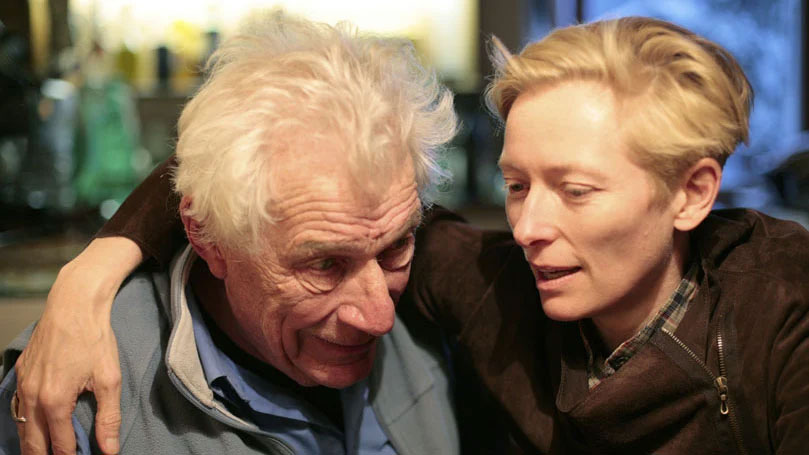
The Seasons in Quincy (2016) unknowingly catches up with Berger shortly before his passing. A quartet of shorts each encapsulating Winter to Summer portrays Berger in and out of his Alpine base. His friendship with Tilda Swinton frames the film, first in their shared histories with recalcitrant, veteran fathers and later through their children. Along the way, gitanes are smoked, apples cored and peeled, eggs are gifted, drawings sketched and death rears its somber head. Berger's warmth and generosity are equaled only by his seemingly unrehearsed eloquence and endless capacity for awe. Even at this late date, he was still considering whether “the vocabulary of prose” was adequate to the search for truth, wondering if perhaps song may be a superior medium for it.
In Ways of Seeing, Berger prophetically stated that “Before the invention of the camera men believed that everyone could see everything. But perspective organized the visual field as though that were indeed the ideal. Every drawing or painting that used perspective proposed to the spectator that he was the unique centre of the world. The camera—and more particularly the movie camera—demonstrated that there was no centre.” In his late seventies, as seen in The Seasons at Quincy, Berger still commands not only his faculties but also the handlebars of his motorbike, charting the course of this decentered world with an open heart and an encyclopedic imagination.
“Hold Everything Dear – John Berger and Cinema” runs July 29-August 3 across multiple venues.