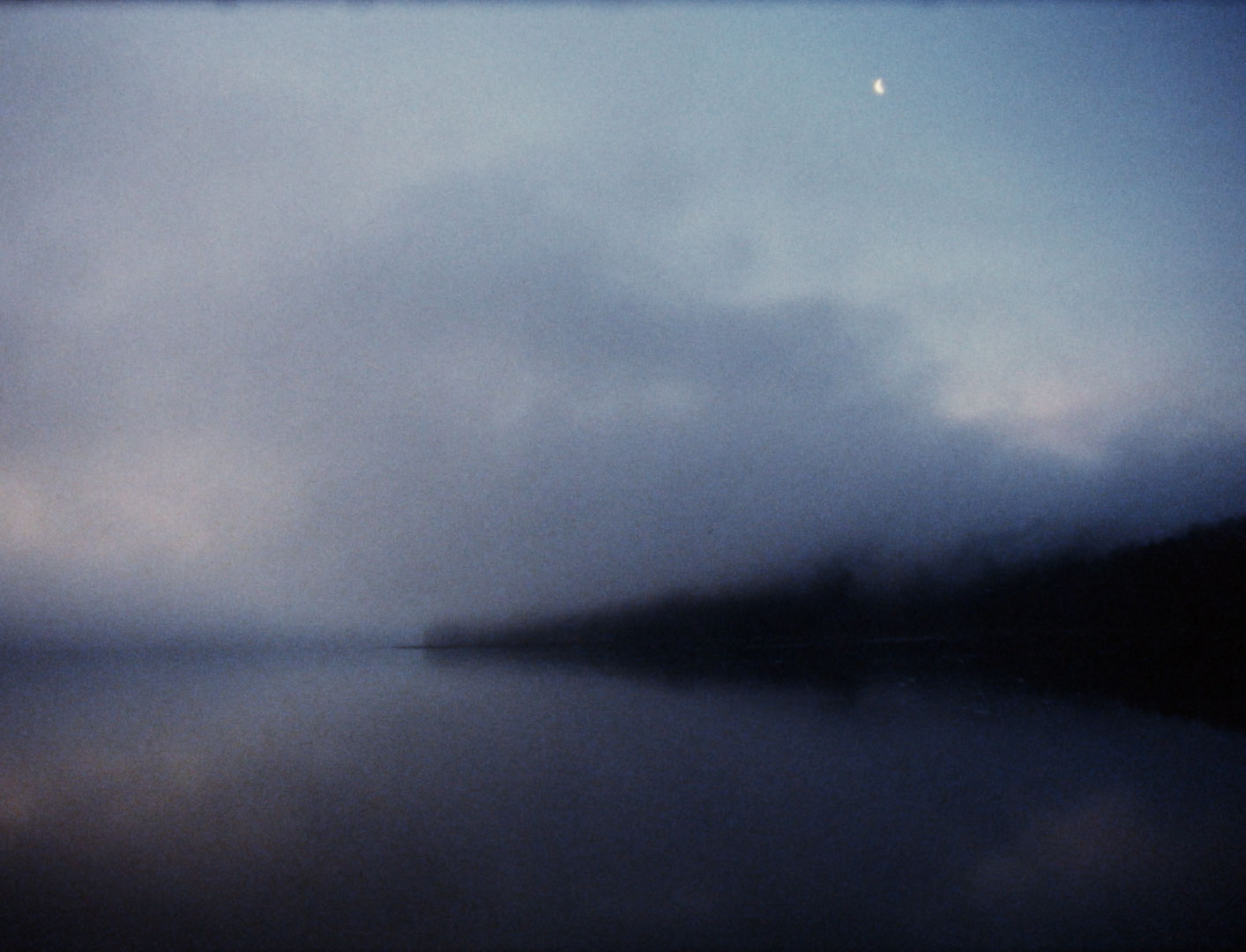
Max Weinman and I met on September 2, 2026, at the opening night of the ninth annual Rockaway Film Festival. We watched Of Rivers (2026, pictured at top), an installation film drawn from Bolex footage he has shot over nearly two decades, from an Arverne Alley bench topped with homegrown flowers. Nearby, Kyp Malone of TV on the Radio played at the outdoor Arverne Cinema.
Weinman said the current version of Of Rivers contains 977 images, totaling five-and-a-half hours of footage from dozens of rivers. He tags the images manually according to distance from the water and its movement, then translates his editing instincts into code governing how one image may lead to another. The soundscape, comprised of music by Bryce Hackford, unfolds according to a similar schema. With no master edit or loop, the film composes itself in real time and never plays the same way twice.
Watching it, I thought of the Tao Te Ching’s paradoxical water. In Ursula K. Le Guin’s translation of the Taoist classic, she writes, “Nothing in the world is as soft, as weak, as water; nothing else can wear away the hard, the strong.” Water, yielding to everything, is still relentless enough to shape stone. The vastness of the open ocean doesn’t scare me, but some of these propulsive rivers did. Water crashed, rocks surfaced and vanished, and trees blurred. I worried for Weinman alone in his canoe. At times, sunrise light danced across the rivers and I felt the quick hope of spring. I wanted to see the film again in a pitch-black gallery or cinema.
As the images passed, I kept asking Weinman where they came from. The Saint John River in Maine. The Allagash. The Delaware River. The Hudson. A stream in Iceland. “That’s the river that kicked my ass in May,” he said of the Machias in Downeast Maine; he lost his tripod to the rapids but held onto the Bolex case. Eventually, we moved next door to the former brewery that houses RFF’s indoor cinema. We cracked silver cans marked BEER in blue Sharpie and settled into its courtyard.
As Weinman rolled a cigarette, I asked what Peter Hutton had taught him at Bard, where Hutton directed the Film and Electronic Arts program. He said his former teacher talked over his own silent films in class, explaining where he had been and the context of particular images. I realized I’d been asking Weinman to do the same. Four nights later, the festival would close with Hutton’s river films—travelogues following fixed paths, though Weinman’s film keeps changing course.
Weinman grew up in downtown Manhattan and spent childhood summers with extended family in southern France. He first saw Hutton’s films on the opening day of his class at Bard. Hutton had recently made At Sea (2004–07), following a container ship from its construction in South Korea to its dismantling in Bangladesh. Weinman became an obsessive student, worked in Bard’s film equipment room, and grew close with Hutton. After graduating, he returned to teach some of his former teacher’s classes when Hutton traveled.
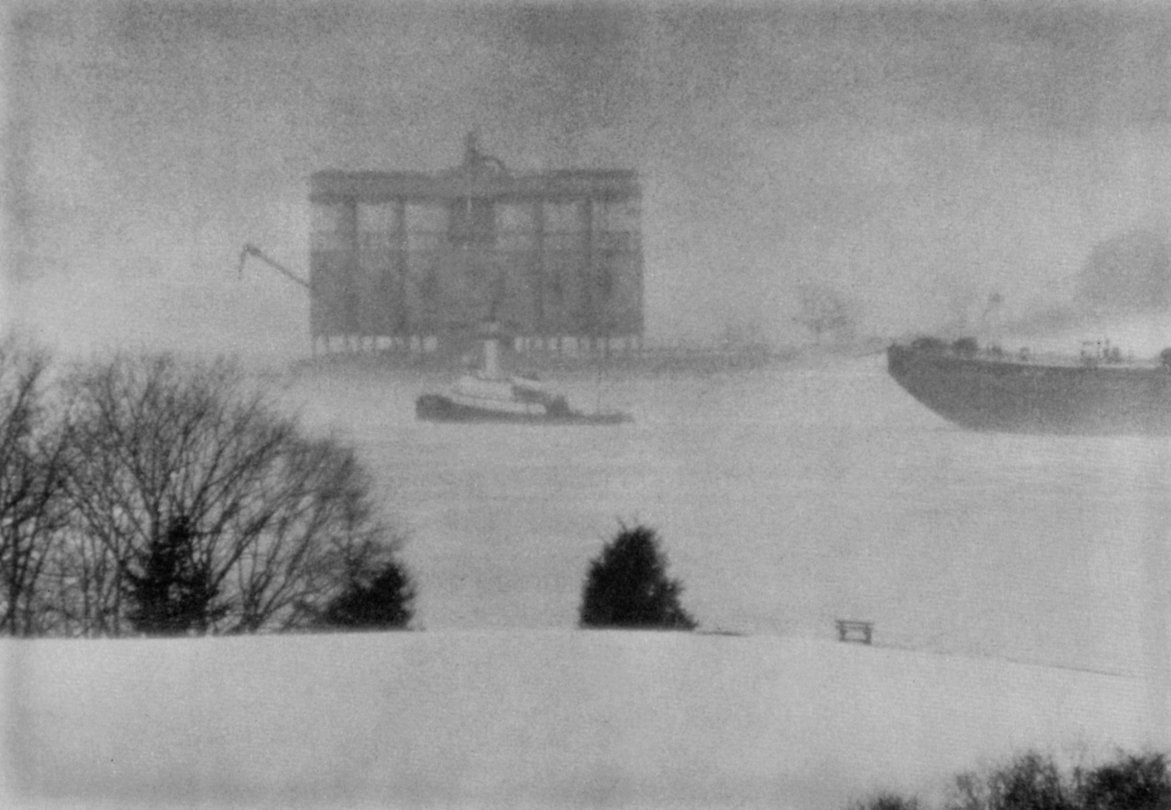
Hutton once called an assignment Weinman had phoned in “a piece of shit.” Weinman laughed. “He knew I could take it, and it was a piece of shit.” After Weinman spent months editing Portiragnes (2012), a portrait of his childhood haven in France, Hutton told him, “Don’t be so neurotic.” Weinman calls this advice “the koan of my creative life.”
“He taught me how to use a Bolex and how to look at nature,” Weinman said. Hutton had what Weinman calls a “monastic gaze,” a care and rhythm in editing that he feels reflected Hutton’s character. Introducing RFF’s closing-night Hutton program Sunday, Light Industry co-founder Ed Halter described that way of looking. “Peter was a practicing Buddhist,” Halter said. “These films are a form of meditation.”
Hutton died in 2016 at the age of 71. Weinman and Mott Hupfel founded the nonprofit PH Film Preservation in 2024 to preserve Hutton’s films and bring them to new audiences. Projected in 16mm, Hutton’s river films relaxed, riveted, and occasionally bored me. My attention slowed. A shimmer on water, smoke from a stack, and a passing boat held equal weight. In Time and Tide, a General Electric logo flashes alone—a reference, Hutton said, to GE’s PCB contamination of the Hudson.
Hutton’s long, static shots make tiny fluctuations major events. His own tendency to agonize over a single cut may have informed his advice to Weinman, who calls Of Rivers and its formation by rules “structurally antithetical” to his teacher’s work. Asked whether those rules allowed him to loosen up, he compared the process to alchemy, or making soup: adding organic material to a structure, adjusting it, then watching what happens. Weinman’s current archive contains about 27,000 images. “The thing has a certain life and cadence of its own,” he said, “that you’re just allowing to happen.”
For years, he printed frames, arranged them on a huge corkboard, and drew connections before fixing a linear cut. “Every choice felt precious,” he said. Of Rivers grew from that problem. His tagging system traces back to the term “im-sign” (image-sign), which he encountered in Pier Paolo Pasolini’s essay “The Cinema of Poetry” in 2009. Weinman has since devised roughly 300 shorthands for each image’s components and gestures, a system that lets him surrender a fixed sequence. He is less interested in narrating memory than in “the complete collapse of chronology.”
Before seeing Of Rivers, RFF had chosen three Hutton films for closing night: In Titan’s Goblet (1991), Time and Tide (2000) and Study of a River (1997). “They had planned that without me,” Weinman said, calling the convergence kismet. RFF co-founders Courtney Muller and Sam Fleischner had long wanted to show Hutton outdoors in Rockaway, where water dictates geography and history. Built in 2021 between Jamaica Bay and the Atlantic, the Arverne Cinema incorporates wood salvaged from the boardwalk Hurricane Sandy destroyed.
Muller loved that the window installation remained illuminated overnight, allowing someone passing at 2 a.m. to “encounter the film by chance.” Introducing Sunday’s Hutton program, she told the crowd that the “exultations of light will continue” outside with Weinman’s piece.
After the Hutton screening, people gathered around the flower-topped bench where we had sat four nights earlier. In the deeper dark, with my attention slowed by Hutton, the kinetic Of Rivers appeared newly incandescent. Weinman could tell us exactly where each image came from. Which one would come next, we discovered together.