Brian De Palma’s Dressed to Kill (1980) was deemed controversial before it even came out in theaters due to a contentious ratings battle with the MPAA. Ahead of its release, The New York Times ran a fairly sensational article titled “Dressed to Kill – How a film Changes From ‘X’ to ‘R’” that sought to educate the public on the arcane methodologies of the ratings board in Hollywood. In said article, author Peter Wood also argued that De Palma was merely sensationalizing his obvious influence, Alfred Hitchcock. De Palma had flirted with the narratives and aesthetics of Hitchcock for nearly a decade before Dressed to Kill hit cinemas, but it wasn’t until Dressed to Kill that he started to pervert the logic of Hitchcock.
Dressed to Kill opens with a shower scene that unsubtly nods to Psycho (1960). These early moments are erotic but delicate, featuring Angie Dickinson (as well as her nude body double, Penthouse model Victoria Lynn Johnson) caressing herself to Pino Donaggio’s score. In the R-rated theatrical cut, cinematographer Ralf D. Bode’s camera stops at her waist, but in the uncut version (now available on home video), it pans down and offers something decidedly more explicit. At this point in his career, De Palma was largely known for successful genre hits like Carrie (1976) and The Fury (1978). Most people were unaware that his sophomore feature had been the X-rated sex comedy Greetings (1968). In that sense, Dressed to Kill feels like two eras of De Palma converging. It functions like his propulsive genre films, even while its provocations reveal a renegade spirit atypical of most studio filmmakers and recalls the independent edge of De Palma’s work in the late ‘60s and early ‘70s. His provocative mix of sex and violence in Dressed to Kill left censors and audiences uncomfortable.
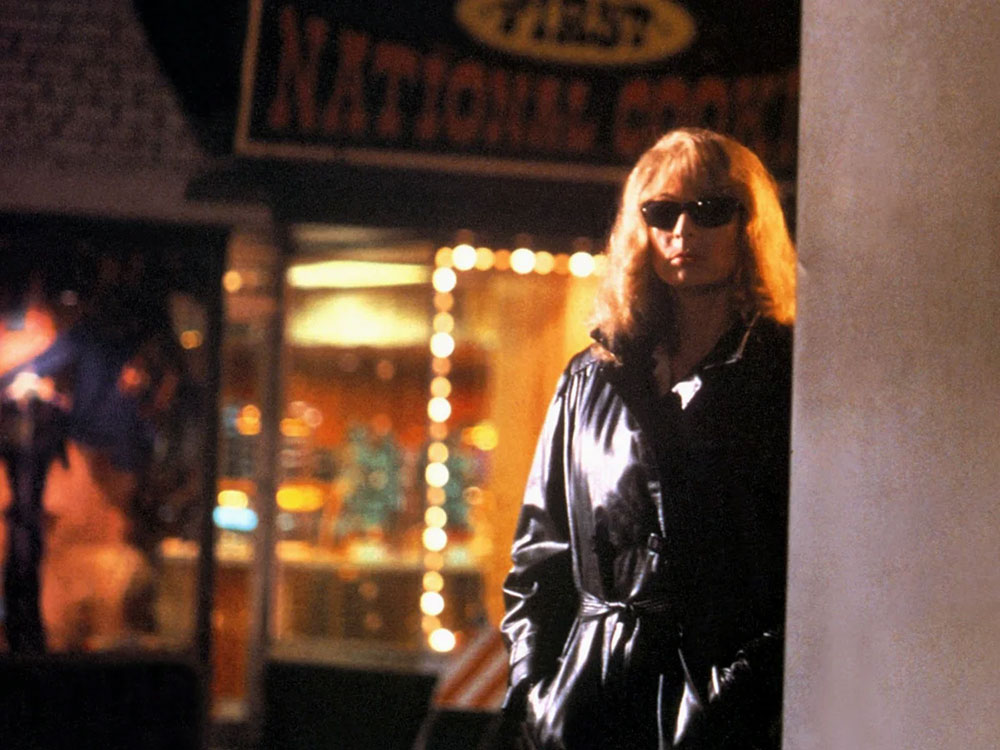
In the film, a call girl named Liz (Nancy Allen) becomes a killer’s target after she witnesses a murder in an elevator. That particular set piece remains one of De Palma’s best. It’s a claustrophobic kill box of tension in which Gerald B. Greenberg’s blunt edits mimic the cuts of a straight razor. Like Psycho before it, which Dressed to Kill apes multiple times, De Palma lets this sequence act as the catalyst for the rest of the film’s events and as its most memorable moment. Dressed to Kill is about a lot of things—identity, adultery, sex work, pathology—but it’s also a flashy demo of De Palma’s technical abilities, for better or worse. His skills make the film feel less sordid than its contents spell out. As an exercise in abject horror, bare skin and fluids abound, but because the craft is so front-and-center De Palma makes it hard to focus on such matters. In a way, that’s his magic trick. His sleight of hand is getting audiences to watch something repellent, perhaps even morally questionable, because he makes it look so good.
Dressed to Kill screens this evening, July 11, at the Museum of the Moving Image on 35mm as part of the series “De Palma: Summer of Suspense.”