In 1968, the sculptor David Lamelas’s career reached the international stage when he represented Argentina at the Venice Biennale. His contribution, Office of Information about the Vietnam War at Three Levels: The Visual Image, Text and Audio, consisted of Olivetti office furniture, a tape recorder, a microphone, two telephone receivers, and a telex machine receiving daily reports from Italy's largest news agency, Agenzia Nazionale Stampa Associata (ANSA). The arrangement was situated behind a pane of glass, as if in a large vitrine, and transmissions in several languages were periodically read aloud by a performer throughout the exhibition's run. Lamelas's work from the previous three years had exhibited a shift in focus from the physical to the immaterial: where his 1965 fiberboard sculptures are concerned with spatial dynamics in an architectural sense, works from 1966-67 engage light as a primary medium, such as Connection of Three Spaces (1966), an installation of approximately seven-foot tall lightboxes that united the gallery's interior in electric brilliance.
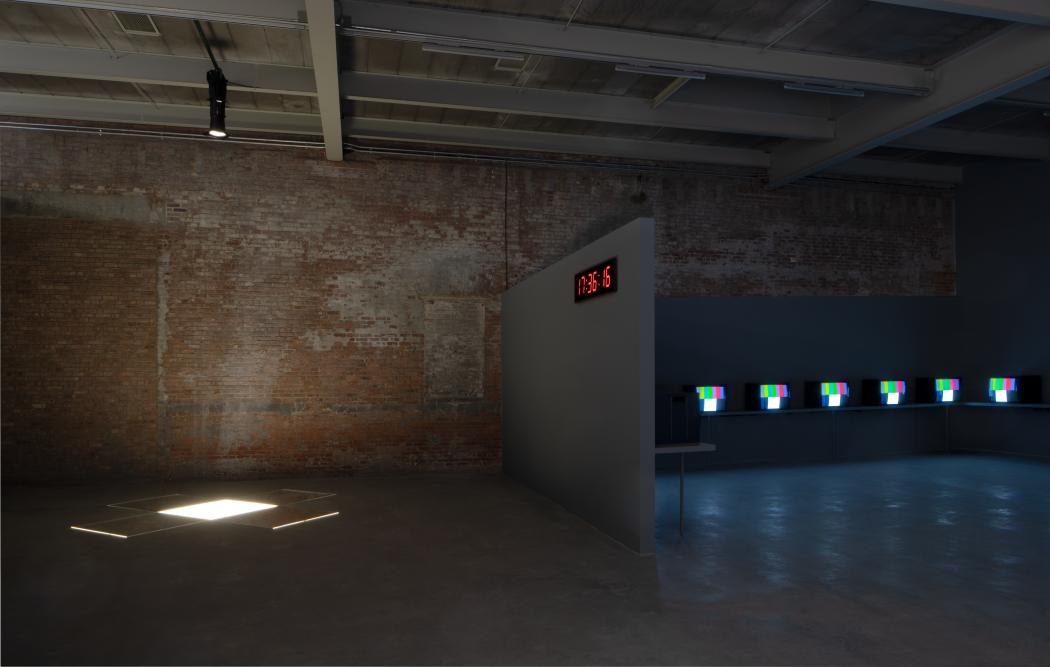
With the Biennale presentation, however, Lamelas further expanded the concerns of his critical practice to encompass the technological apparatuses and media structures that direct the flow of information across the world. This shift had been anticipated the previous year in an installation at the Instituto Torcuato Di Tella in Buenos Aires titled Situación de tiempo [Situation of Time], in which 17 evenly-spaced television monitors tuned to a static channel were placed in a darkened gallery space. Presenting a technological object as a minimalist sculpture, the work strips the televised transmission down to its most basic components of light, sound, and duration, expanding its parameters beyond the three dimensions of sculpture and invoking the networks that control the transmissions it refuses to engage. Steeped in Marshall McLuhan’s theories, Lamelas's work often asks the viewer to examine the frameworks through which they receive the information they consume.
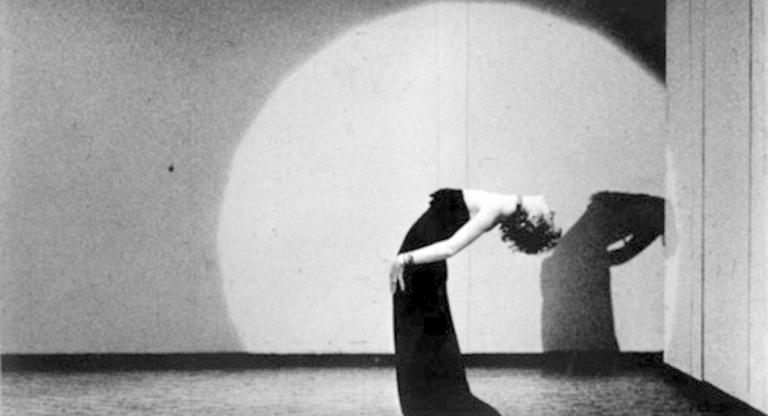
Versions of both of these works are featured in “David Lamelas: The Machine” at Dia: Chelsea, a career retrospective presenting key works executed across six decades and numerous cities, but primarily Buenos Aires, where he was a key member of the 1960s avant-garde that included Marta Minujín; London, where he lived from 1968 until the mid-1970s; and Los Angeles, where he has lived since. In addition to the moving-image works installed throughout the galleries, a four-part film program presents selections from the artist's experimental cinema practice in a dedicated viewing room.
Situated among sculpture and later video works in the main galleries are a group of experimental films Lamelas produced during his time in London that established the lines of thought he would pursue in his subsequent work. A Study of the Relationships Between Inner and Outer Space (1969) begins with a shot of the floor plan of an exhibition space at the Camden Arts Centre—the source of the film's funding and the space in which it would be presented—before moving on to close-up shots of the empty gallery with voiceover describing in dry, mundane terms the room's dimensions, lighting fixtures, noise level, and the activities of its staff. Lamelas then extends his analysis beyond the walls of the institution, moving into the public urban spaces of London to examine the city's architectures, transit system, and climate. The film concludes with a series of man-on-the-street style interviews in which passersby are asked to share their thoughts about the moon landing, which would take place later that day and constitute a watershed moment in the history of broadcast television as 600 million viewers, roughly one-fifth of the world's population at the time, tuned in to watch it live.
Reading of an Extract from Labyrinths by J. L. Borges, completed the following year, consists of an unmoving shot of an actress, positioned newscaster-style at a desk, who reads aloud a passage from Borges’s “A New Refutation of Time,” from his acclaimed book Labyrinths (1962). However, the film is silent. Borges's words are communicated to the viewer via subtitles, displacing the viewer's perception of the excerpt from oral-audial to visual-textual. Lamelas’s film illustrates Borges’s conception of time, articulated in the excerpt, which theorizes that if two individuals undergo the same experience at different points in time, our understanding of time as a linear, casual sequence of events is false; the film enacts a parallel set of experiences through the actress's reading of the text during filming and the viewer's reading of the subtitles during the screening. While both readers’ experience the text subjectively, they are united by the same act perpetually occurring simultaneously in 1970 and at the point of viewing.
The prominence of film within Lamelas’s interdisciplinary oeuvre may be attributed to the medium’s intrinsic alignment with many of the prevailing concerns of his artistic practice, such as film’s capacity to treat time as a malleable, non-linear phenomenon—much like human memory—and the ease with which it blurs fact and fiction. Equally appealing to Lamelas is the filmic image’s subjugation to specific systems of control that define its production and distribution; many of his 1970s films anticipate the effects of an exponentially accelerating, globalized communications industry on our perception of time and reality. The division between content and creator is increasingly muddled in our media-saturated present, their convergence driven, writes the art historian Pamela Lee, by “a sense of time in which critical distance is seemingly eclipsed: where information, coming fast and furious and all too promiscuously, inaugurates a media horizon at once ubiquitous and relentless.”
The prescience of Lamelas’s critique of a media landscape in which news and entertainment are inextricably meshed is represented in the current film program via The Hand (1976), a satirical parody of sensationalist American news programs. Taking the format of a news program on the network Newsmakers (emphasis on “makers”), a Barbara Walters-esque anchor reports that a major rock n’ roll star was recently busted for gun possession in connection with a militant far-left group. The second section shows the anchor interviewing the musician, who denies political affiliation and repeatedly attempts to steer the conversation back to the promotion of his new album. They are joined by a real reporter, Ghila Benesty, who likewise attempts to get a political statement out of the celebrity. Their conversation progresses in a circular fashion as the musician resists any attempt by the reporters to construct a narrative around his alleged involvement with the radical group before an act of violence in the film’s final moments abruptly ends the interview, denying any possibility of resolution.
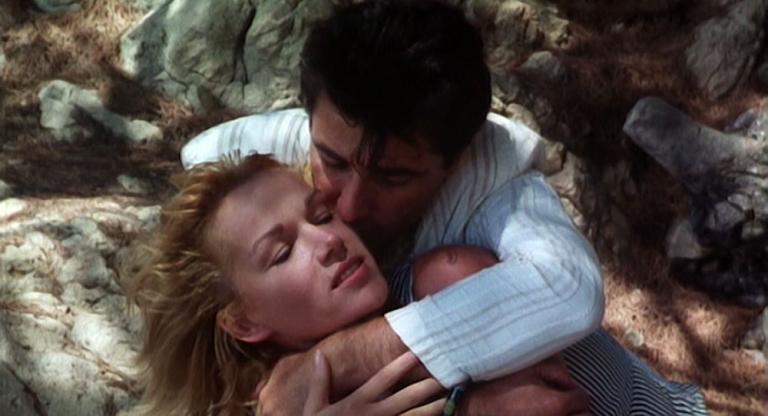
“The Machine” to which the exhibition’s title refers is perhaps best summarized by The Invention of Doctor Morel (2000), an examination of the relationship between consciousness and the constructed image. Based on the 1940 novel by Adolfo Bioy Casares and starring Brian Cox, Nicole Ansari-Cox, and Werner Daehn, the film follows Anton (Daehn), an escaped convict who has been condemned to death. After fleeing captivity, he stumbles onto the palatial residence of Dr. Morel (Cox), who is enamored of the artist Faustine (Ansari-Cox). After observing them for a while, Anton discovers the doctor and Faustine are virtual representations, projections of Morel's fantastic machine, which not only captures images of its subjects, but also their memories. In this way, a kind of immortality is achieved: the consciousnesses of the people recorded are preserved on an endless loop in the machine’s memory device. Anton is left to decide whether to continue his real life or allow his consciousness to be absorbed into the world of the projections. A poetic coalescence of Lamelas’s prevailing concerns, the film reveals Morel's machine, the human mind, and the medium of cinema to be systems of perception predicated upon the inherently fictive act of representation and an eternally unfolding present.
David Lamelas: The Machine is on view through January 16.