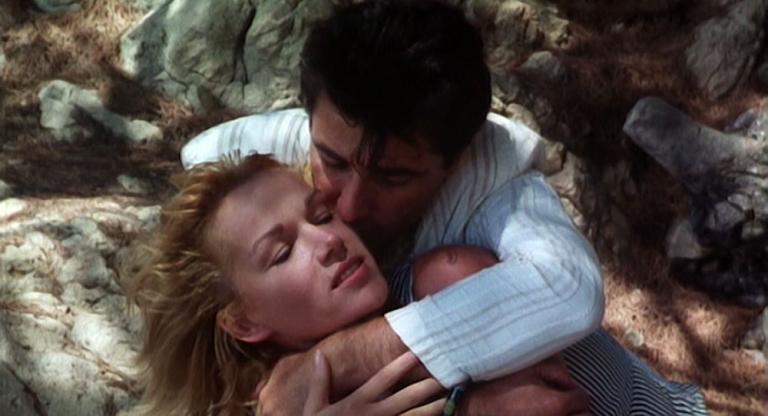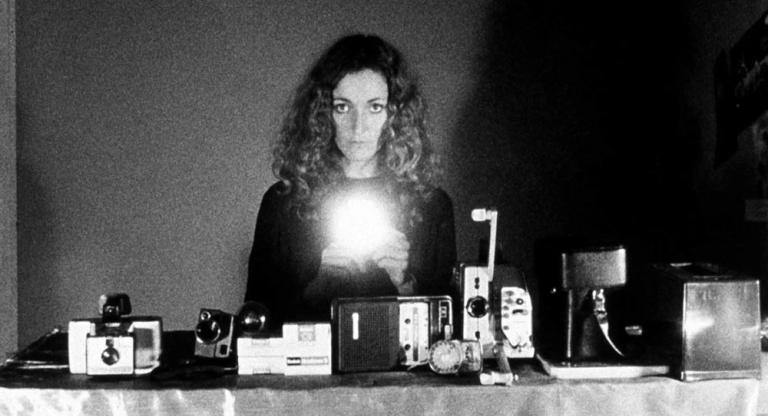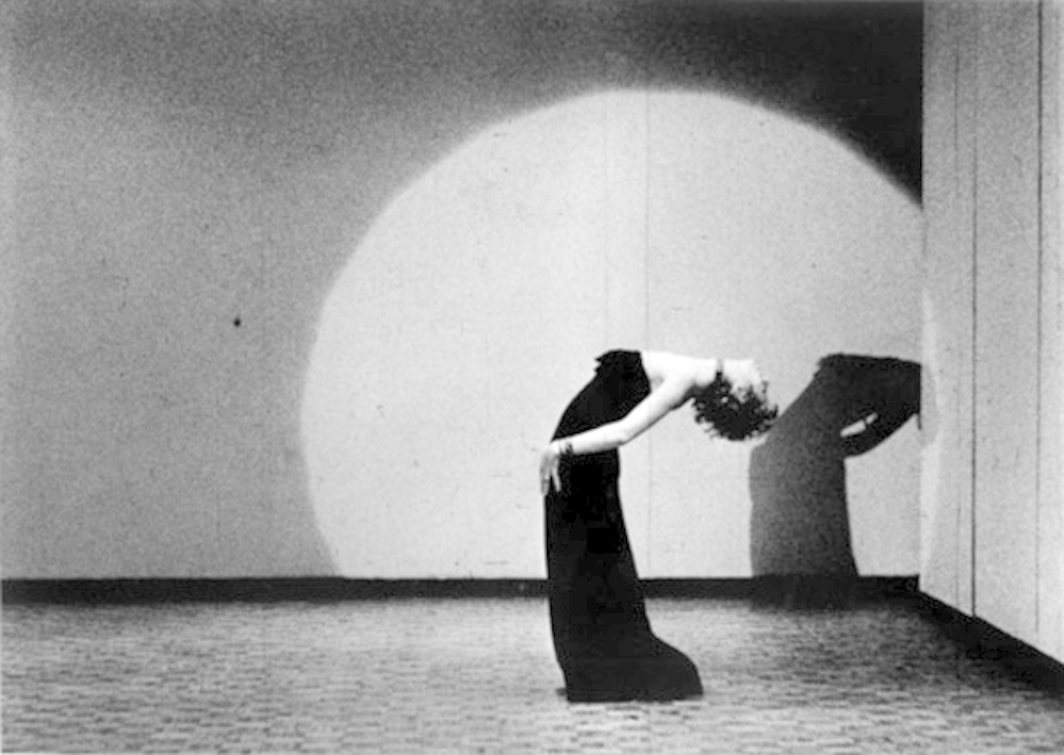
Dancer and choreographer Yvonne Rainer’s first film, Lives of Performers (1972), is marked by a tricky ontological drift. Reduced to its simplest explanation, it’s a film about a performance about another performance about a personal, true story. Detritus from all of these modes and mediums are interwoven in a shawl that smothers the fourth wall, in service of telling a simple narrative about four performers—two men and two women—involved in a romantic affair. This collapsing of life and performance amplifies the presentation of a self both on stage and in the everyday. The sociologist Erving Goffman wrote of “acting” in real life as the maintenance of a “relevant definition of a situation”—a relationship, a team, a group—in which “discrepant roles develop”: “some of the individuals who are apparently teammates, or audience, or outsiders acquire information about the performance and [its] relations… which are not apparent and which complicate the problem of putting on a show.” Lives of Performers, set entirely upon an obvious stage, literalizes this.
The points of the central love triangle are Valda Setterfield, Shirley Soffer, and Fernando Torm, all ostensibly playing themselves. The trio are reunited from Rainer’s 1971 performance Grand Union Dreams, where, if we are to believe the film’s setup, passions were ignited. Intertitles, stage directions, rehearsal footage, photographs, records of other Rainer performances, audience chatter, outtakes, and the music of the Rolling Stones are all used in cacophonous montage. Sometimes the information in the varying media is asynchronous, sometimes it contradicts. Other times it calls attention to its own artifice: “Were you saying that or reading it?” Valda asks her director in one scene. “I’m recalling it from [a previous performance at] Hofstra,” Rainer replies. At one point, the film asks its audience to wager a guess as to which of the competing women the director is more sympathetic toward. Is it “number one,” simply because she appears first?
Pulling back the discursive curtains, the real Valda, Shirley and Fernando were not actually in romantic conflict. The relationship that inspired the film was Rainer’s, and the man was fellow Judson Dance Theater co-founder Robert Morris, whose affair ended their relationship the year before. Halfway through the film, Valda finds a letter from Shirley and reads it in recorded monologue; this is the very real letter Rainer received from the “other woman” in Morris’s life.
Rainer’s interest in film was born from her want to “deal specifically with emotion” in her work. In the case of Lives of Performers, this emotion is infatuation. The film’s opening includes the parenthetical “a melodrama;” Rainer was drawn to early “women’s pictures” such as G.W. Pabst’s Pandora’s Box (1929), which is directly referenced in the film’s denouement. Using the great Babette Mangolte’s camera, Rainer is able to magnify moments, movements and gestures in the film’s dry and “small” betrayals to weightier proportions. Hands, feet, and physical proximity are able to dominate the audience’s field of vision in a way that they could not on stage. Lives of Performers is a resoundingly successful experiment in finding “play” through a documentary lens. Its formal conceits and remixing of Rainer’s choreographical images in the filmic mode construct a perfect foundation for the decades of Rainer’s moving image work to come.
Lives of Performers screens tomorrow afternoon, September 19, at e-flux screening room as part of the series “Rehearsal Behavior.” Director Yvonne Rainer will be in attendance for a Q&A.