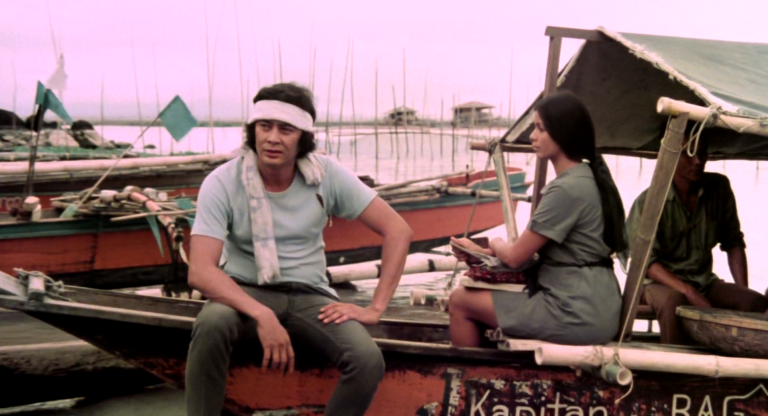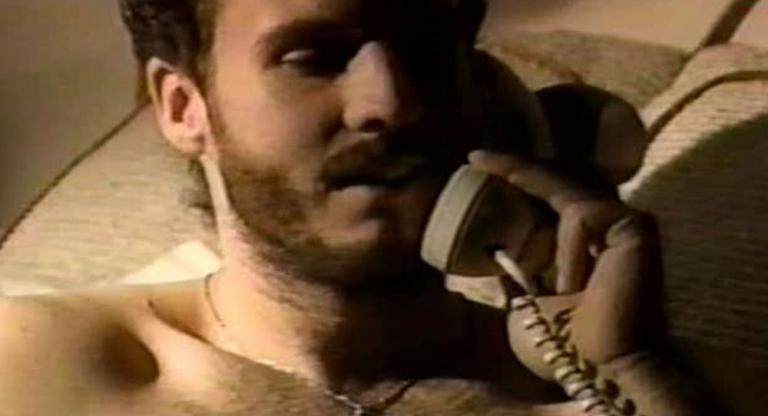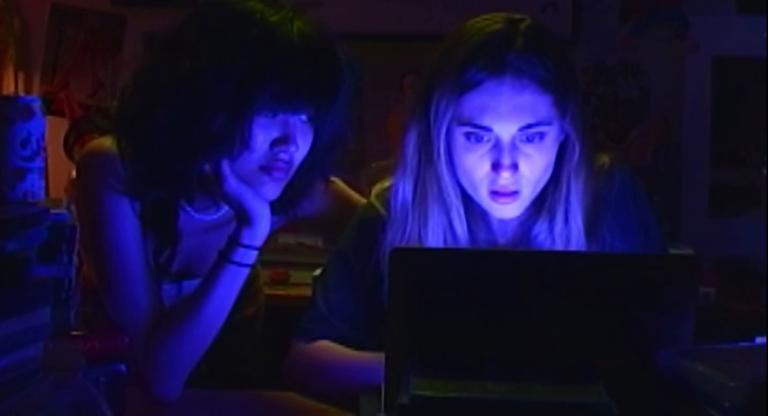
For over two decades, the Texas-born filmmaker Patrick Wang has created deeply human works anchored by empathy. This thread of sensitivity runs through the sprawling, three-hour custody saga of In The Family (2011), the fractured emotional recovery depicted in The Grief of Others (2015), and his grand, two-part epic A Bread Factory (2018), which serves as a poignant meditation on the endurance of art and community within a shifting social fabric.
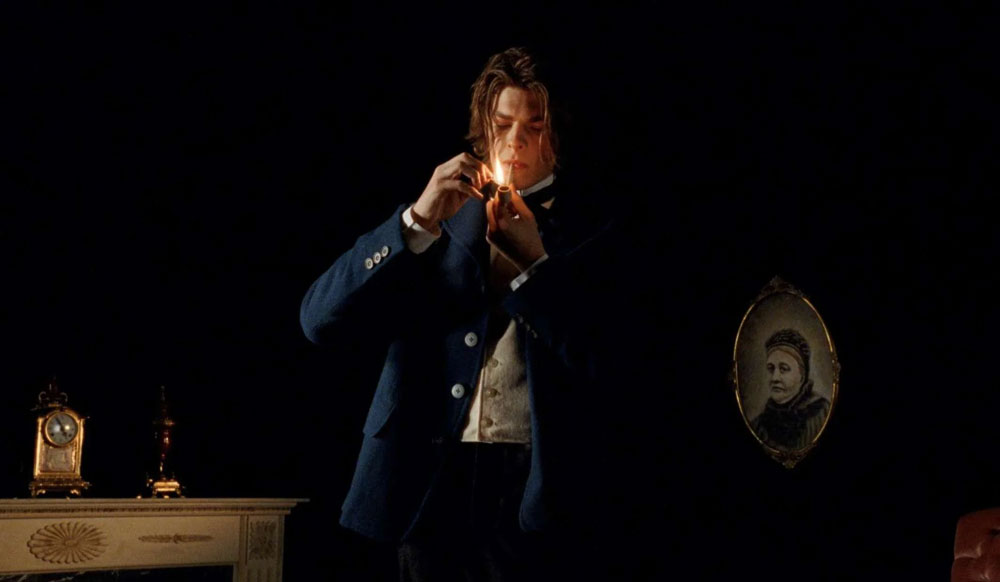
His latest project, A. Rimbaud (2026), is a first for the director in that it is centered on a known figure from the past. For the uninitiated, Arthur Rimbaud was a French poet known for transgressive poetry, most of which he wrote before he was 20. Despite his short career, the author has become very influential in a variety of circles, from folk musicians to modernist authors. Wang’s film, starring Blake Draper, uses an austere aesthetic in which any dialogue spoken to our precocious poet is represented only by unseen musical instruments. Is it a theatrical piece? A series of monologues? Yes and no. The film’s focus on performance, within these sparse elements, creates an atmosphere the medium rarely captures, feeling like an otherworldly yet profoundly human transmission.
Such work requires a distribution strategy outside traditional norms. Bypassing festivals, Wang chose New York City as an unconventional launching pad. This reflects his career-long DIY ethos; while he has seen institutional success—from Roger Ebert’s support for In The Family to a SXSW debut for The Grief of Others—his films thrive through self-actualized tours and a dedicated audience underserved by contemporary independent cinema.
Christopher Bell: What was your first encounter with Rimbaud?
Patrick Wang: I first read him when I was younger and I never quite connected, so then I had a volume of Rimbaud's poems on my shelf for maybe a good 20 years. But this time I started from the beginning, including with his school notebooks. Then I read his letters. Half of them are him demanding books and I'm like, “I can relate to this. This is my guy.” He mostly stopped writing poetry after his teen years, but what I saw in the letters was a continuity of the person and also a continuity of the poetic soul in him. The more I learned about him, the more I saw him in ways that differed from conventional biographical interpretations.
CB: The continuity of the person really comes through in the film. I love that part towards the end of your movie where he's given up poetry and moved to a different country, and people in his life are wondering why. He's in the merchant business and he remarks that poetry is intertwined in the everyday interactions he has.
PW: What's very interesting is that he was trading and exploring among many Somali tribes. He was in Harar, in eastern Ethiopia; he traveled a lot, but that was his home base for many years. Somalia is known as the “land of bards” and has the highest per capita number of poets in the world. For example, their laws were still in verse at the time of Rimbaud. Poetry was a part of life and wasn't written down. I have this little fantasy that he could have continued writing poetry and just didn't record it.
CB: In what way did his poems influence the overall aesthetic and production of your film?
PW: He has a sense of playfulness that we definitely wanted. Also, the way he reinvents himself continuously; I wanted the film to do that too. Poetry takes very few words in a very sparse, efficient arrangement that evokes so much from little shards of things. We tried to do that in the scenic design. It’s very rare we had more than one wall, but that's what a poem will do: it will evoke a wall or a detail. Those things, coupled with the silences and unusual arrangements, stimulate you into seeing the world anew. If I focus your eye on one or two details and the rest of the room is gone, you think differently about that space.
CB: Why did you single him out as the only person with human language and make everyone else communicate in musical instruments?
PW: It did start as a joke: the first instrument you hear is a tuba playing a drunk person in a bar. It’s a little Charlie Brown-ish, an abstract voice that's just a shape. Through writing it seemed to want to keep coming up. The music tells you something about the structures of life in each place. It becomes chamber music when he's in Paris; when he leaves for Yemen and Africa, the instruments change in appropriate ways. There's a kind of loneliness in how our communications are incomplete. That’s a theme in Rimbaud's life. Contrary to popular conceptions, he had many friends and was a person of good humor, but I think there was a fundamental loneliness in him. Using music this way, without another person to connect with, helps you feel that loneliness.
CB: There is a lot riding on this lead performance, but it's remarkable. How did you find Blake and what drew you to him?
PW: I had a vacation planned to Australia and it would’ve been my first vacation that wasn’t work-related or family-related in god knows how long. Then I thought, “Well, you know, I like a lot of Australian actors. Maybe I'll have a casting session while I'm in Melbourne.” I found this wonderful casting director, Thea McLeod, and we started working. With Blake, what was interesting is I already saw a lot of the fundamentals. He had the tools. I saw this in a number of his self-tapes of auditions that he had done and they were so incredibly complete. It's something I haven't actually seen before, someone who puts that much effort into a complete performance for their auditions. When it came to whether he connected with the character, he had read several books about Rimbaud going into that audition, which again is unusual, but he does that for a lot of his auditions.
CB: His transformation by the end is incredible. These are all stock phrases, but… He really does disappear into the role. You won't know it's him by the end. You'll completely forget it's the same actor.
PW: There have been people who've seen it who have questioned if it's different actors. I think that’s a wonderful reflection on his work, because we had wonderful design things to help him. There's some very subtle aging prosthetics, there's some subtle aging makeup. But without him, you don’t have this real deepening of character while not abandoning the guy that we saw before… He managed that really convincingly. It’s a broad age range—15 to 37. It’s no easy task.
CB: You’re skipping a festival debut and instead launching in New York. We’ll get to that, but I was wondering if we can talk about film festivals and our general gripes.
PW: I think that festivals are such a broad topic. I think the slice that I feel is most important to talk about is really the upper echelon of festivals, because they determine commercial prospects for films. They determine our conversation and I think that deserves scrutiny, at the very least.
Submission to them is a very cold process and, oftentimes, hands come up empty. There's a very simple kind of diplomatic explanation that maybe we can start with, which is just that the things that interest them are not the things that interest me. There's another way you could look at it that's much more indignant: it's a very bureaucratic world. They are bureaucrats flying the banner of art, but they only care about it in so much as it is a tool of power, a tool to accumulate more power within their particular little fiefdom. I think the reason for indignation is because, again, you care about those things. You care about the words they're using and you see that they're kind of becoming meaningless as they apply them.
CB: In many ways, too, they’re the only game in town.
PW: I think the reason it's important to spend a little time thinking about it is because you can say, “Screw 'em,” when things don’t turn out the way you want. But institutions change, depending on the people. And, you need to understand what is going on, even if it's not a world that invites you in. There's dynamics of understanding what's going on that are going to shape and help you figure out where to put your energy in the future.
CB: I have to wonder if the way that the whole thing is built—programmers and screening committees wading through thousands of films in a short amount of time—is the best way to actually watch a movie?
PW: One of my favorite writers, Simon Leys, says, “Usually people don't see, they only recognize, and what they don't recognize remains invisible to them.” I think one of the things preventing people from seeing is this idea that “I am a judge.” At first, I could understand if people would object and say, “Of course they're judging. That's their job.” But the problem is that if you're judging from the first frame, you're going to miss so much. You're never going to see things on their own terms. Anything that is particularly new or different is crowded out in that judgment frame of mind. I think that is one of the things preventing what I find are interesting selections from the largest festivals.
CB: It's a shame too because it ends up meaning that, in many ways, a lot of times the choices that they end up choosing are kind of conservative. On the flipside, I'm often surprised at audience reception, because at times they seem a lot more hungry for adventurous stuff.
PW: There's a range to institutions, but in some ways they're designed to be conservative: they're preserving something, they're trying to keep something alive and so you can kind of understand that from their perspective. Audiences that come in are not part of that institution. They're willing to see things on their own terms and they also don't necessarily forge their identity by it, whereas the institution has to own the reputation of the film in a different way.
CB: You’re doing a multi-week roll out in New York for this film, and it can basically go on indefinitely. You did a similar thing with The Grief of Others.
PW: I did. It’s funny, because that actually gave us many more audiences than our actual commercial release of Grief. But, we have a better set-up and about a decade between this film and The Grief of Others that we can build off of.
CB: Now you’re trying to work with the city to activate certain other art scenes in the city. New York is a vital element to your distribution plan.
PW: A number of years ago, I just started noticing a lot more young people at the cinema. At first I thought, “Oh, this has been assigned for some class.” But then they kept showing up. They are so deeply literate and adventurous. The cinephile world has skewed much younger in New York and that's a very very good thing. It’s a terrible thing to waste. In some ways, it's not being wasted. We have very good repertory screenings and really wonderful programmers that do interesting things. For newer films that come along, someone outside of the city has said to pay attention to it. That may be an international film festival or even Sundance or something, but its reputation tends not to be made in New York. My basic idea is that it would be really wonderful to use this cinephile audience. Let New York be a voice in what people should pay attention to. Let it actually make the reputation of a film.
CB: I've always liked sprinkling press throughout the year or years. Instead of one big push that is all in the first week or two, it goes on through a year or two or something so the film gets to live on.
PW: In my earlier releases that would happen, but not by any sort of planning. We'd end up playing a city three times and for the first time some press just didn't cover us. But then, by the time we opened again, they were able to cover us because they didn't cover us the first time. It's nice when you just have a style of release that doesn't require it. You're not so desperate to have everything happen all at once.
CB: Your ideas for New York as a launching pad seems to be hearkening back to an older New York, when movies seemed to play theatrically a lot longer than a week or two.
PW: I think older shapes of things were definitely guiding us. You listen to the old distribution war stories and they always say, “We ran that for four months before it found its audience.” Now the problem is that nobody gets that shot at whether it takes four months or just even a little longer than the one week or two weeks that most films get. Real word of mouth never has a chance to play out. Real estate was something different then, entertainment was something different then. But it made me want to find a version of that for the present.
A. Rimbaud screens Sunday, August 2, at Shapeshifters Cinemas as part of Vital Signs.
Previously:
A. Rimbaud screens tomorrow, May 12, and on May 20 and 26, at the Roxy.