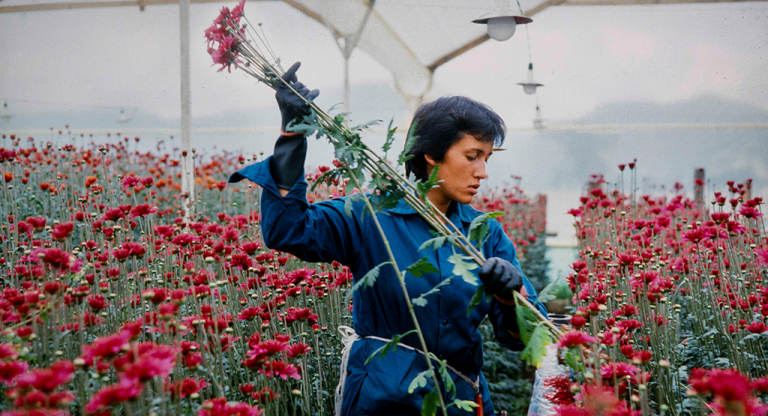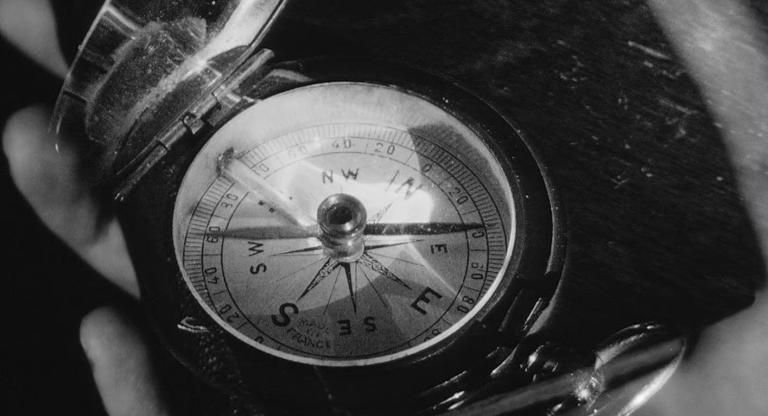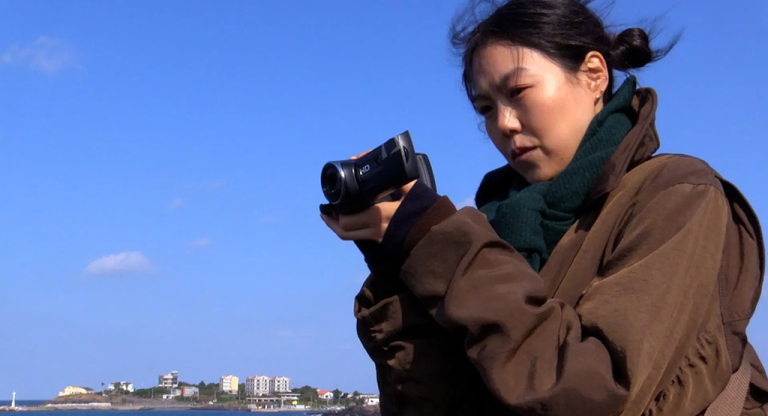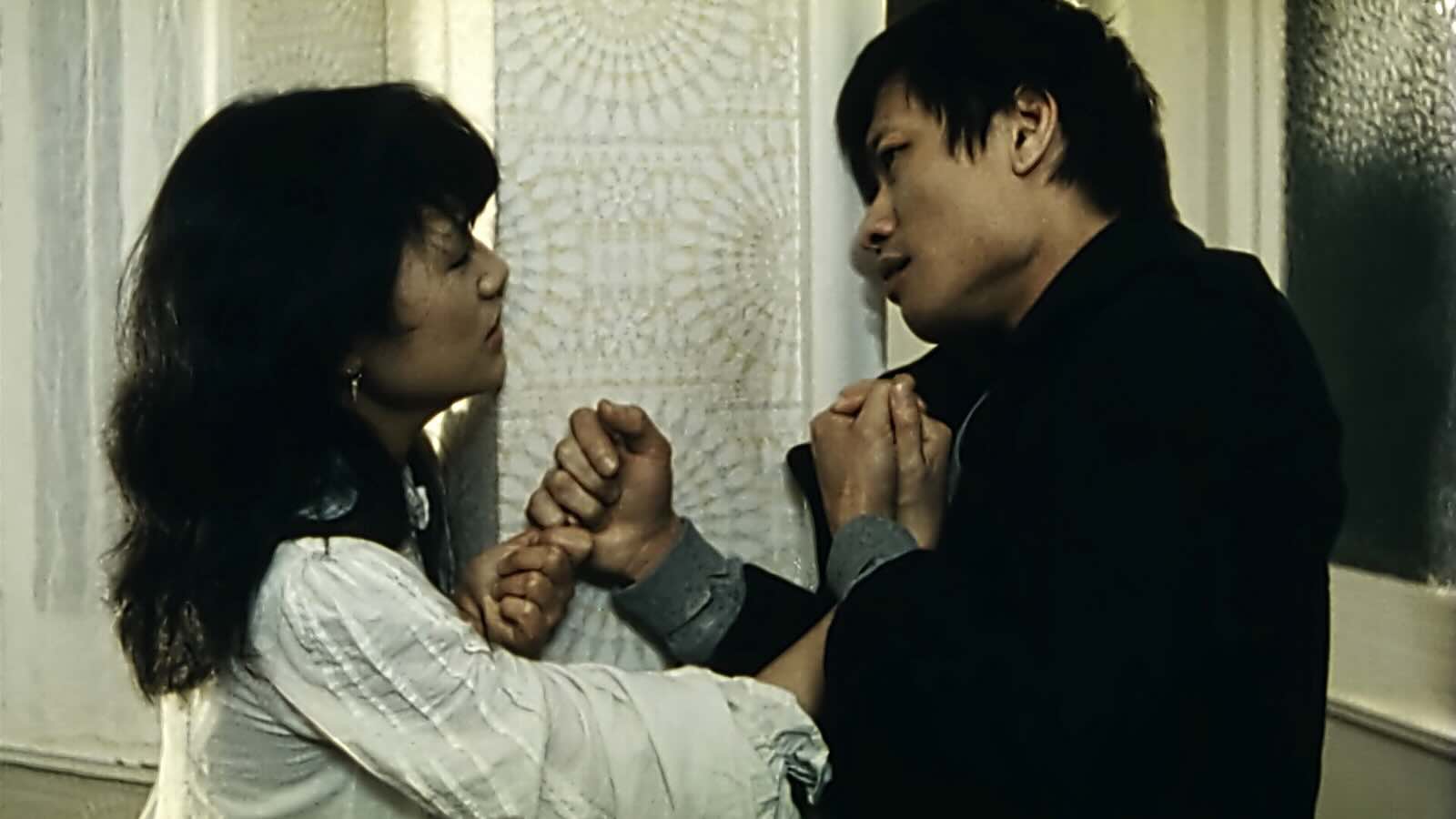
This month Metrograph hosts “In Limbo: The Films of Clara Law,” a long-overdue New York retrospective honoring the Melbourne-based filmmaker whose filmmaking roots trace back to the broadcast television and studio systems of Hong Kong where she spent a large part of her childhood. Her most internationally famous work might be Floating Life (1996), a film about an affluent family of Hongkongers who relocate to Sydney to live near their daughter. Autumn Moon (1992) engages a tender yet nervewracking friendship between a 15 year-old-girl in Hong Kong and a Japanese 20something, while Farewell China (1990) offers a devastating portrayal of the mainland Chinese diasporic experience in 1990s Manhattan.
Beguiling, poetic, archly funny and sometimes devastating, the five films in Metrograph’s series are a welcome primer on Law’s body of work, which has continued at a steady clip as she and her partner Eddie Ling-Ching Fong have embraced a low-budget, DIY-ethos making films such as Drifting Petals (2021) and her latest, Ripples in the Mist (which will premiere at IFFR later this month.)
I spoke to the filmmaker via teleconference. Our conversation has been edited for length and clarity.
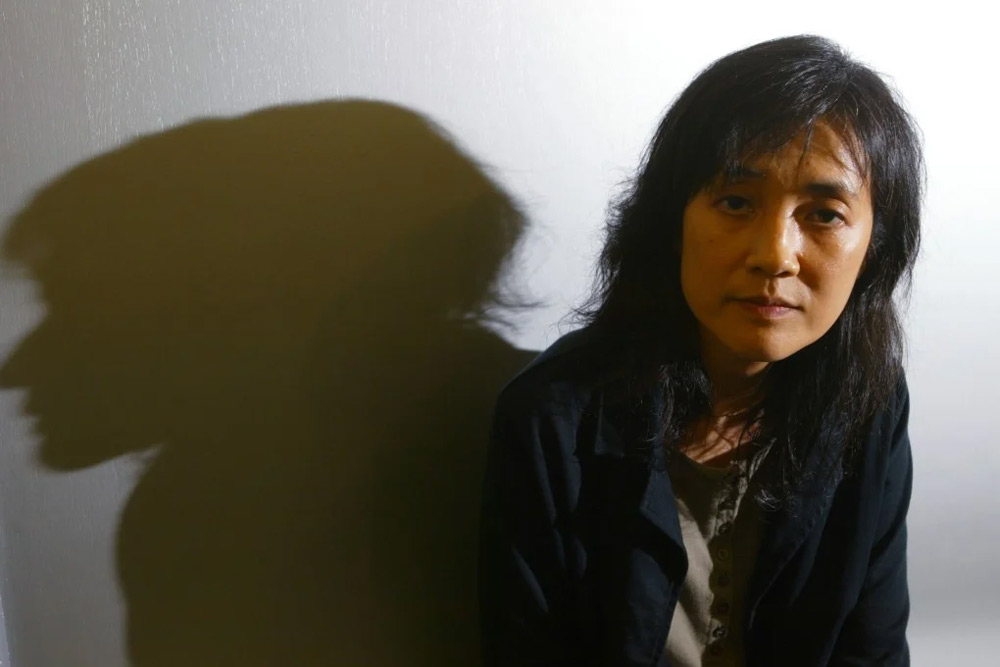
Steve Macfarlane: It’s wild that this is your first New York retrospective yet it’s really just a fraction of your overall body of work. I’d like to ask about the inclusion of They Say the Moon is Fuller Here [1985], which is your student thesis project.
Clara Law: The National Film and Television School [in the United Kingdom] took five foreign students every year, and, I think, 20 British students. I was one of the five. They gave me a scholarship of 10,000 pounds, which you were encouraged to use to make short films—maybe one short in your second year and two or three in your third year. I had already done 45-minute and 30-minute television programs before the scholarship, so I figured I would make a feature film. The school didn’t want me to make a feature, so I had to pull some tricks. I wanted to prove I could learn the technical side of things because of a bad experience with a director of photography who told me off when I was working at Radio Television Hong Kong.
SM: Told you off?
CL: He was saying: “You can’t do this.” “You can’t do that.” “This is not possible with the lighting.” That kind of thing. I wanted to do things with the camera and with lighting; he said they were impossible. I was very frustrated.
SM: You also cast yourself as the lead actress—your first and last onscreen credit.
CL: I wrote They Say the Moon is Fuller Here as an intended feature-length film, but the school did not want us to make features. In order to convince them I recited my script so quickly I managed to convince them it would be a 40-minute film. My mates were all chipping in—the DoP, the camera operator. I had cast the male protagonist character, but hadn’t been able to find the female lead. I couldn’t go back to Hong Kong to cast someone and my mates were getting impatient. So I said, “If this is the only way we can do it, let’s do it.” Not a very pleasant process being behind and in front of the camera. I didn’t think I could do it, but I did.
If I may be so bold as to say: I’m a visual person. I’ve got all these things in my head. Before I made films, I wrote poetry and prose, I directed theater in high school. With They Say the Moon is Fuller Here, I just wanted to express myself cinematically and in a feature length film, and that was how it ended up happening. That’s enough for me.
SM: Martin Scorsese has a small role in one of my favorite films, Bertrand Tavernier’s Round Midnight [1986]. If I recall, in the book Scorsese on Scorsese, he describes it as a humiliating process, but also essential for a director to understand what actors go through.
CL: It doesn’t have to be humiliating. But yes, I understand exactly what he means. It’s an important exercise to get on the same page as the actors. I think you need a different kind of personality to be an actor than the one I have. You’ve got to be very clear separating your life onscreen from your real life. It’s a big sacrifice. Personally, I like to be in control.
SM: Your character is torn between a British guy and a Chinese guy who is traumatized from his experiences during the Cultural Revolution. I don’t think she’s actually that torn, but the latter’s trauma pushes her away. I was struck when he said, “My life has never been my own.”
CL: I had a very English upbringing. First in Macau, then in Hong Kong. But, my grandfather taught me Chinese poetry and calligraphy. When I went to Hong Kong to study, it was a very stressful system—the public exams are very competitive. There was constant pressure to study, study, study. At one stage, I was reflecting. Why are we asked to do this to ourselves? Was it because we were living in a colony and discouraged from thinking freely for ourselves? Forced to study, like a lame duck, so you don’t think. Once I got to Hong Kong University, I went for English literature. My test scores meant I had the freedom to choose law or anything that I wanted, so my mom was not too happy about that. It wasn’t seen as secure, in the same way becoming a lawyer or a doctor is.
This is also the time Thatcher and Deng Xiaoping made their agreement about the future of Hong Kong. Back to my scholarship. The Greek student could go back to Greece. The Israelite could go back to Israel. The Swiss could go back to Switzerland. But, if I was going back to Hong Kong, it wouldn’t be the same. That made me feel like I was living in a vacuum. Do I even know the real China? Allegedly, I knew Britain better, but I didn’t actually feel like I did. All this made me very anxious. I think I was projecting my confusion over living between two cultures by writing a character like that. It’s also that thing where maybe you’re having a problem and then you meet someone who is actually in a far worse scenario than you.
SM: Speaking of bad situations, the series includes your New York film Farewell China, starring Maggie Cheung as a woman who migrates to the U.S. without papers. Tony Leung Ka-fai is her husband, who goes looking for her. It’s a stark, beautiful, but quite pessimistic movie. [For those who can’t attend the series, it’s also on the Criterion Channel.]
CL: I had always been focused on these questions about the fate of the Chinese, the destiny of the Chinese, what are we fighting for as Chinese? Is a Hongkonger really Chinese? This was something I really wanted to take a good look at. I had lived in New York, working in cable television in the 1980s after completing my studies at the National Film and Television School in England. I produced a program on Chinese immigrants; I was an anchor, and a producer on a magazine program. I had done a lot of research about the Chinese living in New York, specifically women who ended up having mental health issues. At the same time, there had been a very tragic story about a Chinese student in Japan who committed suicide by jumping in front of a train.
Farewell China came about because my prior film, The Reincarnation of Golden Lotus [1989], for the production company Golden Harvest, had done quite well at the box office, especially in Taiwan. The company wanted me to stay on and make B-movies for them—American movies in fact. I did not want to do that at all. I felt that I had demonstrated I could make a box office film for them, and therefore that they might let me do this idea instead. They weren’t happy about it.
SM: I tend to think of Golden Harvest as producing wuxia films, outrageous slice-of-life comedies, international co-productions… What was their attitude about your pitch?
CL: They said it was too political. I insisted, because I thought they wanted me to stay on as a director. Raymond Chow [the founder of Golden Harvest] even met with me to try and talk me out of it. I insisted and said, “Just let me do it and I’ll do it on a very, very, very low budget.” I was lucky to have a friend, Nancy Tong, who still lives in New York and worked [on the film] as a line producer. We had met as cable television colleagues. She helped me establish all the necessary contacts in New York, find the locations, do all the recce.
SM: “Recce”?
CL: “Recce” is slang for visiting a location, figuring out logistical issues ahead of the shoot.
SM: How was the script affected by the Tiananmen Square protests?
CL: We weren’t yet married, but Eddie Fong Ling-Ching was working on a different film in China during the prep for Farewell China. So, I got a fax machine—brand new at that time. That enabled us to communicate back and forth about script issues leading up to production. As we were at the last stage of the script, Tiananmen happened. We were emotionally very disturbed, and doing recce I saw, in Columbus Park, a student-made facsimile of The Goddess of Democracy statue from Tiananmen Square. It reflected the strong emotion of the time. I told Eddie about it and that’s what gave us the inspiration to give the film the ending you saw. A lucky coincidence.
SM: Your mise-en-scène is impeccable, but within those frames you often go for long takes, which means the full humanity of your actors is on display—it’s like naturalism embedded within formalism.
CL: I don’t do master shots, barely any inserts. I like things a certain way, which I plan out and I choreograph. I do the shotlist beforehand and I draw the map of the floor plan so there’s no wastage of anything. If I don't have to, I do not cut. In those days, I was shooting at a ratio of 1:10, which was considered very low. And, I already had it all edited in my head. I’m quite precise, but I’m not opposed to improvisation. The lack of budget forced me to go into my inner resources, which I always love to do.
SM: Tell me a little about your collaborative relationship with Eddie.
CL: At the time of our meeting, I was a director and he was a scriptwriter. We are soulmates, but we are also very strong-willed people with different perspectives; I consider him more analytical and myself more intuitive… “Go out there. Push, push, push.” We fight, but the beauty of our fight is that when we are fighting like we are going to kill each other it is always in search of a solution. We’re not fighting because of our egos, but because each of us feels this specific thing is the best for the script, for the film. We have to convince each other.
When you’re trying to convince each other, things reveal themselves to you. You see your own shortage, or he sees his own shortage. We begin to see how we can make something work. And, when we first met, we bonded over the films we loved.
SM: Which films?
CL: I loved Mirror [1975]. He loved Stalker [1979]. We both love Tarkovsky. We love Ozu, especially Tokyo Story [1953]. I remember a period of being very depressed in Hong Kong and watching Tokyo Story over and over and over. It’s just such a beautifully made film. It's a poem. We both love having breakfast while listening to classical music—Beethoven, Schubert, Mozart.
SM: You and Eddie moved to Melbourne in 1994. What followed was Floating Life, as well as The Goddess of 1967 [2000], which introduced the world to Rose Byrne. Both were shot by Dione Beebe before he went to Hollywood. Visually, The Goddess of 1967 is crazier than the other films of yours I’ve seen.
CL: That’s because you haven’t seen Temptation of a Monk [1993] [Laughs]. I always seek out visual references for my cinematographers. There was an image in a book of Michael Kenna photographs that really struck me. The movie is about a blind girl who is very traumatized, so I wanted an unreliable, ambiguous visual scheme which I called “corrupt” color feel. And the car being the Goddess, basically one of the characters in the story, means a lot of car scenes, which I hate shooting. The car is witness to all this suffering, tragedy, and crime in this young woman’s life. It’s like a montage, but of sections instead of shots. Dion suggested rear-projection. I told him about my color idea, so he suggested doing a bleach bypass. The color gets washed out a little bit, but it’s not fully monochromatic. He is really an artist and we love working together.
SM: You’re working on a much lower budget these days, but it doesn’t seem to phase you. I’ve met directors who basically retired because they want a scale of budget that’s not possible anymore, as well as filmmakers who are just starting out and their whole idea of cinema is Hollywood—which is to say, ancient history.
CL: With a big budget, you can’t lose money for your investors. You have to think about them. If you can do it for a low budget, you buy yourself the freedom to compromise less. If you’re going to lose, it’s not that much. Hopefully you can see a little profit. Technically, this is always the way we have worked. I’ve always admired Bergman—having his own studio, his own editing room. We can do that today, but it’s DIY. And, we’ve established a film club here, to help the Chinese community in Melbourne make their own films and do their own thing.
SM: Tell me more about this. It sounds like a film school.
CL: It’s for people from Hong Kong and China who are in Melbourne, who want to learn the artistic side of filmmaking. We have two departments: drama and documentary. It started when we were recruiting film school graduates to help us with Ripples in the Mist, shot partially in Taiwan and partially here. They had such a good experience they wanted to keep working with us.
We tell them, “This is not for the industry. Forget about going to film festivals. Forget about all of that. Do it because you want to do it.” Because art is a poor thing, we don’t do it for the money. I’m very inspired by the Chinese painter Huáng Bīnhóng, a big influence on Ripples in the Mist. It was very hard to convince him to sell his paintings in those days in China; art was not for sale, but for self cultivation. Today, he’s regarded as one of the biggest, most canonical Chinese painters. I’m influenced by the Chinese philosophy Confucius taught, which was all about ren—humanism, compassion, kindness, and that all of these come from within yourself. All human beings have these things and you have to self-cultivate. When you do, you find inner strength. You hear yourself and there comes the clarity of thoughts. That is the space for art.
“In Limbo: The Films of Clara Law” screens January 17-25 at Metrograph.