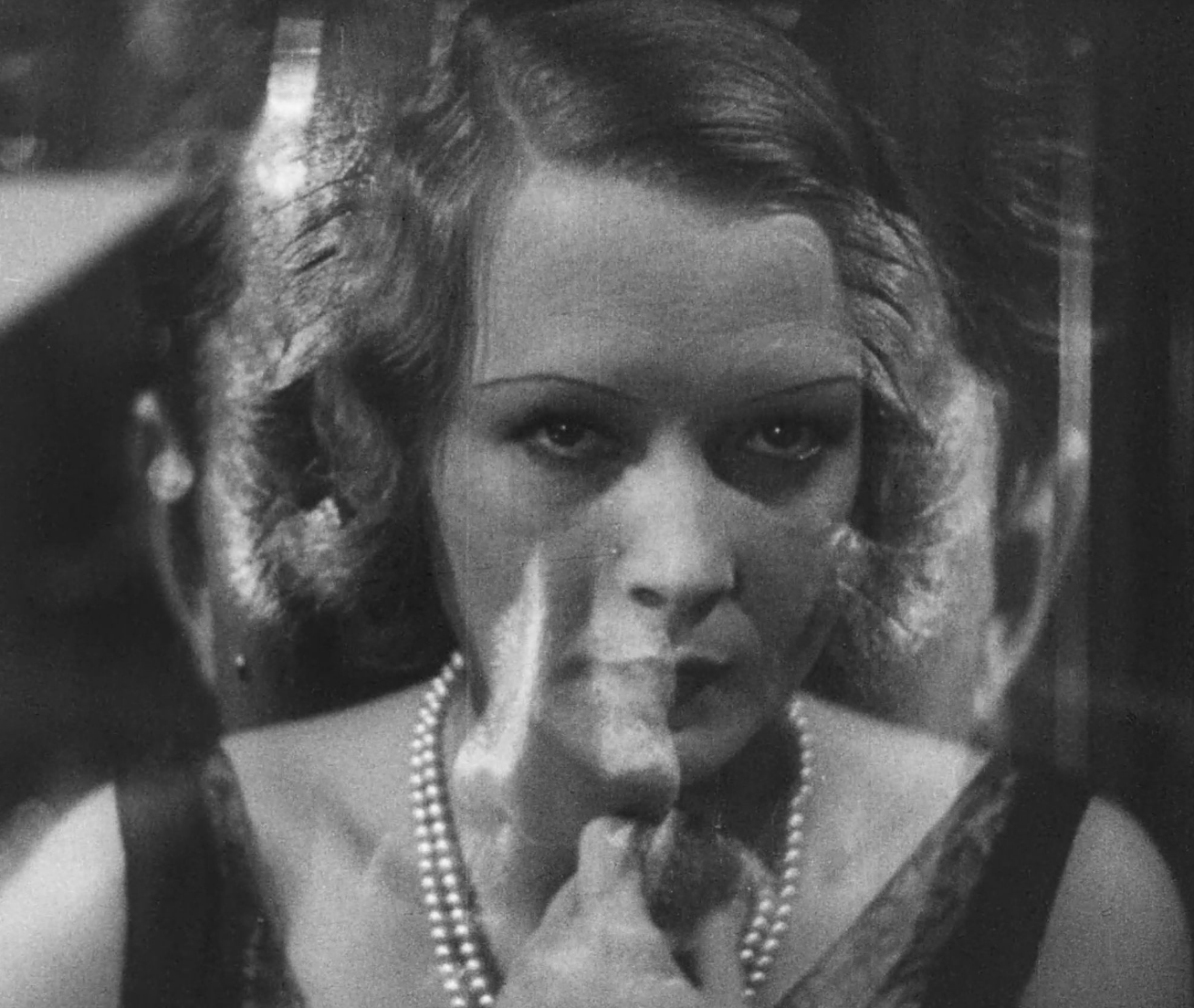
Life Begins Tomorrow (1933) is unique among the cinema of the late Weimar Republic. Its use of location shooting, its way of moving the camera, even its sense of morality, brings to mind the lyricism of the French poetic realists of the time, such as Jean Vigo, Julien Duvivier, and Marcel Carné, rather than the angst-driven chiaroscuro that defined much of German classical cinema. Its director, Werner Hochbaum, is himself an unusual case. His entry into filmmaking came through his association with Germany’s Social Democratic Party, for whom he directed a short, Two Worlds (1929), ahead of the 1930 German Reichstag election. Hochbaum’s first feature, Brothers (1929), was a fictionalized account of the 1896 dockworkers strike in Hamburg, an example of what was then known as the German proletarian film. Its approach borrows flagrantly from Sergei Eisenstein’s Battleship Potemkin (1925), which would influence many German filmmakers of that generation. But Brothers also points forward. It leans more into documentary, with a cast made up entirely of non-professional actors, at times suggesting a kind of proto-neorealism.
For Hochbaum, realism served more as a means of evading expressionism, the dominance of which was already beginning to wane in Germany at the end of the silent era. By the time of Life Begins Tomorrow, he adopted a more emotional technique. The plot of the film is simple. A woman receives a message that her husband is to be released from prison; she plans to meet him the morning of his release. Circumstances intervene to prevent their first meeting, and the rest of the film is dedicated to describing the variety of social prejudices that stand in the way of their ultimate reconciliation.
The originality of this film has less to do with its subject than its style. Hochbaum assimilates the best energies of the European avant-garde into his film: rhythmic cutting, foggy superimposition, free-form camerawork. Particularly notable is its innovative use of first-person tracking shots as the main character recollects on the events that led to his imprisonment, reminiscent of contemporaneous experiments in films such as Rouben Mamoulian’s Dr. Jekyll and Mr. Hyde (1931) in the United States. Life Begins Tomorrow is a kind of free exercise that would soon disappear from the German screen—a last gasp of experimentation before the rigid homogeny of German cinema under the Nazis.
Life Begins Tomorrow screens this afternoon, January 14, and on January 19, at the Museum of Modern Art as part of the series “To Save and Project: The 22nd MoMA International Festival of Film Preservation.” It will be preceded by Guido Seeber and Julius Pinschewer’s KIPHO-FILM.