Contemporary personal technologies have an odd relationship to human touch: as cell phones and computers train themselves on the subtle topography of users’ faces and fingerprints to replace the heft of buttons, they condition us toward forms of contact that are at once highly personal and immaterial by nature. These devices sell the premise that optimizing function means making touch obsolete. Gone are the well-documented days when making a phone call entailed asking a fleet of women in low heels sat at rows of desks, or sometimes gliding across the office on roller skates, to patch you through.
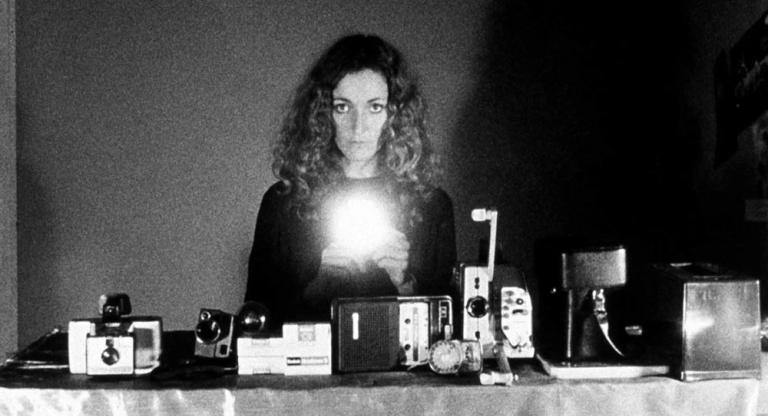
The fact is that no commodities are “touchless.” Rather, as I unlock my iPhone with a blink before tapping it on the subway turnstile and boarding my train, my transit is made possible by thousands of hands who have ideated, tested, mined, manufactured, and delivered this object into mine and continue to work around the clock to maintain its functioning. It is within this matrix of outsourced labor—and amid the historical shift from physical computing, paper filing systems, and clunky machinery to black-box software, data centers, and cloud computing—that the artist and filmmaker Frank Heath emerges. He is an investigator into, historian of, and prankster intervening on governmental and technological bureaucracy.
This month at Spectacle, the series “Wrong Number: Films by Frank Heath” showcases a dynamic selection of his work spanning from 2012 to 2026. Apportioning 18 films across four screening programs, Wrong Number samples the artist’s moving image experiments, from the semi-improvised prank phone calls referenced in the series’s title, to documentaries, and music videos. A faint static buzz intersperses Heath’s artworks—a physical artifact of their media substrate, the telephone. In Heath’s work, that slightly muffled quality which might haunt an audio engineer on a commercial film set plays a pivotal role. It situates his audience in the space of the call while demonstrating how technological systems like phone trees function through aesthetics as much as they do infrastructure. We who navigate these structures are much more familiar with their inner-workings than anyone may realize, if simultaneously in the dark about the facticity of their public histories. Heath’s artworks make this clear.
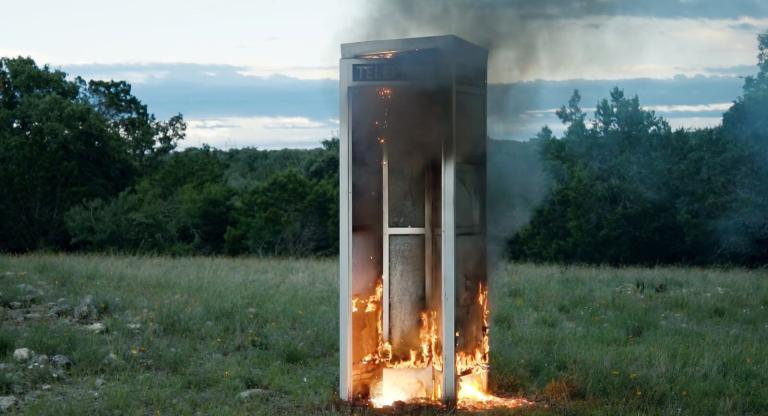
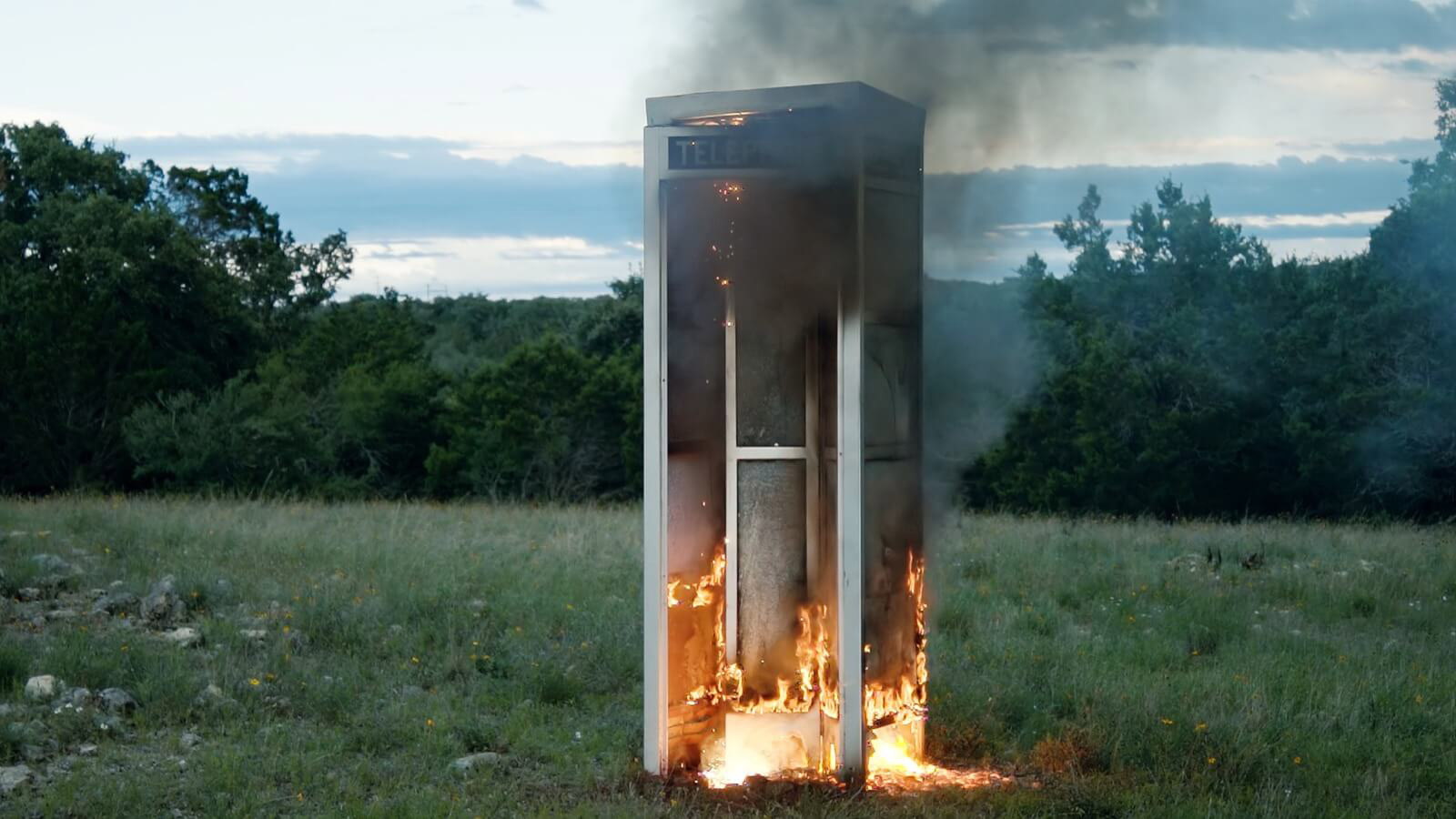
If the aim of tele-bureaucracy is to anticipate customer queries, Heath’s prank calls test this system’s premonitory powers by manufacturing scenarios that stretch the conventions of the customer service interaction. Set in a phone booth across the street from the windowless AT&T Long Lines Building in Lower Manhattan, The Hollow Coin (2016) centers a caller asking the impossible from his pay phone’s service representative: to retrieve the nickel he used to pay for the call, inside which lays hidden a microSD with invaluable footage. War Pigeon (2017) records a man who is concerned he’s been followed by a suspicious pigeon since throwing a Shamrock Shake into his bank’s front window. His interlocutor, empathetic to his concerns about surveillance and retribution from the company, shares that he feels “like a little peon on a big boat that doesn’t have any say in anything.”
In Last Will and Testament (2021), Heath’s caller approaches an estate lawyer about the feasibility of performing 13 discreet categories of funerary rights using his own remains. Wanting to be buried in the Suez Canal, he nods to “the recent noise” about a container ship, the Ever Given, getting stuck in the passageway in March of that year. When used to describe an important global event, the colloquial reference to noise as indistinct hubbub reinforces the weight of this sonic quality as it structures Heath’s videos—most involve some level of buzz, clack, or melodic dissonance.
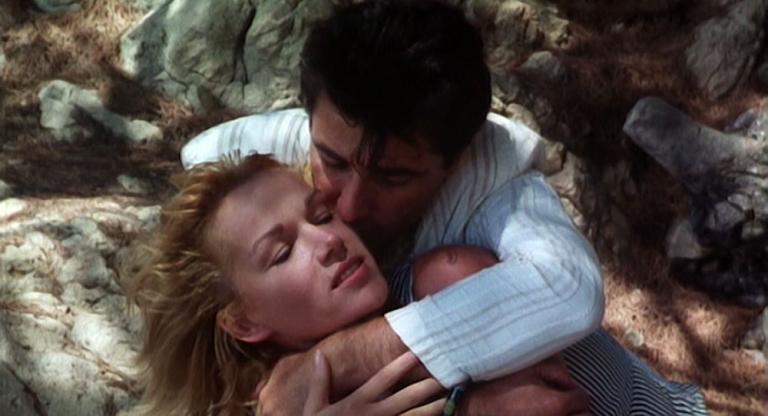
Despite taking up the researched-based narrative structure and elegant cinematic language of documentary, Heath’s works are often absent from their human subjects. Certain pieces employ talking head-style interviews from a handful of primary sources; There is Nothing Underneath the Virginia West Wing (2018) and Path of Totality (2018) use this format as they delve into the Project Greek Island Bunker, an elaborate underground facility designed to accommodate members of the U.S. congress in the case of a nuclear attack, and the 2017 total solar eclipse in Heath’s hometown of Joseph, MO, respectively. Heath forgoes the trope that documentary “give voice to the voiceless,” so to speak, in favor of presenting each of his interlocutors’ perspectives as a distinct form of expertise. Heath’s On the Beach series (2014-18), originally commissioned by Triple Canopy, finds the artist merging documentary with speculative fiction as he depicts two filmmakers attempting to make a portrait of modern civilization before humanity’s collapse.
Heath’s music videos set his footage to vibrant scores. Centralia (2023) extends for the entire length of the LP Ancient Songs of Burlap Heroes by Columbia Icefield, a group led by trumpet player and composer Nate Wooley. As the album pulses forward, Heath documents the town of Centralia, Pennsylvania, in the wake of a subterranean coal fire burning since the early 1960s. Protect Your Home (2021) montages scraps from American visual culture on the theme of home security and damage prevention. Minimalism (2024), also highlighting music by Smith, appropriates televised advertisements, movie clips, and other popular media to survey the miniaturization of technology over time. To this end, Heath’s works offer a means of wayfinding postindustrial urban landscapes.
Heath’s cinematic eye always seems to find fire, from The Hollow Coin’s lonely blazing phone booth, to Protect Your Home’s dueling references to destructive and friendly fire (untamed housefires and the sageburning rituals some promise could stave them off), to the premonitory renderings of Earthly apocalypse appropriated from government agency databases in Earendel (2024). I read these images as evidence of capitalism’s obsession with destruction and as spells cast to conjure smoke. The fumes these flames emit, presumably tainted by the chemicals in industrial paints, pesticides, and plastics, induce in me a familiar sense of paranoia. I often feel this way while navigating the city on foot. Despite holding my breath I am neither immune to these invisible particles nor the information they come to represent in Heath’s works: the deluge of classified contracts, unmarked buildings, shadow figures, and black-box technologies that surround and ultimately define the American national project.
The human points of contact making this system function day-to-day—customer service representatives, archivists, janitors, technicians, and the like—are not immune to this diffuse information either, as much as bureaucracy itself might like us to perceive them as neutral extensions of its beige gloss. Heath’s interlocutors reveal themselves to be hobbyists, conspirators, and conspiracists. People bored at work, wielding a powerful laymen’s history, and involved in the supernatural practice of belief.
Wrong Number: Films by Frank Heath runs through March 27 at Spectacle. Heath will be in attendance for a series of Q&As, including two with Screen Slate editor-in-chief Jon Dieringer on March 25.
Note that Screen Slate members also have free access to a program of Heath's work through our "Stream Slate" archives
See Also