Collier Schorr is one of the most influential and prolific photographers working today, moving fluidly between fine art and fashion. Schorr has lent her singular vision to the covers of Interview, relaunching the magazine in 2018 with a luminous portrait of Agnès Varda; Rolling Stone, igniting right-wing outrage with a photo series featuring a jockstrap-clad Kristen Stewart; and the cult Y2K lesbian magazine KUTT, whose brief three-issue run left an enduring mark on publishing; among others. Her portraits of adolescents, soldiers, athletes, and communities have rearticulated the complex psychosemantics of gender and queerness. Across a four-decade career spanning photography, drawing, and criticism, she has explored deviance, kinship, and personal history in work exhibited and published internationally.
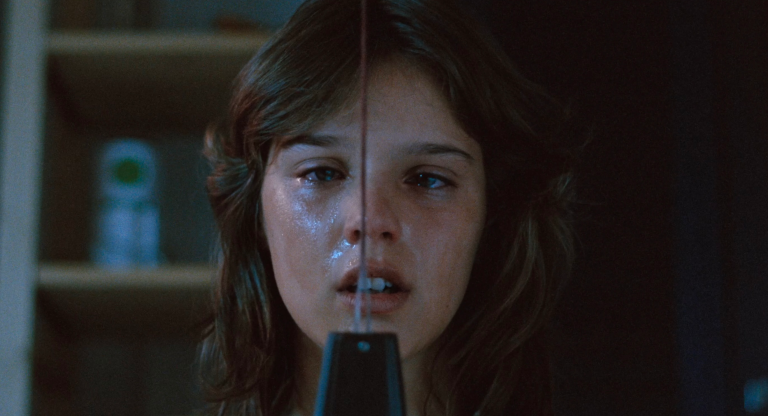
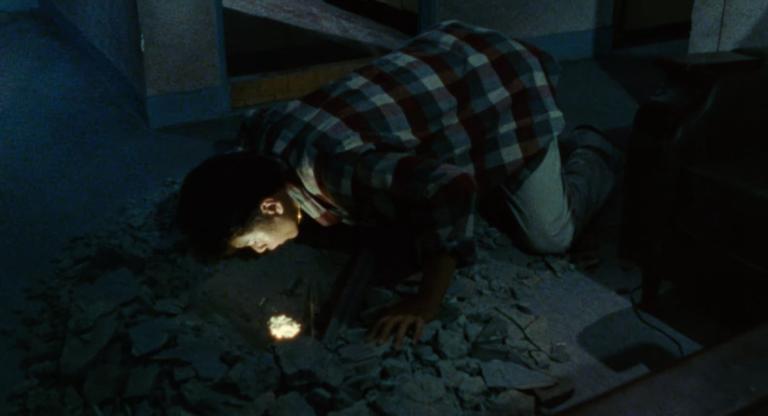
Developed over the last seven years, Schorr's latest project reimagines Chantal Akerman's daring and intimate first feature, Je tu il elle (1974), as a full-length dance work for video. Writing a Letter: Akerman Ballet, Act 1, a book of performance photographs conceived as a movement script, presents a sequenced selection from the ballet’s first act.
Casting herself as both dancer and surrogate for Akerman's protagonist, Schorr alchemizes the film's gestures into a rigorous and provocative physical vocabulary. Drawing on the experimental performance milieu Akerman encountered around New York's Anthology Film Archives and the Judson Dance Theater in the early 1970s, Schorr preserves Je tu il elle’s spare visual architecture while transforming acts of letter-writing, sugar-eating, and waiting into embodied rituals of repetition and endurance, creating a choreographic intensive exposing the compulsions and catharsis beneath heartache, solitude, and desire. Akerman Ballet is both adaptation and correspondence: meticulous, explosive, and alive.
Ahead of the book’s release, I spoke to Schorr about the process of adapting Akerman, imagining a lesbian gaze, rhythms of emotion, and more. Our conversation has been edited for clarity and length.
Andrea Torres: I wanted to begin by talking about your entrance into dance and movement. You've worked for decades across photography, drawing, and criticism. Do you see Akerman Ballet as an extension of your practice, or did it feel like flirting with something new?
Collier Schorr: When the idea came to me, it felt so fully defined. But how to accomplish such a thing was—I didn't even know who to ask. I just asked someone to teach me the basics of movement. I wanted, in general, to be in my work, and I wanted to collaborate with people. I guess the jumping-off point was wanting to understand what the physical experience of photography could be and the appearance of self within the work.
I think the drive was my desire to connect with artists who had worked with themselves. Barbara Hammer, Ana Mendieta, Carolee Schneemann, Adrian Piper, Yvonne Rainer. There are just so many. Cindy Sherman, obviously. Martha Wilson. But, for the most part, I felt like they all had this physical stature that I never saw myself having. It was almost like I condemned myself to a life of making other people appear and controlling that. There's so much direction and a clear sense of speech gets disguised.
AT: There seems to have been a certain comfort in working from behind the camera, in directing others. Did stepping into the frame require you to rethink your relationship to your own work?
CS: It took practice. I was educated in the early '80s, and that was the exact time when they were teaching not to represent, especially because there wasn't a real speech for lesbian representation in 1982 or 1983. Lesbians may have been making work—obviously they were—but that wasn't the work we were looking at as much. So, what can you make? The feminism of the time felt so connected to heterosexuality. There was a real pause for me in what one could do with a picture.
That's why I started by shooting boys. I could project onto them and I was curious about them. I did not care how they felt because they didn't seem to care either. I realize now there was such a bluntness to emotional exchanges then. It was really in the mid-'90s when I started shooting women. It was sort of terrifying because I didn't know how much of the project was about me looking, how much of the project was about a “lesbian gaze,” and how much of that gaze was permissible.
AT: In the book’s introduction, Peggy Phelan writes about the difficulty of “imagining a lesbian gaze,” arguing that to look at women's bodies outside the conventions of pornography, marketing, and mainstream cinema requires unlearning a long visual history. I'm interested in that tension because I sometimes find the language of fixed “gazes” a little reductive since desire and looking can be so fluid and often contradictory.
CS: It's fucked up. Lesbian artists can easily be a direct-to-consumer delivery system of sex without entirely understanding that in the moment. How I look and my exchange can be easily erased by a viewer who doesn't know and doesn’t care. That's what’s so brilliant about Teenage Sex and Death at Camp Miasma [2026] by Jane Schoenbrun. A dialog accompanies images which constantly claim the desire as female.
AT: Yes, I think it can be troubling, but I do appreciate the broader conversation around authorship and relationship to representation. Do you think lesbian experience is depicted differently when it's shaped by lesbian artists? Are lesbians better depicted by lesbians?
CS: I think men are decidedly not good at expressing lesbian desire. I think some of them, some of these fashion photographers, looked at what I was doing and slowly started to adopt some of these things, which could be very simple: a woman in a jacket looking into the camera. I mean, if you go back to the mid-'90s, women didn't look into the camera in quite that way. In a picture by me, a woman is almost always looking into the camera. That’s because I don't want to be invisible, so I need her to look at me. If she isn't looking at me, there's something in the picture that says she is unaware. I really, in general, detest the image of a woman being observed unbeknownst to her.
AT: It's voyeuristic?
CS: Yeah, and that, to me, is the thing I've carried with me from the School of Visual Arts in the ‘80s onward, even if I broke every other rule. I think the reason why Chantal’s work, and Je tu il elle, was so inviting to me was that it was like a self-gaze: how a filmmaker could look at themselves, how an artist could look at themselves. It's very documentary-like, but also very unconscious because she's the performer. She’s aware of being scrutinized and she has some kind of desire to be scrutinized. You don't really get the sense that there's a desirous exchange between her and the cinematographer, because I think she's so clearly directing how the camera is operating in the room. One of the things that was appealing to me about it is that she’s a regular body. And, she's a regular body who’s there because she's clumsy.
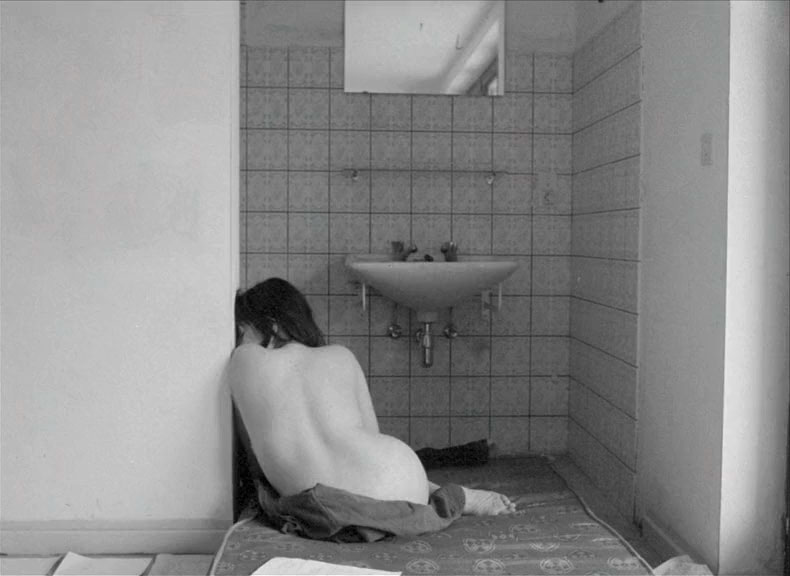
AT: The introduction mentions that Akerman cast herself in Je tu il elle, in part, because “she knew no actress could be as awkward as she was.” Did that resonate with you?
CS: Yeah, that was all the permission I needed to do something that I wasn't trained to do because only I could do it. I could get what I wanted because I could direct physically. That's what Chantal is doing. She's directing what you see through her physicality.
AT: In addition to the collected photographs in the book, I understand you've made a short video work out of this project that will screen at Metrograph later this week, and that you've shown photographs from the book in gallery settings. At what point did you decide the ballet needed to be documented and how did you arrive at the forms in which that documentation was taken?
CS: I showed some of the work at ICP [International Center of Photography] in New York, KW Institute for Contemporary Art in Berlin, and a 50-minute two-screen projection in Antwerp at FOMU [Photo Museum Antwerp]. The funny thing about video and dancing is that a lot of dancers—maybe now it's changing, but even when I started—didn't have a sense of needing to capture anything that wasn't a performance. You got it by doing it. You experienced it. It already happened.
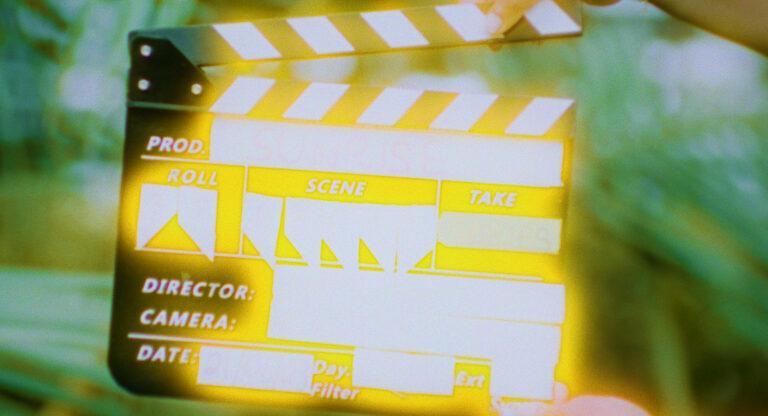
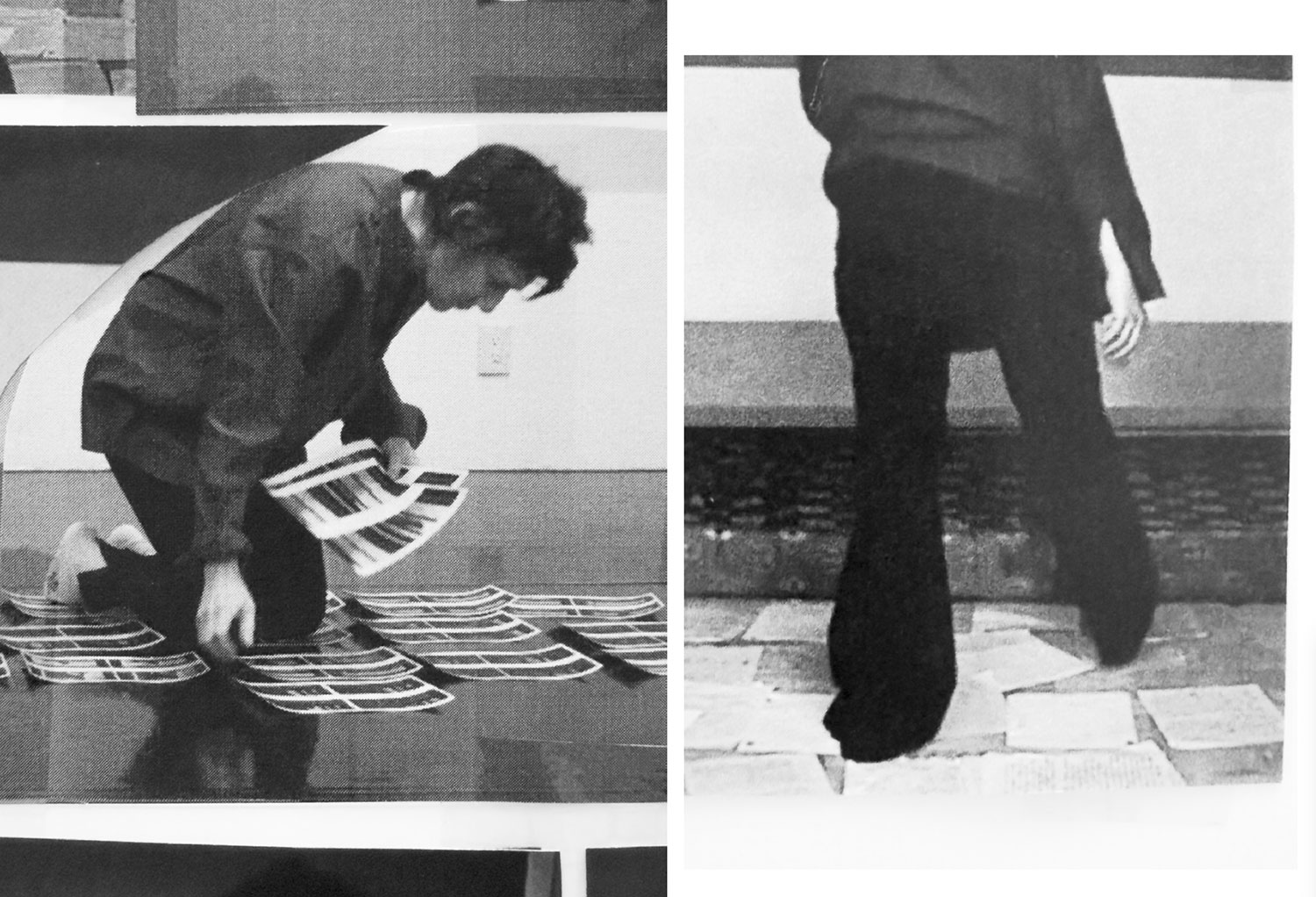
I knew going in that I didn't want to bring anyone else into the room because I'd be incredibly jealous that someone else would be operating a camera. It was meant to be very static: whatever the light was, whatever the quality was. What I didn't consider were the parts of my body disappearing. I only had cameras on tripods and so there are moments where I'm cropped out because I'm out of frame. To me, that's kind of why it's a performance work, but it's also a video piece, and it's a book. It was always meant to be a book. It was always meant to be a score.
What I really liked was that the frame of the camera was constantly visible because of those crops. Technically, it would be very difficult to show the film as a performance of me without the top of my body. The stage can't crop you, but the camera can. The serendipity of that—the idea that movement is also transitory and ephemeral—was really a kind of pleasure.
AT: You seem quite committed to the decision not to have a cinematographer. Was that primarily an aesthetic choice? Were you thinking about echoing the formal qualities of the film and its static visual language?
CS: It’s because I thought that with dance videos or dance films, photography and filming are already a dance. The idea that there would be another body dancing besides my own and the dancer didn't feel correct. It would have been a completely different kind of project if I did that. There would be a budget. There would be someone hired. None of it made sense because the project was so private. Chantal Akerman’s films look so beautiful, so the only way to adapt her work is to jettison film aesthetics.
AT: The performers each bring such distinct disciplines and physical vocabularies to the ballet. I love Young Boy Dancing Group. Maria Metsalu has such a remarkably feral yet composed stage presence. How did you think about assembling this group of collaborators, and how did the work evolve from those earliest conversations and rehearsals into the form that appears in the book?
CS: I started as a writer and I knew I wanted to be outside of the kind of controlled aesthetics of art bookmaking. I was really drawn to The Song Cave. The first book I got from them was Chantal’s memoir, My Mother Laughs, and I remember talking to Ben Estes and just being so drawn to his books, because they're so different from photo books. I think of it as a chapbook of dance and it's basically constructed as three or four dances from the first act of the film. I thought of the first act as Chantal writing a letter to the ex-lover over and over again, kind of getting high with sugar, taking off her clothes, standing in front of a window, moving furniture. In my mind, it was kind of like creating a studio to make work. There are two people who dance with me: Sophia Parker and Maria Metsalu. And the way I found the dancers was completely—I'm going to use the word, “naturalistic.”
The first dancer I met was Sophia Parker. I was finishing my dance lesson at CPR in Williamsburg and Sophia was coming in to work with Sidra Bell. I was packing up my stuff and I looked at her. I just thought, there's something about this person. I think it was her androgyny, queerness, age, body type, and the clothes she was wearing. So, I challenged her to a dance-off. She looked at me and just kind of laughed because it was so absurd. Then I said, “I'm just joking. I'm working on this project. I'd love to dance with you and talk about it with you.”
That’s the beautiful thing about dancers, if they catch a good vibe... She said sure. There was nothing beyond that until we started dancing and our chemistry was so strong.
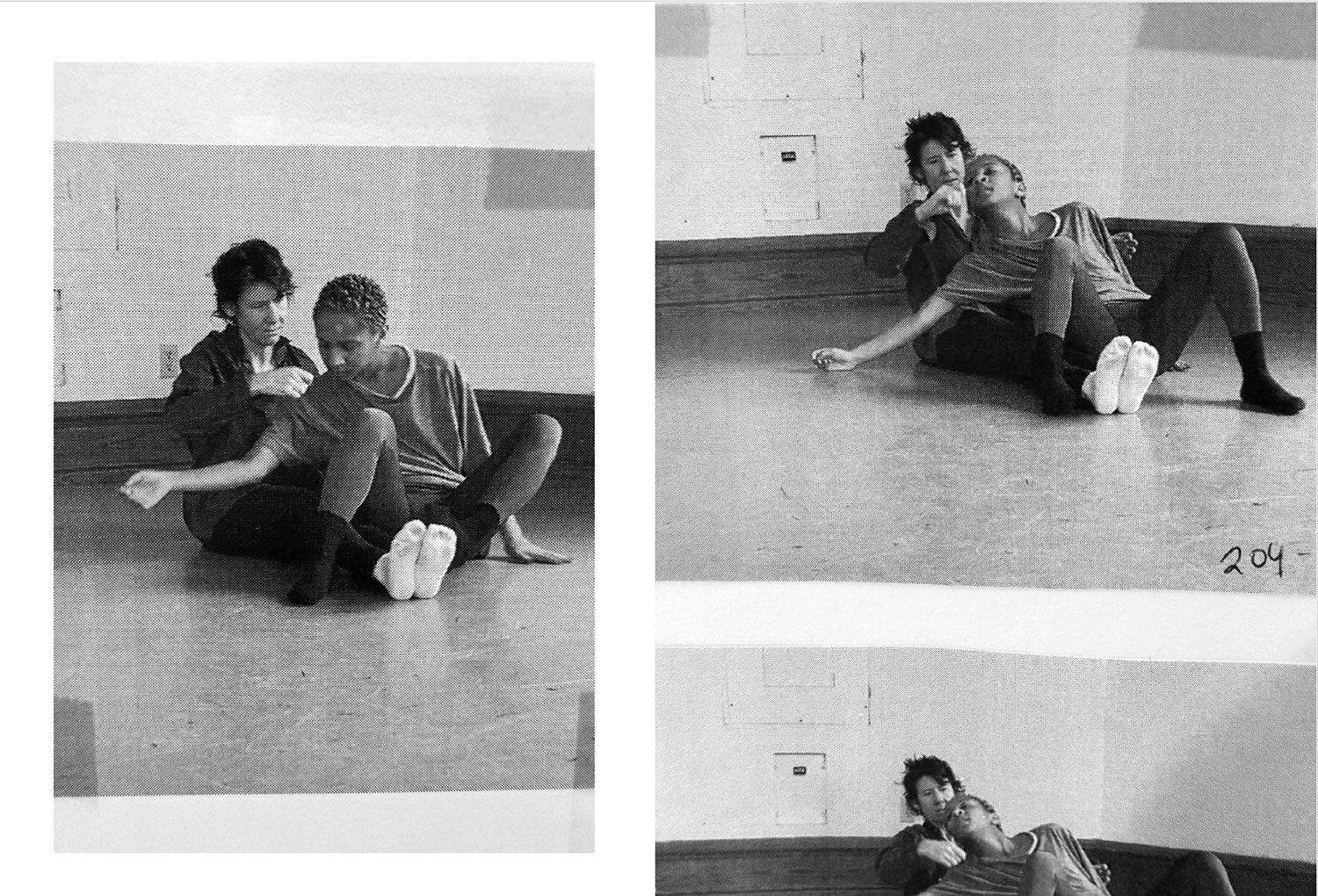
AT: I'm also thinking about your decision to give shape to things like the letter and the sugar. How did you arrive at those figures, and what did they make possible in depicting the solitude at the center of the first act of the film?
CS: The basic strategy was that I printed out stills of all the movements from the film, pasted them into a book, and brought that to rehearsal. I would show Sophia and I would explain, “Okay, so she's moving a mattress to clear her room. It's kind of a performance. So let's do that. You'll be the mattress, or I'll be the mattress.” As we went on, it developed into, “She's eating the sugar as she's writing this letter. So let's dance that. Let's feed each other the sugar.” Let's play with that metaphor and that kind of care, because Chantal is so completely alone in that room. For me, the letter becomes a letter to the self. It becomes a mirror. It's really not about the beloved. It's really about oneself. She's writing to herself. It was an amazing relationship, because we danced through our own relationships, positive and negative. There was a lot of heartache danced in those rooms.
Then I saw Maria in Young Boy Dancing Group at Performance Space during a rehearsal. I was, of course, blown away and just kind of devastated by what those bodies go through in a sort of abyss of pleasure. That's the only way I can think about it: an abyss of pleasure. There was one particular scene where Maria was dancing and I knew I really wanted to dance with her. It was a terrifying thought, too. It's such an intimate project to ask people to be involved with. In Young Boy Dancing Group, they have physical intimacy all the time, so there are no physical boundaries and no shame at all. That was a kind of permission for me.
I asked Maria, and like all great dancers, especially art dancers, she said yes. I wasn't quite sure what exactly we were going to do. Then I realized she has a really interesting role in the piece because she's dancing the letter scene and Maria becomes the ex-lover. She sort of animates the letter. She becomes the person who's written about, and she is the writer. It gets so crazy because, at one point, she's eating the pictures. I was thinking so much about confession and Catholicism—eating the host and eating the body—and the kind of ownership of desire that happens when you send a letter, right? The other person has it, consumes it.
AT: And also the control of that power play that you see in the film's third act, where there's a resistance and an anger, and then a kind of release and surrender, a "come, come." I think that's really beautiful.
CS: I feel like that's really revealed in her becoming the ex-lover and playing with those photographs and eating those photographs. At some point I decided that with the ex-lover it was important to have many people play that role so that the obsessive focus stays on self—it's still always Chantal's imagination, fantasy, and obsession. It’s not really about the ex-lover.
AT: Do you see this project in conversation with, or as a tribute to, Akerman's life and work?
CS: It’s a kind of conversation. To step—the dance has steps—into her body, feels comfortable and yet disturbed or haunted. It’s a particular thing to adapt one work into another. My dance may be performed by other companies and they may make different decisions. It’s not a tribute, it’s a romance.
Writing a Letter: Akerman Ballet, Act 1 is available now via The Song Cave. Je tu il elle screens this Sunday, July 19, at Metrograph, preceded by Schorr’s short film Scene 25, Heads to Camera Kissing, with an introduction by Schorr & Matt Wolf.