In my book you’re either with Withnail and I (1987) or, sorry about this, a target for quotations thereof, to begin with [affects aggrandized English accent]: “How DARE you?” Truly, until you’ve appreciated Bruce Robinson’s autofictional chronicle of two London wastrels seeing off the swinging ‘60s one damp weekend at a rich uncle’s country house, have you even lived?
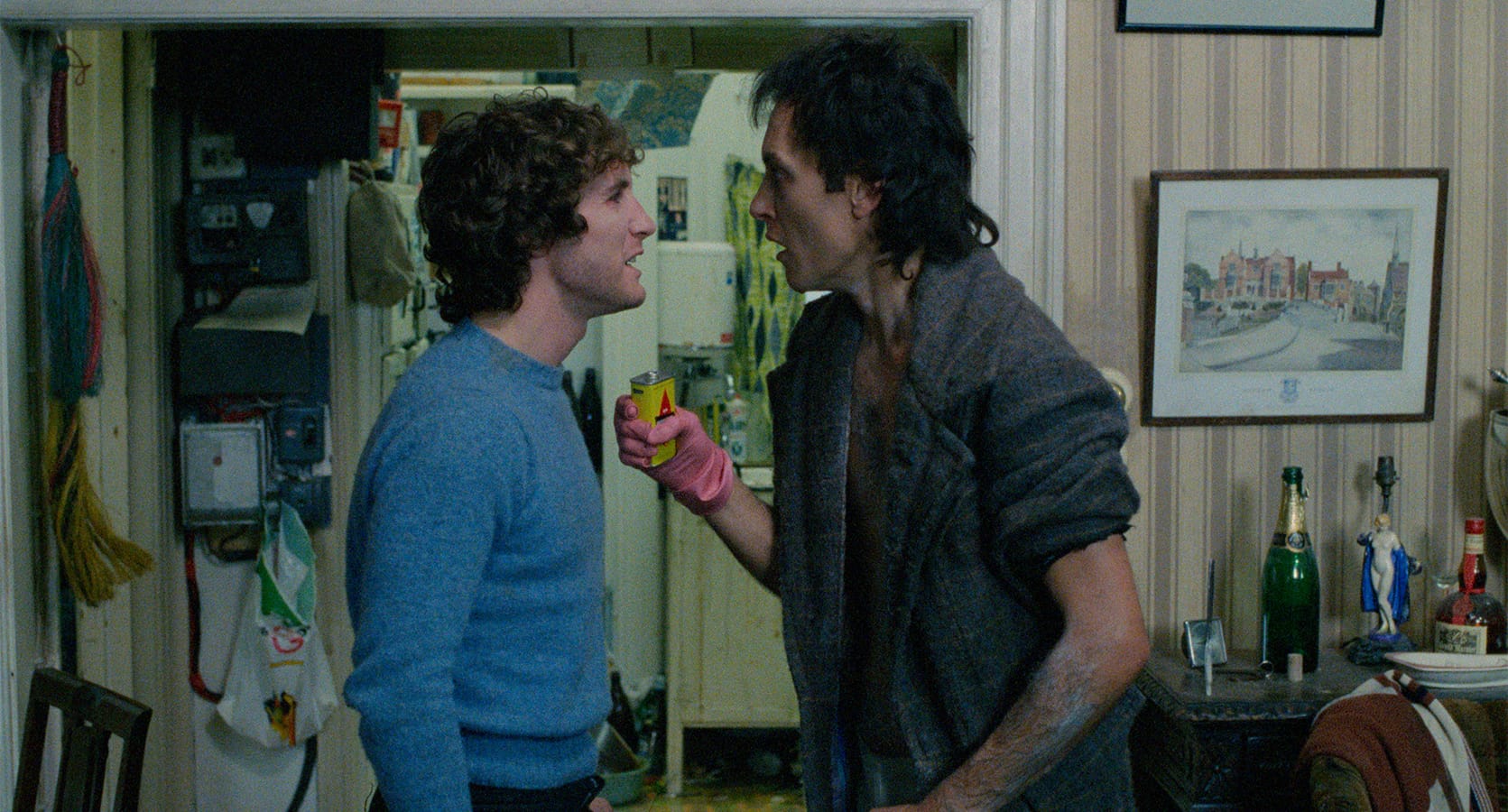
Out-of-work actors on a dreary funny bender is merely the film’s hook; its tone is the acquired taste—whether like “the finest wines available to humanity,” as the eponymous antihero demands in a stifling tea room, or like the lighter fluid he guzzles as last resort in his squalid flat, will of course depend on viewer tolerance. As immortalized in a glorious breakthrough by Richard E. Grant, Withnail is a familiar yet paradoxical creature—that performer whose flair for the dramatic somehow correlates directly to his unemployability. Pretentious and flamboyantly maudlin, he’s a riveting wreck. Paul McGann plays his deputy in debauchery, an abettor, witness, and first-person narrator whose milder manner makes him more likely to escape the pair’s adventures alive, however bittersweetly. It’s the visual surprise of the “I” character having gotten a respectable haircut that finally signals this film’s melancholy denouement.
Until then, Robinson’s plot as such hinges on arrangements made between the duo and Withnail’s moneyed Uncle Monty, a figure both comic and tragic, sublimely irreducible as performed by Richard Griffiths, as well as with their dealer-philosopher Danny (Ralph Brown), who transcends his comic-relief archetype. But the film’s main engine is eloquence—of phrasing, pace, characterization, and empathy, particularly regarding despicable behavior. In Robinson’s view, sincere moroseness and try-hard comic stylings deserve equal ridicule. Some percentage of Withnail and I fandom must accordingly be a matter of sheer gratitude, for its renouncement of the clichés so many other films can’t seem to avoid. Here, narrowly between the nauseating treacle of redemptive nostalgia and the dire faux-tragic trudge of addiction misery, remains an honest and exquisite register of sad hilarity.
Aptly enough for a tale of self-absorption, Withnail and I doesn’t bother attempting a definitive panorama of 1969, its specified historical setting, but the era whose end it describes might better be called a certain time in one’s life. Made for a budget small enough that period accuracy could be disclaimed as a low priority, the film seems now equally true to the moment of its 1987 release, a cultural crater of beaten-down Thatchertime. For that matter, with its one-has-to-laugh feeling of being basically doomed, too distracted, and forever unable to slow down, it’s also unnervingly, perhaps perpetually current. If I may, as the man himself says in one queasy epiphany: “I think we’ve been in here too long. I feel unusual.”
Withnail & I screens tonight, Monday, July 13, at the Roxie Theater as part of the Fraenkel Film Festival.