Kohei Ando’s career as a filmmaker, video artist, performer, and publisher has spanned nearly seven decades. From his early theatrical collaborations with Shūji Terayama as a member of the theater group Tenjō Sajiki, to his 36-year tenure in commercial advertising at Tokyo Broadcasting Systems, Ando has frequently been at the leading edge of cultural production. Ando’s experiments with different artistic mediums—such as his early use of the “electro free run” video feedback effect—and cinematic narrative have left a profound mark on the development of film and video as tools for personal and political expression.
This year, Prismatic Ground is awarding Ando with its sixth annual Ground Glass Award for his outstanding contribution in the field of experimental media. I was lucky enough to speak with him on this occasion and was immediately struck by his exuberant energy and radical vision of the world both in and outside of his professional field. Ando’s descriptions of his many creative ventures reflect a broader trend in stories of early video, when equipment was procured by “borrowing” from employers and using workplace equipment after hours with or without permission. These stories resist the notion that the medium is an inherently “democratic” one, but also imbue Ando’s early video work with the energy of the determined troublemaker that animates his oeuvre.
Charlotte Strange: I was thinking that we could talk a little bit about your entrance into working with video, but first could you give an overview of some of the mediums that you've worked with?
Kohei Ando: I started in the theater with Shūji Terayama around 1965. Terayama was one of my classmates from Waseda University and started a theater troupe called Tenjō Sajiki, of which I was a member. We received an invitation to participate in the Frankfurt International Theater Festival. Terayama was asked to provide one piece for the festival, but he wanted to do two. We were struggling with the budget regarding making two theater pieces. There used to be an airline company called Pan Am, so we asked Pan Am to help us with the costs of flights and transporting props. That came with the condition that on Japanese television, we would have to carry, for instance, Pan Am bags. Or, that in any kind of documentation of our activities, we would have to promote Pan Am.
After our trip to Frankfurt, we went to Paris. There were Pan Am offices in Paris and we thought that it would be a good idea to take one of these videos that was supposed to be part of our stipulation to promote Pan Am in front of their offices. At the time, there was an Off-Off-Broadway play called Hair that was also in London, and we were trying to bring London’s Hair to Japan. And, there happened to be a Japanese idol from a rock band called The Tigers. The main singer from that band happened to be [in Paris], so we thought it would be a good opportunity to use that idol to promote Pan Am by shooting a video in front of the Pan Am building with all the staff holding the bags. It happened to be that in Paris, it was very expensive to hire a crew to help with the video shoot, so Shūji Terayama and I bought an old camera together—and of course, back then, it wasn't video, it was film—and he asked me to shoot. This became our start in making films together, but then Terayama wouldn't really bring up any new projects for us to film. So, I got together with my friends and started making films.
CS: Did you see that sort of film work as an extension of what you were doing in theater, or did it feel totally different once you brought the cameras in?
KA: Initially, I think we were interested in doing things as an extension of the theater group. But, to be honest, I was getting tired of our activities in the theater and I wanted to try something new. That’s when I came together with my friends to form a filmmaking group. And, while I continued to work with Terayama, I technically left the theater troupe and we worked together as a group called Family Filmmakers while also publishing a parody magazine called Bikkuri House.
Do you know what Bikkuri House is, or have you heard of it? “Bikkuri” means “surprise.” “Bikkuri House” is actually a reference to a kind of carnival ride, so something that would be at a Disneyland, where you enter into a house and then it seems like the house is rotating. I'm not sure if you have that in America. In the ride itself, the floor is kind of shaking and the walls are turning. It's a trick of the eye to make you feel like the house is tumbling. And, I thought of filmmaking as a kind of trick of the eye. That’s why we called the magazine Bikkuri House.
CS: Was the magazine related to the films you were making, or was it a separate project in print?
KA: It was something that we did in parallel with all of the members of Family Filmmakers. At the time, I was working for a television station called TBS [Tokyo Broadcasting Services], but the rest of the members of the group were unemployed. We worked on the magazine together to get some kind of income through publishing the magazine, because obviously, by doing filmmaking we were just hemorrhaging money.
CS: Does “Family Filmmakers” refer to anything in particular?
KA: [Laughs.] I'm not sure it's a great name—do you know about the incident where Sharon Tate was killed?
CS: It’s fuzzy, but yes.
KA: Sharon Tate was killed by the Manson cult, and the Manson cult was called “The Family.” We thought of ourselves as a kind of cult, so we decided to call ourselves that. But, it's kind of stupid in hindsight. We were really young. [Laughs] And, of course, we didn't support Charles Manson.
Charlotte Strange: In the United States, this would have been around the same time as Videofreex, who John Baldessari famously compared to “Jesus freaks” because of their allegiance to video. I wonder if there was a similar energy with collectives convening around early video culture in those days that reflected what was going on elsewhere in popular culture.
KA: We were very much inspired by the work of Shūji Terayama. Terayama's ethos and philosophy around filmmaking was this idea that what we see as reality is actually fake. That the people inside our realities are performing. He wanted to deconstruct reality, make it into small pieces, and then use those pieces to collage together an imaginary that would reveal the actual truth. I'm not sure if it makes sense to call us a cult of that idea, but we certainly wanted to, in a cultural sense, do something revolutionary.
Because we did theater, the idea was that even regular people living in society were actors. That was the basis of everything. In our true reality, if someone is killed, that's a crime. But if a killing were to take place in the theater, on the stage, then it isn't really a crime. We were questioning whether it makes sense for theater, or the stage, and society, and real life, to be considered as something separate.
CS: That makes so much sense to me in terms of the literary references in your works. I'm curious about how reading and literature also came into making these stories for you, or how it impacted your general performance ethos?
KA: I was trying to visualize the Proustian tale of memory and time, as explored in In Search of Lost Time. This idea of lost memories and the search for these lost memories is foundational to a lot of my works. I think that there's a fundamental question about how reality and fiction connect. You had described my work as having literary elements, and I think there are some works that definitely contain that in a more literal sense.
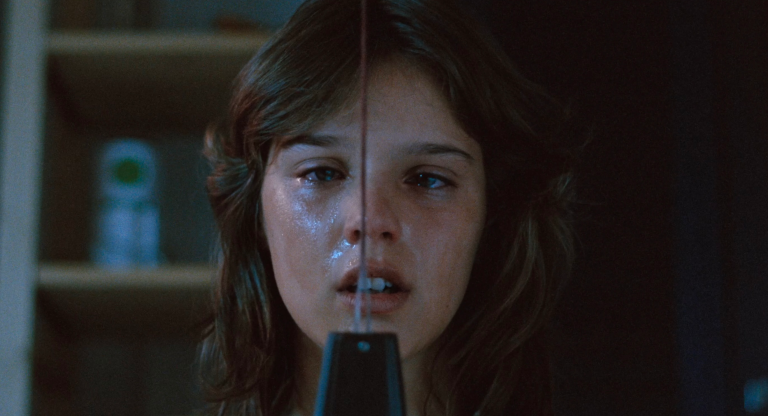
In The Sons [1973, pictured at top], I was practically trying to embed the film itself with language. A lot of that work uses intertitles in French. There's also my first film, Oh! My Mother [1969], which has to do with this idea of cinema and film being overtaken by video. In the film, the “mother figure” is cinema and it's being “raped” by this new digital media of video. I was trying to reflect what was happening in that generation with this specific media, trying to turn that into a narrative and visualize it through a fictional story. Of course, when you mention this idea of a son raping a mother, that brings up the idea of Oedipus.
I think that we are constantly in a [state of] confusion about what our lived time is, what is memory, but also what is a re-creation of history. So then, if we look at my work On the Far Side of Twilight [1994]—the original Japanese title makes reference to Einstein, Einstein Came From the Far Side of Twilight—and look at Einstein's theory of relativity, it is this idea that if you go faster than the speed of light, that time begins to shift, or it begins to lag. It changes our experience. We have this idea that memory follows our experience, but if a young boy could go faster than the speed of light, then perhaps his memory would actually overtake his experience and come before.
CS: How did you see mainstream television and film constructing reality or memory at that time?
KA: In your question, there's already this sense that there is a division between reality and fiction. I want to clarify that we were working under the idea that reality and fiction are boundary-less. For instance, if I were to dream something up, there would be confusion about whether it was real or a fiction. And, that is not an attempt to negate reality. In our theater activities, we would often go out into the streets and put on theater to question this idea. We wanted to see whether people would accept what we did as fiction or reality.
In that sense, we can think of a great actor, let's say Robert De Niro, playing a destitute man and the things that happen in his life. And an audience is incredibly moved by that and praises his performance as “wonderful.” On the flip side, we could think of a homeless man who lives on the street who is maybe having a wonderful life of his own. But the question is, which is closer to the truth? I think that perhaps an ordinary person of that generation, or even today, might watch De Niro’s performance and be deeply moved. However, the same kind of life lived by a man on the street might not catch the eye of the ordinary person. For me to make that comparison is maybe a little bit extreme, but I think that I'm trying to make an extreme example, even if it sounds hypocritical.
I want to think about this question: “What is the necessity of the avant-garde?” If art itself is on the front lines, it's not an easily recognizable or acceptable thing from an ordinary perspective. It's also a very risky thing to be on the front lines, because it means that you are much more prone to failure than anything that’s “safer.” When you are at the front lines, you're at a moment where society and culture is either going to head in a direction that is predictable or unpredictable. The avant-garde is presenting us with these ideas of potential directions that culture could head into. That’s why their failure can happen, and then we have to backtrack and try a new direction.
I believe that art and the avant-garde shows us that without these types of risks and new ideas, culture and society can't move forward. Perhaps Prismatic Ground is an example of that, because this is a presentation of avant-garde art. It doesn't mean that new attempts and new new things are always correct, but the meaning of being avant-garde, or making avant-garde creations, is that we are tempting ideas that are not immediately acceptable. That is what is necessary to move culture towards something new. In order to progress, the avant-garde is necessary.
CS: What you’re saying resonates especially if we move forward in time to the introduction of video. It was really exciting for people to have the sense that there could be a real proximity between the avant-garde and wider audiences through television.
How did you move from Family Filmmakers into your work with Video Hiroba? And, did your feelings about being a part of the avant-garde, and being a “risky” steward of where popular culture might head, change when you started working with video as opposed to film?
KA: I want to clarify that it wasn't that I went from Family Filmmakers to Video Hiroba. It happened in parallel. In your question, there's this idea of a popular culture, which I guess is one that is easily accepted by the masses, and then this idea of a “not popular” culture that maybe we can equate to the avant-garde. But, I don't think that I ever thought of them as distinct.
In my commercial work, I've had three commercials banned from being broadcast because they were deemed, in some sense, societally unacceptable. I wasn't trying to make commercials that would be banned, because that would go against the idea of making a commercial in the first place. Similarly, with Bikkuri House, I don't think that we were making it as a form of artwork. However, it was seen by people as something that was quite avant-garde, but then it evolved into something that was part of popular culture because it sold very well.
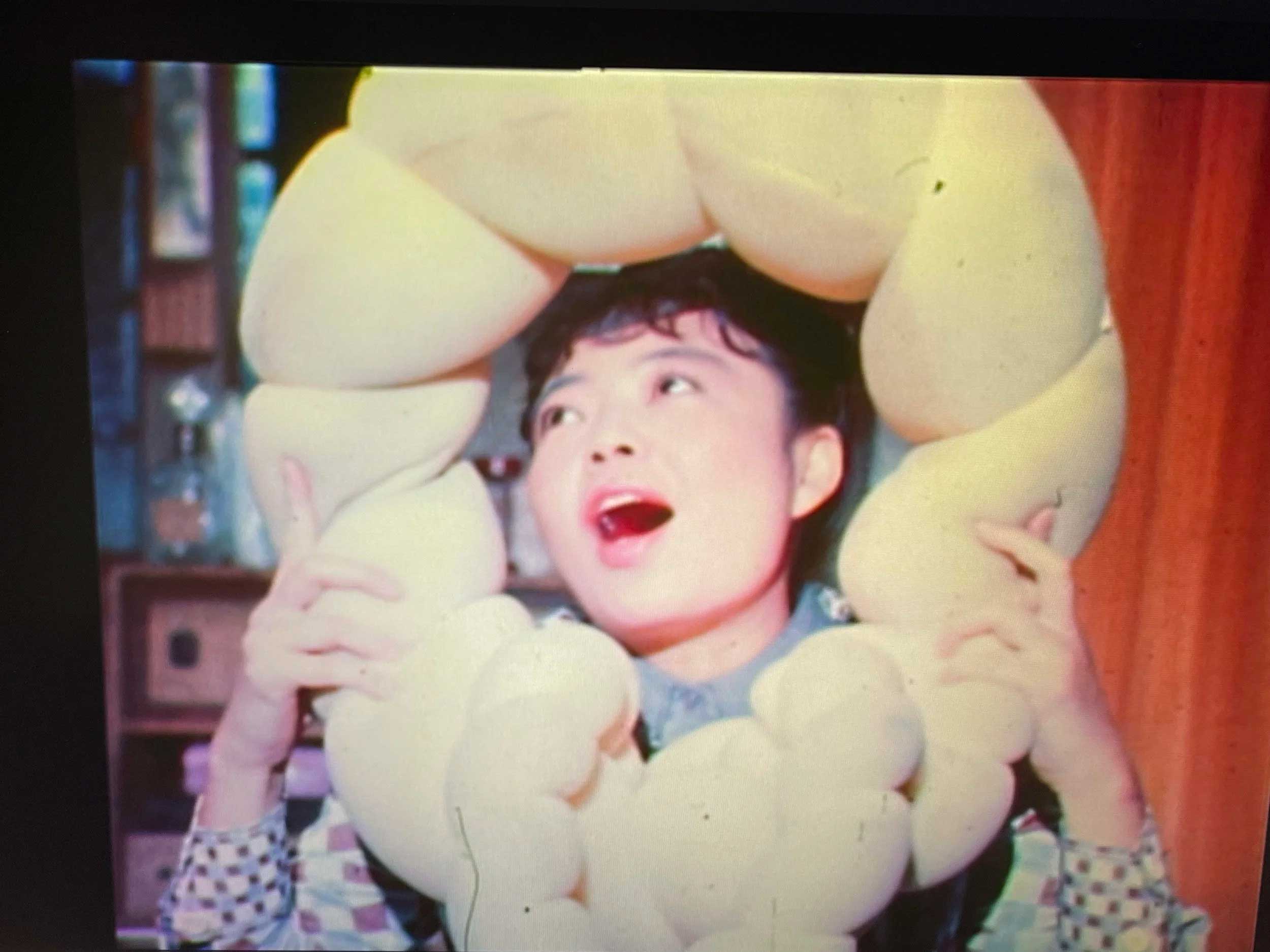
In our activities as Bikkuri House, we decided to hold a kind of film festival and make a film as Bikkuri House. The thing that I made for that was Star Waars! (1978). I wasn't thinking of that as art at all. It was just this idea of, you know, how could stars, like idols or actors or actresses, exist during a time of war and great unrest? What would happen when they said the word “war,” which doesn't mean that it's pro- or against? It's not a complete sentence, this idea of “stop war.” I tried to explain it as this idea that was ambiguous enough that it could be a joke or not be a joke. And, in the framework of parody, it's neither for the masses, nor an artistic thing.
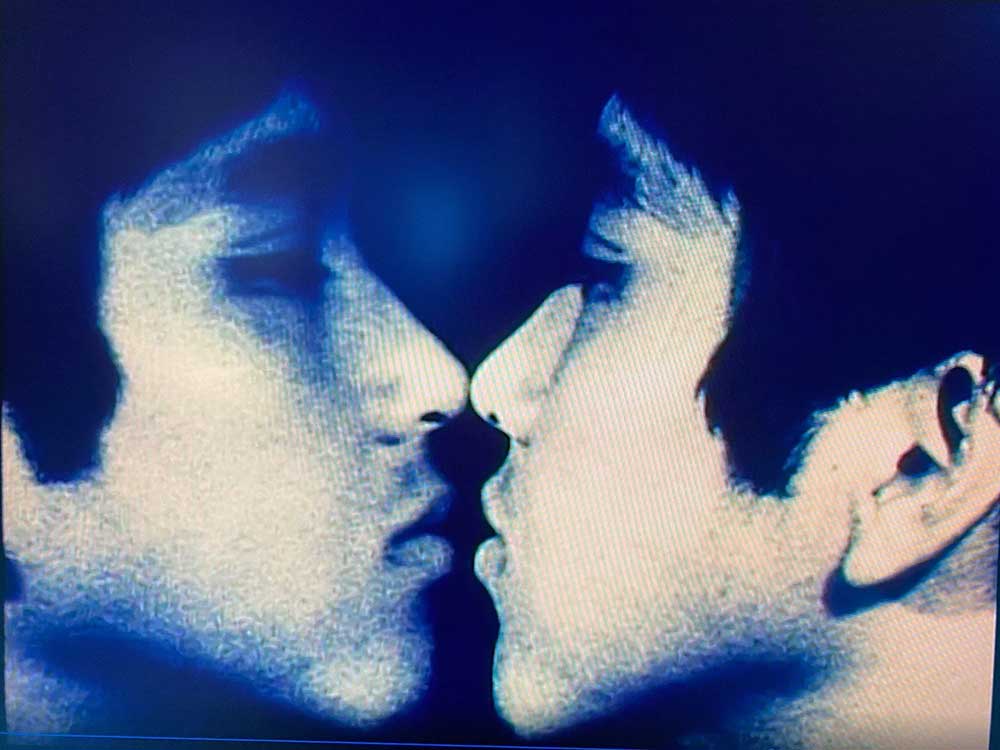
Just to continue, I want to talk about my film The Sons. In Oh! My Mother, there was this idea of the son raping the mother, and I wanted to take that image and narrative even further. That turned into this film [The Sons] that has to do with a homosexual, incestuous relationship between a father and son. Just a few years after I presented that film, Robert Redford won an Oscar for his performance in Ordinary People [1980]. When that film came out, many of my friends were saying that it was ripping off my film The Sons. And to be frank, you know, my film came out in 1970 and I think Ordinary People came out a few years later. Some of my friends suggested that I should sue him. I thought it was an honor that he might have been inspired by my work. But, I guess, I'm trying to prove a point about this idea of what is popular and what is not popular, and whether there is any kind of distinction at all. The Sons is certainly not a popular film. However, if it did happen to inspire someone like Robert Redford to make something, it happens to be a film that's called “ordinary,” right? So is there a difference between popular and not popular?
I understand what you're trying to say, Charlotte, that mass media, particularly television, might be something that is meant to be popular. But you know, even in my work that was geared towards television, I'm still trying to imbue it with something that could affect or impact society in some way, Star Waars! being an example. It is a film that I even feel embarrassed to screen. It was made with my parody magazine group. But even in the context of a parody film, to have people yell out the word “war” felt like an action that might lead to some sort of impact or influence on society. So, again, I suppose I'm posing the question, is there a difference between what is popular and what is not?
CS: For me, the distinction between popular and unpopular culture brings up questions around the scale of one’s intended audience. What’s so incredible to me about your work is that making these pieces in a television context means that you’ve been able to inhabit multiple spaces at once. You’ve made pieces that would be considered more “artistic” or “avant-garde,” but function and find their audience in a space where “art” in the purist sense does not necessarily exist as such because your output is commercial.
How were you thinking about your audience as you were making these films and videos?
KA: I was thinking about different audiences depending on the works that I was making. For instance, Star Waars! was made for Bikkuri House fans. These are people that were young and were into new things, into jokes and into humor. That meant that there were a lot of people that were artists, people that were very hip, but also maybe a lot of people that were into jokes that were in poor taste. That's why I wanted to use popular actors, so that it would entertain people as parody and appeal to people who were fans of Bikkuri House. So, the idea that it is going to screen at Prismatic Ground is actually kind of embarrassing to me.
I've also made cosmetics commercials, and actually two of my cosmetics commercials were banned for being “too sexy,” but I think that cosmetics are sexy and that's why I wanted to make a commercial that had a sexy energy. But television stations at the time were very strict and that's why those commercials were banned.
I also used a song called “Boku ga Senso ni Iku Toki,” which translates to “If I Go To War.” This is a song with lyrics written by Shūji Terayama. I used it for one of my commercials. It got banned because, according to the Japanese Constitution, “Japan is not allowed to go to war.” So, the record itself was also banned. What’s ironic is that the lyrics that Shūji Terayama wrote are against the war and are critical of the war, but unfortunately, with society and with things like television, people are only willing to look at the very shallow, surface messages and not willing to look into what's actually being said. That kind of ambiguity is something that I really like and it's something that I like to work with in my work. Because there was criticism around even the title “If I Go To War,” it's just “If.” We had to change it to just “If.” [Ando shows the LP to the camera.]
Oh! My Mother was made using a technique that I believe is called the “electro free run effect,” which just means it's creating a feedback loop. If something is played, whether it's audio or video, if there's any kind of amplification that happens, it can increase indefinitely or exponentially. I was able to film it because at TBS at the time, or on television at the time in Japan and also in the U.S. probably, the broadcast would end at a certain point and then you would have a test pattern throughout the night until the early morning. I made that film in the equipment room of the television studio and created that feedback loop, which is what I was trying to express with this idea of overflow, the digital overtaking film. The first time that I screened Oh! My Mother would have been a broadcast during the test pattern hours at TBS. If I were to have been found out at the time, I would have gotten in deep trouble and I also may have been arrested. But, it's been many years since then so I don't think I could get in trouble for that now.
I was interested in working within the confines of what could be considered popular, but everyone that I worked with at TBS would always say, “Ando, you've been using company resources and company time to make things just for your work.” But I liked working within what were considered pop mediums. I liked making family dramas. That was very fun for me. Of course, it was fun, but it was also something that I was mainly doing to make money and make sure that I could provide for myself. In that sense, I'm not really interested in being called an artist. I don't even consider myself an artist. I just want to make what I want. In the context of a television station, I would receive assignments, but I wanted to make sure that I would embed my own kind of signature into each of the things that I worked on. I think that I was being a little selfish in that respect, but it's that I like popular things. I like things that are silly, and whether it's making an audience laugh [or something else], I want to make sure that people are left with some kind of emotion.
This conversation was translated by Monika Uchiyama with support from Creative Cataloguing Japan.
A selection of Kohei Ando’s films and videos will screen this Saturday, May 2, and alongside Lynne Sachs’s Every Contact Leaves a Trace (2025) on Sunday, May 3, at Anthology Film Archives.