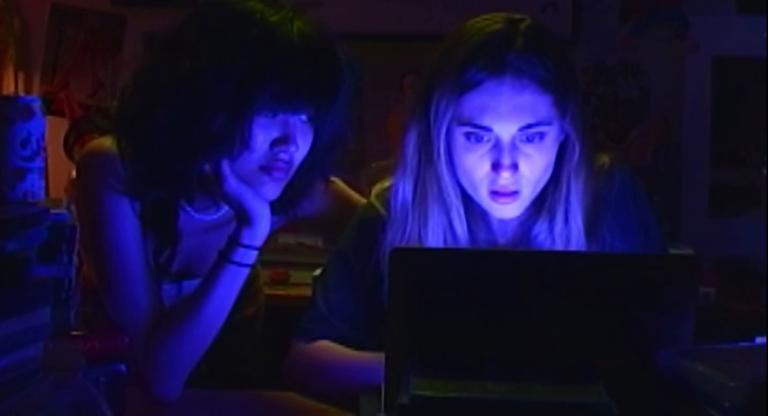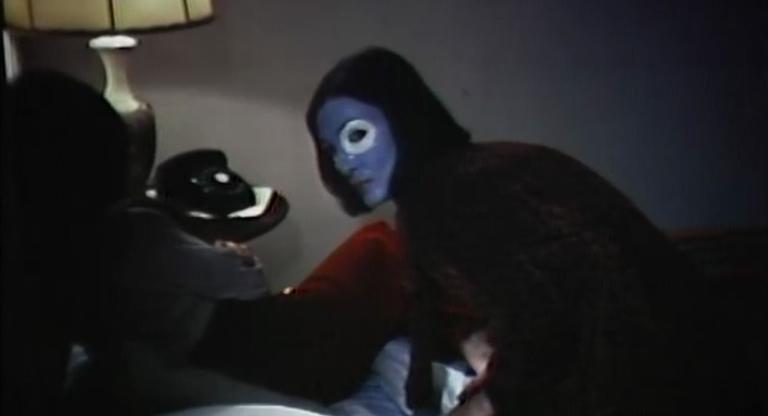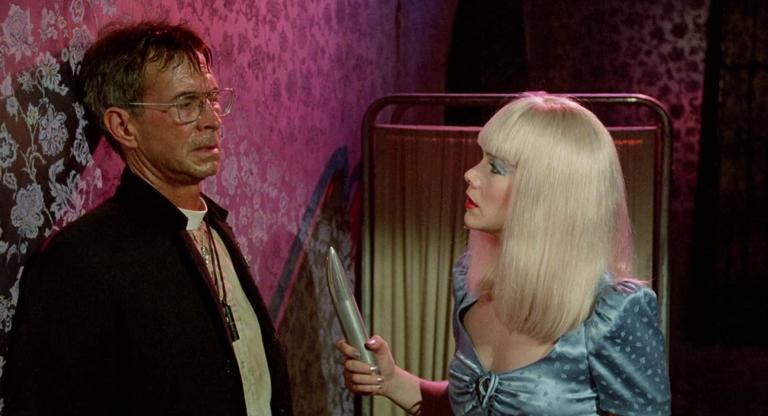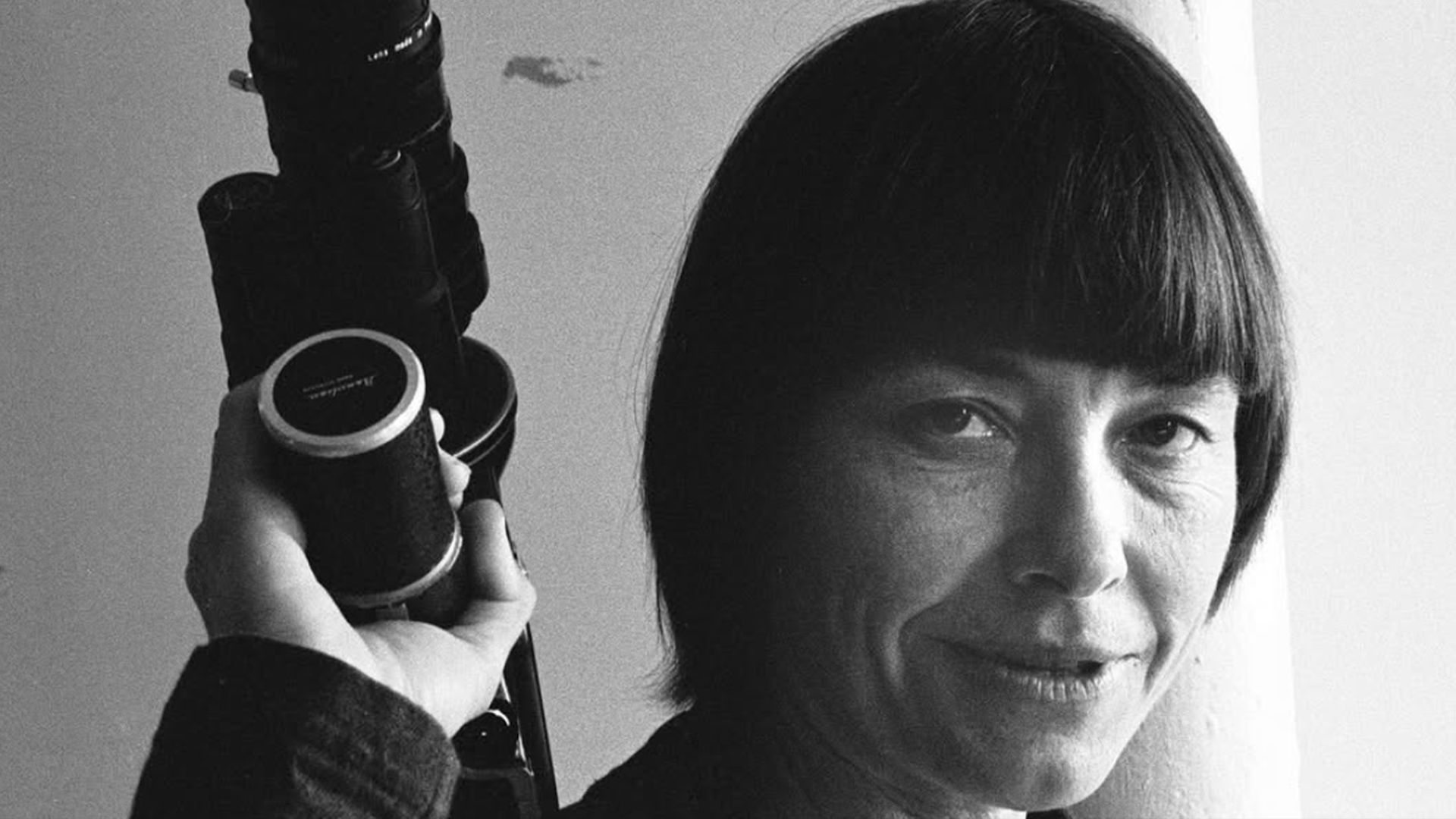
Drawing from more than 400 hours of archival material, director Brydie O’Connor wove films, outtakes, and audio diaries that the avant-garde lesbian filmmaker Barbara Hammer created throughout her life—from her first forays into filmmaking during the late 1960s to her final years living with cancer and facing her own mortality—to assemble Barbara Forever (2026). Hammer’s life partner, Florrie Burke, had a profound influence on the film, providing a key perspective shaped by the more than three decades she and Hammer spent together. Notably, Burke’s presence is largely absent from Hammer’s films, as she did not want their relationship to be reflected that way.
Hammer’s relationship with the camera was deeply personal. She turned the lens on herself, her lovers, and her community for 50 years. Doing so, she blurred the line between her art and her life, creating a new visual language for lesbian culture during a time when representation was scarce. This commitment to representation was especially potent in her first feature film, Nitrate Kisses (1992), where Hammer lovingly presents queer identities then existing on the fringes of queer culture: aging bodies, transgender bodies, the BDSM community, and more. (Frameline is supporting the restoration of this essential queer film, which will be overseen by O’Connor, and carried out by the audiovisual archivist and Screen Slate contributor Mackenzie Lukenbill at BB Optics.) Hammer’s personal life and political activism were inseparable, expanding into her involvement with the Right to Die Movement at the end of her life and culminating in her 2018 solo exhibition Evidentiary Bodies at the Leslie-Lohman Museum of Art in New York. She believed the “art of dying is the same as the art of living,” and worked to make the invisible visible until her final days.
Hammer mentored younger generations of queers throughout her life, actively encouraging them to make work and come out in whatever way they chose. The documentary highlights Generations (2010), a collaborative piece made with Joey Carducci during the last days of Astroland at Coney Island. Later, Joey would use film to come out as a trans man to Barbara. More broadly, Hammer encouraged young queer people to preserve their own histories, understanding the personal archive as a way to fight against the erasure of queer history. This makes the archive-driven format of Barbara Forever a fitting continuation of her life’s work, inviting new generations to see the personal archive as a radical act of queer resistance and legacy-building.
I spoke with O’Connor and Burke separately ahead of the film’s screening at Frameline Festival. Our overlapping conversations have been edited together for length and clarity.
Cat Beckstrand: How did you and Brydie first meet? How did she approach you about making Barbara Forever?
Florrie Burke: We met shortly before the pandemic. She reached out to me by email, introducing herself as someone who had been studying Barbara Hammer's work since she was in college. Something about her email told me she's the real deal, so we met for coffee and it was an instant reciprocity of ideas and thoughts.
As I said at a Q&A in New York, she really had done her homework. To me, that was very important, because I get a lot of requests from people concerning Barbara's work and they ask me to provide all the stuff. Brydie did not do that. At that time, she was talking about making a short film, which became Love Barbara [2022]. It centered on the idea of maintaining her legacy, the personal relationship that I had with Barbara, and how I felt about trying to carry her work forward.
During the pandemic, we would meet heavily masked. Brydie would come over to our loft and I would tell her stories about Barbara and me and her work and all this. I showed her things I had that were not at the Yale archive—the things that I have were more personal. There were some drawings and things that are really part of Barbara's huge output of art in addition to film. We had a lot of fun together, and then she brought a film crew in and we did Love Barbara. Then she told me that she had an idea for a feature-length documentary and I kept saying, “I don't quite understand what you're talking about, having Barbara narrate the film.” I couldn't get it, and finally I did, and we traveled a lot together. We went to the Yale Archive. We went to San Francisco to Canyon Cinema, where they distribute Barbara’s films, and we just dug deeply into Barbara and her work. Barbara Forever is just a spectacular film. I love it so much and Brydie was so thoughtful. Before Sundance, she flew out here to California, where I live, and we went to a microcinema together and watched it, just us. She said, “I didn’t want you to see this for the first time at Sundance with 500 strangers.”
CB: How did you initially approach Barbara's massive archive?
Brydie O’Connor: We were working with over 400 hours of archival material. We considered everything Barbara had saved and collected of hers as part of that archive, which included her films, outtakes, home videos, things that were just on her drive. She also had hours and hours of audio recording. I have a background in archival production on other documentaries, so we organized everything, and my editor Matt and I watched it all in the first six months and made notes.
It was helpful to process all of the material and organize it—give them all file names and set up the Avid project with all the material that we had watched—so after those six months we could just work with the material creatively. We were able to separate the organization from processing it all, and were able to work with it kind of associatively and creatively. It was one of the biggest challenges of the film, but it was really fun to figure out how to cull Barbara’s entire life from these 400 hours of material into Barbara Forever. The film has my own perspective, but it’s also using all of Barbara's images and voice to share a new interpretation or telling of Barbara's life, work, and legacy, as well as how we’re living in her future.
CB: I loved that you chose to have Barbara narrate the film and have everything be in her own words.
BO: Having Barbara narrate this film posthumously is a very cool way to extend time, or to queer time, if you will. That’s how I was thinking about it throughout the process: queering time. Particularly, because the audio recordings that we used were recorded at different moments in her life, so in many of the recordings she sounds very healthy and vibrant, and in others she sounds very sick and weak and quiet. Her voice is noticeably different, but we established this in the first two lines of the film.
In a sense, Barbara is conversing with herself across time. Some of these recordings are taken from when she was just starting out on her over five decade long career, and some were recorded at the very end of her life with all of this perspective. It’s cool to let her be in conversation with herself throughout the film as well.
CB: Were there any particular pieces of her archive that you wanted to include in the film but didn't quite make the cut?
BO: There were many pieces of the archive that we couldn't include, but I think when you’re telling someone’s life story, there's always pieces of information you’re not able to include. The guiding principle of the edit was this idea of why Barbara turned the camera on herself, her body, her community, her lovers, and talked to the camera. It was this really personal engagement with Barbara and the camera, so everything that we cut to really had this idea in mind, which really helped guide what we included and what we decided to not include from her massive archive. I think the beauty of Barbara having published so many films is that people can see Barbara Forever, and then hopefully go seek out her other works.
CB: She created a lot of representation for the lesbian community from a lesbian’s perspective, which was, at the time, pretty much invisible.
BO: Barbara’s initial question—the thing she wanted to take on when she came out as a lesbian, when she realized she was a lesbian—was that she didn’t know where to look to know how to be a lesbian or how to live a lesbian life. That kind of started her lifelong project of documenting her life and her experience as a lesbian from birth to death.
CB: I really admire how Barbara saw not just her own personal archive, but personal archives more broadly, as a way of preserving queer history. So much of it has been lost and destroyed, and she saw keeping a record of our lives as a way to fight against that.
FB: One of Barbara's passions was to keep our history alive. To invite everyone to save everything. To use our voices to help people understand who we are.
CB: Barbara really blurred the line between her art and her life throughout her entire career. One of my favorite segments from the documentary is the audio recordings from her exes talking about their relationship with her and her films, and the accompanying scene of her talking to a woman in a hot tub asking if she can make a film about her.
FB: It was really delightful seeing that process in action, of Barbara speaking to people to get their consent to make these films, and hearing the way that they felt about it and their relationship with her.
CB: I think she expanded that practice of documenting the life of a lesbian from birth to death through mentorship and the relationships that she had with younger queers.
BO: We have a really meaningful thread in the film about Barbara's relationship with Joey Carducci, who is a younger filmmaker. They made a film together, Generations. We show in Barbara Forever how Joey makes a new film later in his life, coming out as a trans man to Barbara. He used cinema, this language that they both shared, to converse with Barbara in that way.
CB: I also think it's great that she distributed outtakes of her films to other filmmakers.
FB: That was not an easy decision on her part.
CB: Really?
FB: She got a grant from the Wexner Center to work with her outtakes and she said, “I’m too ill to do this.” She and I talked about it a lot, and she said, "What do you think about this?” Then she came up with the idea to share those outtakes with people she knew whose work she respected. I think the result was very exciting. I think she saw Lynne Sachs’s film; she saw Deborah Stratman’s film; I don't think she saw Mark Street’s. I think she was already gone by then.
CB: This wasn’t included in the documentary, but when I was watching it, I remembered that Barbara made a movie about Jane Brakhage, Stan Brakhage’s wife, presenting her as a multifaceted artist. She did make movies about women who weren't lesbians, and more about general womanhood.
FB: She didn't want to be just categorized that way—only making work about queers—and she was curious about a lot of people and a lot of things. The film she made about Jane is really interesting. Mark Street got the outtakes from that and made a film.
CB: Barbara’s relationship to her body, or the body in general, has always been an essential part of her work. It's interesting to see the way she approached the body throughout her career—starting out by exploring intimacy and joy, and later the realities of aging and mortality.
FB: She said, “I know some people are sick of seeing me nude, but you know, look at us! Now we're old lesbians, and we have different looking bodies than we had before. I’m not going to be invisible because society wants to make older people invisible, and I'm not going to have it.”
CB: It reminds me of Nitrate Kisses, and the way that she paired archival footage with original footage to shine a spotlight on and to present these unseen parts of queer culture, like older lesbians, lesbians of color, and other couples that are not well represented.
FB: That sequence got so much attention of different kinds. When it was screening somewhere, Barbara would sit out in the lobby to watch who left the film early and ask them why. She was very struck by one woman who said, “I couldn't watch that, it's like watching my mother, and it's just not okay,” but you know, [in Nitrate Kisses], when she asks one of the women, well, how old are you, and she says 77 or something, and you see she's wearing a black thong. It's just so great.
BO: I think Nitrate Kisses is groundbreaking as a work itself, and it's a groundbreaking work for Barbara too within her overall filmography, especially since it was her first feature film. Barbara specifically said she wanted to look at what still felt really taboo: what people weren't looking at or talking about within the queer community. Like you said, that's aging bodies, aging queer bodies, people of color, bisexuals, asexuals, transgender bodies, and the BDSM kink community. These are all identities that she was considering at the time, but also considering how even within queer communities there were still identities existing at the margins of what she felt like was a kind of a culture that was solidifying queer culture. I think it's beautiful and a testament to Barbara's curiosity as an artist, but also her dedication to creating histories out of things the world isn’t looking at, or that the world is looking away from. With Nitrate Kisses, she's making sure these specific queer histories aren't forgotten.
CB: Barbara made a point of working with other generations throughout her career.
FB: She was so passionate about younger people, encouraging them to make work and come out in any way they wanted to. She was a wonderful mentor to many people. When I had her celebration of life, so many young queers were there. Two lesbians drove down from Massachusetts. They said they never met Barbara but had to be here because she influenced them. That was so emblematic. She had young assistants for the Leslie-Lohman show. Two very young curators. People would say, “Barbara, are you sure you don’t need someone very experienced?” She said “No, I'm sure.” She really wanted to carry everything forward.
CB: I remember going to see the Evidentiary Bodies exhibition at Leslie-Lohman. Speaking personally, I have cared for loved ones living with cancer and understand how complex that experience is. I thought that installation was a really powerful culmination of not just Barbara's life and the way that she approached her own mortality, but also her involvement in the Right to Die Movement. I know you have a really rich career in human rights activism as well. I was wondering, what is your perspective on that part of her life?
FB: She kept saying to me, “You don't have to stick around for this, you didn't sign up for this.” I said, “Barbara, we've been together for decades. You think I'm going to leave now?” We worked really hard to maintain our personal relationship and not lose the fact that we were a couple, not just a caregiver and a patient.
She had this diagnosis for 12 years and she did extraordinary work over those 12 years. She suffered greatly with 100 chemo treatments and everything else. I just went along with her. I never missed an appointment. She said, “I'm not going to make a film about cancer.” I said, “Well, you know, that's your choice.” And then, ultimately, she did one day. She said, “Okay, bring my camera and let's… I'm going to go do the chemo. Bring the camera, and I'll see what happens.”
She got interested in the bag of chemo because the light was coming through the window. The nurses had come in that day all primped and with makeup, because she had asked them for their permission and told them she was going to be filming. They thought she was going to be filming them, and of course she wasn’t. She wanted to make the public understand what it's like to be facing your mortality, the end of your life, what it felt like going through treatment. She had shown her body in every way possible for years with her work, and she said, “Well, okay, I think I have to do this too.”
She worked on her installation of Evidentiary Bodies when she was really, really sick. She said, “I’m going to finish this.” It really is her masterpiece. The Whitney purchased it, and I hope they install it sometime. It was important for her to make everything visible, especially the things that people don't want to talk about. That was just another step in her life of documenting her body and her relationship to other things.
CB: It seems like she really believed autonomy and freedom were the two most important things that anyone could strive for.
FB: Absolutely, absolutely.
Barbara Forever screens this Thursday, June 25, at the Castro Theatre, and on Sunday, June 28, at the Roxie Theatre as part of Frameline 50 Encore. Director Brydie O’Connor will be in attendance for Q&As at both showings.