Global, unquantifiable loss is the central theme of both Pig Earth (1979) and Parting Shots from Animals (1980), two episodes of the BBC’s documentary series Omnibus presented together this evening at Anthology Film Archives as part of Film Comment’s series dedicated to writer/critic/artist/public intellectual John Berger’s centennial. Pig Earth laments the decline of peasant ways of life that had survived millennia; Parting Shots considers the marginalization of animals from the center of human existence toward mere images. Engaging but not glib, cerebral but only rarely ponderous, the two films are striking artifacts of a time and place (Europe, between Hitler and Thatcher) when television could speak in ideas as an edifying public service. Given that Berger’s prose and intellectual voracity were the prime movers of each project, he is appropriately the marquee name on both films, but director Mike Dibb, who also collaborated with Berger on the project that made the latter something close to a household name in Britain, Ways of Seeing (1977), contributes striking imagery and editorial flourishes that help enunciate Berger’s arguments without trivializing them.
Berger appears onscreen in Pig Earth, an adaptation of his experimental novel concerning the winnowing of French peasant populations. His mesmerizing presence—speech colored by mild rhotacism and soft pauses that slowly gather profundity; a seductive, achingly inquisitive stare—share the screen with a series of striking still photographs that illustrated the book and documented the five years Berger spent working alongside and befriending members of a demographic that contemporary economists predicted would scarcely exist within a single generation. Vociferously avoiding nostalgia for a prelapsarian landscape of happy, socially integrated toilers, Berger tries to understand what exactly is lost when a “system of multinational agro business” forces peasants into cities to make a living or debt peonage to maintain farm machinery they didn’t want in the first place. Peasants enjoy a “peculiar measure of freedom,” sociologist Teodor Shanin tells Berger late in the film. They sweat for most of each day every day to satisfy the demands of everyone, yet their minute-by-minute movements are relatively undictated compared to their deskbound counterparts. Untold thousands of human cultures have been lost, some with no trace, but Berger convincingly argues that this one, the one that once fed the rest of us, is unique in its sheer breadth, and therefore must be worth understanding and preserving, if only in memory.
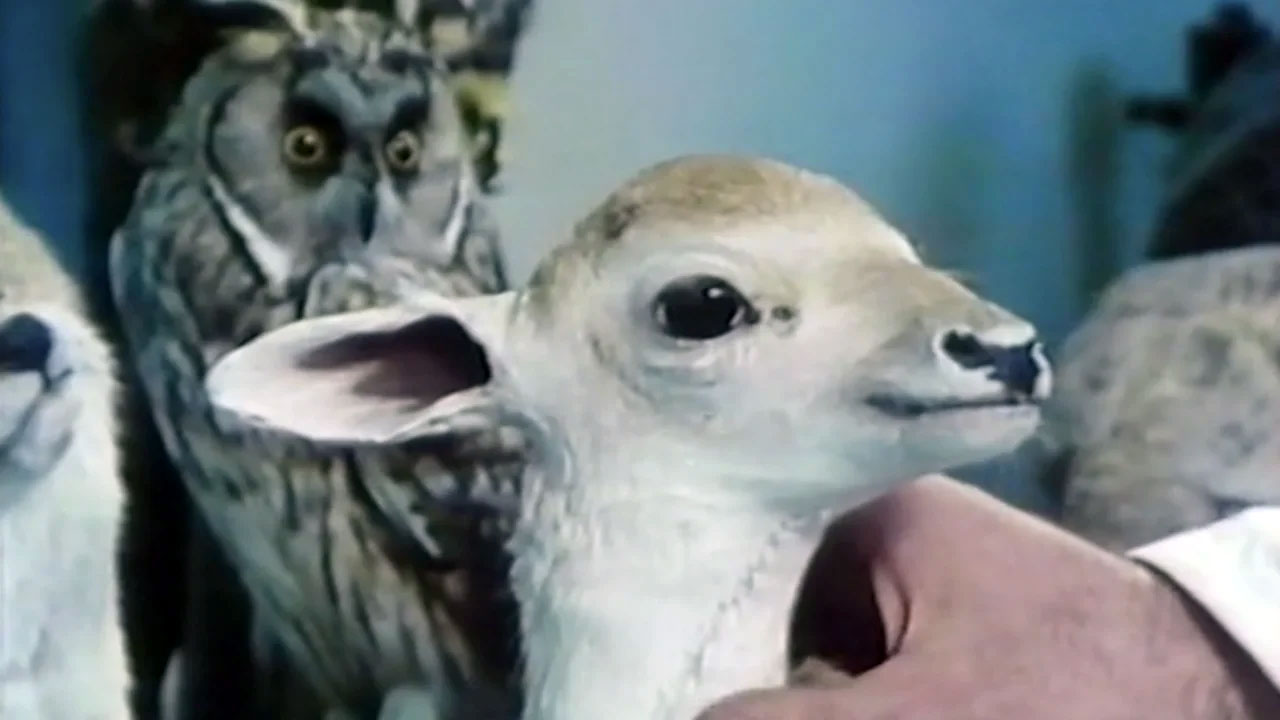
Berger’s voice and face are absent from Parting Shots from Animals, which devastatingly and often humorously visualizes the arguments he made in several essays, chiefly among them, “Why Look at Animals?” The momentous loss here begins as the fictional self-exile of all nonhuman animals, who’ve paradoxically elected to disappear in order to escape humanity’s erasure. The dramatic conceit reveals a more literal loss, that of our ability to see animals as co-authors of our own history. Berger’s prose is reformatted as an open letter to humanity written by the rest of the animal kingdom, and from this starting point director Dibb surveys the capture of animalkind within the capitalist imaginary via documentary vignettes set in newly computerized meat-processing plants, zoos, circuses, taxidermy studios, and advertising offices. The human subjects are all in the business of animals, though in each instance the creatures themselves, as beings possessing sensory apparatuses and distinct behavior patterns, feel disconcertingly absent in all but the most abstract sense.
Extinction always followed human dominion as it spread across the globe, but Berger’s concern for animal absence is more conceptual. We once knew that animals “were something like” us, their open letter insists, and this kinship, while never even, was formed on some meaningful level of understanding. Berger and his animal correspondents insist that capitalism has reduced animals to “a mask to dress up whatever you want to say… [and] you use these appearances to exploit each other.” It’s not just the tiger in old Esso commercials that’s been chained and made to perform, it’s our ancient awe for a majestic creature that’s been shackled to our perception of said fossil fuel company, which spent millions procuring this mindshare. Berger saw clearly that our professed love for animals has never been more adamant, but it is a deeply childish infatuation in its cupidity and egocentrism. You can love animals and still eat them, you can even force them to work for you, but Berger and Dibb provocatively argue that you can’t truly see animals if you’re packaging their likenesses as fuzzy, defanged, and saucer-eyed sleep aids for children. What is our love for animals now worth?
Pig Earth and Parting Shots from Animals screen this evening, August 5, at Anthology Film Archives as part of the series “Film Comment Live: Hold Everything Dear — John Berger and Cinema.”