As a group that exclusively projects celluloid, the Chicago Film Society and their audiences are well acquainted with the virtues of watching a film print. But a full lineup of rich Technicolor prints poses an additional special pleasure, which will be on display at CFS’s fourth annual Technicolor Weekend from August 7-9, 2026.
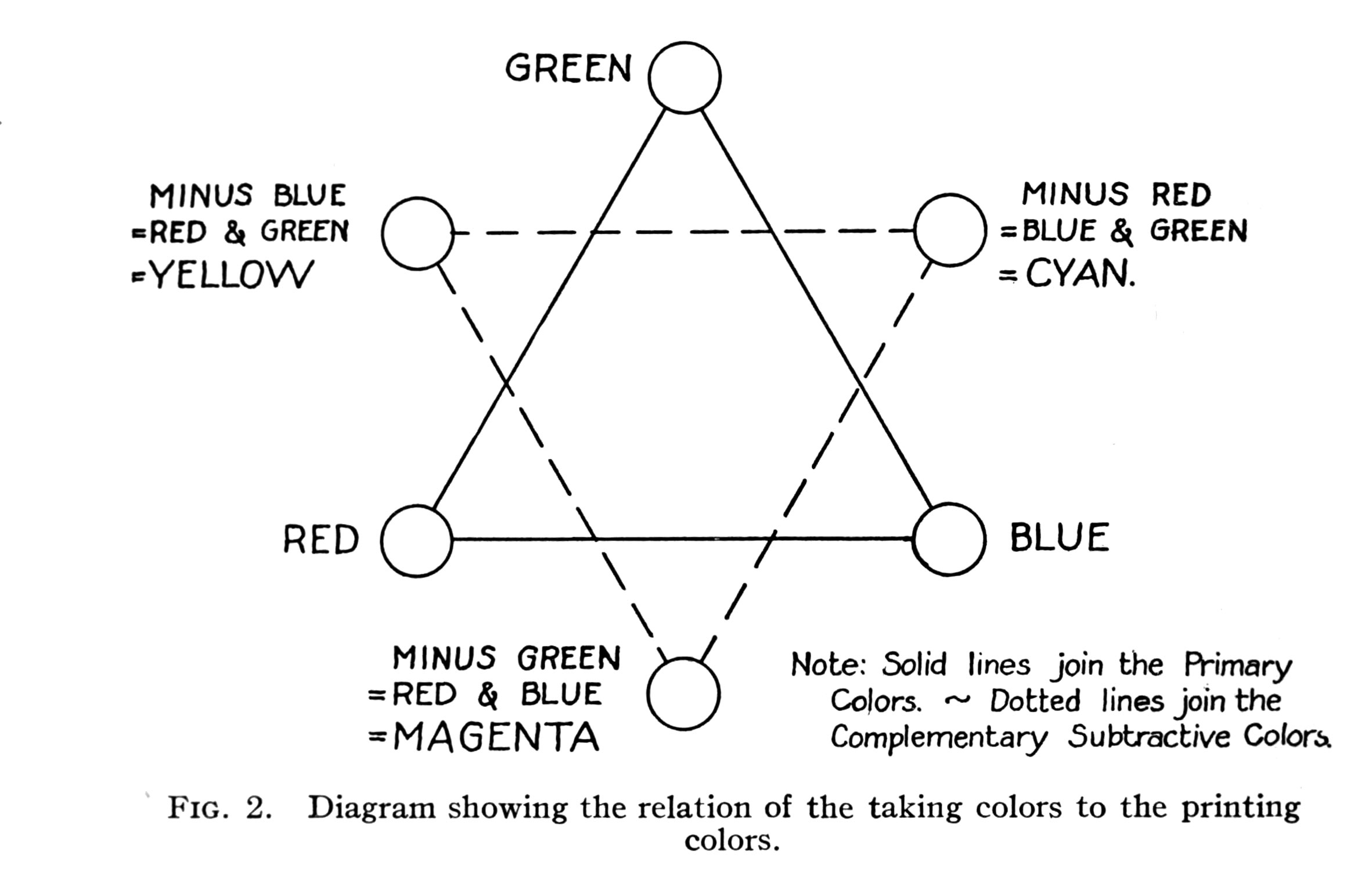
Technicolor Weekend opened in 2023 with a private collector’s 1950s reissue print of The Wizard of Oz (1939). Since then, it’s been a yearly summertime celebration of the supersaturated dye-transfer color process and the people who keep it alive through archiving, preservation, and screenings. CFS Executive Director Julian Antos noted that a Technicolor print is “most impressive as an archival record.” Because of the printing process, which involves printing yellow, cyan, and magenta dyes on the film base one at a time, the colors barely fade over time. “What you’re looking at is exactly the same as what the thing looked like when it came out," he said, “and that’s not really true of any other film stock, even modern film stocks.”
There’s certainly a satisfaction in experiencing a work of art as it first appeared. But as an antidote to current arguments about aspect ratios and IMAX 70mm prints—about the one correct film—CFS member Kyle Westphal highlights variability instead. While a Technicolor print might retain its look, the results of the color technology vary from film to film, print to print. Westphal describes Technicolor prints as “emissaries of the past in ways that cannot be recreated chemically, scientifically, optically.” But they also “muddy the waters of how definitive that past is.” There’s no definitive version of a film, but rather a myriad of them. Part of the fun, then, is seeing a specific print or iteration of a film—and not just one, but many.
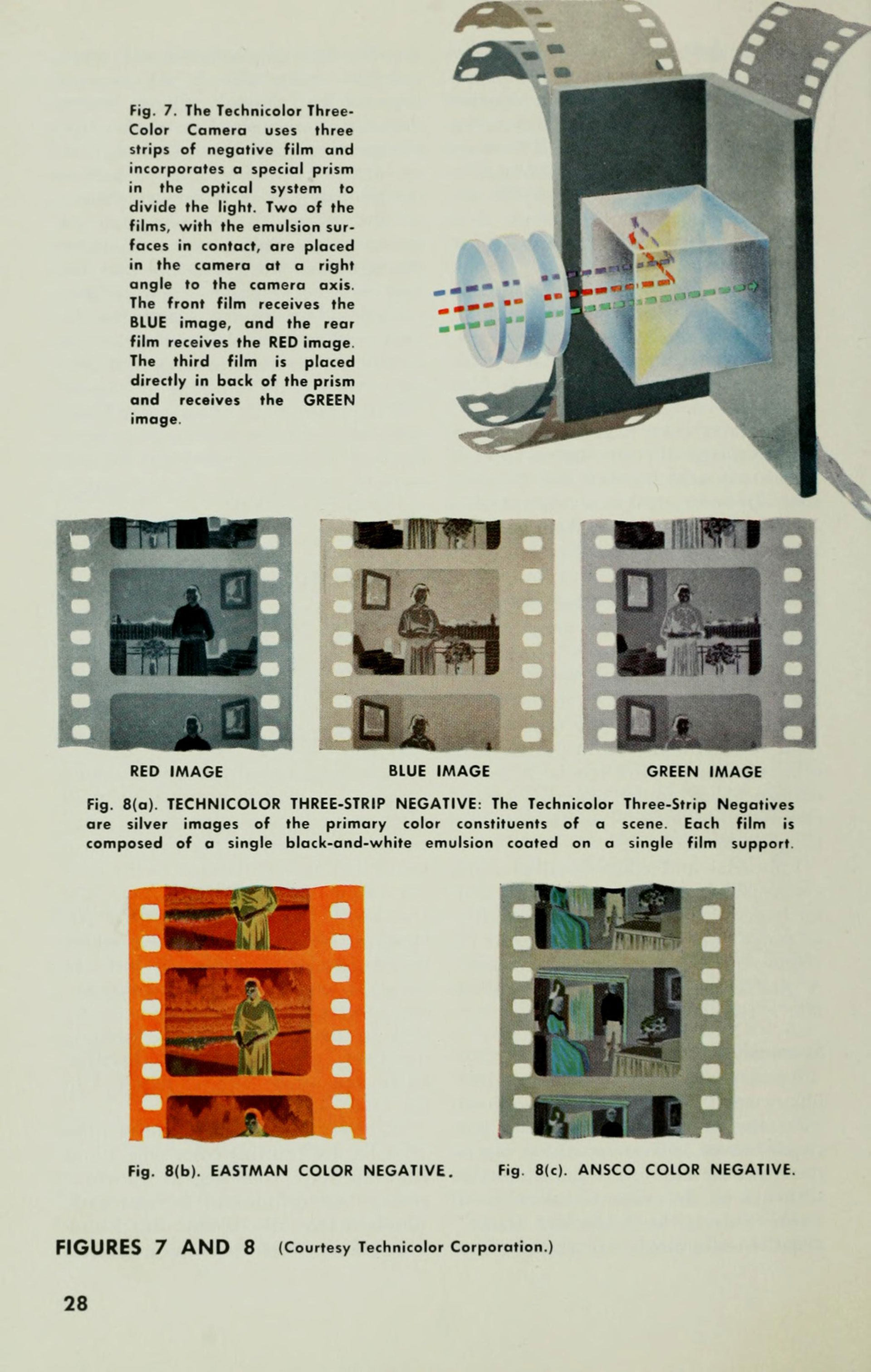
The visual experience of Technicolor is subjective. Despite our colloquial use of the word “Technicolor” to invoke a certain rich Hollywood look, Westphal is inclined to say that it can look a range of ways, from stunning to not all that interesting. While there are visual giveaways that run across lots of Technicolor prints—for Westphal, “discrete colors or discrete objects that announce themselves with this force amidst the rest of the film,” and for Antos, the vibrancy of primary colors and the excellent contrast and black levels—each one takes on unique characteristics from the printing process. But there is a certain universal quality, albeit difficult to describe. “It doesn’t look normal,” Antos says.
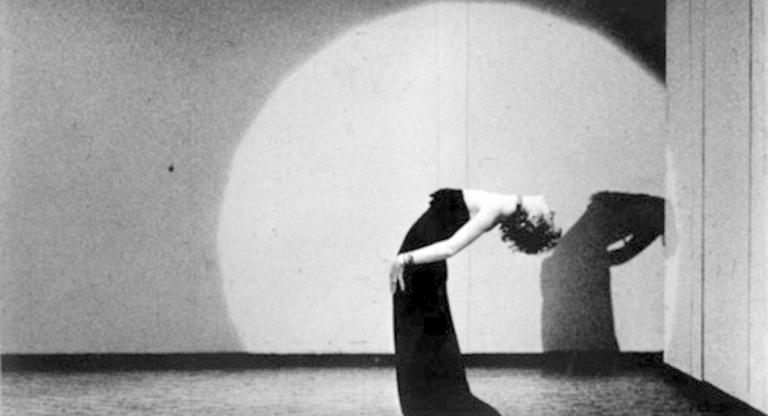
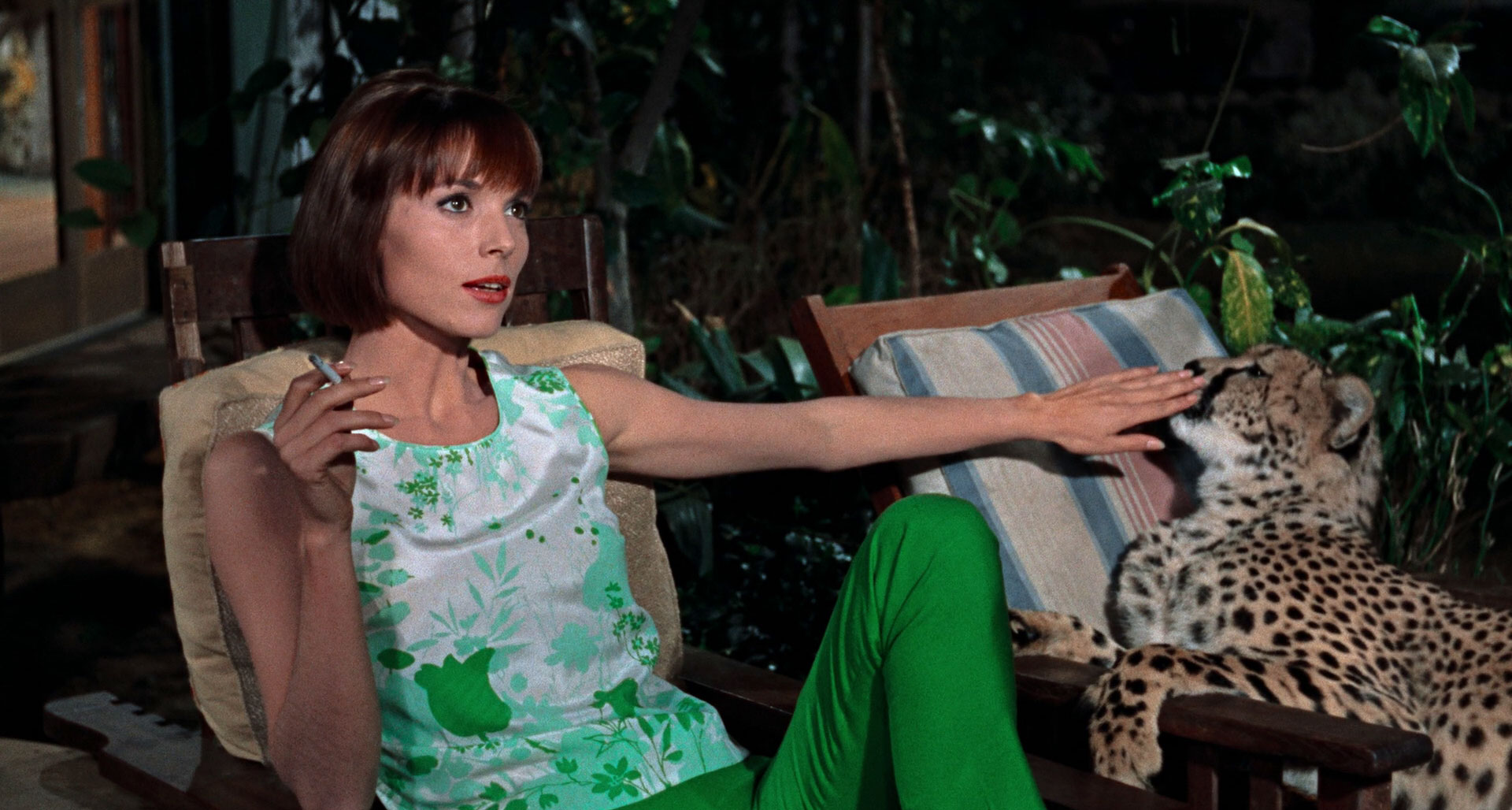
The films aren’t very normal either. While the programming, by nature of when and where these prints were made, leans toward larger studio pictures from the ‘50s to ‘70s, the colors alone guarantee a far-from-conventional frenzy of visual pleasures and discoveries. Besides the classic Singin’ in the Rain (1952) and Howard Hawks’s beloved Hatari! (1962), there is also a rare comedy by the horror director William Castle (The Busy Body, 1967), the lushly colored Gothic Horror of Dracula (1958), and the live-action Disney cat caper That Darn Cat! (1965). Antos and Westphal both endorse a rare Douglas Sirk musical, Meet Me at the Fair (1953), which is also the first 16mm print showing at Technicolor Weekend. Alternatively, The Godfather Part II (1974), with its lamp-lit, dark wood interiors and gritty New York streets, provides a nice example of Technicolor’s breadth: changes in filmmaking at the time created a different look altogether, and the three-strip Technicolor process that produced Singin’ in the Rain had folded by the mid-1950s. Technicolor printing, on the other hand, ended its five-decade run in the States in the 1970s, after which the machines were disassembled and sold to China. But Technicolor held off the retirement of their dye-transfer printers for one last picture, making The Godfather Part II one of the last American Technicolor films.
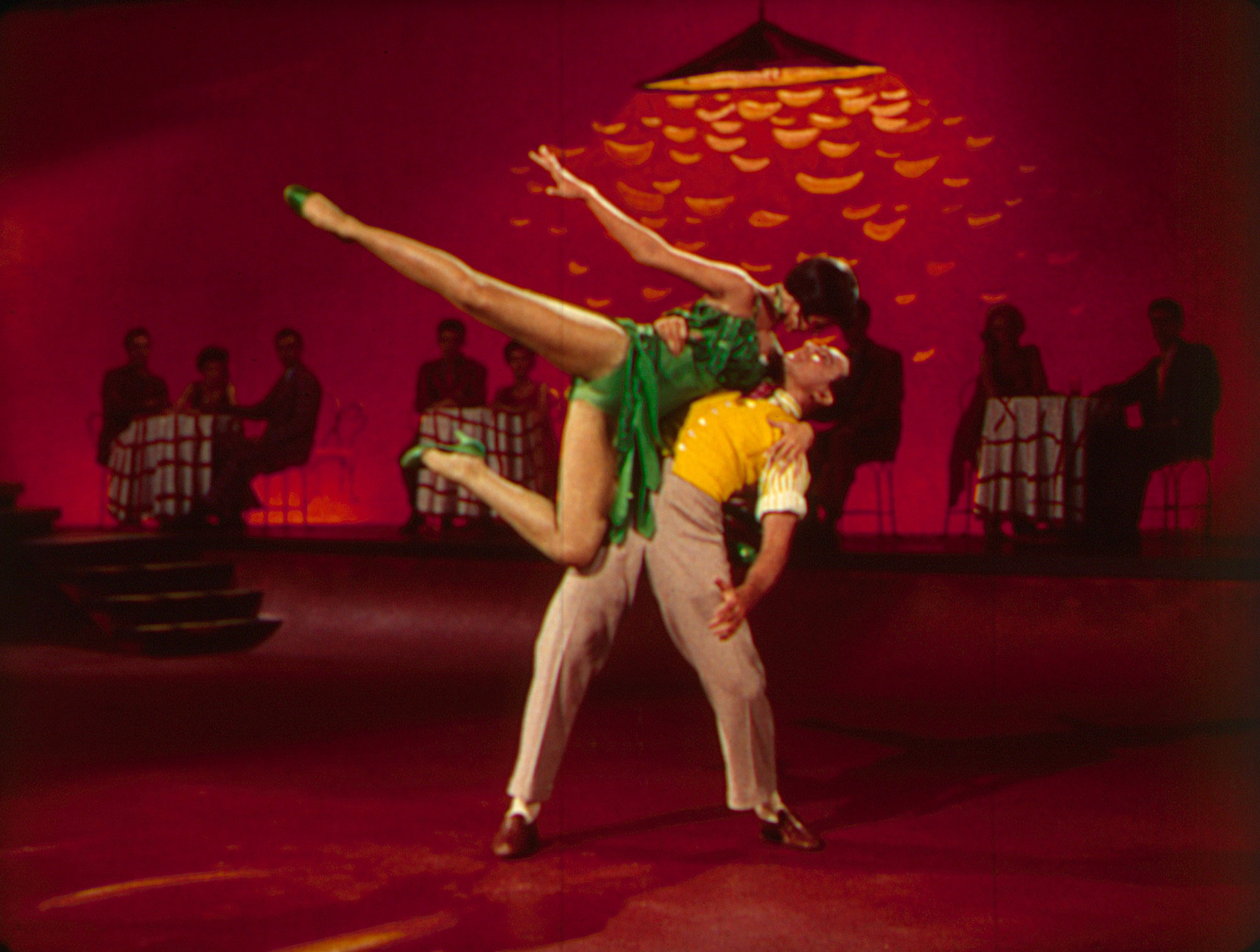
Likewise, “every one of these prints has its own little story,” Antos says. Because of the color stability, they’ve been good for not only first run, but for second, third, fourth runs and re-releases too, playing at different venues to different audiences each time. They accrue a lot of material history, some of which is visible on the screen. And while the most naive of us can appreciate the gauzy pinks and purples framing Gene Kelly in Singin’ in the Rain’s dreamy ballet sequence, greater knowledge reaps greater rewards. Like in previous editions, there may be scrap IB film that people can investigate in the lobby. CFS member Becca Hall has created a demonstration of the basic principle of Technicolor using CMY transparencies. And, of course, there will be introductions full of film facts and overviews of production history, print history, and more before each film.
In addition to their individual histories, Westphal describes Technicolor prints as “living, breathing objects” due to each print's chemical variability. The lifespan? Anywhere from several decades to not that long, according to Antos, “in theory.” While CFS stores their own collection in optimal conditions, they often don’t know how the print had been stored previously. Last year’s program included a print of Douglas Sirk’s Has Anybody Seen My Gal? (1952) which had been kept in a collector’s outdoor shed—projectable but reaching the end of its life. As with many analog film endeavors, a slight urgency runs through Technicolor Weekend. These prints are, after all, still susceptible to deterioration. Technicolor Weekend began partly so that the group could show more prints from their collection. “At least every year there’s one or two where the print is starting to warp real bad, or it just requires a lot of attention, and so it feels very good to screen those prints, sometimes for the last time,” Antos says. With that optimistic encouragement, audiences should hasten to attend screenings.
This year, about half of the prints come from private collectors and archives, and the rest come from CFS themselves. The weekend is a chance to celebrate the work of private collectors, which Antos thinks can be underappreciated: “It’s a lot of labor to just take care of these prints, and in most cases, they’re taking care of something that was meant to be thrown away.” That also means that a lot of work is done by CFS to present these decades-old original prints. They spend more time than usual fixing splices, making repairs, and ensuring the print can run through the projectors. But the work is well worth it when the pictures go up on the screen in rich, Technicolor context: each screening brings together a whole history of material and labor—the print, the unique technology which produced it, the people who worked on it, the labs who printed it, the venues and projectionists that screened it, and the audiences who watch the films, then and now.