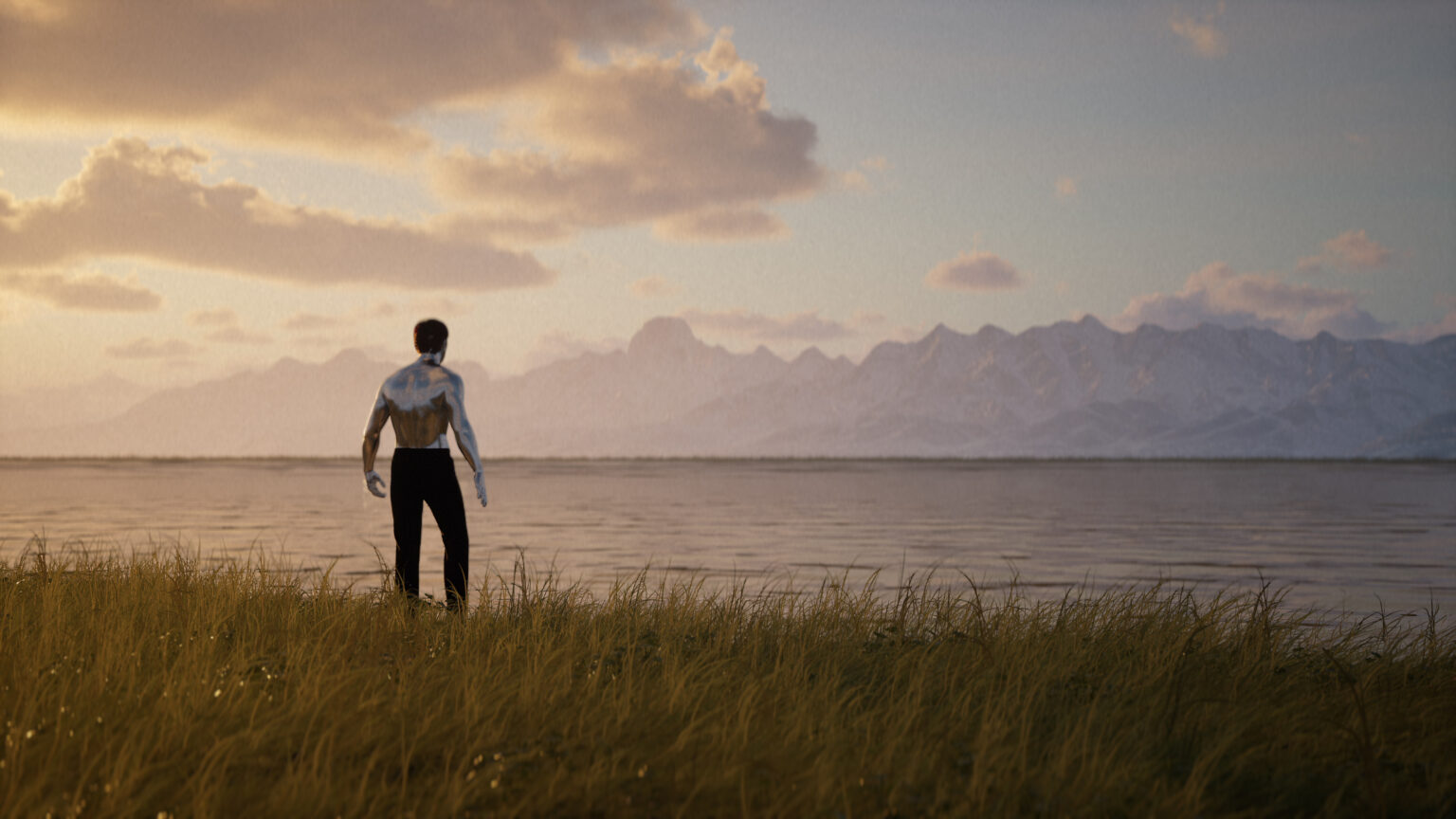
“My dear, the world is crumbling, but do not grieve. Listen: the earth, the grass, the breeze, everything on this land… They see you, they remember you. Reality is no longer solid, and life does not end here. Our existence folds itself into layers of time. Everything you see, everything you touch… Are connected to the resonance.” Whispered gently in Mandarin, these words are spoken by a crow who addresses the protagonist of Tenzin Phuntsog's 3D-animated video The Last Dream at the End of the World (2026, pictured at top, courtesy of the artist and Microscope Gallery) as he lies unconscious on a grassy plain of the Himalayan plateau. The protagonist's skin is a shining, metallic silver, a side effect of the parasitic cordyceps fungus he lives on. He is the last person on Earth after an apocalypse that unfolded in sequences of fire, flooding, and radiation. Guided by Phuntsog's own movements using motion capture, the avatar comes to and stumbles across the plateau, a digital environment modeled on satellite imagery and mapping databases of the area's real terrain. The eight-and-a-half-minute video constitutes the first time in the artist's life that he is able to see his own form in the landscape of his ancestral homeland, having been repeatedly denied entry by the same political and bureaucratic forces that compelled his family to leave the region.
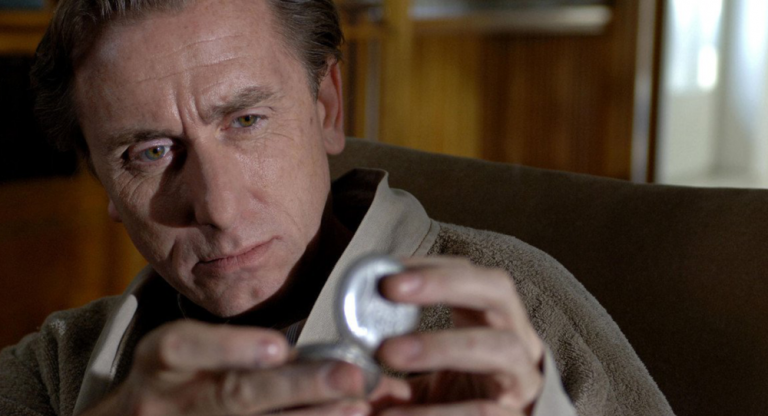
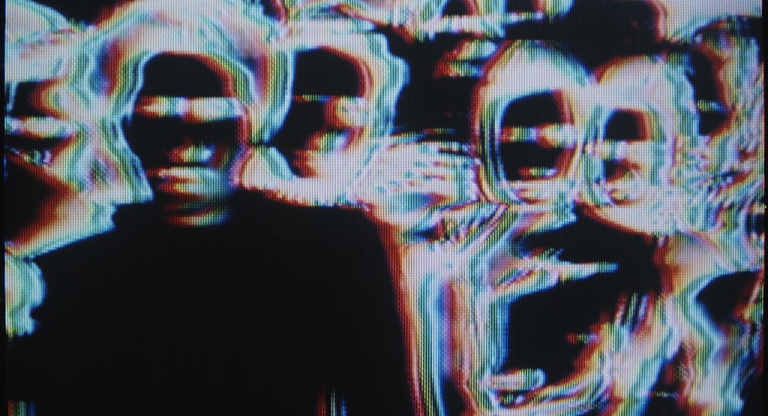
Born in India to Tibetan parents who immigrated to America in the 1980s, Phuntsog has created a body of work that examines what it means to live in exile, much of it structured by the visual histories and spiritual practices of Tibetan Buddhism. In Capturing Reality (2026), we observe a Tibetan monk chanting a Tara mantra to the goddess of healing and liberation. Doubled by a synced, two-channel video, the monk recites the prayer twice while moving his hands through various mudras. At first centering the monk's seated figure in an ambient blue chroma-key backdrop, the shots move progressively closer to before cutting to close-ups of his hands and face. At this vantage we see small gray motion capture markers attached to his fingers that register the graceful flow of his hand movements, which soon proliferate into a layered multitude of gestures, alluding to the thousand-armed Bodhisattva of compassion, a frequent subject of Himalayan Buddhist art, before the image of his hands disappears entirely and we are left only with the digital traces of the markers. By establishing a digital parallel to the spiritual realm invoked by the monk's practice, Capturing Reality considers the multivalent nature of the real in an increasingly virtual world.
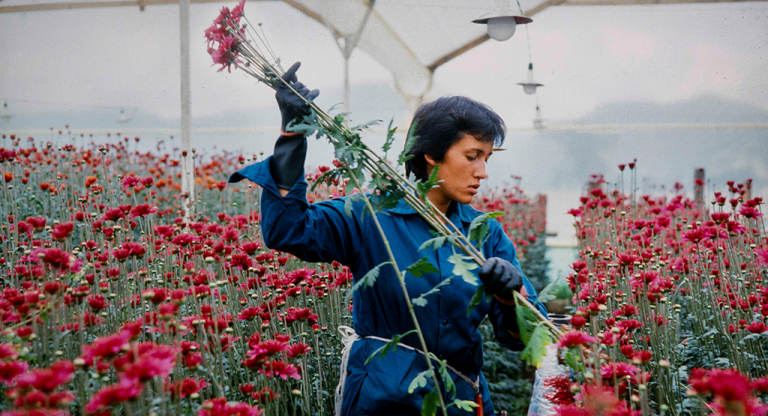
Capturing Reality shares a wall with Phuntsog's first “moving image self-portrait” Auras (2026), a 3-channel 4K video originally shot on 35mm film. Each channel presents “both his conscious and unconscious selves,” centering his figure in the same blue chroma-key ground while taking a series of 16 poses that mirror the iconography of Tibetan Buddhist deities. Sometimes he holds objects, such as a glowing, ember-like sphere or a bright fuchsia lotus blossom, and sometimes his presence is replaced with stand-ins in the form of an old man, an infant, or seven bowls of water, a traditional offering in Vajrayana Buddhism. The three channels of Auras are unsynced and do not have a set beginning or end, rendering the duration and possible combinations of shots infinite. Echoing the eternal structure of the universe, Auras visualizes Phuntsog as beams of light refracted through the form of Buddhist deities, devotional offerings, and past and future versions of himself.
In many shots of Auras, Phuntsog is covered in silver body paint reminiscent of the man in The Last Dream. Citing the rainbow of colors in which the deities of Tibetan thankas (devotional paintings) are rendered, Phuntsog was drawn to silver's technological associations, seeking a color “more unidentified like the surface of a UFO.” This idea informs the one sculptural object in the exhibition, Drone God 1 (2026), a small, flying drone tethered to the floor of the gallery, atop which a 3D resin sculpture of the artist sits, a lotus blossom in his hands. Bringing to mind modern systems of surveillance and commerce, one wonders if Drone God 1 is some future form of the man in The Last Dream, the final shots of which situate him before the Himalayas, taking in the landscape before his body dissolves into the wind. As humanity's final dream unfolds within this emulation of a place forbidden to its creator, the crow's serene voice guides the silver avatar into oblivion, “like petals blooming into light.”
Tenzin Phuntsog: The Last Dream at the End of the World is on view at Microscope Gallery through March 7.