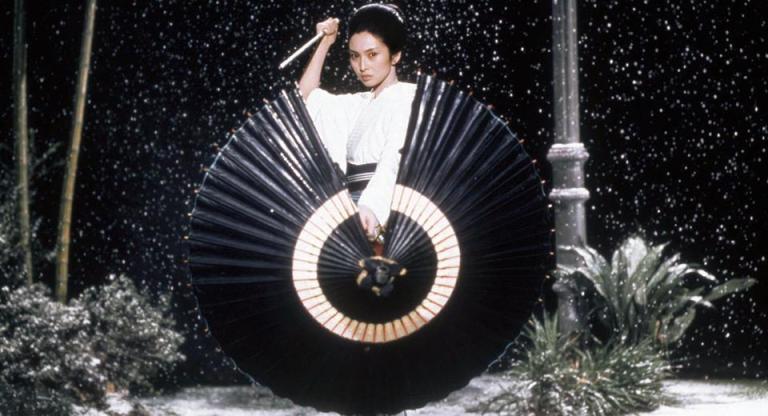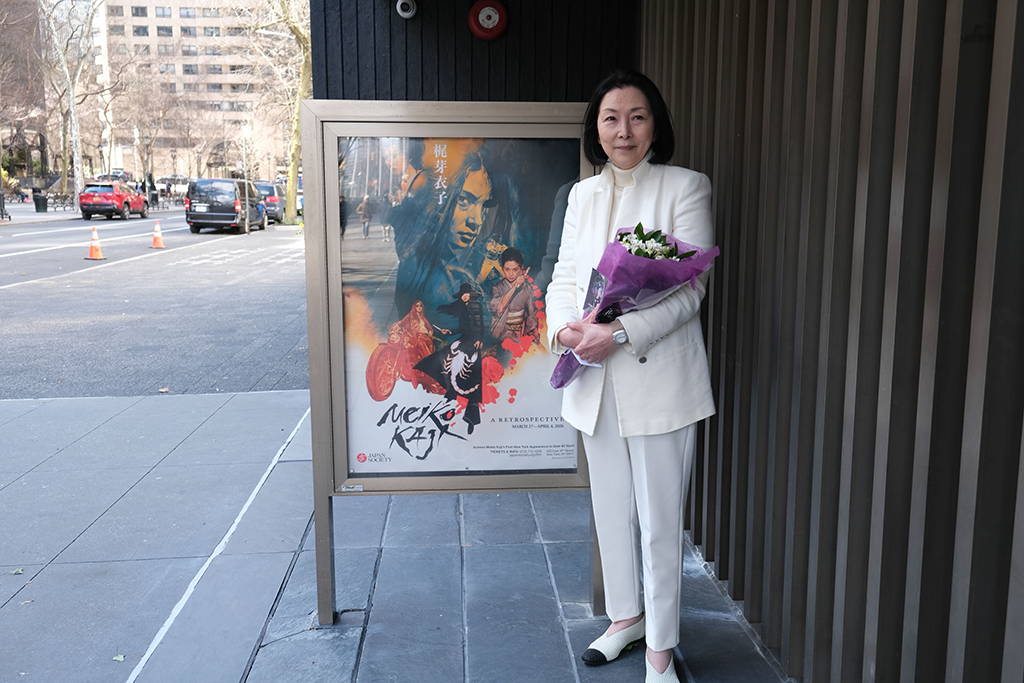
Anticipation coursed through the halls of Japan Society as fans gathered to celebrate the career of Meiko Kaji, accompanied by the actress’s first public appearance in the United States in over 40 years. Best known by Western audiences for the Lady Snowblood movies, in which she plays the titular assassin who is quite literally born and bred to avenge her mother’s rape and her family’s murder, Kaji’s performances as strong, stoic women who fight back against patriarchal violence and oppression cemented her as a feminist icon of genre film. The much-deserved retrospective presented a broader view of Kaji’s work, highlighting both the exploitation classics that defined her earlier career as well as the dramatic performances that have not received the appreciation they deserve outside of Japan. The highlight of the weekend (second to Kaji’s attendance, of course) was the inclusion of beautiful imported and archival 35mm prints.
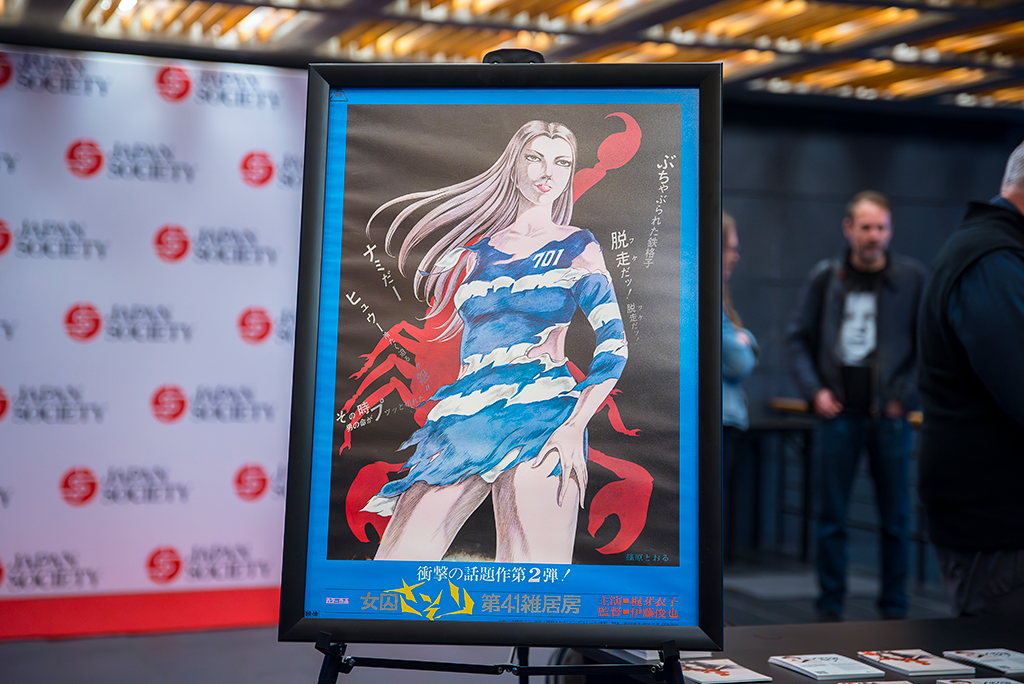
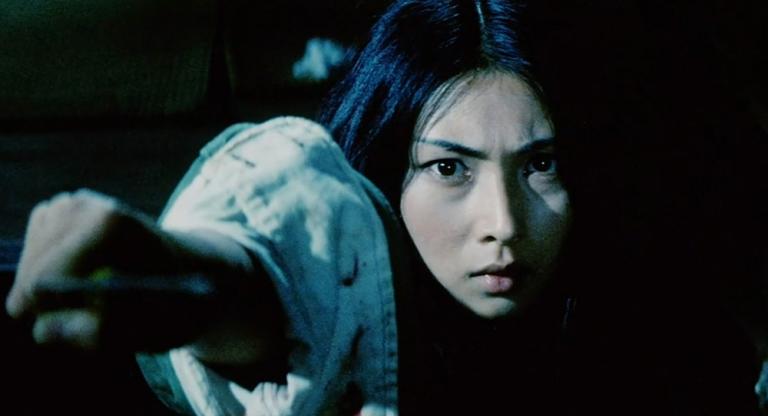
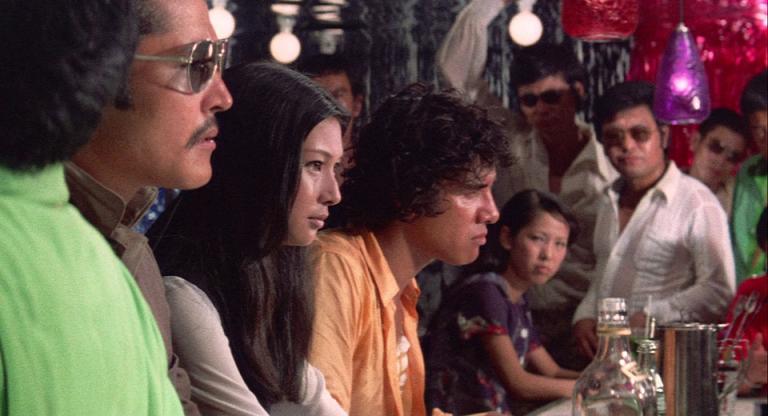
Back-to-back exploitation classics screened on Saturday, April 4: Female Prisoner #701: Scorpion (1972) and Female Prisoner Scorpion: Jailhouse 41 (1972), the latter of which featured Kaji doing her first Q&A with critic and film historian Samm Deighan. The Scorpion movies mark an important inflection point in Kaji’s career, as she exited the Nikkatsu studio (under which she starred in Teruo Ishii’s Blind Woman’s Curse and the Stray Cat Rock series from 1970 - 1971) because of their pivot toward more pink film production and moved to the Toei Company to avoid more overtly sexual roles. It was there that she collaborated with director Shunya Itō on the character of Sasori, the Scorpion, who is sentenced to a harsh women’s prison after being betrayed by her dirty cop boyfriend and becomes determined to escape and seek vengeance. In her Q&A, Kaji recounted how it was her idea to pare down much of the script’s dialogue, making Sasori almost mute, aside from a few key moments. The result is a powerfully physical performance, with Kaji’s eyes conveying the character’s sadness and rage in her arresting glare. Kaji was also responsible for the costuming and overall look of Sasori, selecting the black trench coat and floppy-brimmed black hat that would define the aesthetic of the Japanese female revenge drama in the cultural imagination. Between these contributions and the tie-in theme song she recorded for the series, Kaji’s individual artistic influence is all over the Scorpion movies in ways that were rare for actresses at the time. She took the savagely cool onscreen persona she embodied in her early sukeban movies and made it her own.
The Sunday, April 5, evening screening of Yasuzo Masumura’s The Love Suicides at Sonezaki (1978) felt incredibly special, as it is Meiko Kaji’s personal favorite of her own works, and one she especially wanted highlighted in the retrospective. Her second collaboration with Masumura earned her several acting awards and represented a leap forward in her career, but was also her final lead role in a feature. Based on the play by Chikamatsu Monzaemon, The Love Suicides at Sonezaki tells the ill-fated love story of a soy sauce maker (played by rock star-turned-actor Ryudo Uzaki) and an indentured courtesan (Kaji) who decide to die together instead of entering into the marriages arranged for them. Kaji’s heartbreaking performance and the overarching melodrama may come as a surprise to those who have only encountered the actress through her exploitation pictures—a sense I got during the sold out screening from the audience’s audible reactions to the film’s heightened tone. But Kaji truly shines here, trading in her stoicism for anguish and yearning that buttresses the story’s tragedy, such that it was clear why she selected this work as a centerpiece. Not released in the United States, The Love Suicides screened on a pristine print imported from the National Film Archive of Japan with soft-subtitling occurring live.
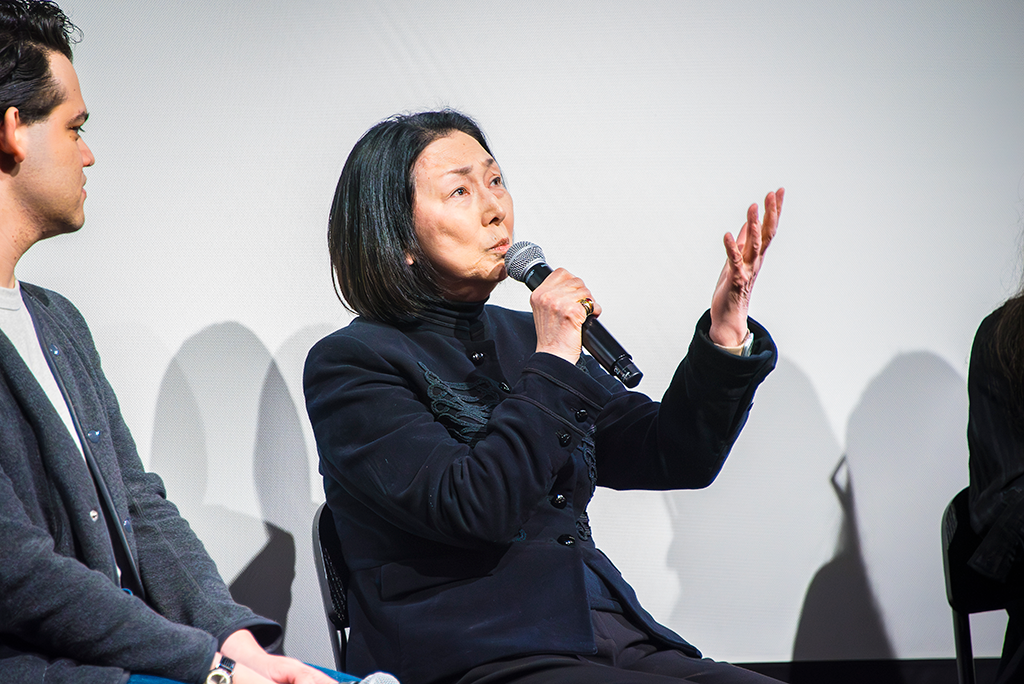
Kaji’s subsequent Q&A was similarly a treat, as she shared many great details about the film’s production, from the cast and crew all sleeping on the floor of a local love hotel because of the low budget to Masumura’s tendency to obsessively start scrubbing the floor whenever he felt the crew was taking too long to set up a scene. Much credit should go to interpreter Monica Uchiyama, who translated Kaji’s lengthy answers while being engaging and capturing her sense of humor. Kaji’s delight at being in New York was palpable and she sent us off into the night by serenading the crowd with a snippet of “Urami Bushi,” her theme song for the Female Prisoner Scorpion series. Luckily for us, Kaji mentioned that she intends to keep working for the next decade (the retrospective began just a few days after her 80th birthday), quipping “I’m full of life because, as you know, a scorpion never dies.”
See Also