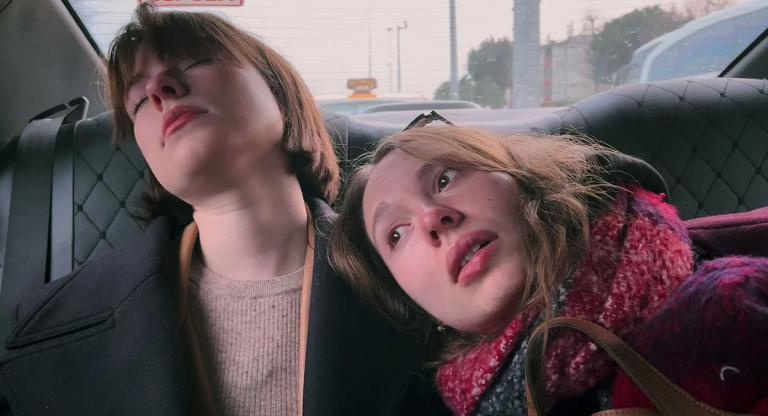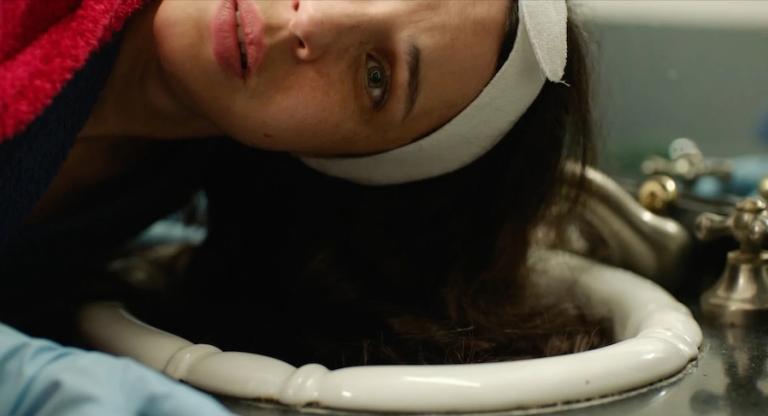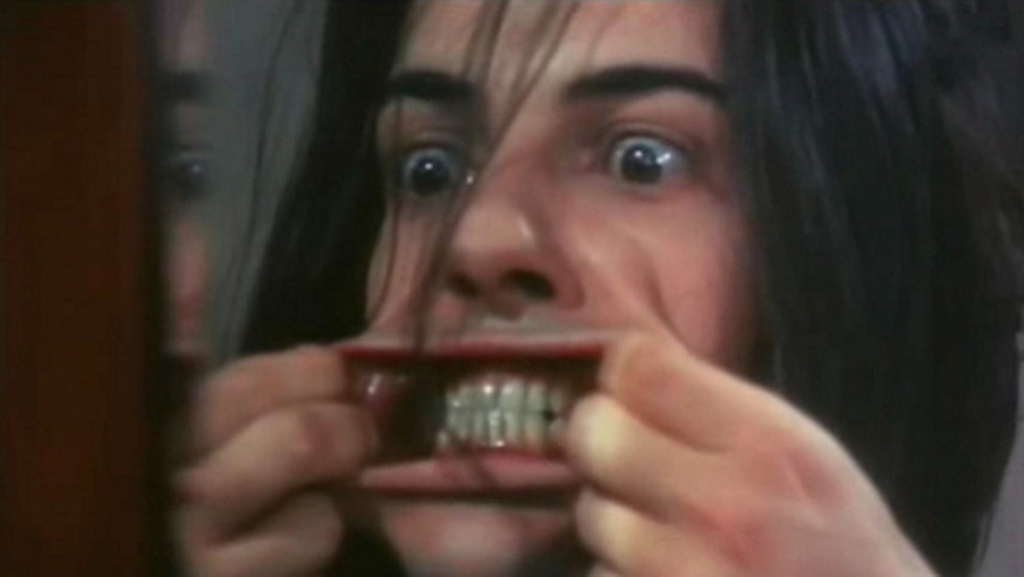
Milan, 1972—a woman and her teenage son hold séances in the living room of Apartment No. 26, Building C, on a crowded block. A cross-section of the urban milieu—men in boring suits, women clutching their pocketbooks, cat-eyed and guileless Tina Aumont—gather and hold hands as Mrs. Tarantino chants a simple invocation, drawing troubled mumblings and pained moans from her customers, one of whom even wets themselves mid-ritual. These daily gatherings, along with individual palm-readings and tarot sessions, pay the Tarantinos’ bills since the patriarch was killed while working in the subway tunnels below the city’s teeming streets. The son is disgusted by his mother’s charlatanry; though it clearly has a therapeutic effect on her clients, he can see these poor suckers’ actual, grim futures (he’s a “natural witch,” in the words of The Craft). Weary of toiling away at homemade hexes, he ties his mother up, demanding the secrets of “real” magic passed down by his maternal grandmother. Mrs. Tarantino warns him: such black dealings will open up the gates of hell.
So concludes the first part of Giulio Questi’s Arcana (1972), as noted by title cards. What happens in part two suggests, indeed, that the supernatural has been unleashed. Plates levitate, Aumont is cruelly seduced, a family stabs a baked homunculus with metal skewers, frogs spew from Mrs. Tarantino’s mouth; the music grows repetitive and incantatory as absurdity overtakes the city. Following the shockingly bleak spaghetti western Django Kill… If You Live, Shoot! (1967) and the unhinged giallo Death Laid an Egg (1968), Arcana was Questi’s final theatrical feature. The film’s distributor, Distribuzione Dinamica Films, went bankrupt in the midst of making prints; as a result, only five copies were created and Arcana saw little distribution, even in the outsider auteur’s home country. Rich with vague symbolism and brought to vivid life by Lucia Bosè (Story of a Love Affair, 1950) and Maurizio Degli Esposti’s unrestrained performances as mother and son, the film is effectively a spell of its own, particularly in the latter half, which offers a viewing experience similar to Jamil Dehlavi’s Born of Fire (1987).
In Django Kill and Egg, Questi’s experiences as a member of the Italian resistance and grim view of capitalism find violent expression, from the gold-fueled brutality of the so-called “Unhappy Place” in the former to the casual serial killing of the latter. In Arcana, politics emerge between the more potent representations of the supernatural, where fortunetelling promises a rather squalid escape from life’s ordinary desperation. That is, until true evil takes over. Yet the film’s darkest aspects—from incest to the penury promised a family when the father dies on the job, rape, and the terror of a pre-wedding pregnancy—are all reflective of the violence wrought by an oppressive and unequal society. Some of the more potent sequences, which read as purely bizarre at first, take place in the hallways outside the Tarantinos’ apartment, where women cluck like chickens for a wild-haired man wielding an egg and grubby children play-act at evil spells and bite a waylaid passerby. Camera trickery and magic spells aside, darkness materializes from the subway tunnels dug by human hands and the hearts of children left to their own devices.
Arcana screens this evening, April 25, at Anthology Film Archives on 35mm as part of the series “La fille des étoiles: Tina Aumont.”